Scotland Photos Part 1: Aberdeen

For all of you who are weary of the US election coverage and want some distraction, here are some photos of Aberdeen taken during my recent trip to the UK. I’ll be posting more in the next few days.

From these photos, it’s obvious why Aberdeen is known as the granite city or the silver city. For pretty much every building in the entire city from the very old to the very new is built from grey granite with the occasional highlights of pale red granite. When the sun is shining, the grey granite shimmers silver, hence the silver city. When it’s overcast or raining, the granite is just grey.

Aberdeen Castlegate

Aberdeen Castlegate, so named because this is where Aberdeen Castle once stood. The castle has been gone since the Middle Ages to be replaced by the 19th century Salvation Army Citadel in the background, Mercat Cross, the structure in the middle of the photo and the monument to the Gordon Highlanders in the foreground.

Aberdeen Mercat Cross

Mercat Cross, which has nothing to do with meerkats, but instead is Scottish for “market cross”. Mercat Crosses are found in towns all over Scotland. This particular example dates from the 17th century. The gentlemen depicted in the reliefs are various Scottish kings from the Stuart dynasty.

Aberdeen Mercat Cross

The royal unicorn on top of Mercat Cross

Aberdeen Arts Centre with Gordon Highlander

It’s the Gordon Highlander monument again, this time with the tower of the Aberdeen Arts Centre in the background.

Aberdeen Arts Centre

This building now houses the Aberdeen Arts Centre, a theatre and concert venue. I’m pretty sure it was something else once upon a time, most probably a church, but I couldn’t find any information about that.

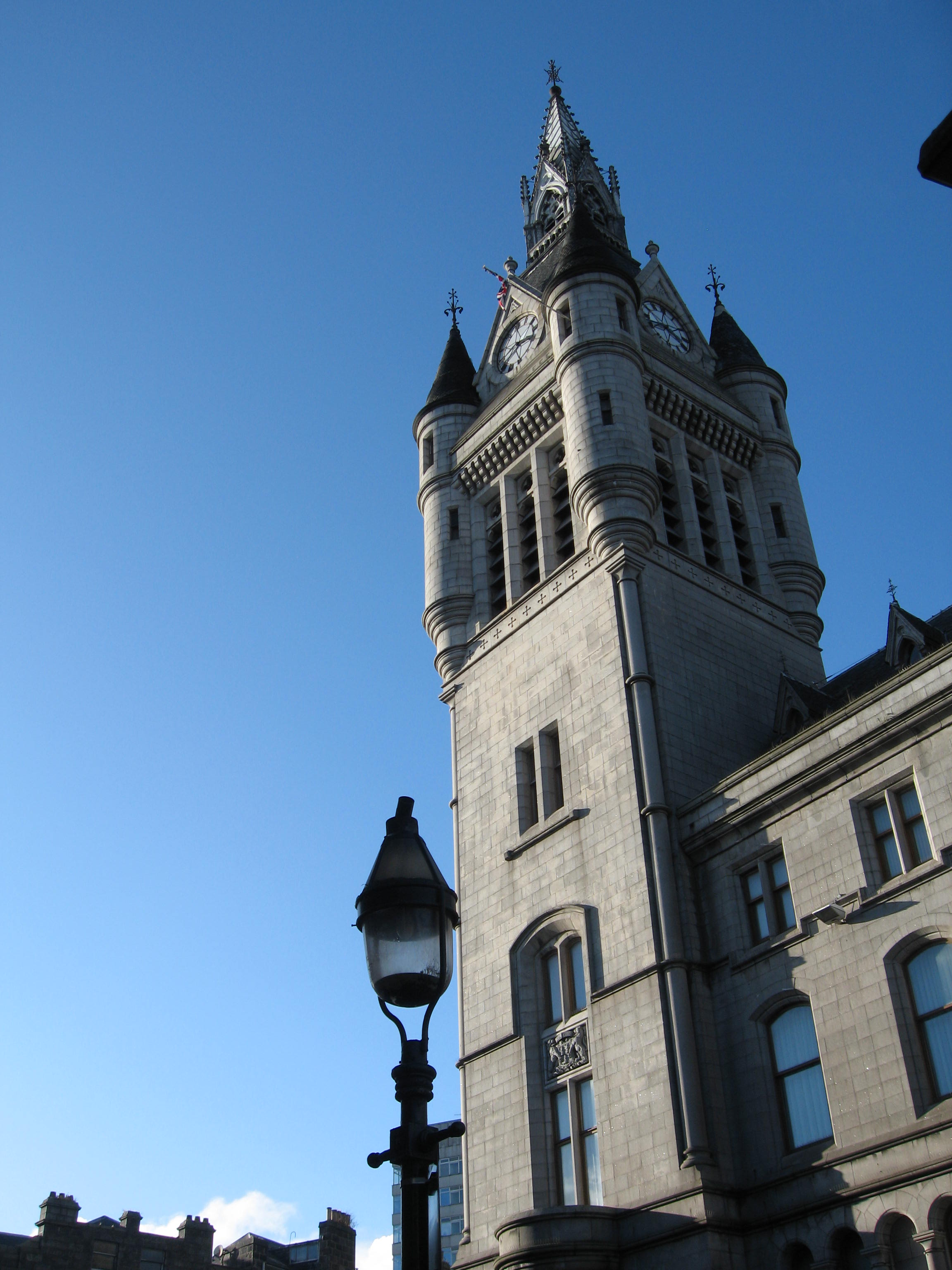
Aberdeen Tolbooth and Sheriff Court

This stunning building houses the so-called Sheriff Court and the so-called Tolbooth, a former prison that is now a museum. Supposedly, it’s haunted.

Aberdeen Sheriff Court

A closer look at the tower of the Sheriff Court building

Aberdeen Provost Skene's House

Provost Skene’s House, a 17th century house that was once owned by the mayor of Aberdeen, one Provost Skene, and later served as an inn. It survived a slum clearance campaign as well as the postwar building boom and is now a museum.

Aberdeen Provost Skene's House

You can see that Provost Skene’s House is nestled between or surrounded by postwar highrise buildings. Note that the modern buildings use the same grey granite material as the old ones.

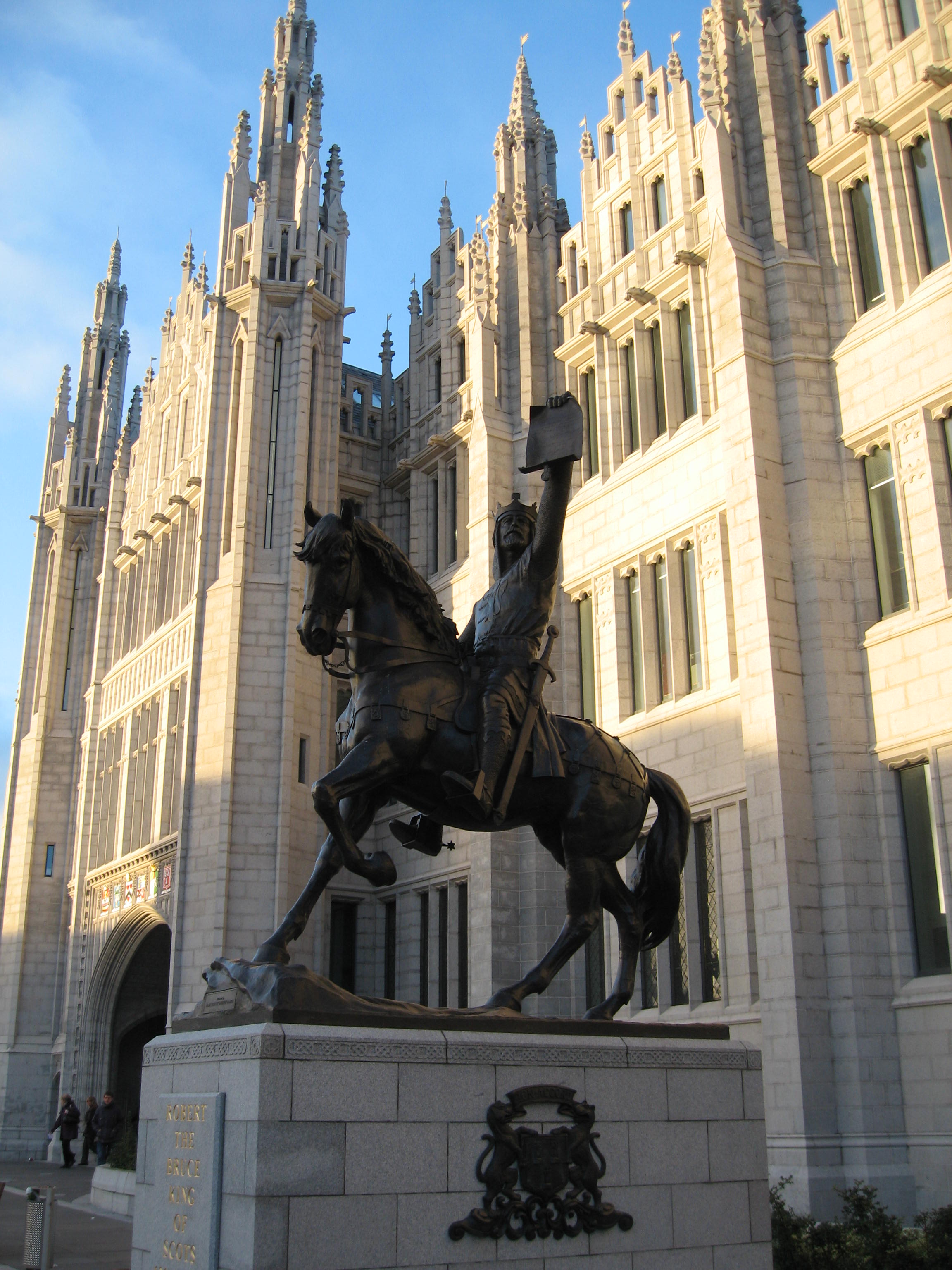
Aberdeen Marischal College

Marischal College, which has been a university since the 16th century. This stunning neogothic granite building only dates from the 19th century, though. Nowadays, Marischal College is part of the University of Aberdeen.

Aberdeen Marischal College

A statue of Robert the Bruce, former King of Scotland, in front of Marischal College

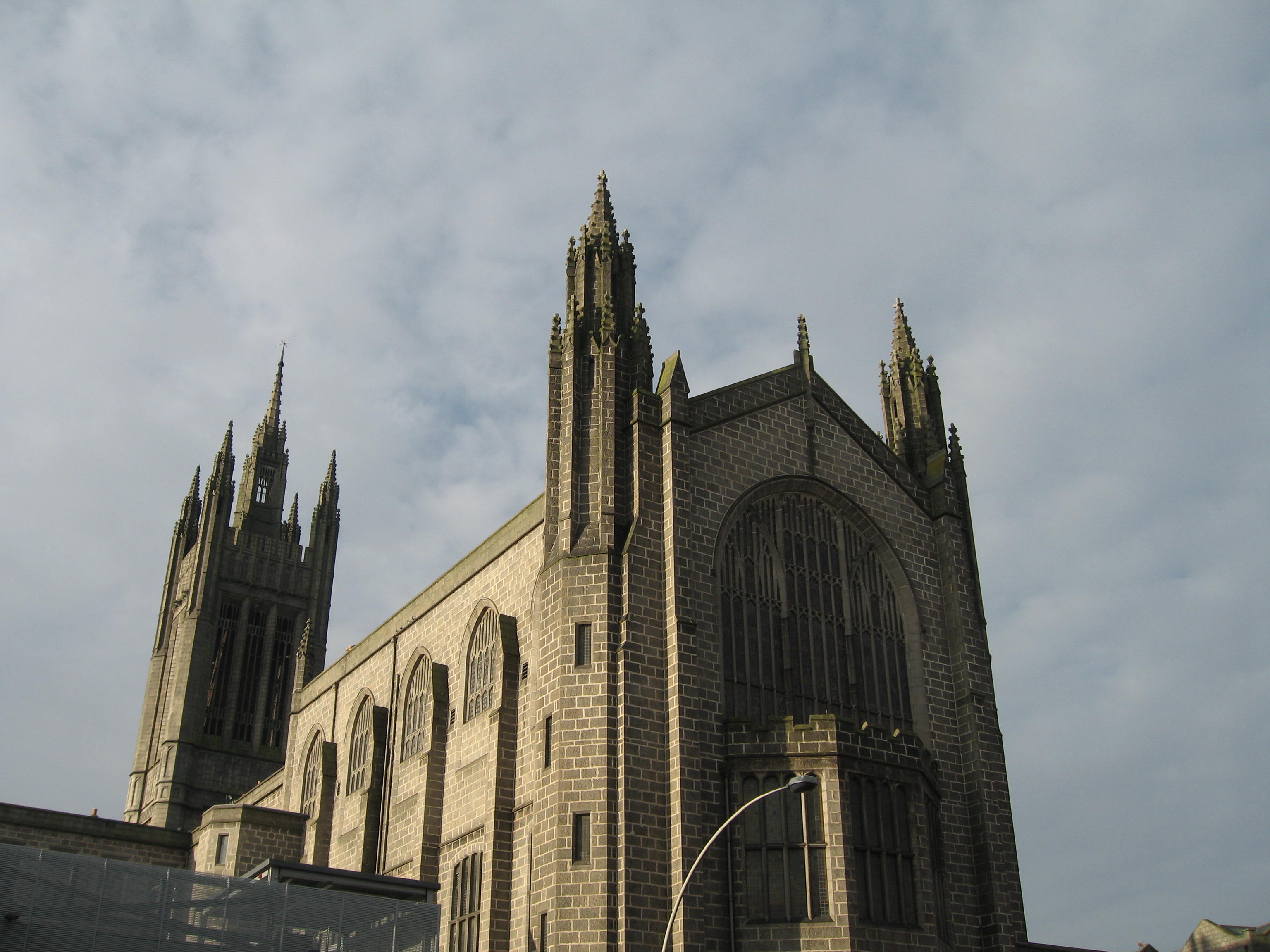
Aberdeen Marischal College

The neogothic college church/chapel of Marischal College.

Aberdeen St Nicholas Kirk

The Kirk of St Nicholas. Though there has been a church on this spot for a long time, the present incarnation is yet another example of Victorian neogothic architecture.

Aberdeen St Nicholas Churchyard

The churchyard of the Kirk of St. Nicholas with many interesting vintage headstones. Quite amazingly, this historic cemetery is located directly in the middle of the city on the main commercial shopping street and is flanked by shopping centres on both sides.

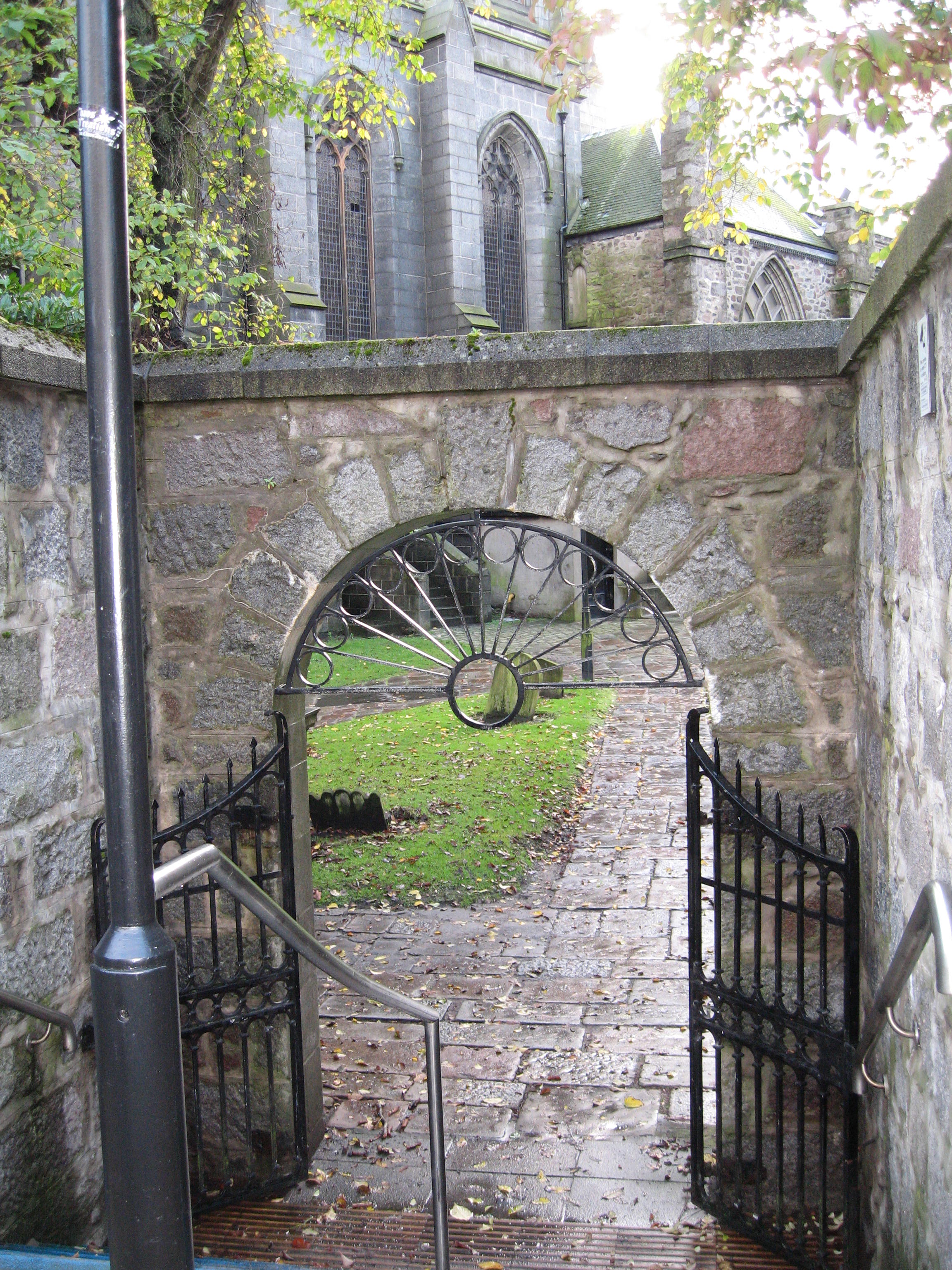
Aberdeen St Nicholas Churchyard

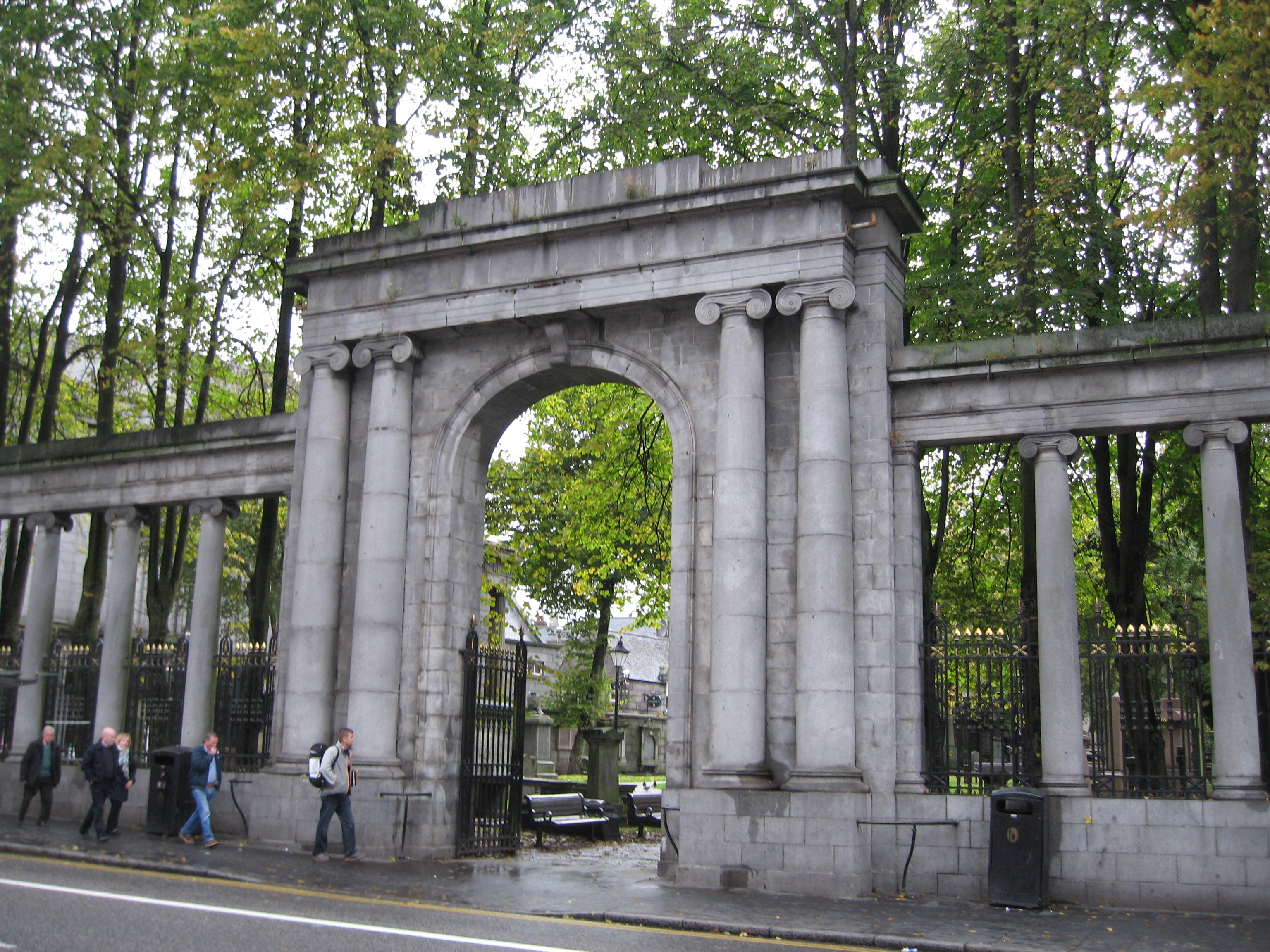
A side entrance to St Nicholas churchyard.

Aberdeen St Nicholas Churchyard

The main entrance of St Nicholas churchyard on Union Street

Aberdeen Church

I have rarely seen a city with so many churches as Aberdeen, though very few of them are still actively used as churches, others are pubs, arts centres, etc… Here is a particularly attractive church on Union Street. Note the red granite that was used alongside the familiar grey granite.

Aberdeen ruined church

Looking at all the granite, one cannot help but wonder what would happen if anybody decided to build something from a material other than granite. It doesn’t seem to happen all too often, because this red brick church was the only building made from something other than granite that I saw and it’s a ruin. Coincidence? Or retribution for using brick instead of granite?

Aberdeen View from Union Bridge

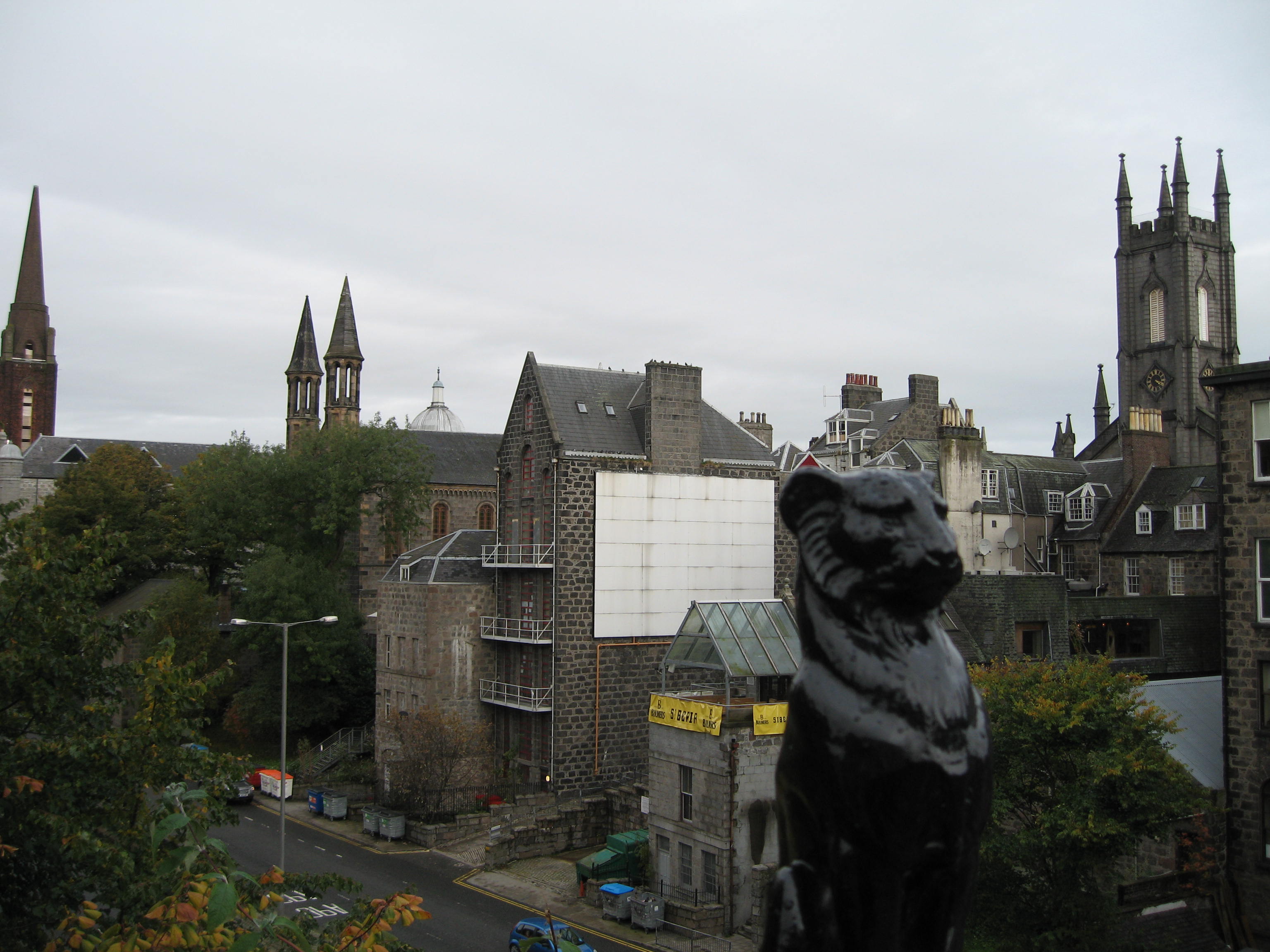
A view across the roofs of the city from Union Bridge with several church spires.

Aberdeen library

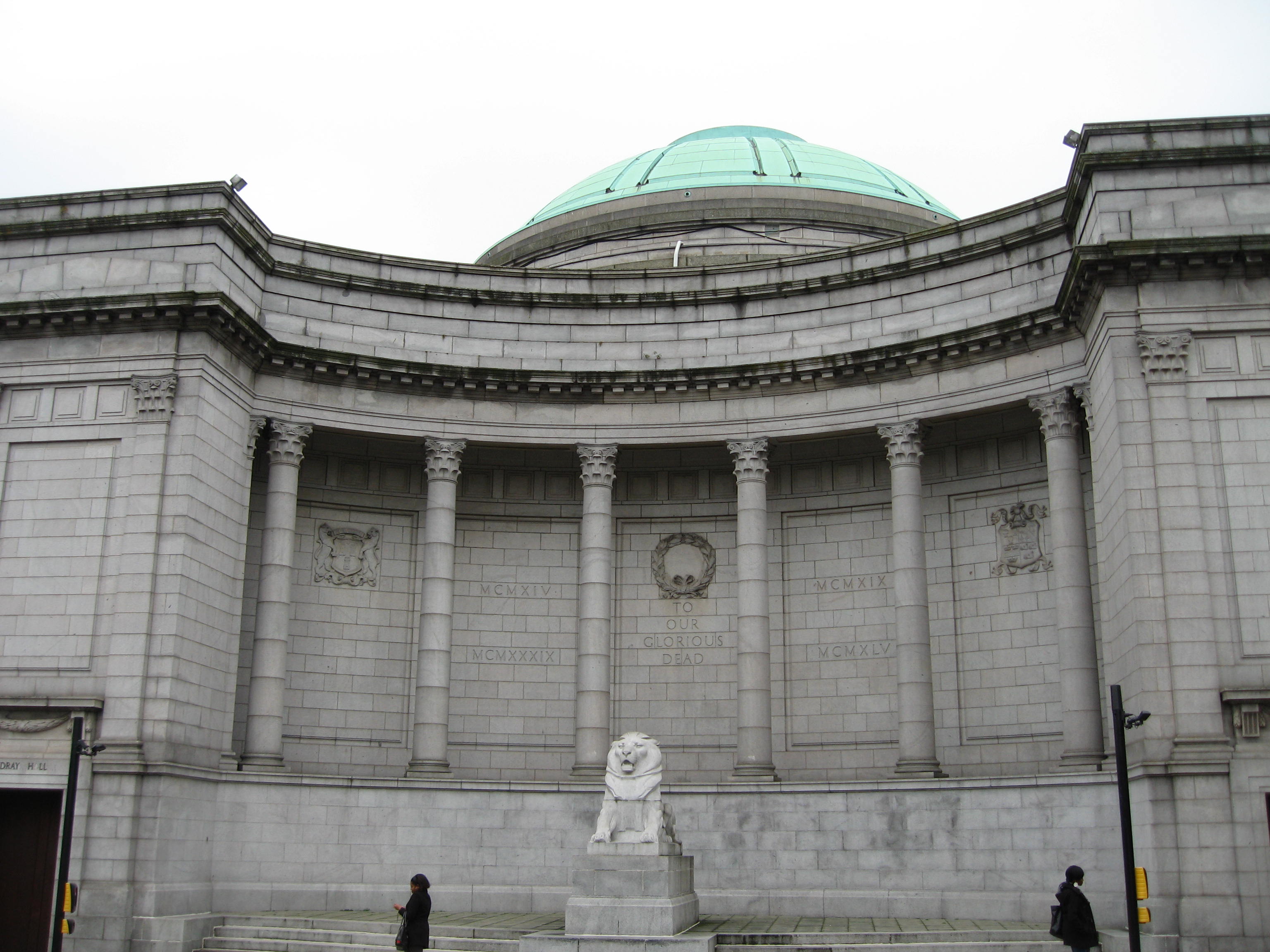
This domed building and war memorial is part of the Aberdeen Art Gallery.

Aberdeen St Marks Church and His Majesty's Theatre

This row of stunning domed buildings consists of, from left to right, the public library, St Mark’s Church, His Majesty’s Theatre and the Aberdeen Art Gallery.

Aberdeen William Wallace and His Majesty's Theatre

This statue of William Wallace – the Scottish rebel who was portrayed badly and inaccurately by Mel Gibson in “Braveheart” – seems to point straight at His Majesty’s Theatre. Either he’s thinking, “Well, it’s not my king” or “Come on, Mel. Isn’t that a lovely theatre? Don’t you want to appear on that stage? Don’t you want to drop by, so I can chop your head off for the travesty that was Braveheart.”

Posted in General | Tagged , , | 5 Comments

Guy Fawkes Day Linkdump

Well, it was either that or US election day linkdump. And since everybody and his dog is already talking about the US election, I thought that Guy deserves some of the spotlight, especially now that he has morphed into an accidental anti-capitalist icon.

The 2012 World Fantasy Awards have been given out this weekend. Jo Walton’s Among Others missed making a clean sweep of all major genre awards, but then Lavie Tidhar’s Osama is a worthy winner and one who probably wouldn’t have won in a popular vote award.

At Femmedia, M. Keep explains why Anastasia Steele from Fifty Shades of Grey may not be a particularly good character but is still not a Mary Sue.

I’ve discussed the misuse of the term “Mary Sue” before, but this quote from the post by M. Keep sums up the issue very well:

A Mary Sue isn’t just code for ‘A character I don’t like’ or ‘A female character that annoys me and doesn’t live up to my expectations for female characters.’

At Slate, Tom Scocca complains about newspaper and magazine articles apparently confusing Mad Men with reality. The article mostly reads like a “Help, people are making pop culture references I don’t get” complaint, though there is an interesting nugget of information in there, namely that Mad Men has come to define the image of the early 1960s in the popular imagination. I guess it’s because the early 1960s are something of a forgotten half-decade, not as cool and revolutionary as the late 1960s (when I hear the word “Sixties” I think of miniskirts, hippies and psychedelia. I bet you do, too), but rather a continuation of the 1950s. And since there is no general image of the early 1960s, people have quickly latched onto the pop cultural image provided by Mad Men. Interestingly, the article also suggests that Don Draper may be a male Mary Sue. And indeed, he would probably score pretty high on those Mary Sue Litmus tests.

Posted in Books, Links | Tagged , , , , | 2 Comments

New crime short available: He never brings me flowers…

First of all, my e-books are now available at the Spanish e-book retailer Casa del Libro. So if you’re from Spain and want an alternative to Amazon ES or want your e-books in epub or pdf format, check them out. For those of you in the US, my e-books should also be coming to Barnes & Noble soon.

What is more, I’ve also got a new or rather a semi-new release, for I have published two more of the short crime stories collected in Murder in the Family as in a standalone edition.

He never brings me flowers...He never brings me flowers…

Waiting for your boyfriend to finally come home from work can be hell, especially if it’s your anniversary and you suspect he forgot – again. But does the ringing of the doorbell promise roses and sex and the long overdue proposal or something far more sinister?

Lovers’ Ridge

A foundling, a newborn, abandoned and left to die. But tonight, he will have his revenge on the parents who deserted him. Tonight, they will pay, at the very place where the story once began, at Lovers’ Ridge…

For more information, visit the dedicated He never brings me flowers… page.

Buy it for the low price of 0.99 USD, EUR or GBP at Amazon US, Amazon UK, Amazon Germany, Amazon France, Amazon Spain, Amazon Italy, Amazon Japan, Kobo, DriveThruFiction, OmniLit/AllRomance ebooks, W.H. Smith, Casa del Libro and XinXii.
More formats coming soon.

Posted in Books | Tagged , , , , , | Leave a comment

How to suppress women’s writing – the latest go-around

It’s really that time of the year. Not only are we having our annual literary versus genre fiction debate and the annual “science fiction is dying” debate – no, it’s time for the annual misogyny in publishing and the doublestandard of content debate, too.

Jeffrey Eugenides kicked off the debate this time around in this lengthy interview at Salon. He talks mainly about writing, first sentences, abandoned novels and his latest novel, The Marriage Plot. But towards the end, he also offers his opinion on the latest go-around of the misogyny in publishing debate, wherein prominent female writers like Jennifer Weiner and Jodi Picoult complained that their books are stuck in the “female only” ghettos of women’s fiction and chick lit, while male writers like Jonathan Franzen or Eugenides himself are praised for their literary work, even though they write about the same subjects that would get a female writer stuck in the women’s fiction ghetto.

In short, Eugenides doesn’t quite understand where the problem lies. After all, he likes and admires women writers and he does give us a handful of names (probably the same names that every other male author is literary fiction gives). What is more, Jodi Picoult writes a different sort of book than Jonathan Franzen, genre instead of literature. And besides, he doesn’t know why she is complaining, because

She’s a huge best-seller and everyone reads her books, and she doesn’t seem starved for attention, in my mind — so I was surprised that she would be the one belly-aching. There’s plenty of extremely worthy novelists who are getting very little attention. I think they have more right to complain. And it usually has nothing to do with their gender, but just the marketplace.

Sigh. And I actually used to like Eugenides. So why does he have to resort to the same tactics that come up in every other discussion of misogyny in publishing? “Oh, but I like women and just to prove it, let me give you a list of women writers I like. As for those other women, the ones who are complaining, well, I don’t know what they are complaining about, since they obviously write a different and inferior sort of book, so they can’t really expect to be taken seriously. And really, why are they complaining, considering their inferior books sell like hotcakes?” Replace Jodi Picoult with Stephenie Meyer or Charlaine Harris and Zadie Smith, Alice Munro and Joyce Carol Oates with Kelly Link, Catherynne Valente and Theodora Goss and you’ve got every statement from every (male) SFF reader/writer/critic dismissing urban fantasy and paranormal romance ever.

Linda Holmes responds at National Public Radio and makes a similar point, namely that we’ve heard replies like Eugenides’ way too often before and besides, Jodi Picoult’s and Jennifer Weiner’s actual arguments were quite different from what Eugenides thinks they said. Apparently, he ignored half of Meg Wolitzer’s argument as well.

Jessica Grose weighs in at Slate and also touches upon the problematic connotations of the term “chick lit”, though she does seem to be a bit confused about what the term actually means. Because “chick lit” has never been a catch-all term of any fiction written for and by women, but rather it designates a specific type of book about young professional women, usually but not always in the big city, juggling career, life and romance and trying to find themselves.

Of all the attempts to define what chick lit actually is, my favourite is this one by Marian Keyes, after all one of the pioneers of the genre, from this 2008 article in the Guardian:

For Keyes, it is about the “dissonance between the self we present to the outside world and what is inside – the hopes, memories and longings that are rarely exposed”. Chick lit, like Sex and the City, she argues, has grown out of the socio-economic fact that women are not their own bosses but always subordinate to a more powerful man.

In a recent post at Omnivoracious, Beth Orsoff also defines and defends chick lit.

In the end, we’re still dealing with the same mechanisms that Joanna Russ already outlined so brilliantly in How to Suppress Women’s Writing almost thirty years ago now. And sadly, that book is still as relevant as it ever was.

Posted in Books | Tagged , , | Leave a comment

Winter is coming, the mice are on the loose

In case you’re waiting for photos from Scotland, you’ll have to wait another day. But instead, I’ve got a funny anecdote and some public service announcements:

First of all, Amazon in its infinite wisdom decided to launch its Kindle store in Japan, while I was away. So you can now buy all of my e-books at Amazon Japan. The link goes to my Amazon Japan author page, which was a chore to set up, since I neither speak nor read Japanese. Luckily, Google Translate came to my rescue.

What is more, my e-books will hopefully be available at Barnes & Noble (which is notoriously unfriendly towards Non-US authors and flat-out refuses to let us use their PubIt platform) soon, because I finally found a place that distributes to them that is not Smashwords. Nothing against Smashwords, but their meatgrinder messes up my formatting. I’ve also decided to start linking directly to W.H. Smith on the individual book pages. I’m not going to link to every single Kobo distribution partner, since there are a lot of them (and I haven’t even found them all yet), but W.H. Smith is a pretty big name, considering they have a presence on every British highstreet as well as in every British railway station or airport. Though it seems they slapped DRM on my e-books, even though I always disable it.

As for the last public service announcement, tomorrow (today, technically) is Halloween. And just in case you’re looking for a spooky read to pass the time, may I suggest giving Letters from the Dark Side a try. Letters from the Dark Side is a collection of spookily humorous epistolary fiction in the format of a confession magazine. It’s one of my worst sellers, probably because epistolary fiction just doesn’t sell (or maybe green covers really are the kiss of death), but I had a lot of fun penning those letters and besides, it’s only 99 cents/pence.

And now for the funny anecdote:

Today, I dropped by the office of one of my translation customers. And one of the guys in the office uttered darkly, “That’s the proof. Winter is coming…”

At first, I did something of a double turn, because the guy in question is about the last person you’d expect to make a Game of Thrones reference. But then he added, “…the mice are coming into the office again.”

Now the company in question had something of a mice problem last year (Don’t worry. They’re not in the food business), because the mice tend to get into the workshop through the large doors and from there into the adjacent administration building. They thought they’d caught them all, though.

But now that winter is coming, the mice have returned. For proof, the guy who made the discovery held up a package of cup noodles with a hole in the side. Apparently, the mice had managed to chew through the cup (I think it was coated cardboard rather than plastic) to get at the noodles and broth powder inside.

Cue everybody checking their desk drawers. One guy was relieved that the mice had left his candy stash alone, though he announced that they had peed into his desk drawer. Another found mouse droppings in his drawer.

But when the last guy opened his desk drawer, he got the biggest surprise. For the mouse had not just peed or shat into his drawer or eaten his lunch – there actually was a mouse in his drawer. It pretty much jumped at the poor guy and then scurried away behind a filing cabinet.

They’re setting up mouse traps now, so cup noodles will hopefully be safe in the future.

Posted in General, Work | Tagged , , , , , , | Leave a comment

Genre versus Literary Fiction, Round 715

Apparently, it’s that time of the year again, for we’re having our semi-annual genre versus literary fiction debate. Oh yes, and science fiction is still dying of exhaustion as well, though that’s material for another post.

This time around, the debate is kicked off by Arthur Krystal, critic at the New Yorker, who already kicked off the last debate of that sort back in May in a post where he talked about Ford Madox Ford as if he were still relevant and read by anybody save scholars of English literature. Though that was before the BBC in its infinite wisdom (they must’ve run out of Austen, Bronte and Dickens novels to adapt) turned one of Ford’s works, Parade’s End, into the sort of nostalgia dripping costume drama that is popular these days (praise for the adaption here and here – it sounds utterly horrible and hundreds of fanfic writers will be so disappointed to hear Benedict Cumberbatch uttering that he stands for chastity and monogamy), and thus sent the novels it’s based on rocketing up the UK bestseller charts.

But we’re not talking about Arthur Krystal’s preference for Ford Madox Ford here, but about his latest volley in the neverending genre versus literature discussion, namely this New Yorker article with the deceptive headline “It’s Genre Fiction. Not That There’s Anything Wrong With That”. Why is the headline deceptive? Because Arthur Krystal proceeds to tell us just what exactly is wrong with genre fiction or rather with the people who’d prefer to do away with the old boundary lines between literature and genre.

In many ways, this article seems to be a somewhat belated response to Lev Grossman’s and Ursula K. LeGuin’s responses to Krystal’s original article back in May. Indeed, Krystal spends four paragraph’s reiterating Grossman’s points, before proceeding to tell us why Grossman is wrong, wrong, wrong. Methinks we have a classic literary grudgematch in the making here, Lev Grossman versus Arthur Krystal. I fully expect Lev Grossman’s response in a few days.

To sum it up, Grossman’s main point, repeated across various articles on the matter, is that genre fiction is revitalizing literary fiction, because a new generation of hybrid writers are combining engaging plotting, which according to Grossman is the big strength of genre fiction, with a beautiful and lyrical use of language, which is the big strength of literary fiction. Now Krystal responds that plenty of literary fiction actually does have a plot. This is about the only point where I agree with him, since the plotless but beautifully written literary novel in which the middle aged ennui-ridden protagonist contemplates his navel in evocative metaphors is pretty much a cliché. Yes, such novels exist, but plenty of literary novels do not match that cliché and never have.

But if it’s not plot or the lack of it, then what does distinguish literary from genre fiction? Arthur Krystal has an answer for us. He writes:

A good mystery or thriller isn’t set off from an accomplished literary novel by plotting, but by the writer’s sensibility, his purpose in writing, and the choices he makes to communicate that purpose. There may be a struggle to express what’s difficult to convey, and perhaps we’ll struggle a bit to understand what we’re reading.

No such difficulty informs true genre fiction; and the fact that some genre writers write better than some of their literary counterparts doesn’t automatically consecrate their books.

So Arthur Krystal sees the difference between literary and genre fiction in some vaguely defined “sensibility”. And because he cannot properly define what that sensibility is, Krystal digs up that ancient chestnut that literary fiction is different (and by implication superior), because it is more difficult to understand, whereas genre fiction is simplicistic. And just in case we didn’t get it the first time around, Krystal tells us just what exactly he thinks of genre fiction:

What I’m trying to say is that “genre” is not a bad word, although perhaps the better word for novels that taxonomically register as genre is simply “commercial.” Born to sell, these novels stick to the trite-and-true, relying on stock characters whose thoughts spool out in Lifetime platitudes. There will be exceptions, as there are in every field, but, for the most part, the standard genre or commercial novel isn’t going to break the sea frozen inside us. If this sounds condescending, so be it. Commercial novels, in general, whether they’re thrillers or romance or science fiction, employ language that is at best undistinguished and at worst characterized by a jejune mentality and a tendency to state the obvious.

So genre fiction is trite, formulaic, full of platitudes and stock characters. Now where have I heard that before? Oh right, in every other takedown of commercial genre fiction, including sometimes by people who are writers of genre fiction themselves. Oh, the books my friends and I write are deep and meaningful, it’s those other books that are the commercial trash full of stock characters and platitudes.

As for the bit about standard genre fiction not breaking the sea frozen inside us (which is a reference to a quote by Franz Kafka, who probably would have agreed with Krystal), the thing is that different people have different frozen seas inside of them and those frozen seas need different axes or rather books to break them. A book that moves one reader deeply may leave the next utterly cold. What is more, a book must not necessarily be high literature to break the frozen sea inside us. In fact, it must not necessarily be particularly good. If I think back on the books that moved me deeply, that gave me new insight into myself and the human condition in general, quite a few of them were genre novels. And even more shockingly, some of them were not even particularly good. When I was a teenager, Isaac Asimov’s Foundation trilogy and The End of Eternity were not just axes that hacked a couple of holes into my inner ice, they were an icebreaker that plowed through my personal frozen sea like nobody’s business. Meanwhile, none of the Nobel Prize winners they made me read in school at around the same time had a similar effect. It’s not just due to having been a teenager with underdeveloped literary tastes either. Only this year, I found myself deeply affected by a space opera series that was neither particularly plausible nor particularly well written and yet it somehow managed to convey a few truths that I have rarely seen conveyed elsewhere and it made me think about it for much longer than those books should have merited. And just in case anybody thinks that the only reason why not so great genre novels are affecting me so deeply is that I haven’t read enough quality fiction, reading Thomas Pynchon in university had a similar effect on me.

The truth is that the effects fiction, whether genre or literary, has differs from person to person, as all of those poor souls whom my teenaged self urged to read Asimov with an eager “You must read this. It will change your life and explain so much.” can probably attest. For of course, Asimov didn’t change their lives and indeed did nothing but bore them to death, though most of them were too polite to mention it. Because they were different people and the books that affected them were quite different from those that affected me.

But back to Arthur Krystal and the final gem of condescension he offers:

Great writers hit us over the head because they present characters whose imaginary lives have real consequences (at least while we’re reading about them), and because they see the world in much the way we do: complicated by surface and subterranean feelings, by ambiguity and misapprehension, and by the misalliance of consciousness and perception. Writers who want to understand why the heart has reasons that reason cannot know are not going to write horror tales or police procedurals.

Now I have found plenty of characters whose imaginary lives have real consequences in genre fiction and plenty of writers who saw the world as a messy and complicated place. Because the qualities that Krystal lists are the hallmark of great writers and great writers are found on all sides of the genre fence.

Of course, writers who want to understand why the heart has reasons that reason cannot know (this one refers to a quote by Blaise Pascal BTW) may not choose to explore those reasons in horror fiction or police procedurals (though some of them do). But they might well decide to write romance, which is after all the genre designed to explore just that question.

Posted in Books | Tagged , , | 4 Comments

Back Again – and a Linkdump

Okay, so I’m back again from Scotland. Actually, I’ve been back for a few days now, but so far I’ve been too exhausted and busy to blog.

Anyway, I had a really great time and took some lovely photos, which will appear on this blog in the next few days. Though the return flight was something of an ordeal. I flew – as I usually do whenever possible – via Amsterdam Schiphol, because Schiphol has a lot of UK connections as well as a direct connection to Bremen three times a day (actually, the Bremen – Amsterdam connection has been in service for ninety years now) and because I like it better than Frankfurt or Paris, which would be the logical alternatives.

However, this time around, the connection time between my flights was only forty minutes. Which would be doable, except that Schiphol is huge. And since Britain persistently refuses to join the Schengen Agreement (Forget about the Euro and keep your pounds, just please do us all a favour and join the Schengen Agreement already, Brits), UK flights always arrive and leave at the international terminal at Schiphol, while flights to destinations inside the Schengen zone arrive and leave at one of the domestic terminals. So not only do you always have to change terminals, you also have to go through the passport controls. Which can be very crowded, if a big overseas flight, i.e. a 747 or an A-380 from Asia or North America has just come in.

The flight from Aberdeen left somewhat late (ten minutes or so) due to another delayed flight and a military jet blocking the runway and thus arrived with a slight delay at Schiphol. Which wouldn’t have been a problem normally, but turned out to be deadly with a connection time this short. Though I did get lucky in other ways. The plane from Aberdeen touched down on one of the runways close to the terminal building and not on the so-called Polderbaan runway, which is located more than seven kilometres from the terminal building and has taxi times of approx. 15 minutes, crossing a highway, several roads and a canal, all in a taxiing plane (it’s really freaky, both if you’re inside the plane and in a car on the highway with a plane passing by overhead). The airport bus left quickly and did not dump us at the furthest end of the terminal at Gate Thirtysomething – if you get unlucky and have to go from D36 to B37 or something like that it’s easily a two kilometer walk – but at D10 or something like that. So when I got into the terminal I thought I’d still make my flight, even though it was already boarding.

What got me in the end was the bloody passport and security line. Because – wouldn’t you know it? – a big overseas flight had just come in. Probably a US flight, at any rate it certainly wasn’t an Asian flight judging by the passengers. As a result, the lines at all passport lanes were endless. I asked the lady who checks the boarding passes whether I could go through the priority lane since my flight was already boarding and she let me. However, the priority lane turned out to be crowded with business class travellers from whatever big overseas flight had just come in. The passport control was relatively quick, though at least one person decided to ask questions of the immigration officer (hint: If you have questions, go to the bloody information desk). The real hassle was the security line. Because those bloody business class passengers apparently were unable to comprehend that the priority lane is not just for people who have the money or the generous employers to shell out for business class, but also for those who might be actually be in a hurry. So they took their sweet time taking off their belts, removing their mobiles and small change from their pockets, taking their laptops out of their cases. And these people weren’t grandparents on their first flight or families with multiple small children or cruise passengers unskilled in the art of flying (my personal check-in counter horrors and I had examples of all three on the outbound flight in Bremen), but business travellers and presumably frequent flyers. You’d figure they’d know the deal by now. As for asking whether they would let me go ahead, because I was actually in a hurry and they were obviously not, maybe I should have done it, but I didn’t, because those people looked like the sorts who wouldn’t let me go ahead anyway, the sort that is always annoyed when a family with small children or a disabled traveller is allowed to board the plane before they do. And if you heard me mumbling “Bloody Americans” under my breath – though I had no idea if they actually were Americans – well, I just had a bad experience with an American aboard the plane (I squeezed ahead of him with a “Sorry, I’m not normally so pushy, but my flight leaves in thirty minutes and it’s a big airport” – he was not pleased). Plus, in my experience the people who can’t comprehend that the “EU Passports Only” signs mean just that are almost always Americans and never say Japanese (I had one of those ahead of me in the queue on the outbound flight).

Once I made it through security, the information board was already flashing “Gate closing” for my flight. Nonetheless I made a mad dash through the concourse, dodging people left and right, and onto Pier B. Now I was lucky that my gate number was in the low Bs, but unfortunately Pier B requires you to walk – or run – for several hundred meters until you finally get to the gates. Anyway, I made it to the gate, found it closed and dashed to the nearest KLM information desk. “Excuse me, but I’m booked on the Bremen flight, but my flight from Aberdeen was delayed and I only just got here. Can you still let get on the plane?”

Turned out that the plane had just left the gate. I wasn’t even the only passenger who missed the flight due to overly tight connection times, an EADS engineer who’d been on a flight from Bristol, arrived huffing and panting seconds after me. However, the ladies at the KLM information desk were very helpful, agreed that the connection time was too short and immediately rebooked me on the late evening flight free of charge. What is more, they also gave me a ten Euro food voucher, a voucher for the payphones in the terminal and a fifty EUR off voucher for my next flight, valid for two years. Now mind you, I did not ask for any of those things – I would have been perfectly happy to be rebooked on the later flight free of charge. So KLM really went above and beyond on customer service, but then I’ve never had a bad experience with KLM ever.

In general, everybody – whether KLM or security staff (and I did have a bad security experience at Schiphol a few years ago – the infamous groping lesbian pat down incident) – was incredibly helpful. It was only some other travellers who were rude and unhelpful. Not just the people ahead of me in the priority lane either, but also the guy in the airport bookshop who looked at me as if I had just suggested a drug-fueled orgy in the restroom, when I politely asked him whether he wanted to share the “2 for 20 Euros” offer (since each of us only wanted one book) and save some money. I’ve done this before in the Schiphol bookshop – shared the “2 for 20” offer in the airport bookshop with another traveller and never had any problems. Well, the guy bought a Tom Clancy book (I was going to buy Philip K. Dick), so his taste was clearly awful.

Anyway, I used my ten Euro food voucher to buy a sandwich and a salad in the Zeppelin Bar (not the official name, but the design is kind of steampunky and looks like an airship skeleton, so I call it Zeppelin Bar) in the Schengen terminal, because I’d already gone through security, so the Ramen noodle bar in the international terminal, usually my preferred eating place at Schiphol, was out of the question. I also used the phone voucher to call my parents and rearrange my pick-up at the airport.

Still, I’ve learned my lesson. I’ll never book a flight with a connection time of under one hour at Schiphol again. Better make that one and a half hours, because even one hour connection time usually ends up as a mad dash from one end of the airport to the other.

And now some links:

Dutch writer Jeroen Steenbeeke weighs in on the gritty epic fantasy discussion.

Alexandra Sokoloff has a good article about theme and how to convey it over at Screenwriting Tricks.

The New York Times has an interesting article about the challenges of translating humour (found via Jay Lake).

German composer Hans Werner Henze died on Sunday aged 86. Henze was one of the greats of modern classical music and composed several operas and symphonies as well as the occasional film score.

Legendary German TV writer Wolfgang Menge also died last week at age 88. Nowadays, Wolfgang Menge is mainly remembered for writing the TV sitcom Ein Herz und eine Seele, the German version of the BBC sitcom Till Death Do Us Part, which has to be one of the most adapted TV show ideas of all time (the US version was All in the Family – there also was a separate Austrian version in Viennese dialect). However, I have never found Till Death Do Us Part/Ein Herz und eine Seele/All in the Family even remotely funny in either form – cause I don’t find racists and sexists funny. Hence I want to remember Wolfgang Menge for the films he wrote that I do love.

First of all, Wolfgang Menge scripted two Edgar Wallace adaptions in the 1960s (for more on the German Wallace adaptions, see my article on the subject), The Red Circle, which has the distinction of executing Klaus Jürgen Wussow, known mainly as the kindly doctor in the saccharine 1980s hospital soap Die Schwarzwaldklinik, not once but twice, and The Green Archer, which is one of my favourites in the series and boasts not just Gerd Fröbe as the main villain but also Heinz Weiß, another familiar face to German TV audiences, as the vigilante archer. Also in the 1960s, Menge wrote the script for Polizeirevier Davidswache, a quasi-documentary film about the daily life at a police station in the heart of Hamburg’s redlight district St. Pauli that became the template for many other St. Pauli set tales in a similar vein. I should probably also give a shout-out to the 1973 eco-thriller Smog, which was directed by a pre-famous Wolfgang Petersen and stars a young Marie Louise Marjan, who would later become famous as Mother Beimer in the long-running soap Lindenstraße. Apparently, Wolfgang Menge also introduced the talkshow to German television, but we don’t want to hold that against him.

However, my all-time favourite Wolfgang Menge film is also his most notorious work, the SF-thriller Das Millionenspiel (The Million Game) from 1970. Das Millionenspiel is based on the Robert Skeckley short story The Prize of Peril and is basically The Most Dangerous Game as a TV show. Three killers (their leader is played by Dieter Hallervorden, who is mainly known as a comedian these days and really shows off his acting chops here) hunt a single contestant, if he survives he wins a million. Unsurprisingly, the game is rigged. What makes the TV-movie so amazing is that it is filmed to look like a real TV show from the 1970s. There is a pretty female announcer, the fictional TV show looks just like variety shows in the 1970s did complete with bizarre ballet interludes. The host is played by Dieter Thomas Heck who was a real host of many popular musical and variety shows at the time, the reporters covering the flight of the contestant are played by real TV reporters. There even are fake ads in typical 1970s style – at a time when there were no ad breaks on German television. It’s like watching TV from a parallel universe, cause it looks just like the TV variety shows I grew up watching and yet is subtly, creepily different. Indeed, Das Millionenspiel caused a scandal upon first broadcast, because in true War of the Worlds style many viewers mistook the fictional TV show for real and wrote outraged letters. Others applied as contestants (at least one woman applied in her husband’s name – most likely the marriage was unhappy) or even as members of the killer team. The letters were archived at the University of Cologne BTW.

Due to the scandal and a copyright issue (turned out that the German publisher of Robert Sheckley did not actually own the film rights) Das Millionenspiel was banned from broadcast for more than thirty years and only reappeared on TV once or twice in the 2000s. However, the whole thing is available on YouTube, so enjoy one of the best things ever on German TV and one of the very few highlights of German made filmic SF. No wonder that The Hunger Games wasn’t that big a success in Germany – after all, we’d already had this.
Posted in Links, Personal, TV, Writing | Tagged , , , , , , , , , , , , | 2 Comments

In Aberdeen

As the headline says, I’m currently in Scotland in the city of Aberdeen.

Sorry about the extended radio silence, but the hotel only offers 30 minutes of free WiFi per day and that is primarily reserved for important e-mails, crucial searches, etc… By comparison, blogging is fairly low priority. And if I owe you an e-mail, sorry, but I’ll reply once I get back on Thursday.

Anyway, I’m enjoying myself here in the silver city (so-called because it’s almost entirely built from grey granite, which looks silvery when the sun is shining). The harbour is located pretty much in the middle of the city, which is rare. Antwerp in Belgium is the only city that comes to mind where the harbour is also located right in the middle of the city. The weather is surprisingly good, considering Aberdeen is at the same latitude is Southern Norway. Once I get back, I’ll have plenty of photos of buildings, castles, scenery, coasts, ships, etc…

I also bought a bunch of books and played with some e-readers.

I actually managed to watch a whole episode of Downton Abbey last night. God, that show is dull. It has a similar effect on me as Chekhov plays. Dull upper class people doing dull things to the point that you hope for the Russian revolution to break out and the revolutionaries shooting them all. Or alternatively – since the Russian revolution isn’t an option for Downton Abbey – you find yourself hoping for the Daleks to swoop in and exterminate everybody.

Meanwhile, Merlin is just plain bad.

Posted in Personal | Tagged , , , | 9 Comments

Gone Away Linkdump

From tomorrow on I’ll be in the UK for a couple of days. In urgent cases, I can still be contacted via e-mail or cellphone. And the office is still occupied in case someone desperately needs to get hold of me. But blogging will be rather sporadic for the next few days. So will responses to comments, etc…

In the meantime, here is a linkdump, beginning once more with a case of political plagiarism: Continue reading

Posted in Links | Tagged , , , , , , , , , , , , | 1 Comment

Autumn Impressions: Solling and Weserbergland

Because the weather was quite decent today, we took a trip upstream the river Weser into the Solling and Weserbergland regions approximately 200 kilometers south of Bremen to admire the autumn leaves. Initially, I had debated whether to go along, because I wasn’t feeling too well and spending several hours inside a car isn’t exactly a great idea when you’ve already got a backache. But since the trip had been planned for almost a week now, I went along anyway.

Our autumns aren’t as spectacularly colourful as the Indian summer in New England and Canada. Partly this is due to climatic factors and partly due to the fact that the make-up of the woodlands is different. But we still saw some lovely leaf coloration, as attested by the photos behind the cut: Continue reading

Posted in General | Tagged , , , , | 6 Comments