Interview with Science Fiction Writer Edward M. Grant

Today I welcome science fiction author Edward M. Grant to my blog. Edward has been kind enough to answer a few questions for me.
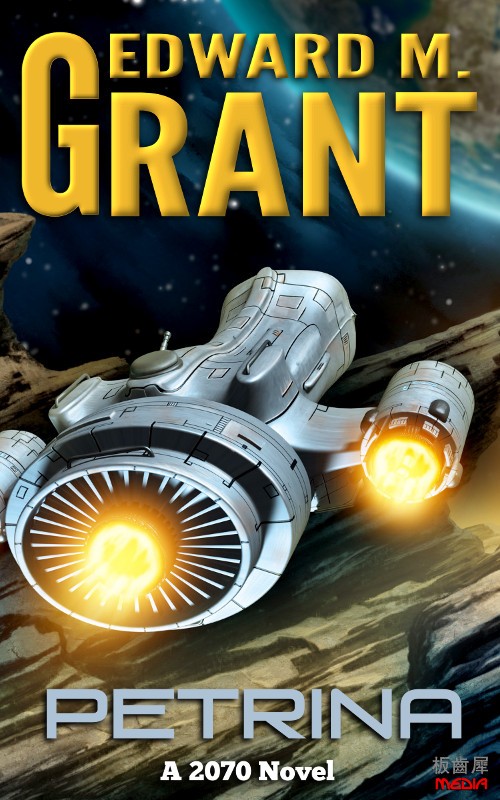
Petrina by Edward M. Grant1.   Tell us a bit about yourself.

I grew up in Britain and studied Physics at Oxford, but emigrated to Canada some years ago. By day, I work in satellite communications, which keeps me very busy, but I’ve been self-publishing my writing for a couple of years now as time permits.

2.   For how long have you been writing and why did you start?

As long as I remember. While clearing out my old bedroom in my parents’ house when I emigrated, I found a book of stories I wrote when I was nine, some of which were quite entertaining despite their many flaws. As a boy, I was more likely to be found in a library than playing football, so progressing to writing stories like the ones I enjoyed reading came
naturally.

I joined a fairly serious hard SF writers’ group in the 90s, and many of the other members went on to at least moderate success, but sending a paper manuscript of a short story across the Atlantic and waiting a couple of months to find out whether the magazine had accepted it (nope) grew old fast. Then I didn’t write many stories for ten years or so, until Amazon and Smashwords made self-publishing easy, and magazines began accepting submissions over the Internet.

In fact, I’ve now self-published revised versions of about half the stories I wrote for that group.

Fade to Grey by Edward M. Grant3.   Tell us a bit about your books.

I primarily write science fiction, though I dabble in horror. I’ve mostly been writing shorter stories (4-15,000 words), but, the more I write, the longer the stories seem to become.

Probably my favourite so far is ‘Fade To Grey’, a 15,000 word novelette. For years, I’ve been wondering why we can’t see any aliens in the galaxy, and, in this story, it’s because alien luddites destroyed all life on their planet. Their ancient planetary defence system then destroys a passing human ship, and a maintenance bot, the ship’s synthetic intelligence computer, and the last surviving passenger try to bring the planet back to life.

One of the Amazon reviews suggested I should rewrite it as a novel. I’ll have to think about that, as I’m sure there’s enough left untold in the story to make it work.

Spaceweasels by Edward M. Grant4.   You write two series, the Dirk Beretta series and the Area 52 series. So who is Dirk Beretta and what is Area 52?

Dirk Beretta was the poster boy for the Space Marines, but quit after the battle of Din Bin Foo, where many of his friends were killed by Space Weasels, who then cooked and ate them with a nice Merlot. In the current series, he’s in a love/hate relationship with the rich girlfriend he rescued from a fate worse than marinating in the Space Weasels’ kitchens, and keeps running into trouble while he looks for another job that suits his destructive skills.

It’s either a parody of or homage to the kind of pulpy science fiction I used to read as a kid, and I’m still not quite sure which. I invented him for a writing example on a web forum and never intended to do anything more, but he wanted me to write a complete story about him. Then more ideas kept coming, so I’ve released three stories and I’ve written most of the fourth, which has time-travelled into ancient Egyptian steam-punk. It’s currently a novella, but may end up as a novel.

In Area 52, a young man who reports to the British Army for his National Service in the 1950s finds himself working as a guard for a base outside a tiny Yorkshire village. Except, unknown to him, hidden beneath the Nissen huts is a cut-price version of America’s semi-mythical Area 51, where the British government keeps all the strange creatures and objects they’ve found around the Empire over the last few centuries.

Having finished the second story on something of a cliff-hanger, I was going to write the third, but decided I should really combine them into a novel. Hopefully I’ll finish that this year, and release it to close that initial story arc.

There are also my 2070 stories, which are more of a shared world than a series. They’re more serious, set in the next few centuries (hence the name), and attempt to make the science and technology as realistic as possible. The human race is expanding across the solar system, Earth is a wasteland after WWIII, the Battle of Armageddon may or may not have happened, there’s little government left, and most societies fear outsiders because one person with a grudge can destroy an entire town or space habitat.

5.   Most of your published works are short fiction. Now as a short fiction writer myself, I believe that the e-books are ideal for stand-alone short stories which would never be viable in print form. But at least in my experience, short stories also sell much worse than novels. So what do you think the future holds for short fiction in e-book form?

Oddly enough, I seem to be one of the few people who’ve found their short stories sell better than novels, though I suspect that’s largely due to low sales of my one published novel.

One of the best things about self-publishing is that stories can be the length they need to be, without having to pad or cut to keep a publisher happy. I grew up reading many 40-60,000 word novels, but they’ve almost disappeared from book store shelves because publishers think all readers want longer ones. With the fast pace of modern life, I’d often rather buy a shorter story I can finish in the time I have available, than a novel I’d have to read over several days or weeks. So I think short fiction has a much brighter future now than it did in trade publishing.

6.   Worldbuilding is crucial for science fiction. So how did you approach the worldbuilding for your books?

For different projects, I’ve tried the ‘plan everything in advance’ method, the ‘make it up as I go along’ method, and a number of stages in between. Planning allows you to make the world consistent, but runs the risk that you spend all the time creating the world, and not enough thinking about the stories to tell in it (or writing them). Making it up is faster, but risks building a world that makes no sense.

I made up the Dirk Beretta world as I went along, but the more I write, the more throwaway background details I can expand on in future stories. Because it’s pure space opera, I can get away with a lot.

Some of Area 52 was inspired by war stories I heard as a kid from men who had been in the forces in WWII, or during the National Service era when almost everyone had to serve for two years. Most of them either seemed to have been fighting for their lives, or, like Ron at the beginning of the story, bored to death with little of any value to do. I also read a lot of wacky UFO and conspiracy books as a kid, and thought how much more fun the world would be if the Bermuda Triangle really was a vortex to another universe, Area 51 had aliens in the freezer, and the Moon was hollow and full of UFOs. So it was more a matter of deciding what wouldn’t go in than what would, and doing my best to research the military of the time to make it as accurate as I can; I still need to work more on that.

The 2070 stories are approaching hard SF, so that’s more complex and requires more research; the basic premise came from a role-playing game I developed at school, and, while that’s massively mutated over the years, I now have a couple of megabytes of notes about the history, the people and the places. I spent much of the time working through the consequences of some of the changes that seem likely to occur in the next few decades, such as dramatic genetic modification and life extension, 3D printing eliminating many jobs, and the economics of a space-faring culture with technology only a few decades ahead of us. I find a lot of SF worlds make no sense if you think about the economics for long, and I’m trying to avoid that problem.

7.   Unlike many science fiction writers (interviewer raises hand), you studied physics and are actually a scientist. How does your physics background influence your SF?

It’s very useful for the 2070 stories, because they are harder SF. When, say, I need to work out how large the Big Momma space freighter has to be to carry enough fuel to travel between two asteroids in two weeks, or how fast it would accelerate, I can sit down and go through the numbers. It’s less useful for the space opera stories, because I keep thinking
that the things I’m writing could never actually happen!

8.   Have you ever been traditionally published or did you ever pursue traditional publishing? And if so, what were your experiences?

I wrote some non-fiction articles for a science and technology magazine in the 90s, but that’s the only time I’ve seen my name on a book store shelf. I still submit some of my stories to magazines like Asimov’s and Analog, but I’ve yet to make a sale. ‘Robo-Zombie’ made the finalists for a print anthology recently, but not the final cut, and I’m sending that story out to some magazines before self-publishing it.

I think it makes sense for shorts, where turnaround time is fast, pay is good, and rights typically revert in a year or so, but I don’t intend to submit any novels. I would if more publishers were willing to do print-only deals, but when they’ll take a year or two to get a novel into print, and expect a non-compete clause preventing me from writing anything similar, I’d rather just publish it myself.

9.   You’re not just a writer, but you’ve also worked on several indie films. Did your filmmaking experience influence your writing in any way?

I learned a lot about telling a story from editing indie movies. You have far less control as a movie editor with a bunch of tapes on your desk than as a fiction writer, but pacing and smooth editing is even more important than in books. Hopefully that’s come over into my writing.

I also co-wrote an indie vampire movie that was produced, and wrote about a dozen scripts that weren’t. I’m starting to work on turning those into novels.

Then, of course, there’s ‘Horror Movie’, and ‘Horror Movie 2: The Sequel’, two horror novels I’ve been trying to finish since 2010, based on a somewhat exaggerated version of my experiences working on indie movie sets.

10.   According to your author bio, you’ve lived a really exciting life and travelled all over the world. So how did those experience influence your fiction?

It may contribute to having so many ‘homeless’ characters in my stories, who spend their lives travelling from one place to another; many of my characters live in space, and have nothing resembling a home to go to. I’ve travelled so much that my nightmares tend to consist of being stuck in an airport, or trying to get the rental car returned before I miss my flight. Usually while being hunted by zombies.

It’s also given me a chance to try things and visit places that I can incorporate into stories. ‘Take The Plunge,’ one of my favourite unpublished short stories, is set in New Zealand; I wrote the first draft while I was travelling around the country on a bus, inspired by their massive industry of extreme sports for tourists. Gregory Benford actually critiqued it for me, then I submitted it unsuccessfully to the major magazines, but I want to write a novelization of one of the throwaway ideas in the story before I self-publish it.

The earthquakes and rocket launches have also come in handy, for when I need to describe one.

11.   It’s currently awards nomination time in the science fiction world, so what would be your pick for the best novel of 2013? And are there any other works, writer, artists or editors you believe deserve some Hugo recognition?

I’m probably not a good person to suggest anything, because I was so busy in my day job last year that I read very little SF released in 2013. I need to catch up this year!

12.   Is there anything else you’d like to tell our readers?

I’d like to say thanks to everyone who’s bought one of my books, and hopefully you found them interesting, or at least entertaining. There should be plenty more to come.

Thanks a lot for answering my questions, Edward.

You can visit Edward on the web at www.edwardmgrant.com and buy his books at Amazon, Smashwords, Barnes and Noble, Sony, Diesel and Kobo.

Posted in Books, Writing | Tagged , , , , , , , , | 3 Comments

More Snow in the Forest

We had even more snow last night as well as temperatures of minus 10 degrees Celsius. And guess when the main heater decided to have a hiccup. Luckily, the service technician is coming in tomorrow.

Apart from the cold, the weather was lovely and so we took the chance to go hiking at Westermark Forest near the town of Syke, a place that has been featured before on this blog, most recently here.

Of course, I also took my camera along, so have some photos of snowy winter woods: Continue reading

Posted in General | Tagged , , , , , , , | 4 Comments

Snow 2014 by Day

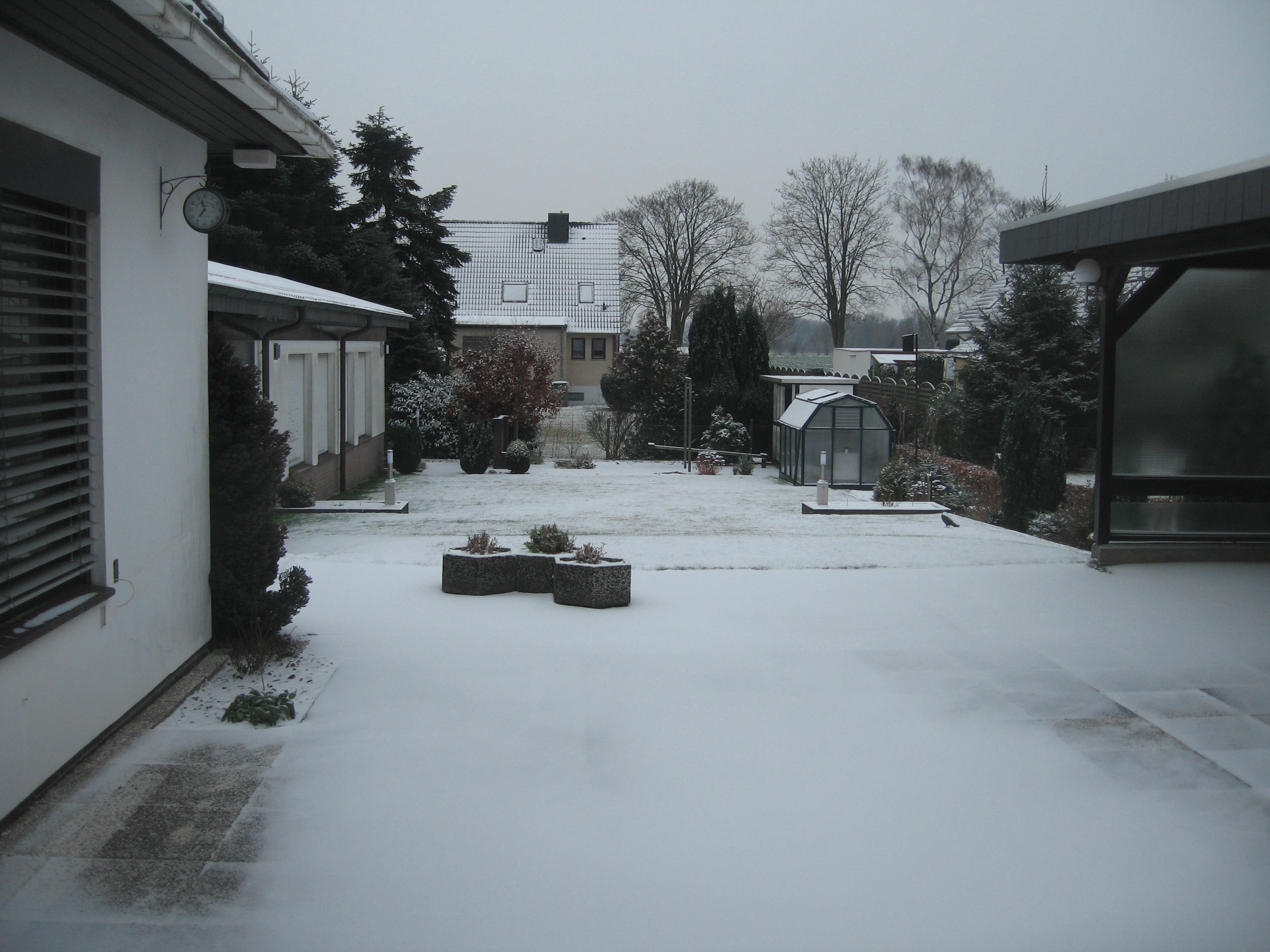
And this is what the snow looks like by daylight, when I went out to shovel the driveway free.

Snowy street

My street, all covered in snow.

Snowy street

The other side of the street

Snowy meadow

The meadow and oaktree next to the house

Snowy garden

The terrace and backgarden

We’re supposed to be getting even more snow on Sunday, since we’re right at the borderline between freezing dry and warm and humid air.

Posted in General, Personal | Tagged , , | 4 Comments

Night Snow 2014

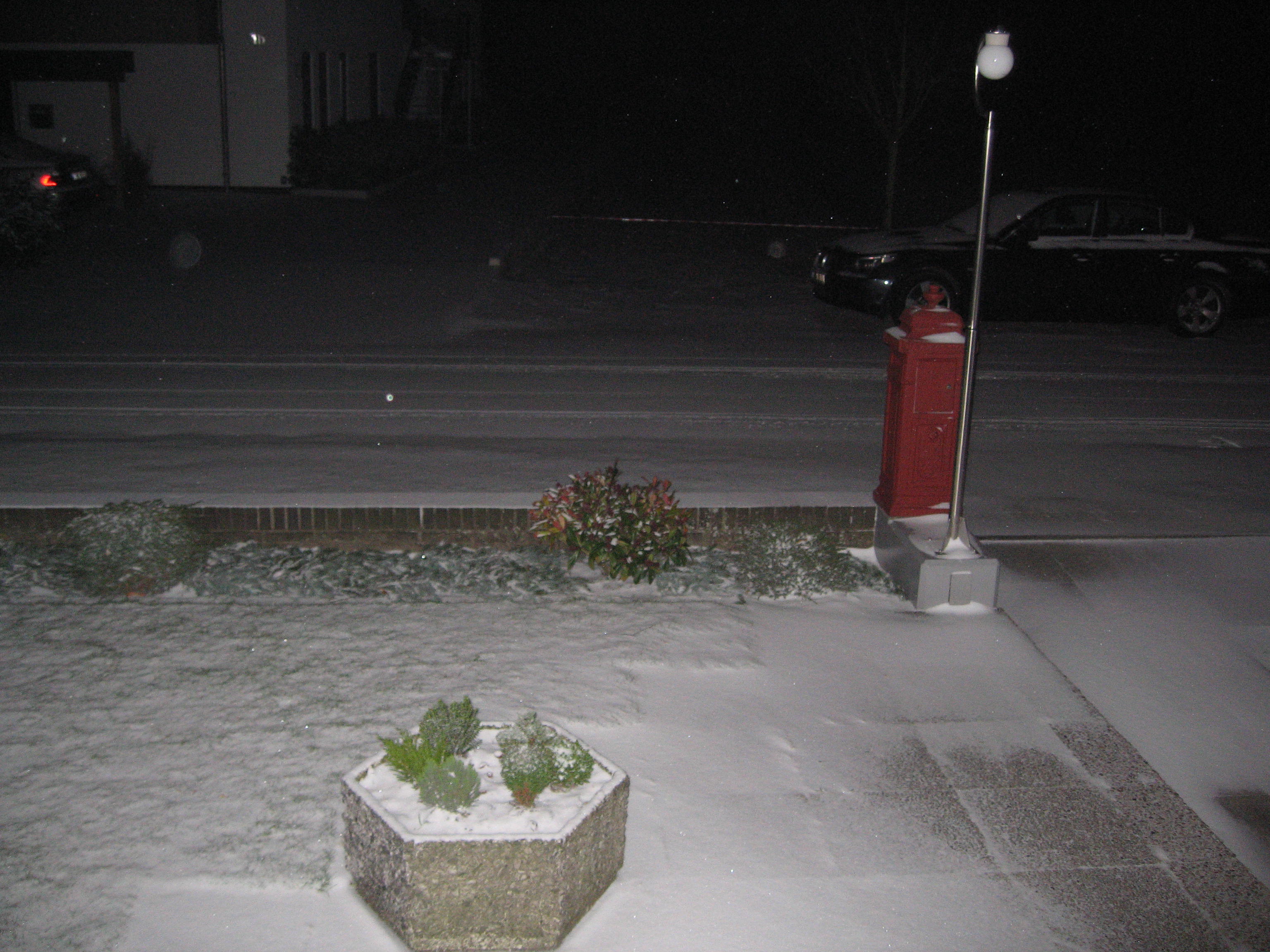
The icy wind blowing in from Eastern Europe has mostly been bringing me headaches (I’m very sensitive to air pressure changes) and shivers, but tonight it also brought us this:

Snow

First snow of the winter, as viewed from my front door.

Posted in Uncategorized | Leave a comment

Science fiction and Romance Linkdump

First of all, science fiction writer, terminal cancer patient and regular reader of this blog Jay Lake has the chance to take part in a clinical trial for a new cancer treatment, which will hopefully help both Jay and other cancer patients. However, there are a lot of associated costs, so friends of Jay have started a fundraiser to help him cover those costs. If you have a bit of money to spare, please consider donating.

I have been interviewed by SF writer Edward Lake (no relation to Jay Lake, as far as I know), author of the Mamluks Saga. We talk about science fiction, the Shattered Empire saga and the connection between Theodor W. Adorno and Lois McMaster Bujold. What, you mean other people don’t quote Adorno when talking about science fiction? Damn.

Over at the Pegasus Pulp blog, I also have some neat promotional images created via a site called Photofunia.

At The World in Satin Bag, Shaun Duke responds to the current debate about “masculine” writing initiated by Paul S. Kemp and points out that no human behaviours are gendered per se. Bonus points for mentioning the fascinating Zula, as played by Grace Jones in the Arnold Schwarzenegger Conan movies from the early 1980s. Indeed, May Day, the character Grace Jones played in A View to Kill, Roger Moore’s last outing as James Bond, is quite similar to Zula and probably the least traditionally feminine of the many Bond women. Nonetheless, May Day is memorable, whereas the “good girl” character played by Tanya Roberts is instantly forgettable.

At The Booksmugglers, Kameron Hurley has a great essay on heteronormativity in science fiction and other stories and how the pervasive heteronormativity of the world she grew up in made it very difficult to imagine anything else.

Foz Meadows, who coincidentally would be another great pick for the best fan writer Hugo, has a fascinating post on gender in digital spaces and the “fake geek girl” meme. Turns out that approximately half of all players of MMORPGs play characters of a different gender and that those who engage in the sort of behaviour in MMORPGs that “fake geek girls” are often accused of, i.e. using their feminine wiles to trick men and scam them out of something, are mostly male players playing female avatars. Meanwhile, many women prefer to play as male characters, because they are tired of the harrassment and sexist crap they get when playing as women.

At Wonk-O-Mance, romance writer Ruthie Knox has a great post about how she was made to remove some of the more realistic and less idealized bits from her novels by editorial fiat. It’s a fascinating post and explains the reasoning behind many of the more infuriating bits of romance novels such as the rigid gender roles and the madonna/whore or virgin/slut complex still peddled by way too many books or the fact that no women ever seems to have any bodyhair in a romance novel or that if condoms are mentioned at all (big if, because there still are way too many supposedly contemporary romances where characters are blissfully having unprotected sex, as if STDs didn’t exist) the hero is always carrying a condom around in his wallet or jeans pocket just in case, whereas the heroine never has one (because that would make her a slut). Apparently, the editors are pushing for many of those things, because they believe that readers want them. Well, this reader would rather see a bit of realism in her romance novels.

If like me, you have enjoyed Jeannie Lin’s historical romances set in Tang Dynasty China, you will be disappointed to hear that Jeannie Lin’s upcoming novel The Jade Temptress will not be published in print, because sales are allegedly too low. Courtney Milan weighs in as well and explains exactly why print sales of historical romances are low across the board and why Jeannie Lin’s publisher Harlequin is unfair in blaming the low sales on the unusual setting.

Whatever you may think of them, the Harlequin/Mills & Boon line of historical romances is actually one of the very few mainstream romance publishers where you occasionally find something other than the same old regency romance, high on dukes and spicy sex and low on historical accuracy. Not that Harlequin/Mills & Boon doesn’t offer regencies and lots of them, but in the past few years I’ve also seen historicals set in the American West, the Roman Empire, Restoration England and – in the case of Jeannie Lin’s novels – Tang Dynasty China among their offerings. And indeed an uncommon setting makes me far more likely to pick up a historical romance, whereas with regencies I mostly stick to trusted authors like Carla Kelly. Doubly so, if it’s a non-European/US set historical romance with characters of colour and a non-whitewashed cover, because we see so very few of those. Jeannie Lin’s novels fit the bill perfectly and they’re excellent besides, which is why it’s so frustrating that they supposedly don’t sell.

Buzzfeed of all places has a great profile of V.C. Andrews, writer of gothic novels which thrilled teenagers of the 1980s, as well as of Andrew Neiderman, the ghost writer who penned the many new V.C. Andrews novels that appeared after her death. Fascinating that the publisher tried to hide the fact that V.C. Andrews had died and even managed to get away with it.

V.C. Andrews was already dead by the time I discovered her books on my cousin’s bookshelf during a visit to the US in 1988. I remember that one of the latter books in the Casteel series carried a note stating that V.C. Andrews had died, but that she had left behind several completed manuscripts, which would now be published. It was sometime during the Dawn series, that I started to wonder just how many unpublished manuscripts V.C. Andrews had managed to write before her death. It was either during the Dawn or the Ruby series that I saw a note in one of the books that the Andrews family had hired another writer to continue the series based on V.C. Andrews’ notes. Partway through the Dawn series I was rapidly losing interest in the Andrews novels anyway, probably because I was outgrowing them. I did read the Ruby series, but only because the Lousiana setting intrigued me. I never read another V.C. Andrews after Tarnished Gold, last in the Ruby series. They’re best read as a teenager.

Posted in Books, Links | Tagged , , , , , , , , , , , , , , , , , , , | 6 Comments

The Latest on the current Genre Debates

Two debates are currently raging across the online SFF sphere, namely the debate about the appropriateness of awards eligibility posts (see my previous posts here and here) as well as the debate about “masculine stories” initiated by Paul S. Kemp (see my post here).

Let’s start with the masculinity debate:

At Dreamwidth, Ithiliana responds to me responding to Paul S. Kemp and points out that gender debates have been with us since the beginnings of SFF fandom and that we’re still not much further than we were approx. ninety years ago. Ithiliana also makes a very important point, namely that all responses to Paul S. Kemp so far are still stuck in the same straight, white, cisgendered, able-bodied paradigm with all the attendant problems.

Kameron Hurley (who is one of my picks for best fan writer BTW) has a great post in which she explains how gender-switching the stereotypical lone wolf hypermasculine action hero shows how problematic such characters really are and that in order to be fully human, people should embrace both their traditionally masculine and feminine traits regardless of gender.

At The Bathroom Monologues, John Wiswell breaks down Paul S. Kemp’s characteristics for masculine characters bit by bit and concludes that nothing is exclusively masculine. Bonus points for pointing out how harmful the stereotypes of men having their emotions in check are to young boys who are emotionally crippled by being told to “man up”.

Teresa Frohock responds to Paul S. Kemp by pointing out that she wrote a character who ticks all the boxes of a manly man according to Kemp. Unfortunately, that character is a woman – oops. Teresa Frohock also points out that rigid gender stereotypes and honour culture hurt both men and women.

At Fangirl, Lex wonders what Paul S. Kemp’s views on gender mean for the future of the Star Wars novels, since Kemp is still under contract for further Star Wars novels.

This post is very illuminating, since it sheds light on where Kemp, a writer whose name was vaguely and whose work not at all familiar to me, is coming from. Apparently, one of his Star Wars novels has no significant female characters at all, while another fridges the lone woman, so that the men can escape (whatever happend to women and children first, as extrolled as a manly virtue by Kemp?). And there is even more problematic stuff.

Fangirl also points out that Paul S. Kemp’s ideal of hyper-masculinity as virtue does not really fit into the Star Wars universe as it’s been portrayed in the films and many of the novels. Because for all its gender issues such as the fact that in all of the Star Wars films men vastly outnumber women or that the original trilogy fails the Bechdel test with flying colours, Star Wars doesn’t really present hyper-masculine and ultra-feminine characters. Luke, Anakin, Obi Wan, Lando, Qui Gon Jin, etc… are not the sort of manly man Kemp prefers. Han Solo comes closest and he is hardly Conan either. As for the women, I have been suspecting for a while that the fact that Leia was so damn awesome was a lucky accident, but none of the few Star Wars women are wilting flowers.

Now I have never read any of Paul S. Kemp’s novels and I gave up on the Star Wars novels years ago. And a large part of the reason why I gave up on the Star Wars novels (and indeed rarely bother with tie-ins in general, even if I love the franchise) was that the Star Wars universe presented in the novels was not the Star Wars universe I had fallen in love with. For starters, most of the writers focussed far too much on the Jedi, while none of them seemed to get that the Jedi aren’t a good thing nor are they really portrayed as one in the films. Indeed, Kemp’s “masculine virtues” as practiced by the Jedi order, e.g. stoicness, having one’s emotions in check, an emphasis on honour, contribute to the downfall of the Old Republic and are directly responsible for the fall of Anakin, since none of the Jedi are willing or able to recognise how the conflict between the (impossible) demands of the Jedi order and Anakin’s feelings for his mother and Padme are tearing him apart, until he goes totally off the rails and becomes Darth Vader. Anakin practically begs for help at several points during Attack of the Clones and Revenge of the Sith and is blown off with Jedi platitudes.

***

Meanwhile, the debate about awards eligibility posts is still raging as well. But first of all, if you are a Hugo nominator and have problems deciding whom to nominate in the art categories, the Hugo Award eligible artists tumblr might help.

Larry Nolen declares genre awards irrelevant in general at the OF Blog, since only very few people bother to nominate and vote and the financial advantage is likely to be small to non-existent, particularly in the short fiction and fan categories. And besides, writers and publishers don’t behave in nearly such an undignified way regarding nominations for the literary awards that really matter according to Larry Nolen, namely the Booker Prize or the National Book Award.

Reading through this post, I couldn’t help but be struck by the privilege on display. Because apparently, Larry Nolen cannot even fathom that for many women or writers of colour or international writers or GLBT writers, being nominated for a genre award, even if it’s in a fan category, is an affirmation that they belong here and are part of the genre, that their books and stories and other contributions to the genre are welcomed and recognised. Never mind that he does underestimate the impact winning a Hugo even in the short fiction categories can have on a writer’s career. Because editors are a lot more willing to look at your work, when you are a Hugo or a Campbell winner. Especially, if you aren’t a straight white cisgendered man.

On a similar note, Martin Lewis at Everything Nice explains in great detail why he considers awards eligibility posts selfish, destructive and counter-productive. The post is a bit of a mess, but apparently awards eligiblity posts disenfranchise readers (How? People posting lists for their eligible works doesn’t force me to vote for them and indeed some of the writers I will be nominating have not made any posts) and don’t help diversity of shortlists, because people should be nominating based on the literary merit of the work in question and not because the author ticks a certain demographic box. I do agree that nominations should be based on literary merit, but if the only works of literary merit are written by straight white men, there is something wrong. Though to be fair to Martin Lewis, his own recommendations for awards worthy works include at least two women as well as an artist of colour.

At Jenny’s Library, Jenny Gadget has a thoughtful response to Martin Lewis and explains how writers talking about their own works on the internet helped her find speculative fiction that she could enjoy, often books by female authors that were not on any of the officially approved “best of the genre” lists, books that were not reviewed and pushed by booksellers and the genre press. She also points out how awards eligibility lists by women and writers of colour and other marginalised writers are less about genuinely expecting to be nominated or believing their own work to be one of the five or six best works of the year and more about pointing out, “Hey, we exist, too, and it would be nice if you could remember and maybe read our work instead of erasing us.” Post found via Radish Reviews, a great site operated by Natalie Luhrs who would coincidentally also be a good pick for best fanwriter.

Jenny’s post really resonated with me, because my own journey as a speculative fiction reader and fan was very similar down to having books I found hugely problematic recommended to me over and over again before stumbling into a vast realm of SFF books by mostly female authors which were neither discussed nor mentioned at all.

Coffeeandink also weighs in and points out that it’s easy for straight white men to say that awards eligibility posts are tacky and that the market a.k.a readers will automatically find and nominate the best and most worthy works, when it’s known that works by men are more reviewed and generally given more attention.

Take this post by Jaime Lee Moyer, who wrote a wonderful Edwardian set fantasy novel called Delia’s Shadow, for example. Jaime Lee Moyer points out how there are many great books written by women, but when you check out “Year’s best” lists, it’s always the same handful of male names. Indeed, I quickly gave up looking at “Year’s best” lists for SFF, unless the list was compiled by a woman or to be found at a notable women-friend site, because how many times do I need to see Doctor Sleep or A Memory of Light or The Ocean at the End of the Lane or NOS4A2 extolled as the best books of the year? I already know about those books. However, it would be nice to find some new to me books on those lists.

While on the subject of A Memory of Light, apparently there are attempts to nominate the entire 15-book Wheel of Time series for a best novel Hugo. Leigh Butler at Tor.com is pleased (understandable, considering who the publisher is), Damien Walter at the Guardian less so. I’m inclined to agree with Damien Walter on this one. Whatever one thinks of the literary merits of the Wheel of Time series (I can’t comment, because I’ve never read the series), if there is one speculative property that does not need the attention boost of a Hugo nomination, it is Wheel of Time. Yet the series is familiar to a whole lot of people and may well end up on the shortlist. Which would put me as a Hugo voter in an unpleasant situation, because I honestly have no idea how to vote on Wheel of Time and there is no way I am reading a whole series of 15 very thick books I have very little interest in.

If there were no recommendation and awards eligibility lists, we would probably see even more examples of people nominating the familiar, simply because it is familiar. And is this really what we want?

Posted in Books, Film, Links | Tagged , , , , , , , , | 32 Comments

First Gender Debate of the Year – Hurray!

It seems we’re having the first gender debate of the year, though this time around we are not talking about women writers for once, but about masculine writing.

The first volley was fired by Paul S. Kemp, author of several Forgotten Realms and Star Wars Extended Universe novels as well as of the original sword & sorcery novels The Hammer and the Blade and A Discourse in Steel, when he wrote a blogpost called “Why I write masculine stories”.

My eyes were already rolling so hard I could barely focus, when I first clicked on the link. But the truth is that the post isn’t quite as bad as the title makes it sound. Okay, so Paul S. Kemp has a rather old-fashioned idea of masculinity and there is a weird derailing into the subject of “Women and children first” in case of shipwrecks (which coincidentally applies only in very specific circumstances*). But if Paul S. Kemp wants to write about manly men, then more power to him. However, that doesn’t mean I have to read it.

Besides, I’d like to point out that some of the characteristics of “manly men” that Kemp lists, such as “drinks a lot”, “womanizing” and “answer violence with violence” don’t necessarily strike me as honourable. Nor do I think that being stoic in the face of pain and having your emotions in check are all that admirable qualities. Never mind that none of the characteristics that Kemp lists are exclusively masculine, not even the womanizing. I mean, there are lesbian womanizers. Not to mention promiscuous heterosexual women.

Liz Bourke and Deb E. Howell both point out that the list of typically masculine behaviours Kemp gives could just as well apply to women.

Sam Sykes also points out that the characteristics Paul S. Kemp lists are not in fact traditionally masculine and that gender roles and characteristics are not nearly as clear-cut in general.

At Lawyers, Guns and Money, B. Spencer points out that ninety-nine percent of men are not bad-asses either and that denigrating women won’t turn them into bad-asses.

Chuck Wendig responds by pointing out the harm that traditional and clear-cut views of gender can do to men desperately trying to suppress their emotions. He also writes about how his non-stereotypically feminine heroine Miriam Black was called “a man with the serial numbers filed off”.

Now I hate, hate, hate the complaints that a tough woman character is “a man with boobs” (transphobia right there) or “a man with the serial numbers filed off”. Because guess what? Women aren’t all the same. And several of those characters later denounced as “men with boobs” were female characters I could identify with and found inspirational growing up. Isaac Asimov’s wonderful Dr. Susan Calvin, a character who is often called “unrealistic” and “really just a man with boobs” was one of my heroines as a teenager, a much needed antidote against my boyfriend obsessed classmates, a character who I identified with and who showed me that it was possible not to care about stuff like men and relationships and still live a great life.

Indeed, I’ve lately noticed a lot of backlash against tough heroines and the media that features them (mostly urban fantasy novels by female authors) from both men and women. Instead, we are supposed to admire more stereotypically feminine heroines, women who – to quote one post by a man I cannot locate now – “wield a diaper bag instead of a sword”. Yeah right, because all women are mothers.

Now I actually believe that we should have a broad variety of characters both male and female. I want to see both heroic and cowardly characters of either gender, stoic and emotional characters of either gender, motherly types and leather-clas arsekickers.

However, a big part of my heart will always belong to the leather-clad amazon, because those were the female characters I’ve always loved. Nor is the leather-clad arsekicker merely a product of a modern urban fantasy genre. I had very vivid fantasies of sexy leather-clad and weapon-wielding women kicking the shit out of monsters and demons, often connected to pop songs of the 1980s. Where did I get those images from? I guess where everybody else got them from, namely from Emma Peel, patron saint of all leather-clad arsekickers. And this is why calling today’s leather-clad urban fantasy heroines “male fantasies” (even though most of them are written by women) hurts me. Because I wanted to be those women long before anybody decided to write books about them.

Finally, here is an older (from May 2013) post from Amanda Hocking’s blog, in which she talks about how she deliberately tried to distance herself from anything “girly” as a teenager, because she had internalized the idea that anything stereotypically feminine was automatically inferior. This post really struck a chord with me, because this rejection of anything feminine is a problem that many geek girls have (I don’t even exclude myself there, though I grew out of it) and it’s incredibly harmful.

People of whatever gender are more than just a collection of characteristics.

*Even aboard the Titanic, plenty of men, both passengers and crewmembers, did survive, while many female and minor steerage passengers drowned. However, many male first and second class passengers really did let women and children have lifeboat seats without complaints probably due to the way they were raised. During the sinking of the Empress of Ireland in 1914, only about five percent of the children onboard and thirteen percent of the women were saved, compared to nearly thirty percent of male passengers and almost sixty percent of crewmembers. Meanwhile, male passengers and crewmembers were far more likely to survive the MS Estonia sinking in 1994, while most women and youngsters died, even if they made it off the ship.

Posted in Books, Links | Tagged , , , , , | 12 Comments

More on the 2014 Hugo nomination dust-up

The debate about awards eligibility lists and whether they are good practice or incredibly tacky (see my link round-up here) continues.

Amal El-Mohtar responds to both John Scalzi and Adam Roberts and points out that the debate about the appropriateness of awards eligibility lists is particularly harmful to women writers, writers of colour, GLBT writers and international writers, i.e. the very same groups that both Scalzi and Roberts claim they want to see more of on the awards shortlists.

I think she makes a very good point here, cause no amount of shaming will keep the Larry Correias of this world from touting their own horn (and his approach seems to work for him and his fanbase, so more power to him), but it may just silence women writers, writers of colour and GLBT writers, many of whom already feel uncomfortable about self-promotion. So the result of shaming writers for self-promotion and awards eligibility lists will not stop the most determined (often straight white men), but may well shut up the very groups everybody claims they want to see nominated.

Besides, it’s a fact that women are judged a lot more harshly for daring to tout their own horn than men. During last year’s Hugo nomination debate (which at least only took place after the nominations were announced), those who were unhappy with the nominated works poured a lot more vitriol on the two female nominees Lois McMaster Bujold and Seanan McGuire a.k.a. than on male nominee John Scalzi, even though those who disliked Bujold’s and McGuire’s works usually disliked Scalzi’s as well. And Lois McMaster Bujold didn’t self-promote at all, whereas Seanan McGuire’s self-promotion was less in the face than John Scalzi’s, let alone Larry Correia’s. On her livejournal, Seanan McGuire discusses the reaction she received for daring to do the same thing lots of male writers do every year, namely list her eligible works, and how women are often judged harsher for daring to speak up.

Indeed, the reaction to last year’s Hugo nominations also makes me highly skeptical regarding those (male) writers and critics who claim to want to see more women and writers of colour on the awards shortlist. Because last year, when there were several women and writers of colour and international writers on the Hugo and Nebula shortlists, there also was a lot of hue and cry of “Of course, we want women and writers of colour and international writers, but not those women and writers of colour and international writers, because they’re too nostalgic and old-fashioned, not modern enough and don’t write about things we consider interesting.”

I don’t doubt that the desire of many in the SFF community to see more women and writers of colour and GLBT writers and international writers recognised is genuine. However, several people want women and writers of colour and GLBT writers and international writers to sound just like straight, white, Anglo-American men.

For example, during one of the many genre dust-ups last year, a male critic said that Lois McMaster Bujold’s Vorkosigan series was old-fashioned popcorn space opera, that could have been written in the 1950s, which made it unworthy of recognition in his eyes. So a space opera series with a disabled protagonist who is nonetheless the smartest person in the room and with lots of strong female characters, a series set in a world that is rapidly transformed by advances in bio-technology, where uterine replicators have freed women from the burden of child-bearing and where sex change procedures and intersex people are normal, and – in the case of last year’s Hugo nominee Captain Vorpatril’s Alliance – a novel featuring an interracial relationship could have been written in the 1950s? Really?

I already linked to this great post by Ann Leckie (whose Ancillary Justice will hopefully gather lots of Hugo and Nebula nominations this year), in which she countered the novelty mania and vehement anti-nostalgia in parts of the SFF community by pointing out that particularly for writers from traditionally marginalised groups, even being allowed to play in the sand-box can be a great victory. Here is a quote:

And the whole “escape the suffocating weight of Tradition!” thing doesn’t look the same from every angle. Consider that for women, POC, and LGBTQ writers the question of forebears and tradition can be a fraught one. “She wrote it, but she’s an anomaly.” Such writers have either been denied their own tradition by this kind of erasure, or have been repeatedly erased from the dominant one. To some of us, belonging to a tradition is a valuable and hard-won thing. Sure, we all probably could profit from looking at our assumptions and cultural baggage, and being aware of that as we write.*** But burning the whole castle down? When we’ve uncovered and rebuilt these parts here, so painstakingly? When we love the castle so much and want so badly to be there, even when others are trying to push us out? “Burn it all down and start over!” doesn’t sound terribly appealing. Quite the opposite.

Gwenda Bond also points out the problems many women have talking about their own work and the nasty reactions they often get when they do, referring to both the current debate about awards eligibility lists and reactions to the recent profile of Jennifer Weiner in the New Yorker and the general reaction to Jennifer Weiner whenever she points out that her books aren’t all that different in theme from Jonathan Franzen’s and that she’d like a bit of recognition, too.

Justine Larbalastier points out that awards eligibility lists are uncomfortable for many and not that important in the YA field anyway, since all the important awards are juried.

Cheryl Morgan and Alan Deniro weigh in on the debate about awards eligibility lists as well.

Posted in Books, Links | Tagged , , , | 2 Comments

Hugo dust-up 2014 – earlier every year

Do you know how Christmas cookies, sweets and decorations seem to pop up earlier in the stores every year? Case in point: The weekly special offers flyer from the discount supermarket chain Aldi included an embroider-it-yourself Easter tablecloth – two weeks after Christmas!

Debates about genre award nominations seem to be like Christmas cookies and embroider-it-yourself Easter tablecloths – they begin earlier every year. Case in point: This year’s Hugo nomination dust-up has begun before the Hugo nominations have actually been announced. Indeed, the nomination period only just opened a few days ago.

So what on Earth can be so controversial before many people have even nominated?

The answer is the awards pimpage posts which are currently popping up everywhere.

Adam Roberts fired the first volley in this debate with this post on his blog.

I actually agree with much of Adam Roberts’ post, though I suspect that Adam Roberts and I would differ on what constitutes a good and awards-worthy work. But like Adam Roberts, I would like to see more works by women, writers of colour and non-anglophone writers on the awards shortlists. And like Adam Roberts, I believe that we should nominate on the strength of the work in question and not nominate a not-so-great work, because we like the author or the series or the TV show.

However, Adam Roberts’ main beef seems to be with the awards nomination pimpage posts that are popping up everywhere these days. Now I am of two minds regarding those awards pimpage posts. On the one hand, I find them a tad embarrassing and indeed the one time I wrote such a post, I felt extremely stupid*. On the other hand, as a Hugo nominator and voter, I like seeing lists of works which are eligible and also – for short fiction – into which category these works fall. Though I don’t think those lists need necessarily come from the author of the work. Lists of “Stuff by other creators I liked this year” are just as helpful and less problematic. Of course, it’s also possible to do a mix of both, pimp both your stuff and deserving works by other people.

Over at Whatever, John Scalzi responds to Adam Roberts and points out that most SFF fans are fans of many writers, that a lot of nominees and even winners are not avid self-promoters and that Adam Roberts is just annoyed that people are not nominating the sort of works he personally prefers.

As for Adam Roberts (whose academic study of The Riddles in The Hobbit may well end up on my nomination list for best related work, because this is exactly the sort of work I want to see in that category), he has a history of complaining about the nominees and winners of the big SFF awards, which suggests that he is annoyed that the tastes of the Hugo nominators and voters are out of line with his own tastes, so John Scalzi might well have a point there.

John Scalzi is also correct that writers with very little in the way of an online presence get nominated for Hugo awards, while avid self-promoters such as Larry Correia (who’s running another promo campaign this year) have nonetheless found themselves without a nomination.

Nonetheless, I believe that John Scalzi does underestimate the impact of self-promotion, if done by someone with a sufficiently big platform. Scalzi’s Whatever is probably one of the biggest author platforms in SFF and if Scalzi honestly believes that the size and reach of Whatever has nothing to do with the fact that Scalzi’s work regularly shows up on awards shortlists and “best SF books of the decade/century/all time” lists, he is kidding himself.

Though it seems John Scalzi is aware of the size and reach of his platform, because he specifically created an awards awareness post for others to mention their own eligible works. Inspired by Scalzi’s post, Charles Stross did the same thing. Personally, I think these “Use my platform to pimp your works” posts are a nice idea. Unlike Adam Roberts, I don’t find them patronizing at all. And as a matter of fact, I did post in the comments of John Scalzi’s thread in a mildly alcohol fueled attack of “Why the hell not?”. I didn’t post in Charles Stross’ thread, because considering my issues with Stross’ works, I doubt our readerships overlap.

Scrivener’s Error also weighs in and generally seems to agree with Adam Roberts. They also point out that eligibility and nomination period are too close together for people to have read many of the eligible works, particularly if they came out late in the year or if they received the work in question as a Christmas gift. If – like me – you don’t do hardcovers, a lot of books are difficult to read within the specified period at all. As a matter of fact, I often only get around to reading a book yars after it was first published. For example, my hands-down favourite read of 2013 – a book I would have nominated for a Hugo in a pinch, if I could have – was originally published in 1991.

Since I knew I would have Hugo nomination and voting privileges this year, I made a point of reading or at least sampling 2013 books closer to publication date. I also kept a list of potential nominees divided among the different categories. My list isn’t final yet (I really need to read more short fiction), though I already know that it will have lots of women and some writers of colour as well. In fact, the one thing I’m really short of in the fiction categories are men. There was one book by a male writer I would have nominated – alas turns out it’s not eligible due to being published on the wrong side of New Year’s Eve.

Will I eventually share my picks with the rest of the world? I’m not sure yet. From what I’ve seen around the web, most people keep their nominations to themselves. Though if there is a movement of “This is what I nominated for the Hugo” posts, I would probably join in.

*Should you want to nominate me, Mercy Mission is eligible in the novella category, The Hybrids in the novelette category, Acacia Crescent and Old Mommark’s Tale in the short story category. And should you enjoy my blog more than my fiction, I’m also eligible for best fan writer.

Posted in Books, Links | Tagged , , , | 6 Comments

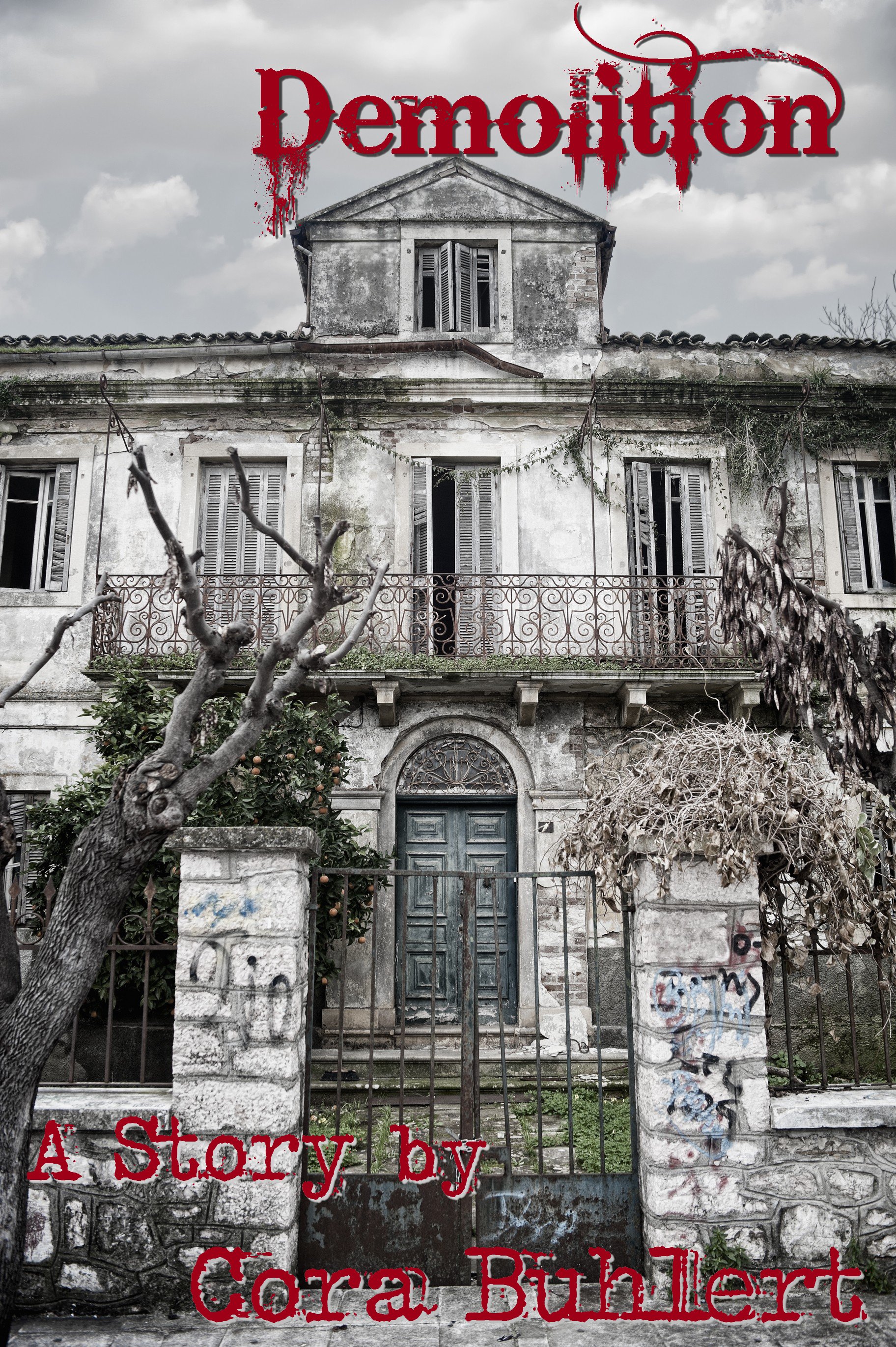
First short story release of the new year: Demolition

As you can see, I haven’t been idle during the quiet period between the years and used the opportunity to write a new story or rather to revise an old short story, edit, format and publish it, because the original version of Demolition was written almost twenty years ago now.

I must say, I was surprised how well the story still held up after all those years. Of course it required extensive rewriting, but not nearly as extensive as e.g. The Hybrids, the first skeleton draft of which was written during the same period.

So what’s Demolition about? It’s a short and bittersweet story about an old house, three children and men in hard-hats.

Demolition The stately mansion stood tall for one hundred years. But after the death of its last owner, the old house has been neglected and forgotten, its garden overgrown by rose bushes.
When three children stumble upon the old house, it gains a new lease on life, doubling for Sleeping Beauty’s castle in the children’s imagination. But unbeknownst to the children, the old house is under threat, for real estate developers have no use for enchanted fairy tale castles…

.

.

For more information, visit the Demolition page.

Buy it for the low price of 0.99 USD, EUR or GBP at Amazon US, Amazon UK, Amazon Germany, Amazon France, Amazon Spain, Amazon Italy, Amazon Canada, Amazon Australia, Amazon Brazil, Amazon Japan, Amazon India, Amazon Mexico, Kobo, Barnes & Noble, Apple iTunes, Casa del Libro, Libiro, Nook UK, DriveThruFiction, OmniLit/AllRomance e-books and XinXii.

Posted in Books | Tagged , , , | 2 Comments