The 2015 Nebula Awards, the Bram Stoker Awards, the Eurovision Song Contest… and a bit about football

So the Eurovision Song Contest was last night. I was watching something else and occasionally switched over, only to decide that I really could not bring myself to care. I finally tuned for the voting only to realise that a) they had changed the voting system and announced first the jury votes in the regular way and then the collated televoting results. Personally, I prefer the old system. Okay, so they apparently wanted to defuse the political nature of the televoting results, but it’s not as if the jury votes aren’t political or as if the whole thing isn’t political in general.

Case in point: Germany finished last for the second time in a row. And unlike last year, where the German song did not even have a whole lot of backing in Germany itself, this year’s entry – “Ghost”, sung by 18-year-old Jamie-Lee – had a lot of popular support. Jamie-Lee was the runaway winner of the German primaries and she’d previously won the German edition of The Voice. I don’t think anybody really expected her to win Eurovision, but everybody expected her to at least place decently.

Okay, so she did have a weird manga-inspired outfit, but there were plenty of equally weird outfits (e.g. the Croatian tree dress, the Polish ringmaster vampire or the Armenian reject from the Black Widow program), so that a girl who looks like a cosplayer at an Anime con doesn’t really stick out all that much. I have heard from some older viewers that they had problems with Jamie-Lee’s outfit (i.e. they didn’t understand it, because they have no idea what mangas or anime are), but these were inevitably the sort of people who also hated the fact that she sang in English like eighty percent of the contestants. And the monolingual defenders of the German language don’t matter and never did.

One potentially problematic aspect is that Jamie-Lee is a white German teenager appropriating Asian culture, but considering we’ve seen all sorts of blatant cultural appropriation at the Eurovision Song Contest before, I doubt that was the deciding factor.

So if there was nothing wrong with the song and the singer, the obvious answer is that bad result for the German entry was due to political reasons. Because apparently, the rest of Europe hates us because of we insist on responsible fiscal policies or because we take our responsibility to help the refugees displaced by other people’s wars seriously, unlike certain other countries, or because they hate Angela Merkel, the best chancellor we’ve had in decades, or because… well, honestly, I no longer care. By this point, I think the German broadcaster ARD should simply get out of both the Song Contest and the European Broadcast Union altogether. Because I don’t see why we should have to pay for the privilege of having 18-year-old girls publicly humiliated. I’m not the only one who thinks so either, here is an article which compiles a bunch of confused and angry social media reactions.

ETA: Composer Ralph Siegel, self-styled Mr. Eurovision, because he wrote more Eurovision entries than anybody else and pretty much dominated the German entries in the 1970s, 1980s and early 1990s, squarely puts the blame on singer Jamie-Lee and on the way the German contestant is selected via a publicly voted primary. Because a “cute little girl from a talent show” couldn’t possibly hack it. I suspect Ralph Siegel would prefer that Germany bow to his superior wisdom and let him write the German entry again. Never mind that in his twenty plus Eurovision attempts, Siegel only ever won once, in 1982, with a sappy song sung by a teen girl. But generally his songs placed badly, because they were hopelessly out of touch, at least by the late 1980s/1990s. So in short, a guy past his prime wants some attention.

Ukraine won by the way with a singer called Jamala performing a song called “1944” about the expulsion of the Crimean Tartars under Joseph Stalin. Okay, so it wasn’t an okay song and clearly heartfelt, especially since singer Jamala drew on her own family history. But don’t believe for a minute that this wasn’t a political vote, especially since Australia was leading after the jury voting (and IMO had the better song). And of course, Russia is thoroughly pissed off (even though their televoters gave Jamala ten points), especially since their contestant only landed in third place, and are threatening to boycott the contest next year. Meanwhile, in the rest of Europe the reaction is, “Yes, please, do, cause we’re kind of tired of your blatant campaigning for a win.”

In better news, Werder Bremen will remain in the first German league after a last minute win against Frankfurt.

Also in better news, the winners of the 2015 Nebula Awards were announced tonight and they look very good.

“Hungry Daughters of Starving Mothers” by Alyssa Wong, winner in the short story category, and Binti by Nnedi Okorafor, winner in the novella category, are both very fine stories. Binti was on my Hugo nomination list, while “Hungry Daughters of Starving Mothers” made my personal longlist. I haven’t read “Our Lady of the Open Road” by Sarah Pinsker, the winner in the novelette category, because it’s not available online as far as I know, but I know that the story has gotten a lot of positive reactions. Correction: I just checked and “Our Lady of the Open Road” is available online here, if you want to read it.

ETA: Here is Alyssa Wong’s acceptance speech, courtesy of her blog.

I haven’t read Updraft by Fran Wilde, winner in YA category, yet, though I’ve heard a lot of good things. As for Uprooted by Naomi Novik, winner in the best novel category, so far I haven’t been overly interested in the book for the reasons outlined here (short version, contains too many “Not my things”), but it’s a novel that has gotten a lot of buzz and is clearly a worthy winner, even though Brandon Kempner of Chaos Horizons and Ceridwen Christensen of the Barnes & Noble blog both predicted that The Fifth Season would win. And who knows, once the Hugo voters’ packet goes online, I may well realise that Uprooted is my thing after all.

That leaves Mad Max: Fury Road in the best damatic presentation category, another worthy winner, which – let’s not forget – was also the big winner at the Oscars this year. Rounding out the 2015 Nebulas, C.J. Cherryh was deserved named SFWA Grandmaster and the two special awards went to the late Sir Terry Pratchett and Lawrence M. Schoen respectively.

So all in all, some very fine winners at the 2015 Nebula Awards, even if not every winner would have been my first choice in the respective category. There is a discussion of the winners in the comments at File 770 BTW. Comparing the Nebula winners with the 2016 Hugo shortlist, you’ll notice that the winners are fairly well represented with Uprooted, Binti and Mad Max: Fury Road all nominated in the respective categories and Alyssa Wong, author of “Hungry Daughters of Starving Mothers”, nominated for the John W. Campbell Award. The only Nebula winners conspicuously absent from the Hugo shortlist are Updraft, which isn’t that much of a surprise, since the Hugos don’t have a YA category and YA usually has a hard time getting nominated in the regular categories, and “Our Lady of the Open Road”, which may well have been a casualty of canine interference.

Both Joel Cunningham at the Barnes & Noble blog and Andrew Liptak at io9 also point out that the winners of the 2015 Nebula Awards are all women with the sole exception of the dramatic presentation category, in which a movie which featured a plethora of well-drawn and interesting female characters won, even though the nominal protagonist was a man as were the director and writer.

What is more, two of the 2015 Nebula Award winners are women of colour and two of the winning stories feature queer characters and were written by queer authors, at least according to Andrew Liptak. Add in that the Grandmaster Award also went to a woman, the great C.J. Cherryh, and the 2015 Nebulas are a triumph of diversity and a reflection of the changing demographics of the SFF genre. And given the controversy that has been engulfing the Hugo Awards these past three years, this is a very encouraging sign. Yes, the Hugo Awards may be besieged by reactionaries, but they don’t speak for the rest of us.

Talking of which, I was curious and checked out some puppy-affiliated blogs for reactions, since I suspect that whining canines are not exactly happy with this year’s Nebula Award decisions. Most are conspicuously quiet, though Brad Torgersen, spokesperson of last year’s Sad Puppy campaign, laments that Mad Max: Fury Road won over his personal favourite The Martian, which he views as yet another sign of the decline of the genre.

Now I get that Brad Torgersen really, really loved The Martian, ironically for the same reasons that I don’t care for it (the movie was okay, largely due to the excellent actors, but the book was just dull), namely that it feels like a throwback to the 1950s/early 1960s. Now Mad Max: Fury Road is a throwback itself, namely a continuation of a franchise from the 1980s and a return to the trendy punk post-apocalyptica of the time. But Mad Max: Fury Road – which I initially filed under “sequel no one asked for” when it was announced – managed to update its narrative for the 2010s, while The Martian still feels very much like a 1950s/early 1960s work, even though the cast of both book and movie is a lot more diverse than it would have been back then and the special effects are a lot better as well.

As for why Mad Max: Fury Road winning over The Martian is a sign of the decline of the genre, Torgersen points out that The Martian features a positive future you would want to live in (unless you’re Mark Watney stuck on Mars, I suppose), while no one in his right mind would want to live in the world of any of the Mad Max movies. He’s actually right on that point, but it’s still the Ray Bradbury Award for best dramatic presentation and not the award for the best future world to live in. He also points out that The Martian made a lot more money at the box office than Mad Max: Fury Road, which in the “earnings are everything” world of the Sad Puppies must mean that it’s the better movie. But if the Nebula were awarded according to earnings than The Force Awakens should have won, because it outgrossed everything else on the shortlist. Never mind that Mad Max: Fury Road had the misfortune of being released sandwiched between two huge blockbusters in a crowded summer, while The Martian was released in a much less crowded environment. Plus, The Martian was very much marketed at a general audience, whereas Mad Max: Fury Road was clearly aimed at genre viewers. Coincidentally, my personal favourite in the best dramatic presentation category would have been a tie between The Force Awakens and Jessica Jones (haven’t seen Ex Machina yet and don’t care for Pixar’s stuff at all), though I’m perfectly happy with Mad Max: Fury Road as well.

As for the swipes against humanities graduates ruining the genre, because they don’t understand science, can we please just stop it? An author’s educational and professional background does not say anything about the quality of their work. There is an odd insistence in parts of the SFF sphere that “real scientists”, “real engineers” and “real soldiers” (if we’re talking about military SF) make better SFF writers because of their background. This is of course bullshit, because a) there is such a thing as research (just ask Andy Weir), b) having a humanities degree (or indeed no university degree at all) does not necessarily mean that you don’t understand science and c) it’s fiction, i.e. it’s all made up anyway. We don’t insist that mystery writers should be police officers or criminals, that historical fiction writers should be historians or that romance writers should be relationship counsellors or at least happily married. Fantasy writers usually aren’t knights, wizards or demon slayers in real life either. So why the hell is an author’s day job so important in science fiction?

While on the subjects of awards, the HWA also announced the winners of the 2015 Bram Stoker Awards yesterday. Now I’m not all that familiar with the winners, since horror isn’t really my genre, though Andrew Liptak gave the winner in the best novel category, A Head Full of Ghosts by Paul Tremblay, an excellent review at io9. I’ve also heard praise for Mr. Suicide by Nicole Cushing, winner in the first novel category, and the movie It Follows, winner in the screenply category. What is more, we featured Mercedes M. Yardley, winner in the long fiction category, over at the Speculative Fiction Showcase (though with a different title), where we also featured several works published by Crystal Lake Publishing, who published the winner in the poetry category.

Finally, the winners of the Bram Stoker Awards also have a good gender balance, particularly considering that horror is even more male dominated than science fiction.

So in short, yesterday saw some excellent works win awards and Werder Bremen stay in the Bundesliga. Pity about Eurovision.

Comments are closed, because SFF awards discussion generally brings out the trolls and Eurovision fans can be nasty as well. Ditto for disgruntled football fans.

Posted in Books, Film, TV | Tagged , , , , , , , , , , , , , , , , , | Leave a comment

New Story Available: The Death of the American Dream

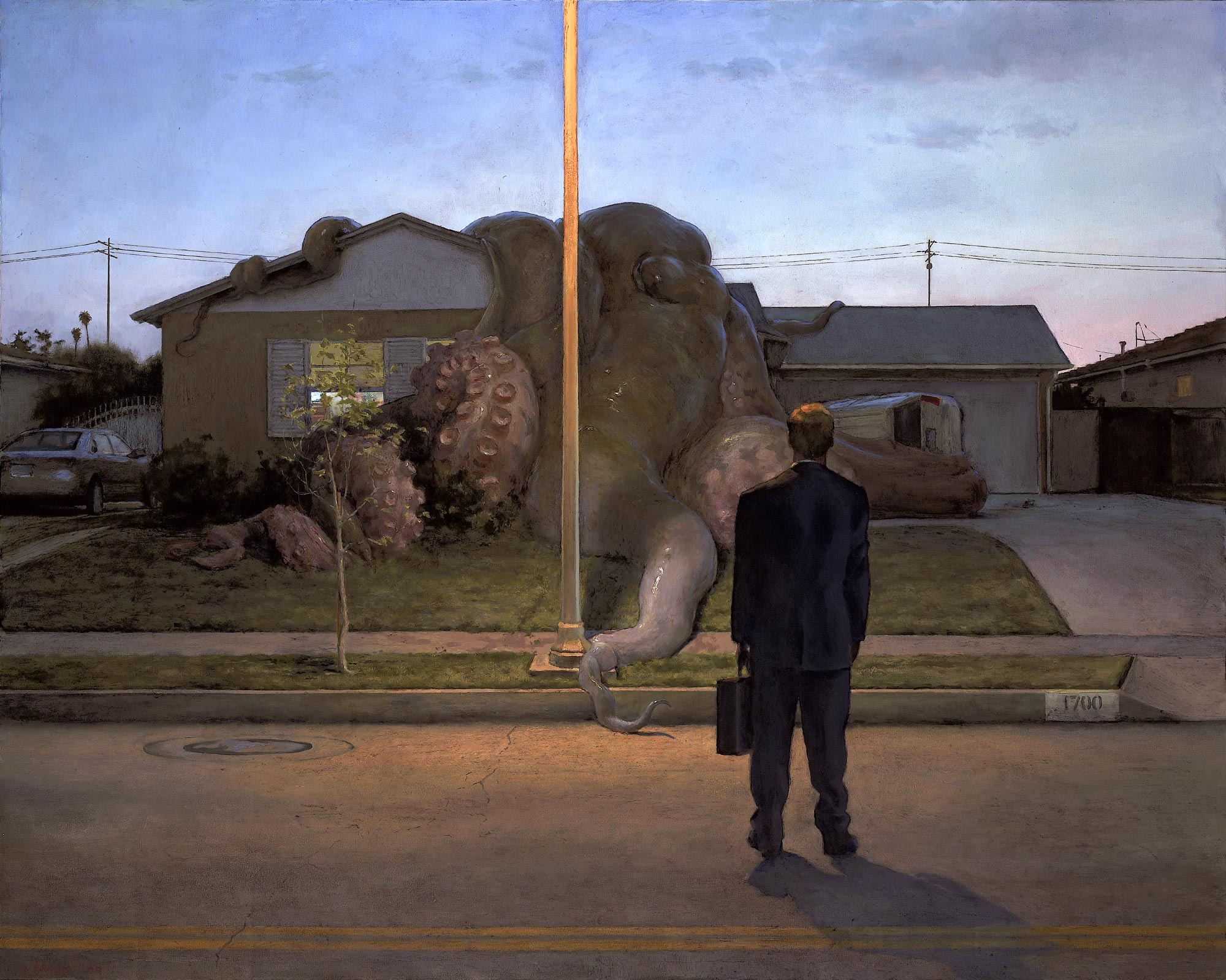
I have a new release to announce. It’s called The Death of the American Dream and it’s basically Mad Men meets the apocalypse, complete with giant mutant crabs and other monsters.

This is another story that was inspired by a piece of SFF artwork, in this case a painting called “Fatigue” by artist John Brosio. Brosio also has another painting called “Fatigue”, which came up during an image search and promptly influenced the story as well. In general, I like using images – often SFF art – for inspiration and have a whole folder full of intriguing images for that purpose. Occasionally, when I’m blocked and looking for inspiration I go through that folder, pick an image and start writing about it.

And since I was watching the final season of Mad Men, while I was writing The Death of the American Dream, the show combined itself with the nascent story.

You can find the result below. I hope you like it.

The Death of the American Dream
The Death of the American Dream by Cora BuhlertThey came out of nowhere to attack America’s towns and suburbs: Giant mutant crabs and other creatures, grown to enormous size due to nuclear radiation and bent on destroying the American way of life. But while many fall to the monster attacks, an advertising executive finds the unexpected strength to survive and fight back for the sake of his family…

This is a short story of 5300 words or approximately 20 print pages.


More information.
Length: 5300 words
List price: 0.99 USD, EUR or GBP
Buy it at Amazon US, Amazon UK, Amazon Germany, Amazon France, Amazon Netherlands, Amazon Spain, Amazon Italy, Amazon Canada, Amazon Australia, Amazon Brazil, Amazon Japan, Amazon India, Amazon Mexico, Kobo, Barnes & Noble, Apple iTunes, Scribd, Smashwords, Inktera, txtr, Thalia, Weltbild, Hugendubel, Buecher.de, DriveThruFiction, OmniLit/AllRomance e-books, Casa del Libro, Flipkart, e-Sentral, 24symbols and XinXii.

Posted in Books | Tagged , , , , , , , , , , , , | Leave a comment

And even more Hugo links – and the Locus Awards

The 2016 Hugo debate is still going on, which isn’t surprising, since last year it lasted all the way until the winners were announced in August, whereupon it morphed into a debate of the winning works. What is more, we’re having a debate about the Locus Awards as well.

For my own contributions so far, see this post, this post and this post. For even more Hugo links, including links to Puppy spaces, also check out File 770.

For starters, the 2016 Hugo Ballot has been updated with the replacements for the two dropped out finalists, the short story “The Commuter” by Thomas A. Mays and the fanzine Black Gate. The new Hugo finalists are “Cat Pictures, Please” by Naomi Kritzer in the short story category and Lady Business in the fanzine category. Both are excellent choices IMO and were also on my own nomination ballot (so was Black Gate which dropped out BTW). Continue reading

Posted in Books | Tagged , , , , , , , , | Leave a comment

Photos: The Ems Barrier at Gandersum

Here is the second part of my photo post about my Ascension Day outing to East Frisia. Yesterday, we took a look at the town of Leer, today we visit the Ems Barrier at Gandersum a few kilometers downstream.

Gandersum is a tiny village on the River Ems, just a handful of houses and a medieval church, approximately 90 inhabitants all in all. And it’s very likely that no one would ever have heard of Gandersum, if it hadn’t been chosen as the location for the Ems Barrier in the 1990s.

As the name suggests, the Ems Barrier can shut off the river Ems, if necessary, keeping water in or out. The Ems Barrier was built between 1998 and 2002 and has a dual purpose.

The first purpose is flood protection, similar to the Thames Barrier in London (on which the design of the Ems Barrier is based) and the Deltawerken in the Netherlands. The idea is quite simple. In case of a massive storm surge in the North Sea, when winter storms press tidal waters into the river mouths, causing flooding and – in particularly bad cases like the 1953 and 1962 floods – heavy casualties inland, the river barriers are closed and keep the spring tides from flooding cities and farmland further upstream.

However, the Ems Barrier has another, more controversial purpose. For it cannot just be used to keep storm surges out, but also to keep the river waters in, causing the level of the Ems to rise. Now why would anybody want to raise the level of the river Ems? The answer lies 36 kilometers inland in the town of Papenburg, which also happens to be the location of the shipyard Meyer Werft, which specialises in building cruise liners.

Now anybody who has ever seen a modern cruise liner knows that those vessels are massive. And the river Ems is fairly shallow. And so, as the cruise liners built by the Meyer Werft became ever bigger, transferring those vessels the 36 kilometers down the river Ems to the North Sea became something of a problem. Because the last thing you want is a brand-new cruise liner getting stuck on the way to the sea. And this is where the Ems Barrier comes in. Because closing the Ems barrier raises the level of the river high enough to allow a cruise liner to pass through at high tide. As you can imagine, artificially damming up a river just to let giant cruise liner pass isn’t exactly good for the environment (and it is notable how muddy the Ems is compared to e.g. the Weser or the Elbe), which is why the Ems Barrier was controversial from the start. However, the Meyer Werft is the biggest employer and tax payer in the region, so their needs won out over environmental concerns.

A cruise liner transfer down the Ems is a sight to see BTW, because the giant vessels tower over everything in the area. It is also an enormous logistic undertaking, because first you have to wait for a suitably high tide, then Ems Barrier has to be closed to raise the level of the river even further and even then the vessel often only has centimetres to spare before running aground.

Here are some photos (not mine) of what a cruise liner transfer looks like: Here you can see a comparatively tiny tugboat towing a cruise liner along the river Ems, while people look on (cruise liner transfers are big tourist attractions), here we have the Star Virgo literally towering above farm houses, here we have the Aida Diva passing by overhead, while cars and trucks on the highway 31 drive into the Ems tunnel at Leer and here we have an aerial shot of a cruise liner passing through the Ems Barrier.

And now let’s see what it looks like from the ground and without a cruise liner: Continue reading

Posted in General | Tagged , , , , , , , , | 4 Comments

Photos: Leer in East Frisia

Yesterday was Ascension Day a.k.a. Father’s Day, which is a public holiday in Germany.

Ascension Day is traditionally a day for outings, including the infamous Father’s Day tours where groups of young men, most of whom are not fathers, set out with handcarts and/or bicycles to wander around the countryside and get very very drunk. I talk a bit more about this tradition in this 2013 post.

In addition to being a public holiday, yesterday also had some very sunny and pleasant weather and as a result, the streets were full of people of all ages and genders enjoying themselves on bicycles, motorbikes or on foot.

Because of the nice weather and the fact that it was a public holiday, we also decided to go on a trip to East Frisia. Our first destination was the city of Leer, a lovely little town located on a sidearm of the river Ems. Afterwards, we followed the river Ems and visited the Ems flood barrier at Gandersum.

Of course, I also took photos. We’ll start with the town of Leer and I’ll post the photos of the Ems flood barrier tomorrow. Continue reading

Posted in General | Tagged , , , , , , , , , , | Leave a comment

Yet more Hugo Debate 2016 – and a bit about the Clarke Awards

The 2016 Hugo debate is still going on, which isn’t surprising, since last year it lasted all the way until the winners were announced in August, whereupon it morphed into a debate of the winning works.

For my own contributions so far, see this post and this post.

Meanwhile, here are some more updates and reactions from around the web. Mike Glyer at File 770 has even more Hugo links, including several from puppy affiliated blogs and sites, which I won’t link to with “Do Not Link” down. Continue reading

Posted in Books | Tagged , , , , , , , , , , | 1 Comment

Indie Speculative Fiction of the Month for April 2016

Indie Speculative Fiction of the MonthIt’s that time of the month again, time for “Indie Speculative Fiction of the Month”.

So what is “Indie Speculative Fiction of the Month”? It’s a round-up of speculative fiction by indie authors newly published this month, though some March books I missed the last time around snuck in as well. The books are arranged in alphabetical order by author. So far, most links only go to Amazon.com, though I may add other retailers for future editions.

Once again, we have new releases covering the whole broad spectrum of speculative fiction. We have retro science fiction, space opera, paranormal romance, epic fantasy, urban fantasy, horror, post-apocalyptic fiction, weird western, vampires, werewolves, wizards, demons, witches, time travel, zombies, alien invasions, flying saucers, god killers, superheroes, exiled princes, Wild West mages and much more.

Don’t forget that Indie Speculative Fiction of the Month is also crossposted to the Speculative Fiction Showcase, a group blog run by Jessica Rydill and myself, which features new release spotlights, guest posts, interviews and link round-ups regarding all things speculative fiction several times per week.

As always, I know the authors at least vaguely, but I haven’t read all of the books, so Caveat emptor.

And now on to the books without further ado:

Realm of Mirrors by Sonya BatemanRealm of Mirrors by Sonya Bateman:
“The dead must answer to you, and no one else. Remember that, Gideon.”

He may be the DeathSpeaker, but Gideon Black has no idea what he’s doing. The job didn’t come with an instruction manual. That’s why his half-brother Taeral plans to bring him across the Veil to the Fae realm of Arcadia, to consult with an ancient Fae who knew the previous DeathSpeaker personally.

Those plans are violently interrupted when the royal Unseelie Guard invade their home, dragging Taeral and their father, Daoin, to Arcadia ahead of schedule. And Gideon will do anything to get them back.

But the concrete jungles of Manhattan are nothing compared to the threats waiting in Arcadia. Facing deadly wildlife, even deadlier enemies, and magic he never imagined possible, Gideon must learn quickly to wield his power as both a Fae and the DeathSpeaker — before the vengeful Unseelie Queen can exact a cost higher than death from his family, and everyone he holds dear.

Double Feature by Cora BuhlertDouble Feature by Cora Buhlert:

1956: Judy is the designated town slut of Stillwater Creek. After getting thrown out of a sock hop at the local high school, Judy winds up going to the movies with bad boy Hank instead, where a science fiction double feature is playing. However, before the first reel of the second movie is through, the night is interrupted by a very real invasion of flying saucers from outer space…

This is a novelette of 8500 words or approx. 30 print pages.


The Young Vampire's Survival Guide by Lucy EldritchThe Young Vampire’s Survival Guide by Lucy Eldritch:

It started with his death.

Student Robert James never asked to be bitten. He didn’t want to be the leader of a new breed of vampires. Thing is: he wasn’t offered a choice.

Survival and destiny combine when Robert finds himself under threat from a mysterious cult known as the Dawn Warriors. Within months, many of those he cares about are dead and he vows to fight back without mercy. Robert unearths terrible truths and confronts eternal evils that threaten to break him. He may not succeed in defeating the Dawn Warriors, but he has no choice but to try.

‘The Young Vampire’s Survival Guide’ is the first book in the ‘New Breed Vampires’ book series. Described as “Anne Rice meets Kelley Armstrong”, it is set in London and Manchester and written in British English. It’s gruesome, compelling, horrifying and uplifting vampire fiction.

In the Dark by Kera EmoryIn the Dark: A Novella of the Undying by Kera Emory:

Chase Covington and Anne Sheffield are on the run, but Chase isn’t sure where they’re going.

She’s a centuries-old vampire, and he’s been a werewolf hybrid for about three weeks. They’ve left a trail of bodies and a shattered supernatural treaty in their wake, and they’re having major communication problems.

And when the full moon rises, things are going to get a whole lot worse.

From the author of YOUR NAME, IN FIRE, this stand-alone novella pays homage to classic Urban Fantasy traditions.

Assassin's Charge by Claire FrankAssassin’s Charge by Claire Frank:

A cold-hearted assassin. A boy with a price on his head.

Rhisia Sen is one of the Empire’s highest paid assassins. Living a life of luxury, she chooses her contracts carefully, working to amass enough wealth so she can leave her bloody trade. She is offered a new contract on the outskirts of civilization, and almost refuses—until she sees the purse. It could be the last job she ever has to take.

But when she reaches the destination, she discovers her mark is a child.

The contract, and her reputation, demand she kill the boy—if she can banish his innocent face from her mind. But another assassin has been sent to kill her, and a notorious bounty hunter is on her trail. She doesn’t know why the boy is a target, or why her former employer wants her dead. Saving the child could be her only chance at survival.

Assassin’s Charge is a stand-alone novel, set in the same world as the Echoes of Imara series. It can be enjoyed with or without having read the other books in the series.

For the Wildings by Kyra HallandFor the Wildings by Kyra Halland:

In the conclusion of Daughter of the Wildings, Silas and Lainie recover from their ordeal in Granadaia, while knowing that an evil is at work that threatens the freedom of the Wildings and that this peaceful interval is no more than a brief illusion. Then the unthinkable happens, the battle begins, and Lainie, the daughter of the Wildings, and Silas, the man she has claimed for herself and for the land, have to draw on all their power and strength – and on the life of the land itself – to protect their beloved Wildings and the people who make it their home.


Coronation by Kevin HardmanCoronation by Kevin Hardman:

As the grandson of the alien princess Indigo, Jim (aka Kid Sensation) has always known that, technically, he’s royalty. That said, he’d be the first to admit that he’s never lived any kind of regal lifestyle – no titles, no castles, no crown jewels… However, the arrival of a courier from his grandmother’s homeworld changes all of that in an instant.

By royal edict, Jim is summoned “home” to the distant planet Caeles in order to claim an alien inheritance. Unfortunately, this is no warm and cuddly family reunion. Caeles is a hotbed of political intrigue, and Jim’s arrival has widespread ramifications. Not only are several factions attempting to utilize his very existence as leverage to advance their own agendas, but Jim himself is required to submit to an archaic trial known as a prexetus. Moreover, while some are content with simply trying to use him, it quickly becomes apparent that at least one shadowy individual just wants Jim out of the way – quickly, completely, and permanently.

Light years from Earth, with little family and fewer friends, Jim faces the daunting task of finding an enemy whose ultimate purpose is unknown and whose methods are extreme. Complicating matters even further is the fact that Jim’s much-heralded super powers are glitching, making him incredibly vulnerable for perhaps the first time in his life.

Let Go by Michael Patrick HicksLet Go by Michael Patrick Hicks:

Widowed and with retirement drawing near, Everett Hart believes he has already lost everything – until the dead begin to rise.

Trapped in a cheap restaurant with a small band of other elderly survivors, Everett is forced to decide if he’ll fight for whatever scraps of a future remain, or if he will simply… let go.

LET GO is a short story of approximately 10,000 words.


Barrow Fiend by Amy Hopkins Barrow Fiend by Amy Hopkins:

When Emma is approached by DCI Greyson to assist with a case, her first instinct is to say no. Still shaken by the attack on her life six months earlier, and balancing her friendships with a budding relationship, she’d prefer to stay clear of the danger.
However, circumstances force her hand and she throws herself into the investigation. She soon realises that her target isn’t a mysterious creature, but a dangerous man without the slightest care for human life…

Can Emma survive the biggest risk she’s ever faced, or will she have to sacrifice too much?

This Would Be Paradise by N.D. IversonThis Would Be Paradise, Book 2 by N.D. Iverson:

Community connotes safety and togetherness–or does it?

Bailey and Chloe head back on the road, where they come across strange markings belonging to a group intent on bloodshed and abduction. With this heinous enemy lurking in the shadows, they seek help in new and old friends along the way.

When they arrive at Hargrove, nothing is what it seems inside the makeshift, post-apocalyptic community. People are turning up dead, and for once, zombies aren’t the ones to blame. Fingers are pointed, everyone is a suspect, and no one is safe outside or inside these walls.

Page count: ~282 pages

Borrowed Tides by Paul LevinsonBorrowed Tides by Paul Levinson:

The first starship to Alpha Centauri in 2029 uses a new technology which can move it through deep space at almost half the speed of light. But it requires an enormous amount of fuel, and can only carry enough for a one-way trip. A philosopher of science and his childhood friend, an anthropologist with a specialty in Native American culture, have a daringly bizarre plan, and talk the government into putting them in charge of the Light Through starship voyage.


The Men Who Killed God by J. Alex McCarthyThe Men Who Killed God by J. Alex McCarthy:

This is it.
They have finally done it.
They have finally killed a god.

In August’s world, everything was created by a single, secular god. HE—the creator of everything. However, HE left the world to be ruled with a subtle, iron fist by less powerful gods.

It had been two years since August stepped foot into his hometown, Sotira. It had also been that long since he’d last visited his father, seen his crooked smile, and felt those familial ties.

He wished he didn’t have to return. However, at the request of his girlfriend and his family, he was heading back home. To a place where the foundations themselves were built with false truths, hidden behind the ‘utopia’ the gods supposedly created. He knew fear lay under all that outward, deceitful happiness—a terror that Sotira would be next to come under the wrath of the gods.

When August arrived home, he wasn’t prepared for what he found. His best friend had been hanged and turned into a monument in the middle of town by the order of his father and the gods. The world he thought he knew had been turned upside down. To turn it right again, August would do anything… even start down the path that would allow him to gain the power to kill God.

Doctor Wolf by Jenny SchwartzDoctor Wolf by Jenny Schwartz:

A werewolf in London romance.

Liz Jekyll might be the most wanted werewolf in London—wanted for dating, that is—but she doesn’t take it as a compliment. In fact, it’s a wretched nuisance because Liz has a vital secret to hide. What she needs is a disinterested werewolf who could pretend to be her boyfriend.

Carson Erving would be very interested in Liz if it weren’t for Gentiana Aeternae. The botanist werewolf from Alabama has found the legendary Elixir Gentian, and ruthless people will do anything, kill anyone, to get their hands on a plant that can grant an extra hundred years of life.

As danger explodes around them, two very independent werewolves will have to do the unthinkable and rely on one another. But when Liz’s secret is revealed, who will die?

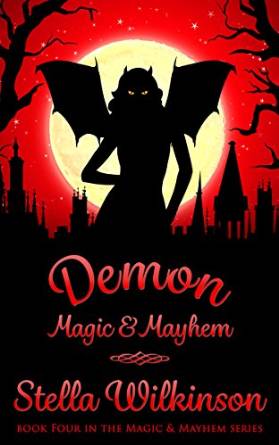
Demon Magic & Mayhem by Stella WilkinsonDemon Magic & Mayhem by Stella Wilkinson:

You know that feeling when you think life is pretty darn perfect, and then a werewolf savages your best friend and a ridiculously sexy demon drags your boyfriend off to hell with her? No? Just me then…

Young witch Emily Rand is back doing what she does best – blundering her way through paranormal mishaps with limited magic and mixed luck. But with her crow on her shoulder, and a ghost by her side, Emily’s not about to let some demonic vixen kidnap and keep the hot werewolf that holds her heart.

This book also includes a bonus short story : All Hallows Eve

Posted in Books | Tagged , , , , , , , , , , , , , , , , , , , , | Leave a comment

2016 Hugo Shortlist: More Thoughts and Reactions – and the Clarke Awards

There have been a few developments since my last Hugo shortlist reaction post.

Warning: Lots of links and neepery behind the cut: Continue reading

Posted in Books | Tagged , , , , , , | 1 Comment

The obligatory 2016 Hugo Shortlist Post

So the finalists for the 2016 Hugo Awards were announced today – against tradition in the middle of the week rather than on a weekend, which will make John Scalzi happy (though since he recused himself from nominations this year, it’s not really his problem) and will make everybody who has to work during the week and would like to engage in the inevitable discussions unhappy.

Coincidentally, this year’s Hugo finalists were also announced on the 30th anniversary of the Chernobyl disaster – an unfortunate coincidence that the MidAmeriCon organisers may not have been aware of, since Chernobyl isn’t as big a deal in the US as it is in those parts of Europe who got radioactive fall-out dumped onto their heads.

What is more, just to prove that this April 26th is not a completely bad day, the inquest about the Hillsborough disaster ruled today that the 96 dead Liverpool fans were “unlawfully killed” due to fatal failings on the part of the police and emergency services. This is a very good thing – and the Hillborough disaster has always loomed large in my memory, since it happened just before my 16th birthday and many of the victims were my age – though it’s sad that it only took 27 years to get there.

But let’s get back to the Hugos. Ready? So here we go…

Warning: Lots of Hugo and general SF neepery under the cut. Continue reading

Posted in Books, Film, TV | Tagged , , , , , , | Leave a comment

Sailor’s Curry – a curious Indian-German fusion dish

I don’t blog about food all that much, but today I want to share a personal favourite with you, namely the curious Indian-German fusion dish known as sailor’s curry or simply curry, if you’re from North Germany and grew up with this version.

As the name suggests, sailor’s curry is the curry served aboard German ships during the sailboat and steamship era. It was probably based on the curry served aboard the ships of the British Royal Navy, though the North German version is always served not just with rice, but also with a selection of pickles and other add-ons. I suspect the pickles and add-ons were influenced by the Dutch-Indonesian rijsttafel, itself a European-Asian fusion dish, especially since older rijstafel recipes don’t sound all that different from the North German sailor’s curry and its add-ons that I grew up with.

Because of the many ingredients and long preparation time, Sailor’s curry is a festive dish that’s reserved for special occasions. In Bremen, it is served at the annual feast of the Bremen East Asia Society as well as at the annual Captain’s Day held for the captains and officers of all ships (and in recent years’ pilots and co-pilots of airplanes) currently in the harbours of Bremen and Bremerhaven.

I usually have sailor’s curry three or four times a year, which always includes Christmas and my birthday or rather the following weekend. And since my birthday was last week, it meant that this Sunday was curry day.

Sailor's curry with pickles

Pork curry, basmati rice and pickles.

The exact recipe and the number and type of add-ons vary and there are probably as many versions as there are people cooking it. Our family recipe, which my mother got from a chef working aboard the vessels of the DDG Hansa shipping company* in the 1960s, uses pork filet rather than the more common chicken (or maybe my parents simply preferred pork). Other ingredients are onion, tomato paste, garlic, some kind of fat (the original recipe calls for butter or margarine, though we use oilve oil these days), paprika powder, cardamon powder, cloves, bayleaves, salt and of course, curry powder. The brand used aboard the Hansa vessels was Mida’s curry powder, probably because it was the only brand of Indian curry powder available in Germany well into the 1990s, but any good Madras curry powder will do. The spices are measured in shot glasses or egg cups BTW, which is a lovely oddity of the recipe.

In our family, the add-ons are chopped gherkins, chopped pickled beetroot, chopped hardboiled egg, chopped onions, chopped banana, mango chutney and Indian lime pickle. sambal oelek also used to be included, but these days I omit it, since the curry is plenty hot in itself. We’ve also had shredded coconut at times. Apart from the lime pickle, which is a recent addition, and the mango chutney, none of these add-ons are even remotely authentically Indian, while sambal oelek and the shredded coconut (similar to the Indonesian serundeng) point back to the rijsttafel. Coincidentally, several of the add-ons also show up in the Dutchified version of Nasi Goreng. Most of the ingredients are, however, very common in North Germany. Coincidentally, several of the add-ons, namely the gherkins, pickled beetroot and eggs, are also found in another sailor’s favourite, Labskaus or Lobscouse for the English version. And of course, pickles of any kind are food that lasts a long time, which was important aboard ships in the days before ubiquitous refrigeration.

Pickle tray

The selection of pickles and add-ons.

Other versions of the dish call for different add-ons. The gherkins, beetroot and mango chutney seem to be universal, but I have seen versions that included pickled pearl onions, pickled asparagus, pickled sardines, canned tuna, chopped ham, chopped gouda cheese, raisins, canned pineapple, canned corn, roasted peanuts and salami. What all of these add-ons have in common is that they would have been found aboard ships. In many cases, you can also see that those add-ons were familiar replacements for unfamiliar or hard to procure foods. Indian pickles were unavailable in Germany until the 1990s, but gherkins, pickled beetroot and pickled pearl onions were plentiful. The shredded coconut and roasted peanuts are obviously a replacement for Serundeng. The sardines were probably a replacement for ikan bilis, the dried anchovies served in Malaysia and Myamar. The raisins, pineapples and corn were all “exotic” before approx. 1960. The chopped ham and chopped gouda cheese probably just ended up on the add-on list, because someone liked them or because there was an abundance of them in the ship’s galley that day.

Coincidentally, I wish that more SFF worldbuilding would come up with dishes like sailor’s curry or the Dutch-Indonesian rijsttafel or Dutchified Nasi Goreng or Pataje Oorlog or Spaghetti Naporitan, where food from one culture is adapted to another and mixed with food from totally different traditions, where familiar ingredients are used to replace unfamiliar ones and the result is something that has little to do with either food culture, but is nonetheless delicious. You’d figure you’d find variations on this in space opera or also in secondary world fantasy with port and trade city settings. But then, SFF has never been very good with food, with some notable exceptions.

At the table, the rice, curry and various add-ons are all mixed up into something that looks like an unholy mess, but is in fact delicious:

Sailor's curry

Sailor’s curry mixed and ready for eating

Here are some other versions of sailor’s curry BTW: What’s notable is that all recipes stress the maritime origins of the dish and several of them can be traced directly back to a ship’s cook with DDG Hansa, the Norddeutscher Lloyd, Hapag or Hamburg-Süd.

As a kid, I assumed that this curry I grew up with was in fact an authentic Indian curry. So, I suspect, did my parents. After time spent in Singapore, Malaysia and the UK with its many curry houses, I eventually figured out that the curry I grew up with was not even remotely authentic. However, while I’m also very fond of Indian, Anglo-Indian, Thai and Malaysian curries, I still love the sailor’s curry of my childhood and must have it three or four times per year.

*The DDG Hansa shipping company specialised in routes to East and South East Asia, hence the affinity for curry and the tendency to give Asian knick-knacks (my parents have a nice collection) to its employees for Christmas. My Dad worked for them until 1974, when he switched to the rival shipping company Hapag-Lloyd.

Posted in General, Personal | Tagged , , , , , , , , , | 8 Comments