New Helen Shepherd Mystery available: Kitchen Witch

If you took a look at the brand-new Indie Crime Fiction of the Month round-up I posted two days ago, you might have noticed that one of the new releases listed was a new Helen Shepherd Mystery. So here is the official new release announcement for Kitchen Witch, the tenth Helen Shepherd Mystery to date (and there are at least two more coming up).

The inspiration for this particular Helen Shepherd Mystery was culinary. For you see, I’m very fond of wild garlic a.k.a. ramsons a.k.a. wood garlic a.k.a. bear garlic, a tasty and healthy leafy herb. Wild garlic is only available for a few weeks in April and early May, so I have it as often as possible when it’s in season. My favourite way of preparing it is lightly sauteeing the leaves in olive oil, tossing them with garlic, tomatoes, olives and red pepper flakes and serving it with pasta. Here’s a pic I took last time I had wild garlic spaghetti.

I buy my wild garlic at the supermarket, but quite a few people forage their own. And so, during wild garlic season, I came across an article that warned of the dangers of mistaking the leaves of autumn crocus or lily of the valley, both of which are highly poisonous, for edible wild garlic. This got my mystery writer’s mind working and wondering what if someone deliberately switched harmless wild garlic leaves for poisonous autumn crocus?

Now there are few things that get a mystery writer’s mind going faster than a good murder method. And so I came up with the story of Eudora Pembroke, herbalist, eccentric and self-styled witch, who ends up dead in her favourite armchair, after eating a wild garlic salad that contains a lethal dose of autumn crocus leaves.

As always, Detective Inspector Helen Shepherd and her team question several witnesses and potential suspects. One of these witnesses/suspects is Tara Willows, owner of a New Age shop. I enjoyed writing Tara a whole lot, so much that I decided to keep her around and give her her own spin-off.

I’m not a “write to market” person at all, but I am interested in genres and subgenres and how they are defined. Now I’ve explained before that the definition of crime and mystery fiction is quite different in Germany and the US and that the definition of “mystery” in the US is much narrower than the definition of “Krimi” a.k.a. “crime fiction” in Germany. As a result, most of the crime shorts collected in Murder in the Family and elsewhere (Murder in the Family, Volume 2 is coming soon BTW) are Krimis, but they’re not mysteries in the US sense. But unfortunately, the crime fiction category at Amazon is something of a wasteland – mystery is where the readers and the sales are. So I tried to write a crime story that would fit into the narrower US definition of mystery and so the Helen Shepherd Mysteries were born.

Now one of the most popular mystery subgenres are cozy mysteries featuring an amateur sleuth, usually a woman, solving mysteries, often using specialist knowledge about cooking, baking, crafts, etc… Cozy mysteries are not easy to come by here in Germany – the crime fiction sections in bookstores are dominated by thrillers and suspense – though I enjoyed the atmosphere and quirky characters of those that I’ve read. I also considered writing one, provided the right protagonist came along. When Helen and DC Walker walked into Tara’s shop to question her, I realised at once that Tara was the amateur sleuth protagonist I’d been waiting for. So look out for the first Tara Willows Mystery soon.

But for now, here is Kitchen Witch, the latest Helen Shepherd Mystery:

Kitchen Witch
Kitchen Witch by Cora BuhlertWhen Eudora Pembroke, a self-styled witch, is found dead in her house after ingesting a poisonous plant, everybody suspects a tragic accident. After all, Eudora was elderly and might have mistaken the poisonous plant for a benign herb.

But Detective Inspector Helen Shepherd is sceptical. Would a skilled herbalist like Eudora Pembroke really make such a beginner’s mistake? And who might have had a motive to poison her?


More information.
Length: 12500 words
List price: 2.99 USD, EUR or GBP
Buy it at Amazon US, Amazon UK, Amazon Germany, Amazon France, Amazon Netherlands, Amazon Spain, Amazon Italy, Amazon Canada, Amazon Australia, Amazon Brazil, Amazon Japan, Amazon India, Amazon Mexico, Kobo, Barnes & Noble, Apple iTunes, Scribd, Smashwords, Inktera, Playster, Thalia, Weltbild, Hugendubel, Buecher.de, DriveThruFiction, Casa del Libro, e-Sentral, 24symbols and XinXii.

Posted in Books, Writing | Tagged , , , , , , , , , , , | Leave a comment

Indie Speculative Fiction of the Month for May 2017

Indie Speculative Fiction of the MonthIt’s that time of the month again, time for “Indie Speculative Fiction of the Month”.

So what is “Indie Speculative Fiction of the Month”? It’s a round-up of speculative fiction by indie authors newly published this month, though some April books I missed the last time around snuck in as well. The books are arranged in alphabetical order by author. So far, most links only go to Amazon.com, though I may add other retailers for future editions.

Once again, we have new releases covering the whole broad spectrum of speculative fiction. This month, we have urban fantasy, epic fantasy, historical fantasy, Arthurian fantasy, Asian fantasy, dystopian fiction, post-apocalyptic fiction, Cyberpunk, space opera, military science fiction, near future science fiction, science fiction romance, fantasy romance, gothic romance, paranormal romance, paranormal mystery, horror, young adult science fiction and fantasy, dragons, vampires, witches, magicians, shamans, mercenaries, superheroes, star dogs, werewolves in space, galactic empires, planetstriders, intergalactic plagues, time travel, telepathic space pirates, killer clones, jackalope wives, kidnapped fae, King Arthur reincarnated and much more.

Don’t forget that Indie Speculative Fiction of the Month is also crossposted to the Speculative Fiction Showcase, a group blog run by Jessica Rydill and myself, which features new release spotlights, guest posts, interviews and link round-ups regarding all things speculative fiction several times per week.

As always, I know the authors at least vaguely, but I haven’t read all of the books, so Caveat emptor.

And now on to the books without further ado:

Blue Gold by David BarkerBlue Gold by David Barker:

The near future. Climate change and geopolitical tension have given rise to a new international threat – a world war for water. This most vital of resources has become a precious commodity and some will stop at nothing to control its flow.

When a satellite disappears over Iceland, Sim Atkins thinks he knows why. He is given the chance to join the hallowed Overseas Division and hunt for the terrorists responsible. But his new partner Freda Brightwell is aggrieved to be stuck with a rookie on such a deadly mission.

Freda’s misgivings are well founded when their first assignment ends in disaster – a bomb destroys a valuable airship and those responsible evade capture. Seeking redemption, the British agents follow the trail to a billionaires’ tax haven in the middle of the Atlantic ocean and uncover a web of deceit that threatens global war. Whom can they trust?

As the world edges ever closer to destruction Sim and Freda must put their lives on the line to prevent Armageddon – and protect the future of ‘blue gold’.

Magic Waking by Eva ChaseMagic Waking by Eva Chase:

Die, reincarnate, repeat. It’s been a long fifteen hundred years…

Reborn wizard Emma Hale has three goals in life, or rather lives: Track down the present incarnation of the legendary King Arthur, fend off the shadow creatures that hound him for as long as she can, and break the spell that binds their souls in this morbid cycle.

If only she had a better idea how she’d cast that spell in the first place. And if only Arthur’s current host wasn’t so cocky yet distractingly good-looking. Because Emma is falling even harder for the man she can’t have.

When a fae mercenary with power to rival Emma’s puts her king in his sights, Emma burns through all her tricks just to stay one step ahead. Now her only chance is to find some way to destroy the mercenary before he and his army of dark forces destroy Arthur.

No human Emma’s ever known has managed to kill a fae. But if she can’t, and quickly, this death might be their last.

Looking for a story full of sarcastic wizardry, cruel fae, and a star-crossed love centuries in the making? Scroll up and grab this Arthurian-flavored urban fantasy today!

Starfang by Joyce ChngStarfang: Rise of the Clan by Joyce Chng:

Is a clan captain going to sacrifice everything for her clan? Tasked to kill Yeung Leung by her parents, powerful rival clan leader of the Amber Eyes, Captain Francesca Min Yue sets out across the galaxy to hunt her prey, only to be thrown into a web of political intrigue spreading across the stars. Is Yeung Leung collaborating with the reptilian shishini and playing a bigger game with the galaxy as a price? Is Francesca’s clan at stake? Welcome to Starfang: Rise of the Clan, where merchants and starship captains are also wolves.

“Wolves should not be in space, but here we were, a clan of wolves and merchants. Instead of the preserved forests of New Earth and Noah’s Ark, we were in ships of steel and armor, reading data scans and commanding officers on the bridge. Wolves within the uniform of merchants and mercenaries, human seeming, claws and teeth sheathed.”

– Captain Francesca Ming Yue, of the warship Starfang.

Welcome to Starfang, a space opera with werewolves, politics and intrigue.

Human by Karen DiemHuman by Karen Diem:

Death? Acceptable risk. Taxes? No problem. Ancient magical cutlery of mass destruction? Bad, very bad.
Following a brief foray into the world of superpowered vigilantism, extreme sports enthusiast and halfhearted tax preparer, Zita Garcia, wants her old life, her shiny new abilities, and none of the consequences. She’s even willing to hide her powers since the alternative means endangering her family and living life as a literal lab rat.
Unfortunately, supervillains are searching for the pieces of a decrepit magic dagger, hurting innocents and fueling nasty anti-super protests. Her close friends, who helped before, are barely speaking to her, and one of them stands in the path of the violent hunt for the knife.
Zita better dig out her mask—fast.
Human is the second in the Arca superhero urban fantasy series, and as a movie would be rated “R” for immoderate language, lame sexual innuendo, and comic book violence. While Human can be read as a standalone, it contains spoilers for the first book in the series.

Retrograde Horizon by Charon DunnRetrograde Horizon by Charon Dunn:

A fast-paced epic science fiction adventure set in 3748 on an earth with a very different climate, not to mention configuration, chemistry and composition. For Young Adults and Old Children.

TRIGGER WARNING: contains potentially upsetting material about explosions, terrorists attacking schools, malfunctioning robots, school bullies, mean principals that assign a bunch of extra homework, paparazzi, poverty, affluenza, bad neighborhoods, public transit, precipitous drops in socioeconomic status, police drones, police, clandestine lizard fights, exploding roller coasters, unicorn attack, industrial steam calender malfunction, pissed-off chef with a deep fryer … I’d better stop, I’m starting to get into spoilers and I’m barely into the second chapter.

In volume one, Sonny made his way home. Now he’s in volume two, and those pesky clones are still trying to kill him – or worse. Meanwhile, his family is still trapped in a comfortable suburban development on the clones’ super secret mist-shrounded volcanic island somewhere in the South Pacific. It’s starting to look like he’s going to have to go get them, if he can get past the assassination attempts, and avoid getting distracted by true love.

Toric's Dagger by Jamie EdmundsonToric’s Dagger by Jamie Edmundson:

Toric’s Dagger is just another religious relic, until it’s stolen. Belwynn and her twin brother, Soren, volunteer to lead a team tasked with its retrieval. Drawn into a world of danger and treachery, they must rely on Soren’s magical abilities, and on the telepathic bond they share.

Now, as kingdoms and empires start to fall, the twins confront the dark forces that threaten them. They must not let the Dagger fall into the wrong hands. But when mercenaries, zealots and sorcerers are all hunting for the same weapon, who should they trust?

Book One of The Weapon Takers Saga, an Epic Fantasy Series in the tradition of Tolkien, Tad Williams & GRR Martin

Behind the Lines by Chris Fox:Behind the Lines by Chris Fox:

A brand new adventure in the Void Wraith universe

Mechs, kaiju, epic space battles, and galactic archeology…

The Void Wraith ravaged our galaxy, nearly eradicating both humanity and our enemies, the Tigris. Captain Nolan vowed it would never happen again, that he would find the Void Wraith’s dark masters.

Nolan leads a company of mechs into uncharted space, where a new foe lies in wait. The Coalition’s fleet is destroyed, and Nolan’s squad is stranded behind enemy lines. Between them and escape stand three Planetstriders, thousand meter monstrosities capable of destroying an orbiting capital ship.

In order to survive, they must disable these titanic war machines, an impossible task made even more difficult by the discovery of a terrible secret – one that must reach fleet command, no matter the cost.

Fire Wall by Dana FraserFire Wall by Dana Fraser:

RESIST

The men in the bunkers have sent a hit squad to Cash Bishop’s Tennessee homestead. They want to take his woman—and his life.

RESIST

Hannah Carter just found out that she could be the key to bringing down Project Erebus if she can leave behind everyone she loves and infiltrate the Black Diamond facility.

If she tries, the only guarantee she has is that there will be blood.

RESIST

Cash won’t stand by while Hannah puts herself in danger. Even if he has to drag her complicit brother along by the balls and kill every damned soul inside Black Diamond, he will find and protect the woman he loves.

And bring down the corrupt government that ended America.

RESIST

Jess Rising by D.M GuayJess Rising by D.M. Guay:

Seventeen-year-old Jess Flowers sees the killer in visions. He slaughters the helpless with fire and lightning. And she’s next on the kill list.

Billy Combs is the gorgeous outcast with the electrifying secret. He’s stolen Jess’ heart, but his own past may be darker than he’s let on.

As the body count ticks higher, a growing pile of evidence links Billy to the crimes. Jess’ heart says no, but she’s the new kid in isolated Salt Creek, Ohio, a town with a life-changing secret, a town where people aren’t what they seem, a town where it’s hard to know who to trust.

Can she tame the mysterious powers surging within her and identify the real killer before it’s her turn to die?

Magic Reborn by Carly HansenMagic Reborn by Carly Hansen:

On the run and disguised as a boy, Fenix Graystone finds sanctuary when a witch opens her home, arms her with charmed knives, and transforms her into a fearsome fighter. But when an enigmatic vampire overlord arrives seeking help to solve the murders of three young women, Fenix’s newfound peace shatters.

Black Site by Michael Patrick HicksBlack Site by Michael Patrick Hicks:

Are you prepared to enter the BLACK SITE?

Inside an abandoned mining station, in the depths of space, a team of scientists are seeking to unravel the secrets of humanity’s origin. Using cutting-edge genetic cloning experiments, their discoveries take them down an unimaginable and frightening path as their latest creation proves to be far more than they had bargained for.

Perfect for fans of H.P. Lovecraft and Alien comes a new work of cosmic terror!

Black Site is a short story of approximately 10,000 words.

Sky Dancers by E.E. IsherwoodSky Dancers by E.E. Isherwood

Can discovering sunshine trigger the next apocalypse?

Elle is a typical doomsday bunker teenager, living under the crush of routine. She attends classes, tries to follow the rules, and endures the same petty jealousies and anxieties teens have endured since fire was used as the first hangout. But a crumbling section of tunnel exposes a big lie about her world, and Elle’s life quickly spirals downward.

She’s harassed by the enigmatic Commander. She must ward off unwanted advances from older male survivors. And, as the ultimate insult, everyone seems to know more about her past than she does. Elle seeks freedom in the plague-ravaged wasteland outside her home, but discovers the true threat to her people, and her own future, lies coiled inside the dark tunnels she left behind.

Can Elle uncover and expose the secrets buried with her underground home? Or will they fade away like the memories of everyone who thinks to oppose the Commander?

Sky Dancers is a dystopian read that will have you turning the pages! If you like mysterious wastelands, abandoned bunkers, and strong female leads, you will love the Eternal Apocalypse series!

Shadows of Our Fathers by Rex JamesonShadows of Our Fathers by Rex Jameson:

Imagine a war between angels and demons that extends across our universe. Now, think bigger. Imagine that the fight between Lucifer and Jehovah extends across not only our universe but also involves two more ancient universes filled with demons and the remnants of the proud elven race.

Angels and demons fall as the Great War between Order and Chaos comes to a close. For those who thought Jehovah’s days of smiting stopped in the Old Testament, it’s time to give the devil his due.

In the face of democratic and social reforms, the Chaos Universe struggles with its past while pursuing the future that King Lucifer promises. While the demons thrive, the creator of the Elven universe looks to his own past for the salvation of his favorite immortals. Jehovah’s wife Gaea and son Isaac seek asylum in Chaos as Lucifer and Jehovah have their final, apocalyptic battle.

“Shadows of Our Fathers” is the last book of the Lucifer’s Fall trilogy, and book three in the Primal Patterns series.

Contamination by Patty JansenContamination by Patty Jansen:

Jonathan Bartell is a young man, just out of university, when he signs up for the position of Quarantine Officer at the Orbital Launch Station.

He is part of a crop of students who flocked to study exo-biology when bacteria were discovered on Mars, and who are now all making their living flipping burgers, because the jobs are few and hard to get.

He is lucky to get a job in space, no matter how mundane.

Or so he thinks…

Gaby Larsen is a doctor at the tiny hospital at the space station, and she keeps secrets, not because she wants to keep them, but because she is too scared to share them.

Because out in space, your worst enemies are your fellow travellers.

Prelude to Insurrection by J.C. KangPrelude to Insurrection by J.C. Kang:

Only an orphan half-elf spy can avert a rebellion before it starts.

Jie’s superior senses have made her the perfect lookout. Now, as the adopted daughter of the Black Lotus Clanmaster, she wants to prove her pointed ears aren’t a liability when she’s tasked to infiltrate a rebel lord’s castle.

In this prequel to Songs of Insurrection, Jie must decide between her duty to the emperor and her sense of compassion toward the downtrodden. No matter her choice, it will have explosive consequences for her, the realm, and the upcoming war.

Jackalope Wives and other stories by T. KingfisherJackalope Wives and Other Stories by T. Kingfisher:

Winner of the Nebula and WSFA Short Fiction Awards

From award-winning author T. Kingfisher comes a collection of short stories, including “Jackalope Wives,” “The Tomato Thief,” “Pocosin,” and many others. By turns funny, lyrical, angry and beautiful, this anthology includes two all-new stories, “Origin Story” and “Let Pass The Horses Black,” appearing for the first time in print.

Once Giants by Eugene Kirk and Garan MadOnce Giants by Eugene Kirk and Garan Mad:

The future is a no-holds-barred free for all, but all in a day’s work…when you were Once Giants.

The year is 2189, and a wormhole leading to five habitable planets has been discovered, prompting a new global space race. Political undermining and sabotage abound, creating the perfect blend of chaos and opportunity for newly minted NETwork operator Tina Thompson to put her augmented, former pro-wrestler body to the test in the mercenary game.

But her celebrity past isn’t so easy to outrun. And when her infamy botches her latest job in Imperial East Africa, her actions trigger repercussions that affect former rival Shay Santiago as well.

As Tina and Shay both struggle to salvage their lives, a bigger threat looms. A mysterious gravitational anomaly has appeared, threatening to destroy the solar system itself. And Shay’s old high school flame may be the only person on Earth who can stop it.

Richly textured, interweaving narratives introduce new characters and bigger military sci-fi threats in this second installment of Once Giants, offering a thought-provoking look at how one person’s actions can affect the entire world.
The Metaverse by William KurthThe Metaverse: Virtual Life – Real Death by William Kurth:

An FBI Agent more comfortable hunting criminals the old fashioned way. A brilliant scientist who kills using Virtual Reality. And an Artificial Intelligence with an agenda of its own.

The Metaverse, more than the “internet of things,” is a place where humankind has devised a way to comfortably and seamlessly merge the biologic and the digital to the point that neither is readily distinguishable from the other. As people in ever greater numbers choose to live, work and play “In World,” so too do those who prey on their fellow man.

The Metaverse is a fast-paced Crime Thriller that takes place in the not too distant future with technology that even now is a part of our world.

A Dark Inheritance by Erme LanderA Dark Inheritance by Erme Lander

“I do not require your eternal love or devotion Ms Johnson, merely what is inside your veins.”

When Tina Johnson, single mother, forty, wakes up in an isolated castle in Central Europe she simply wants to return to her daughter as quickly as possible. She doesn’t expect to find that she has been kidnapped and brought into a world where power is the key to survival and sanity is an optional extra.
Tina discovers she has been watched for many years, she has a rare genetic structure that makes her attractive to vampires and has the possibility of living for well over a century, if she allows herself to become infected. Kalmár has stolen her and intends to keep her captive, hiding her from both her family and other vampires. She meets Wolfie, his bonded servant, unable to disobey the orders given by his master whether he wishes to or not. Normality becomes a frightening place as Tina struggles to escape those holding her and to fights to keep her daughter, her lover and her freedom.

Pirate Nemesis by Carysa LockePirate Nemesis by Carysa Locke:

Killers. Thieves. Pirates. Family.

Mercy Kincaid is a fugitive from her own family. Her dangerous telepathic gifts make her a target. So is anyone she gets close to. When her best friend is captured and tortured, Mercy’s only hope is to reunite with the family that tried to murder her as a child. She trusts few among her blood relatives, but finds herself intrigued by an enigmatic and dangerous killer.

Reaper has spent a lifetime watching his people die. He’s vowed to kill anyone who jeopardizes their survival. Mercy’s gifts are the biggest threat they’ve faced in eleven years, since a biological weapon nearly annihilated the pirate colonies. But Reaper realizes her talents can either destroy them, or save them. He must decide if he’s fallen victim to her power, or if he can truly trust the beautiful woman and her compelling abilities. If he makes the wrong choice, everyone dies.

Pirate Nemesis is the first book in an ongoing space opera series. If you like compelling world-building, fantastic characters, and romantic adventure, then you’ll love Carysa Locke’s new twist on an old genre.

The Rending by Carol Holland MarchThe Rending by Carol Holland March:

The saga of The Dreamwalkers of Larreta continues . . .

Deadly time rifts threaten Earth and Larreta. The rifts have swallowed people, buildings and the land itself. They must be stopped before the very fabrics of both worlds are torn apart.

Dreamwalker Leo can look backward in time. Jesse can walk into the future. Both of these abilities are needed to create the dangerous truan passage to locate and defeat the mysterious instigator of the rifts.

But Jesse is a volatile newcomer, unable to completely control his abilities. And Leo is still uncertain of his personal feelings for Jesse.

Working past their issues is key to discovering the location where the rifts originate. But the dark force behind the rifts has other plans—ones that won’t allow the two dreamwalkers to remain together. And only together can the rifts be stopped.

Physllis Wong and the Girl who Danced with LightningPhyllis Wong and the Girl Who Danced with Lightning by Geoffrey McSkimming:

When Phyllis Wong’s friend Clement finds a seemingly ordinary old movie poster in an antique shop, little does Phyllis know that the discovery will fling her on a journey into the past … a journey that will lead the brilliant young magician and clever sleuth to a forgotten mystery surrounding one of the most famous stories ever written!
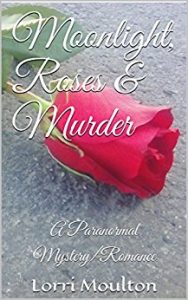
Moonlight, Roses & Murder by Lori MoultonMoonlight, Roses & Murder by Lori Moulton:

Selina is a woman with a secret and she has been hiding it for a very long time. With her nieces, she runs Luna’s, a nightclub in downtown Seattle, catering to Steampunk and Goth clientele. When someone leaves a body behind her club, she is drawn into a web of mystery and murder. Puncture marks on the body indicate a vampire might be responsible and when more women are killed, a red rose is left by their bodies. As a vampire hunter comes to investigate, Selina wonders, who she can trust…

Feral by P.J. PostFeral by P.J. Post:

He’s just a teenager, hollow and lost, looking to keep the past buried, to forget. He surfs the backwash of the westward migration across a dead America; a war-torn desolation devoid of electricity, infrastructure and civilization. It has become a strange and unrecognizable land, rife with the worst of humanity. And his is a life without hope, equally dark and solitary.

Until he meets Feral.

Once was boy, selfish and directionless.

Now is love.

Now is reason.

Now is vengeance.

She is his vow, his purpose, and to save her, he’ll murder the world.

Children of the Shaman by Jessica RydillChildren of the Shaman by Jessica Rydill:

When their aunt is taken ill, thirteen-year old Annat and her brother are sent from their small coastal town to live with their unknown father. Like Annat, Yuda is a Shaman; a Wanderer with magical powers, able to enter other worlds. As Annat learns more about her powers, the children join their father on a remarkable train journey to the frozen north and find a land of mystery and intrigue, threatened by dark forces and beset by senseless murders that have halted construction of a new tunnel. But Annat’s doll, her only remembrance of her dead mother, may hold a dark secret – and when her brother Malchik is kidnapped, Annat and her father must travel onwards to find him before it is too late.

Between uncertain allies, shadowed enemies and hostile surroundings, it is only in the magical kingdom of La Souterraine that they can find answers – and it may be that only a Shaman can save the family and the Goddess.

Missing Things by Hollis ShilohMissing Things by Hollis Shiloh:

Is there a way to save the captive fae?

Jocelyn and Ellis, magicians and life partners, grapple with dilemmas and a miasma of magic and mystery.

Jocelyn searches out magical artifacts, and struggles with the troubling gap in his memories — and the feeling that his and Ellis’s partnership is falling apart.

Meanwhile, Ellis works desperately to dig into a wicked injustice being perpetrated against a kidnapped fae…and finds it may be too much for him to handle alone.

43,000 words
Men of Magic book 2
Very low heat

Rimward Stars by Glynn StewartRimward Stars by Glynn Stewart:

A helpless ally calls for aid
A ruthless enemy strikes without mercy
The fate of empires turns on even the smallest actions

When a minor trade partner sends the Castle Federation a desperate call for aid, they have few resources to spare from their all-consuming war against the Terran Commonwealth. Unwilling to be seen failing their allies but able to spare only a tiny force, Castle sends a hero to command the task group: Captain Kyle Roberts, the Stellar Fox.

Beyond the Rimward frontier of the Federation and its allies, little is as it seems. The pirates are being armed by an outside force, and the politics of these worlds is made deadlier by their poverty. When the Coraline Imperium—the Federation’s oft-difficult ally—sends forces as well, it risks a conflict that could undermine the Alliance protecting them both.

There are deeper games afoot as local schemes play the great powers against each other. Captain Roberts is caught in the chaos as fire and blood explode across the region. There is only one certainty: these Rimward Stars must not fall.

Star Dog Corruption by Lucas C. WheelerStar Dog Corruption by Lucas C. Wheeler:

After the Star Dog Fiasco, as it was termed by the media, Star Dog is joined by Nathan, Nicole, and Clancy while trying to rebuild his life. In the midst of a serial jewel theft and deepening conspiracies, can Star Dog truly fit into society, or will society reject him like a bad organ? Will he be able to stop the thefts and honor his name, or is there something more sinister at work?

Witch Spelling by A. WoodleyWitch Spelling by A. Woodley:

A fictional tale of witches, warlocks and wizards trying to fit in with the mundane way of life but always fearful of the consequences of being found out, especially after having already been persecuted and driven out of another town previously.
An accidental skirmish between two differing species, (both of which were once witches and warlocks) banished to adjoining worlds in an alternative dimension.

Posted in Books | Tagged , , , , , , , , , , , , , , , , , , , , , , , , , , , , , , , , , , | Leave a comment

Indie Crime Fiction of the Month for May 2017

Welcome to the first ever edition of “Indie Crime Fiction of the Month”.

So what is “Indie Crime Fiction of the Month”? It’s a round-up of speculative fiction by indie authors newly published this month, though some April books I missed the last time around snuck in as well. The books are arranged in alphabetical order by author. So far, most links only go to Amazon.com, though I may add other retailers for future editions.

Our new releases cover the broad spectrum of crime fiction. We have cozy mysteries, historical mysteries, police procedurals, children’s mysteries, mystery short fiction, paranormal mysteries, psychological thrillers, legal thrillers, crime thrillers, near future crime, yakuza, smugglers, lawyers, watchmakers, vampires, kitchen witches, magician sleuths and much more.

Don’t forget that Indie Crime Fiction of the Month is also crossposted to the Indie Crime Scene, a group blog which features new release spotlights, guest posts, interviews and link round-ups regarding all things speculative fiction several times per week.

As always, I know the authors at least vaguely, but I haven’t read all of the books, so Caveat emptor.

And now on to the books without further ado:

Kitchen Witch by Cora BuhlertKitchen Witch by Cora Buhlert:

When Eudora Pembroke, a self-styled witch, is found dead in her house after ingesting a poisonous plant, everybody suspects a tragic accident. After all, Eudora was elderly and might have mistaken the poisonous plant for a benign herb.

But Detective Inspector Helen Shepherd is sceptical. Would a skilled herbalist like Eudora Pembroke really make such a beginner’s mistake? And who might have had a motive to poison her?

This is a mystery novelette of 12500 words or approximately 45 print pages.

Tools of the Trade by Cynthia E. HurstTools of the Trade by Cynthia E. Hurst:

He’s considered a heretic. She’s a 13-year-old thief. Jacob Silver and Sarah Simm are mistrusted by the residents of their Cotswold market town even before the suspicious death of wealthy merchant Thomas Martyn – a man with the power to destroy both of them. But a secret night visit, a hidden scandal and a second murder mean that the two outsiders on the fringes of society are now thrust into the spotlight. Can they discover the truth others have missed – or concealed?
‘Tools of the Trade’ is the first novel in the Silver and Simm Victorian Mysteries series.

Impulse Spy by Carrie Ann KnoxImpulse Spy by Carrie Ann Knox:

Studious grad student Quinn’s orderly world is shaken up when she meets mysterious stranger Sloan McKenzie, private investigator and man-dazzler extraordinaire. And she wants Quinn’s help.

It turns out a little espionage may be just what Quinn needs. And she finds that she can even use her hearing loss to her advantage. But when a target of their surveillance turns up dead, and Quinn realizes she may have unwittingly played a role, she may be forced to put her future career–or her life–on the line to uncover the truth and keep other innocent bystanders from harm.

The Metaverse by William KurthThe Metaverse: Virtual Life – Real Death by William Kurth:

An FBI Agent more comfortable hunting criminals the old fashioned way. A brilliant scientist who kills using Virtual Reality. And an Artificial Intelligence with an agenda of its own.

The Metaverse, more than the “internet of things,” is a place where humankind has devised a way to comfortably and seamlessly merge the biologic and the digital to the point that neither is readily distinguishable from the other. As people in ever greater numbers choose to live, work and play “In World,” so too do those who prey on their fellow man.

The Metaverse is a fast-paced Crime Thriller that takes place in the not too distant future with technology that even now is a part of our world.

Physllis Wong and the Girl who Danced with LightningPhyllis Wong and the Girl Who Danced with Lightning by Geoffrey McSkimming:

When Phyllis Wong’s friend Clement finds a seemingly ordinary old movie poster in an antique shop, little does Phyllis know that the discovery will fling her on a journey into the past … a journey that will lead the brilliant young magician and clever sleuth to a forgotten mystery surrounding one of the most famous stories ever written!


Moonlight, Roses & Murder by Lori MoultonMoonlight, Roses & Murder by Lori Moulton:

Selina is a woman with a secret and she has been hiding it for a very long time. With her nieces, she runs Luna’s, a nightclub in downtown Seattle, catering to Steampunk and Goth clientele. When someone leaves a body behind her club, she is drawn into a web of mystery and murder. Puncture marks on the body indicate a vampire might be responsible and when more women are killed, a red rose is left by their bodies. As a vampire hunter comes to investigate, Selina wonders, who she can trust…


Hidden Defendant by Rachel SinclairHidden Defendant by Rachel Sinclair:

Harper’s uncle, Jack Calhoun, has been charged with murdering a priest. Jack has no idea if he killed the priest or not. All that he knows is that he woke up in the rectory, holding a knife, with a priest covered in blood at his feet.

It soon become apparent that Jack is not who he seems. He’s not the man who Harper grew up with. He’s become something else. Somebody else. It’s possible that he really killed Father Malone – Harper must come to terms with the reality.

As Harper gets further into the case, she’s never quite sure exactly what happened. She doesn’t want to believe that her beloved uncle would be capable of such a crime.

All signs point to Jack as the murderer.

Did he do it?

With the twists and turns that you’ve come to expect from a Rachel Sinclair legal thriller, this tightly-paced story is not to be missed!

Better than Suicide by Amy TasukadaBetter Than Suicide by Amy Tasukada:

A bag of drugs. A twisted cop. A mob on the verge of self-destruction…

Nao Murata is the new Godfather of the Matsukawa syndicate. When Detective Yamada confronts Nao over a dead drug dealer, the Nao knows his organization isn’t responsible. The Matsukawa doesn’t deal drugs… or does it?

When Nao discovers drugs in a locker owned by his syndicate, he no longer knows who to trust. With the police bearing down on the Matsukawa, Nao must make unlikely allies to find out the truth. Can he discover who is betraying him before time runs out, or will everyone suffer for a crime he didn’t commit?

Better Than Suicide is the second book in a Japanese mafia thriller series. If you like complex plots, gripping suspense, and splash of gay romance, then you’ll love the next installment in Amy Tasukada’s Yakuza Path series.

The Girl in the Darkness by John TriptychThe Girl in the Darkness by John Triptych:

Brenda DeVoe lives a lonely, quiet life in a secluded house by the backwoods of Virginia. Her days are spent working as a volunteer at the local animal shelter, caring for unwanted and injured pets. Once the toast of their small town, Brenda and her husband Jeff were destined for great things until one fateful night, when their young daughter disappeared without a trace. Their marriage soon fell apart and they separated, each to live out their damaged lives as best they could. Years later, Brenda finds something familiar when an injured cat is brought into the shelter, and the nightmares that she had once left behind are now returning … with a vengeance.

If you like the pulse pounding novels of Mary Higgins Clark, Gillian Flynn, Kathy Reichs, Tami Hoag and Paula Hawkins, then have a look at this newest psychological suspense thriller by John Triptych!

Ferrying Riches by A. WoodleyFerrying Riches by A. Woodley:

Gabe and Derry Thomson were twin brothers looking for a new life, in a new town, where they found themselves mixed up in the type of criminality that they’d only ever seen in films before.


Murder Melange by A. WoodleyMurder Melange by A. Woodley:

20 fictional murder short stories.

Posted in Books | Tagged , , , , , , , , , , , , , , , , , , , , , , | Leave a comment

Rest in Peace, Roger Moore

Actor Roger Moore died yesterday, aged 89. There’s also a lovely tribute by Peter Bradshaw at the Guardian.

I heard the news on the radio, while driving home after a grocery haul. “And now we have some tragic news from Britain”, the DJ said, whereupon I assumed it would be about the Manchester bombing. And then he announced that Roger Moore had died. And I thought, “Oh no, but he wasn’t even that old.”

Of course, the truth is that Roger Moore was old – 89 is a highly respectable age, after all. And it’s pretty much a miracle that until two days ago, all six actors who played James Bond in the official Bond films were still alive, given how decimated the cast of other franchises which debuted around the same time or even later (e.g. Doctor Who, Star Trek, The Avengers, Raumpatrouille Orion, the Winnetou movies, the Edgar Wallace movies, Mission Impossible, etc…) is today. But Roger Moore was one of those actors who always appeared ageless to the point that I was stunned when I did the math and realised that he’d been in his thirties when he played Simon Templar, in his early forties, when he played Lord Brett Sinclair, and that he was 45, when he took over the role of James Bond and 58, when he retired from it. Of course, you can see that Roger Moore was aging, especially over the course of his seven Bond movies. But though he was aging, he never seemed old.

Now I have to make a confession: James Bond is not the first role that I associate with Roger Moore. He never was my favourite or even second favourite Bond (I rank both Sean Connery and Timothy Dalton above him) and in fact, his Bond movies usually end up in the bottom half, whenever I try to rank them. A.O. Scott may claim at the New York Times that Roger Moore was the best Bond, because he was Generation X’s Bond, but though I’m Generation X, Roger Moore was never my Bond. For due to the old, three-channel, wholesome programming and nothing foreign public TV system, the Bond movies only started airing on German TV from the mid 1980s on and they started at the beginning with the Connery Bonds, so it took until the late 1980s, until they finally got to Roger Moore. Watching the movies in the cinema was out of the question due to a combination of being too young to watch them and overprotective parents and watching them on video was even more out of the question, since my parents believed that VCRs were a waste of money. So by the time I finally saw him as Bond, I already associated Roger Moore with other parts, namely Simon Templar and particularly Lord Brett Sinclair from The Persuaders, though I’d also seen him in his very early TV role as Ivanhoe.

For some reason, The Persuaders, starring Roger Moore and Tony Curtis, is hardly remembered in the US at all, though British obituaries usually at least mention it. But the show was hugely popular in Germany, largely due to Rainer Brandt‘s brilliant pun and innuendo laden dubbing work (some of it so rude that adult me was lying on the floor gasping, “I can’t believe they dared to say that on TV. In 1971”), which turned a fairly straight adventure show into a brilliant fourth-wall breaking meta-commentary on the action adventure genre and television in general. By comparison, watching The Persuaders undubbed is a huge let-down, because where are the jokes? Quite a few episodes of The Persuaders dubbed into German are available online. There’s also a side by side comparison between the original and German dubbed version, which shows how much better the latter is.

When I first saw Roger Moore as James Bond, sometime in the late 1980s during the German TV premiere of Live and Let Die, it was like seeing Brett Sinclair or Simon Templar pretending to be James Bond. And why was he behaving like such an arsehole towards Solitaire? Coincidentally, seeing Pierce Brosnan as James Bond has a similar effect on me, only that it felt like watching Remington Steele impersonating Bond. And anyway, why is he fighting Richard Sharpe (cause that’s the role I associated Sean Bean with pre-Game of Thrones)? For that matter, why is he trying to kill Vic from La Boum* and the skinny guy fro The Full Monty?

These days, I still find Roger Moore’s seven Bond films more rewatchable than Brosnan’s. I will probably stick around and watch for a while, if I run across a Moore Bond on late-night TV (ditto for a Connery or Dalton Bond), though I rarely bother with Brosnan. For though the first two Brosnan Bonds were pretty good and hold up well even twenty-plus years later, but casting Sophie Marceau as a villainess in The World Is Not Enough was a huge mistake, because Sophie Marceau was an icon to a generation of European teenagers who saw their own lives and problems reflected in hers. When Brosnan’s Bond turned on her, he turned on all of us. It’s probably no coincidence that The World Is Not Enough was the last Bond movie I’ve bothered to watch in the theatre. I have seen bits and piece of Die Another Day and Casino Royale, all of Skyfall (which is a damn good Bond film, even though I don’t normally care for Daniel Craig’s Bond), though I’ve never gotten around to watching Quantum of Solace and Spectre. But the magic is gone and it has been gone since The World Is Not Enough.

Compared to the Dalton Bonds and beyond, Roger Moore’s James Bond movies are often downright silly and time hasn’t been kind to them. A lot of the old Bonds are racist, but Live and Let Die goes quite a bit beyond casual vintage racism into “I can’t believe they didn’t realise how offensive this was” territory, though the New Orleans funeral scene is great, Baron Samedi is still brilliant and Jane Seymour remains one of the most beautiful and memorable Bond girls of all times. The Man with the Golden Gun is just a bad movie, in spite of Christopher Lee’s presence (plus, Bond is mean to Herve Villechaise, which will horrify anybody who grew up watching Fantasy Island). The Spy Who Loved Me has the advantage of stunning Ken Adam sets, the submersible Lotus (who didn’t want one?), Richard Kiel’s Jaws as one of the most memorable henchmen, Barbara Bach as another great Bond girl (Come to think of it, Roger Moore’s Bond did have the best Bond girls) and of course that ski jump into the abyss (courtesy of Willy Bogner, master of the ski stunt, and stuntman Rick Sylvester), but the plot is a notable rehash of You Only Live Twice and Curd Jürgens is probably the worst Bond villain of all time. Moonraker is just plain bonkers, basically James Bond does Star Wars with Michael Lonsdale playing Hugo Drax as the Master from Doctor Who. On the plus side, it had Lois Chiles and Corinne Clery. For Your Eyes Only isn’t bad at all, but for some reason it’s the Bond film I remember the least and the one I usually recall next to nothing about it except, some undersea sequences, a climax on an Alpine mountain top (which could describe any number of Bond movies) and Julian Glover being the villain. Octopussy is pretty crazy as well, but it has circusses, Maude Adams and Kabir Bedi a.k.a. Sandokan himself. Finally, A View to a Kill is probably my favourite Moore Bond, since it has an Ah-Ha theme song (the Moore Bonds also had excellent theme songs, come to think of it), Grace Jones being awesome, Christopher Walken being villainous, a chase on the Eiffel Tower, which left me so disappointed, once I saw the real thing (But it’s so packed. You can barely move, let alone have a chase scene here) and a climax involving a zeppelin and the Golden Gate Bridge. So really, what’s not to love?

Roger Moore’s Bond movies are also the furthest from Ian Fleming’s original version of the character, though I didn’t realise that, until I started tracking down the original Bond novels in the 1990s. Nonetheless, I find them a lot more rewatchable than the Brosnan and Craig Bonds, probably because even at their worst and most bizarre, the Moore Bonds are always incredibly entertaining. And due to Roger Moore’s suave and ever so slightly tongue in cheek portrayal, his James Bond is a lot closer to Brett Sinclair and Simon Templar than Brosnan’s ever was to Remington Steele. Though my favourite Bond movie is and will always be On Her Majesty’s Secret Service. Yes, I know I’m weird.

Talking of which, Roger Moore’s suave, tongue-in-cheek Bond may always seem as if nothing could faze him, but he has unexpected moments of vulnerability that were rarely seen in the character (as opposed to book Bond) all the way up to Daniel Craig era. There is a scene in one of the early Moore Bonds, where Bond is seen visiting the grave of his wife Tracy, who got murdered by Blofeld on their honeymoon. And when Barbara Bach’s Agent Triple X mentions Bond’s late wife in The Spy Who Loved Me, he cuts her off. Because talking about Tracy is just too painful. I have always hated how the later Bond films dismissed Tracy, even though she was the one woman Bond was willing to marry (and played by Diana Rigg a.k.a. Emma Peel herself) and presumably died while carrying his child, so seeing her acknowledged, however slightly, is good. And the only Bond movies that did acknowldge her were Roger Moore’s

Of course, Roger Moore, was much more than just Ivanhoe, Simon Templar, Brett Sinclair and James Bond. By all accounts, he was lovely and modest in person and also worked tirelessly as an ambassador for Unicef in his later years.

Finally, here is one of my all-time favourite Roger Moore moments from The Muppets Show, where Moore sings “Talk to the Animals” from Doctor Doolittle, which was of course Ian Fleming’s most famous non-Bond work (and how amazing is it that the producers of The Muppets not only knew this, but assumed their audience did, too), while fighting rival spies:

And of course Miss Piggy (who had a really great taste in men – Mikhail Baryshnikov, Christophr Reeves, Nathan Fillion, Roger Moore – though I wonder what she saw in Kermit) tried to seduce him:

So rest in peace, Sir Roger Moore, who played James Bond in more movies than any other actor. Though he’ll always be Brett Sinclair to me.

Posted in Film, TV | Tagged , , , , , , , , | Leave a comment

A few words on the 2016 Nebula Awards, the 2017 Arthur C. Clarke Awards and the Shadow Clarkes

Yesterday, the winners of the 2016 Nebula Awards were announced. You can find a full list of winners plus plenty of photos of the ceremony here at File 770. Joel Cunningham also offers a brief overview of the ceremony as well as a list of winners and nominees at the B&N Sci-Fi and Fantasy Blog.

Back in February, when the 2016 Nebula Awards shortlist was announced, I wrote that it was a very good shortlist. This shortlist produced a set of very worthy winners, too, though most of them were not my personal favourites.

All the Birds in the Sky by Charlie Jane Anders wins in the novel category. It’s not an unsurprising winner, since the novel got a lot of buzz from the time it was released on. It also was one of two clear favourites, since both Everfair and Borderline are more niche works and The Obelisk Gate is a sequel to a novel which did not win the Nebula last year. Nonetheless, I expected Ninefox Gambit to win, though Ceridwen Christensen at the B&N blog correctly pegged All the Birds in the Sky as the eventual winner.

Three of the 2016 Nebula nominees in the best novel category are also Hugo finalists this year. Now I’m a Hugo voter this year and thanks to an excellent Hugo shortlist, I currently have three novels duking it out for the number 1 spot on my Hugo ballot. Only one of those three was also a Nebula finalists and it’s not All the Birds in the Sky. Now don’t get me wrong, I did like All the Birds in the Sky, I just didn’t love it the way so many other people apparently did. But then, I never quite got why last year’s Nebula winner in the best novel category Uprooted was so popular either.

On to the novella category, where the winner is Every Heart a Doorway by Seanan McGuire. Again, it’s a story that has gotten a lot of buzz and coincidentally is also a Hugo finalist. It’s certainly a worthy winner and a story I liked well enough, though once again I didn’t love it like so many others apparently did. I guess a story about a boarding school for children who once visited fantastic worlds, but can’t go back there, does not resonate with me as much as it evidently does with US readers. For while Anglo-American children’s fantasy is chock full of portal stories (Narnia, Oz, Alice in Wonderland), portal fantasies are much rarer in German children’s fantasy. I mean, there is Michael Ende’s Neverending Story and – well, that’s it, basically. So naturally, a novella which explores the aftermath that portal fantasies normally leave out would resonate more with US and UK readers.

The respective winners in all other categories are works I’m at least familiar with. However, the winner in the novelette category, “The Long Fall Up” by William Ledbetter, is a complete unknown to me, probably because the story first appeared in F&SF and print SFF mags are notoriously difficult to come by here in Germany. Greg Hullender has a summary and a mini-review at Rocket Stack Rank. Based on this, it certainly sounds like an interesting story. Coincidentally, “The Long Fall Up” is not just the only Nebula win for the big three print magazines this year, it’s also the only clear science fiction story among all the winners in the fiction categories. And those who worry that women and people of colour are taking over all the genre awards will be pleased that the author is a white man.

The winner in the best short story category is “Seasons of Glass and Iron” by Amal El-Mohtar. Once more, this is a story that got a lot of buzz and coincidentally is also a Hugo finalist in this category. And once again it’s a story that’s perfectly fine and certainly a worthy winner, but not really one that wowed me (I’m sensing a theme here). In many ways, my reaction to “Seasons of Glass and Iron” is similar to my reaction to the controversial 2014 Nebula winner in this category, “If you were a dinosaur, my love” by Rachel Swirsky. I can absolutely see why so many other people love this story – however, I don’t love it myself (though I liked “Seasons of Glass and Iron” quite a bit more than “If you were a dinosaur, my love”). Part of the reason is that – as I’ve said several times before – fairy tale retellings and new fairy tales rarely do it for me. And while “Seasons of Glass and Iron” is beautifully written, it’s also very predictable.

The Ray Bradbury Award for Outstanding Dramatic presentation goes to Arrival. Once again, this is hardly an unexpected winner, since Arrival is exactly the sort of serious science fiction movie that the Nebula and Hugo electorate loves. Plus, it’s based on a Nebula Award winning story by Ted Chiang. What somewhat marrs it for me is that the Sapir-Whorf hypothesis doesn’t work that way, no matter how many SF authors (not just Ted Chiang, but also Samuel R. Delany and Jack Vance) insist that it does.

The Andre Norton Award for YA SFF goes to Arabella of Mars by David D. Levine. It’s an excellent choice IMO, though I wouldn’t necessarily call it YA and indeed, it’s classified as regular SFF and published by Tor, not a YA publisher. But then, Locus seems to believe that Revenger by Alastair Reynolds is YA, too. And once again those who worry that women and people of colour are taking over the genre will be pleased that the author is a white man who managed to win even in the traditionally heavily female dominated YA category. So rest assured, white men can still win SFF awards in the year 2017.

The Damon Knight Grand Master Award went to Jane Yolen and highly deserved it is, too. The Kevin O’Donnell Jr. Service to SFWA Award went to Jim Fiscus and the Solstice Award went to Toni Weisskopf and (posthumously) to Peggy Rae Sapienza. Certain quarters will be very pleased with Toni Weisskopf’s win, I’m sure.

Finally, File 770 reports that the Nebulas will add a category for game writing in 2018 or 2019, which will once again please a lot of people.

In other awards news, the shortlist for the 2017 Arthur C. Clarke Award has been announced as well. It’s a pretty good shortlist, consisting of a Hugo and Nebula Award nominee (Ninefox Gambit by Yoon Ha Lee), a Hugo nominee, sequel to one of last year’s Clarke Award nominees (A Closed and Common Orbit by Becky Chambers), this year’s Pulitzer Prize winner for fiction and the literary speculative fiction novel of the year (The Underground Railroad by Colson Whitehead), a new novel by a former Clarke Award winner (Occupy Me by Tricia Sullivan), a new work by an author nominated for multiple BSFA, British Fantasy and World Fantasy Awards (Central Station by Lavie Tidhar) and a Locus Award nominated novel by an established and talented, but somewhat overlooked writer (After Atlas by Emma Newman). It’s also a nicely diverse shortlist, ranging from space opera and military SF via dystopian fiction to alternate history. The writer demographics are diverse as well – after the debacle of the all male, all white shortlist in 2013, in spite of a jury consisting of several women – and include three men and three women, two writers of colour, at least two LGBT writers and one international writer. At the Guardian, David Barnett also reports on the 2017 Clarke Award shortlist and praises its diversity.

So in short, it’s a good shortlist with lots of interesting works. I have my favourites, of course, but I wouldn’t mind if any of those books won.

Shortly before the official Arthur C. Clarke Award shortlist was announced, the Shadow Clarke jury (shadow juries are apparently a thing in the UK, so this is not as presumptuous as it sounds) also announced its personal shortlist. The Shadow Clarke shortlist overlaps with the official shortlist in two points, namely The Underground Railroad by Colson Whitehead and Central Station by Lavie Tidhar. The remaining Shadow nominees are The Power by Naomi Alderman, a critically acclaimed feminist SF novel that would not look out of place on the actual Clarke shortlist, The Arrival of Missives by Aliya Whiteley, a somewhat obscure novella that has gotten quite a bit of buzz in the run-up to the Hugos, and two to me unknown quantities, A Field Guide to Reality by Johanna Kavenna and Infinite Ground by Martin MacInnes. Both straddle the border between literary fiction and SF and are therefore representative of the sort of books the Shadow Clarke Jury tends to favour. Diversity count: three women, three men, one writer of colour, one international writer.

Unsurprisingly, the selections of the Shadow Clarke Jury tend towards the literary end of SF. Also unsurprisingly, the members of the Shadow Clarke Jury are not at all happy about the actual Arthur C. Clarke Award shortlist, as they explain at great length here, even though they got two out of six nominees right, while two more actual Clarke nominees, Occupy Me by Tricia Sullivan and Ninefox Gambit by Yoon Ha Lee, were on the Shadow Jury’s longlist. So their hit rate is not bad at all. Nonetheless, there is a lot of complaining, because the actual Clarke Award shortlist (or at least those books the Shadow Clarke Jury doesn’t like) is too safe, too populist, too commercial (whereas the bestselling, Pulitzer-Prize winning, Oprah Winfrey and Barack Obama endorsed Underground Railroad apparently isn’t commercial and populist at all), too focussed on core genre works, too YA focussed (whereby YA seems to refer not to actual young adult fiction but to works that focus more on characters and emotions than on ideas) and too much like the Hugos and Nebulas.

They might have a point with the last bit, since IMO the biggest strength of the Arthur C. Clarke Award has always been that it honours books that the Hugos and Nebulas tend to miss, because they sit on the fringes of the genre. And it’s true that in recent years, there has been more overlap between the Clarke Awards and the Hugos and Nebulas. However, it’s not just the Clarke Awards that are changing direction (if indeed they are), but but the Hugos and Nebulas are changing direction as well and increacingly recognizing works one would rarely have found on a Hugo or Nebula shortlist ten or fifteen years ago.

As for the rest of the Shadow Clarke Jury’s complaints, those might be summed up as “The books we liked best weren’t shortlisted”. Well, the works I like best often don’t get shortlisted for genre awards either, let alone win. Since approx. 2010, the Hugo and Nebula shortlists have matched my personal preferences closer than they used to and I’m generally quite happy with the shortlists, puppy shenangigans notwithstanding. Nonetheless, in the four years I’ve been a Hugo nominator now, my favourite SFF novel of the respective year never made the shortlist or even the longlist (though at least one book I nominated always made it). SFF awards reflect the direction the genre as a whole is going in, not our personal preferences. Also, as my somewhat lukewarm reaction to the 2016 Nebula Award winners shows, sometimes the works that win awards are not the ones we’d prefer, even if they’re perfectly fine and worthy winners.

Though I honestly wonder why there is such a vehement dislike for Becky Chambers among the Shadow Clarke Jury and in the UK SFF scene in general? It’s okay not to care for her books, but the way Becky Chambers is singled out as an undeserving finalist and an example of all that’s wrong with contemporary SFF is quite remarkable. Sour grapes that Becky Chambers’ debut novel The Long Way to a Small, Angry Planet was not just shortlisted for last year’s Arthur C. Clarke Award, but also longlisted for last year’s Bailey’s Women’s Prize for Fiction, i.e. a literary award, alongside such writers as Anne Enright, Kate Atkinson and Geraldine Brooks? So much for hyper-commercial.

At Lady Business, Renay comments both on the actual Shadow Clarke and the actual Arthur C. Clarke Award shortlist. Unlike the “Sharkes”, Renay is quite happy with the direction the Clarke Award is currently going.

I guess the Shadow Clarke Jury provides another illustration for my “Three Fractions of Speculative Fiction” theory, since the “Sharkes” (which is what the Shadow Clarke Jury members call themselves) are an excellent example of what I’ve called the anti-nostalgic fraction. Coincidentally, they also prove that the anti-nostalgic fraction and the traditionalist fraction can often sound eerily similar in their criticisms of works they don’t like (they also tend to dislike the same works, though for different reasons), even though they would probably never agree on what makes a good book.

Comments are off, since that’s safer with awards posts.

Posted in Books, Film | Tagged , , , , , , , , , | 1 Comment

What is it that makes Space Opera so good?

Tor.com and the Barnes & Noble Sci-Fi and Fantasy Blog are still running their space opera week event, so I’ll use this as an excuse to talk some more about one of my favourite subgenres.

First of all, we have another list, for at the B&N SFF blog, T.W. O’Brien posts a massive list of fifty-five essential space operas from the past seventy years, from Lensmen and The Star Kings all the way to Ninefox Gambit. It’s a great list which shows how broad and diverse space opera really is and that it’s much more than just manly men doing manly things in space (though there’s plenty of that, too). The writer demographics are much more diverse, too, than those of the almost all-male and all-white I linked to in my last post. The early years are very white and very male, though you also have Leigh Brackett, Andre Norton, Anne McCaffrey and Samuel R. Delany in there (though they did miss C.L. Moore, probably because she wrote most of the Northwest Smith stories before the 1937 cut-off point, though Judgment Night would fit in). And the further down you get, the more women and writers of colour appear. Lots of personal favourites are included, too, though I can’t help but notice that Ann Aguirre’s Sirantha Jax series and the Dredd Chronicles are sorely missing.

Another really fascinating piece to come out of the space opera week event is Liz Bourke’s post about space opera and the question of empire at Tor.com. Herein, Liz Bourke takes a look at four different space operas, namely David Weber’s Honor Harrington series, David Drake’s RCN series, Ann Leckie’s Imperial Radch series and Yoon Ha Lee’s Ninefox Gambit and sequel, and analyses how these four works tackle the question of empire and imperialism and its social and political implications. She comes to the conclusion that David Weber is mainly interested in military action and does not particularly care about the social and political implications of the universe he built. He also doesn’t question imperialism at all. David Drake (whom I have to admit I keep confusing with David Weber, though I have read books by both) also focusses on military action, but places more emphasis on the political and social implications of imperialism than Weber. on the other end of the spectrum, Ann Leckie and Yoon Ha Lee are far more interested in how their characters deal with questions of identity and position in strictly hierarchical imperialist systems than in big space battles.

Yoon Ha Lee himself makes a similar point in his contribution to space opera week, when he discusses the emphasis the space opera subgenre tends to place on big space battles. Like Liz Bourke, Yoon Ha Lee takes a look at individual works and diagnoses that in Jack Campbell’s Lost Fleet series and Simon R. Green’s Deathstalker series, the focus is very much on big space battles and other space opera shenangigans rather than on politics and culture (he’s mistaken with regards to Green, though, because there is quite a bit of political commentary embedded in the Deathstalker series together with all the space opera fun Green could squeeze in). Meanwhile, other works such as Ann Leckie’s Imperial Radch series and Lois McMaster Bujold’s Vorkosigan series use the superficial trappings of space opera to make a sociocultural point about the effects of imperialism and the clash of cultures.

Talking of Yoon Ha Lee, Martin Cahill reviews Raven Stratagem by Yoon Ha Lee, the sequel to Hugo, Nebula and Clarke Award nominated Ninefox Gambit. I’m not sure if this is just a regular review or a space opera week tie-in, but it certainly fits. There’s also an excerpt from Raven Stratagem at Tor.com.

Now empires and imperialism (and big space battles) seem to come part and parcel with space opera, since the overwhelming majority of space opera presents imperialist powers, even if the actual system is not an empire but a republic or a federation or – rarely – a quasi-communist/socialist state. Even the cheerfully collectivist and anarchist post-scarcity society of Iain Banks’ Culture frequently comes up against the imperialism of less enlightened powers and occasionally engages in a bit of imperialism of their own. Perhaps Ian Sales had a point when he called space opera an inherently rightwing genre, because it tends to default to imperialism, regardless of the writers’ actual politics.

I have to admit that my own attempts at space opera, the Shattered Empire and the In Love and War series, are both set in imperialist systems, an actual empire in the case of Shattered Empire and an empire and a republic, both of which are equally imperialistic, in the case of In Love and War. in both cases, this was due to a worldbuilding necessity. Shattered Empire is my attempt to write the sort of story about an epic struggle against an injust system that permeates much of the SF I love most. And you can’t really have a revolution without an evil empire. Though I didn’t pattern the Fifth Human Empire and its history after such obvious suspects as the Roman Empire, the British Empire or the Napoleonic wars, but instead did what space opera writers have been doing for a long time and used the politics of my own country as a base. The history of the Fifth Human Empire as recounted in History Lesson blatantly borrows from the politics of West Germany post-1945. Interestingly, no one has ever remarked on this, even though the borrowings are very blatant indeed.

For In Love and War, I needed a universe divided between two great powers locked in a generation-spanning war, with the few independent entities squeezed to the margins. In short, it’s basically the Cold War gone hot in space. My initial idea was that the Empire of Worlds is the British Empire on steroids, while the Republic of United Planets is the US at its most expansionist and imperialistic on steroids. However, while I was actually writing the stories, the Empire of Worlds turned into a hierarchical class/caste system that is a lot more strictly stratified than the British Empire ever was at its worst, while the Republic of Worlds turned into a technocracy governed by a body calling itself the Scientific Council. Both systems are extremely nasty, even the supposedly rational, democratic and egalitarian Republic. My protagonists, Anjali and Mikhail both come from the margins of their respective regimes. Anjali is a member of the lowest class from an exploited backwater planet (and remember that so far, we haven’t actually seen any members of the higher classes of the Empire), while Mikhail is a war orphan, an abused throwaway child who was only viewed as a burden on the state to which he lost his family. They both join their respective militaries, the only way out for people like them and manage to occasionally walk the corridors of power, though they never really belong there. See Mikhail pretending to be a guard and fading into the background in Graveyard Shift, while his superiors discuss the fates of human beings over tea and pastries.

When I write, I usually start with the characters or a situation and then build the world or the universe to fit. This is what I did with both Shattered Empire and In Love and War, both of which are set in imperialistic universes by ncessity.

Talking of worldbuilding, Kameron Hurley, who also has a post at Tor.com in which she explains how she created her space opera universe for The Stars Are Legion. I always enjoy posts where authors explain how they created their worlds and what was the initiating spark for a given novel or series, especially since it’s often something that didn’t strike me as very memorable when I read the books in question. Now I haven’t read The Stars Are Legion yet, but here is a similar post by Charles Stross about how he created the world of Singularity Sky and Iron Sunrise. Now I read both books back in the day and found them immensely frustrating (and indeed they’re part of the reason I have issues with New British Space Opera, as chronicled here). However, when I read Charles Stross’ post about the building the universe of those books, I found that even though I’d read them and remembered my whole frustration with them very well indeed, I had very little memory of this whole Eschaton stuff, because frankly, I didn’t find it very interesting (and that was before I discovered that it was heavily borrowed from Iain Banks’ Culture novels). But then, my own writing process is different, as described above.

Talking of the Culture novels, also at Tor.com, Karin L. Kross celebrates Iain M. Banks, the Culture novels and their revolutionary optimism. Now I have to admit that I’m not the world’s biggest Iain Banks fan. That’s more my fault than his, because I came across other New British space opera strongly influenced by Banks before I finally read my first Culture novel. And since I did not care for what I’d seen of New British space opera, I never gave Iain Banks a fair shot, because I always associated him with those books. Things might well have been different if I’d found Banks before I found his immitators.

In another Tor.com post, Molly Templeton shares her appreciation for the Lightless series by C.A. Higgins, which I haven’t read. Other offerings for space opera week include Leah Schnelbach revisiting Babel-17 by Samuel R. Delany, a space opera which hinges on linguistics. I enjoyed Babel-17 a lot, when I first read it, largely for the combination of space opera and James Bond-style spy thriller. Though the linguistics aspect – sorry – is bunk. I know SF authors love the Sapir-Whorf hypothesis, love it more than actual linguists, in fact (well, how could you not love a hypothesis that sounds as if it was cooked up by two Klingon linguists), but it’s a hypothesis and even if you accept it, no real world language will ever do what language can do in Babel-17 or Jack Vance’s Languages of Pao or Ted Chiang’s “The Story of Your Life” a.k.a. Arrival. I understand the fascination – hey, part of the reason why I chose sociology as my secondary subject at university was my love for Asimov’s Foundation series. But actually studying the stuff – both sociology and linguistics (I even taught the latter at the University of Vechta and wrote a paper on linguistics and SF) – tends to show you that neither sociology nor language actually work that way in the real world, anymore than FTL travel is possible in the real world.

Tor.com also reprints the space opera/military SF short story “Damage” by David D. Levine, narrated from the POV of an artificially intelligent fighter supposed to carry out the final strike in an interplanetary war. “Damage” was a Nebula finalist in 2016 and was also on my personal Hugo nomination ballot that year. It’s also a very poignant story.

Meanwhile, over at the Barnes & Noble Sci-Fi and Fantasy Blog, Ross Johnson shares a list of ten space operas in comic and graphic novel form. It’s a pretty good list, though heavy on recent works. I mean, a list of space opera comics that omits Flash Gordon and Buck Rogers? Really? None of Jack Kirby’s many space opera comics make the list either, though the Green Lantern Corps gets a mention. The list is very US dominated, while largely ignoring European and Japanese comics. Valerian and Laureline get a mention, but they’re far from the only space opera found in Franco-Belgian-Dutch comics. Meanwhile, manga is omitted altogether. At Tor.com, Natalie Zutter takes a closer look at Brian K. Vaughan’s and Fiona Staples’ multiple-award-winning Saga, one of the space opera comics on the B&N list, and how it focusses more on building a family and the theme of hope than on big space battles, even though Saga is chock-full of space opera weirdness.

Also at Barnes & Noble, Sarah Gailey offers book recommendations to what may well be the only actual opera diva in space opera, the tentacled and blue diva Plavalaguna from Luc Besson’s The Fifth Element. It seems Plavalaguna likes YA fiction, which is unexpected. Or maybe not, since opera thrives on drama and modern YA has plenty of that. Besides, my time of peak opera love was in my teens (So dramatic! So romantic! So thrilling! And music, too), so Plavalaguna, prime opera diva of the galaxy*, loving YA fiction makes an unexpected amount of sense.

Tor.com offers another excellent contribution to space opera week with Emily Asher-Perrin’s post tackling the frequent accusation that space opera is just fantasy set in space (as opposed to proper hard science fiction). She pretty much answers that question in the negative in the headline and then goes on to trace the history of the term “space opera” and how it went from derogatory description of a certain kind of science fiction story to subgenre designation. Emily Asher-Perrin also points out that space opera initially wasn’t compared to the fantasy genre at all, probably because there was no fantasy genre in the modern sense before the 1960s/1070s. Instead, the genres space opera found itself negatively compared to were the soap opera and the western a.k.a. the horse opera, which is turn received their monickers via a negative view of the melodramatic plots of some operas (which still persists – I’ve seen interviews with opera directors in which they complained about the melodramatic and silly plots of many classics).

Coincidentally, the overblown melodrama was a large part of what I loved (and still love) about actual opera. What initially drew my teenaged self to opera was that it combined two things I loved, namely music and stories, gloriously wild and exciting stories full of court intrigue and swordfights, deadly feuds, crossdressing and disguise, forbidden love, betrayal, dashing heroism, sacrifice, prison escapes, torture, executions, suicides, disastrous mix-ups (I can offhand name three operas where someone winds up killing their lover or child in an easily prevented mix-up), devastating tragedies, grand gestures of mercy, dramatic dying arias and much more. I still don’t get why there are concert productions of operas, because to me, the stories are as important as the music, so concert productions omit what to me is the best part of opera (and I was a kid who read opera libretti for entertainment). Of course, stage productions often don’t deliver either, since many directors are uncomfortable with the melodramatic plots of many operas and either try to subvert them or try to find some political or social relevance in them. Bonus points, if they take an opera that actually could have relevance to current affairs and somehow manage to twist a meaning from it that totally misses the obvious, e.g. Mozart’s The Abduction from the Seraglio (a personal favourite of mine) could be turned into a great commentary on relations between Islam and the West, so of course the director has to turn it into a treatise on the sex trade. Or Beethoven’s Fidelio, an opera about a political prisoner and his wife’s desperate attempt to free him, i.e. a story which can be so easily related to current affairs, is instead turned into a parable on deindustrialisation and mass unployment, complete with the chorus dressed up as stereotyped unemployed workers lugging discount store shopping bags across the stage, as happened in a production at the Bremen theatre in the 1990s. And of course, Bayreuth is infamous for Wagner productions that completely miss the point.

If you take a look at the plot elements that so thrilled me about classic operas that I listed above, you’ll notice that you can find many of them in both soap operas and space operas. Viewed in that light, it’s probably no surprise that my teenaged self which loved operas also enjoyed soap operas. And of course, I also loved space opera, fantasy and superhero comics, all of which I’ve been known to describe as “It’s like a soap opera, but with swordfights and dragons/with superpowers/in space”.

So while the affinity between opera proper, space opera, soap opera and epic fantasy is clearly visible, I recall that the comparison between space opera and westerns (or indeed anyone of the others and westerns) has always stumped me, because with obvious exceptions such as Firefly and Serenity, I don’t see a whole lot of similarities between space opera and westerns, at least not enough to call refer to space operas as “westerns in space”. Besides, like Emily Asher-Perrin, I have never much cared for the western genre or rather I disliked certain prominent elements of westerns so much that they turned me off the entire genre. Therefore, I was always stunned, whenever someone compared the genre I loved most to the genre I loved least, because wasn’t it obviously to anybody with half an eye that these two weren’t the same at all.

Though the question remains why I love space opera so much more than e.g. epic fantasy. The answer was always pretty clear to me. For while you can get your fix of the good stuff – adventure, love, heroics, wondrous worlds, conflict on a grand scale – in various genres, I have always preferred my fantasy with indoor plumbing. That’s why I prefer both urban fantasy, steampunk and science fiction, including space opera, over epic fantasy.

Meanwhile, the puppies or at least some of them are still pissed that they weren’t invited to the party (gee, I wonder why?), so they started their own space opera week event. All links go to archive.is, in case you’re worried about visiting a puppy site.

Jon Del Arroz complains that he is being oppressed and censored, because Tor.com moderators deleted his comments in which he promoted one of his posts at the Castalia House blog and also deleted the comments his friends left that called for Tor.com to give Del Arroz a guest post. He also quite grandiosely declares himself an important space opera writer and the leading Hispanic voice in science fiction (I guess Ann Aguirre, Junot Diaz, Malka Older, Daniel José Older, Carmen Maria Machado, Silvia Moreno-Garcia, etc… might have a few words to say about that). Dude, it’s not censorship if moderators delete self-promoting posts, since I’m pretty sure Tor.com does not allow any self-promotion in comments. Though Del Arroz doesn’t just promote himself, since he also offers a list of five current space operas he recommends at the Superversive SF blog.

Over at the Castalia House blog, Dominika Lein declares that space opera requires sense of wonder and should never be mundane, while Misha Burnett declares that space opera should follow the rules of myth and uses Guardians of the Galaxy, Vol. 2 as an example. Benjamin Cheah, who had a short story on the 2016 Hugo ballot, also weighs in on his own blog and declares that space opera should be grand and operatic and focus on adventure rather than on realism and details of mundane life. And at Superversive SF, Corey McCleary declares that “real readers/viewers” (TM) want action and adventure and heroics and not mundane realism and uses the box office figures of various recent Hollywood movies to prove his point. Ironically, he lumps American Sniper**, a film biography of a real life sniper with the US military, in on the action, adventure and heroics side (well, the movie does not question the questionable actions of its protagonist at all), while La La Land, a candy-coloured musical about two young people looking for Hollywood stardom and finding love instead, gets classified as mundane realism. Dude, these words don’t mean what you think they do. Meanwhile, at Tales of the Rampant Coyote, Jay Barnson explains what space opera means to him (sense of wonder, action and adventure, larger than life settings and characters, thrilling heroics). Barnson also shares a quote by Leigh Brackett on space opera and how it endures, when all the “important” science fiction has faded. Now I adore Leigh Brackett’s fiction, but her comments on writing and genre have never impressed me. Never mind that the reason why Leigh Brackett’s Eric John Stark stories and her Mars stories are still read today, while many of her contemporaries have faded away is because they offered something more (great characters and dialogue, mainly, cause Brackett was also a top-motch screenwriter) than just adventure in space.

Interestingly, several of the puppy contributions to space opera week specifically take issue with Ellen Cheeseman-Meyer’s post on the underrated importance of ordinary daily life in space opera, which they somehow read as “Ellen Cheeseman-Meyer hates space opera [No, she doesn’t. After all, she does the Vorkosigan reread series at Tor.com and you don’t do a reread with commentary of a genre you hate] and wants to take away our fun [Dudes, no one wants to take away your fun. We simply want something different out of the genre].”

The puppy contributions to space opera week also clearly show that they (or rather the pulp revolution and superversive SF offshoots, since the space opera discussion seems to be concentrated there) have a fairly narrow view of the subgenre, one that focusses on sense of wonder, thrilling action and adventure, larger than life heroics, usually of the military kind, a strict good and evil dichotomy and traditional gender roles. Now there’s nothing wrong about that and indeed, many of the Tor.com and B&N posters also declared their love for works that did just that, featuring heroic people, usually but not always male, being heroic in space. However – and this is something the various puppies and puppy adjacents don’t get – space opera can be more than just manly space marines (and occasionally feminine space princesses) doing manly things in space. To some people, the seemingly mundane interactions between realistic characters in decidedly non-realistic and non-mundane settings are as much as, if not more fun than the big space battles. And the beauty of the space opera genre is that it can accomodate all of those stories from the great space battles of Jack Campbell’s Lost Fleet to the small scale learning to the be human stories of Becky Chambers’ A Closed and Common Orbit.

Comments are off. Puppies, whine elsewhere.

*Or maybe not, since one of the oldest surviving characters I’ve created is an immortal telepathic singer with a taste for opera. Since she’s immortal and has access to a time machine, she can literally pop up everywhere, and may well put in a guest appearance in the Shattered Empire series (The Empire has operas. You know they do) or the In Love and War series (The Empire definitely has opera and the Republic probably does, too) one day. She may even meet the Silencer one day, because hey, time travel.

**By the way, it’s fascinating that the same actor, Bradley Cooper both plays the lead in the hyper-propagandistic American Sniper and provides the voice for Rocket Raccoon in the cheerfully anarchistic found-family space opera adventure Guardians of the Galaxy and that he played both roles in the same year.

Posted in Books, Writing | Tagged , , , , , , , , , , , , | 1 Comment

Space Opera – It’s not just for white men anymore (and never was in the first place)

Tor.com is currently hosting a space opera week in conjunction with the Barnes & Noble Sci-Fi and Fantasy Blog. This is a good thing, particularly for those like me who love space opera. And coincidentally, the Tor.com intro post links to the same Wired article by Charlie Jane Anders I used as a jumping off point for my own post about the current space opera boom last month.

However, Tor.com’s space opera week was not off to a good start, because literally the first post in the week-long event is this list of ten classic space opera universes by Alan Brown. If you’ll click over to the list, you’ll immediately notice one glaring issue with it, namely that it’s very white and very male. Brown’s list contains a meagre half woman (since Sharon Lee is one half of a husband/wife writing team) and not a single writer of colour. Coincidentally, the majority of the white dude authors listed also tend towards the right of the political spectrum.

Now the overwhelming whiteness and maleness of that list might at least partly be blamed on the fact that it’s intended to be a list of classic space opera, i.e. space opera dating from a time where SF was a lot more white and male than today. Besides, Alan Brown normally reviews vintage science fiction (and Agents of S.H.I.E.L.D.) for Tor.com, so his specialty are older works. But even if you only confine the list to works that are older than twenty years, there are plenty of women you could include and even a handful of writers of colour. So even the remit of classic space opera is no excuse for an all-white and almost all male list.

However, if you actually look at the list, it does not solely include include Golden Age writers like Heinlein and Poul Anderson and works from the 1970s/80s/90s like Babylon 5, the Liaden Universe series, the Niven/Pournelle collaborations or the David Brin, Gregory Benford and Vernor Vinge books. The first book in Jack Campbell’s Lost Fleet series came out in 2006, i.e. firmly in the 21st century. And the first book in Michael Flynn’s space opera series came out in 2012*. So if 21st century works are eligible, then there really is no excuse for such a skewed list.

Of course, this list is merely one person’s opinion, Alan Brown. And of course, such lists are by definition personal favourites. And if Alan Brown’s personal favourites are overwhelmingly white and male, then that’s the way it is (and looking at the classic SF novels he reviewed for Tor.com, there is a strong male and white bias there, too). However, when compiling a list of “N books about X/in subgenre Y” for broader public consumption (i.e. not posted on a personal blog, where anything goes), it’s always worth asking yourself, “Does this list skew towards a particular demographic (often straight white men, but not always**)? And is there anything I can do to make it more inclusive?”

For example, whenever I compile Indie Speculative Fiction of the Month or the weekly link round-up for the Speculative Fiction Showcase or the weekly link round-up at the new Indie Crime Scene (well, there only is one so far), I always check whether it skews in a certain direction, i.e. do I have mainly science fiction and hardly any fantasy or vice versa, do I have mainly women or men, is there anything not white and western included at all? And if the answer is, yes, the round-up skews in one direction, I take steps to remedy that. That is, if I have mainly space opera, I actively look for some fantasy to include. If I have mainly books by men, I actively look for books by women, or vice versa. If everything is white and western, I actively look for books or authors that aren’t. I also usually try to include at least one LGBT book in every Indie Speculative Fiction of the Month round-up. And after doing this for a while, it turns out that the round-ups are becoming naturally more diverse. Coincidentally, I also find that I get more diverse submissions both to the Speculative Fiction Showcase and to the Indie Crime Scene, which I suspect is at least partly because the link round-ups and new release round-ups indicate that we’re open to diverse voices. So in short, making your lists of “N book about X/in subgenre Y” more diverse can absolutely be done.

Now Alan Brown explicitly states that his list of classic space opera universes is by no means complete and that he could have included dozens more. And to be fair, he also says in the comments that he would have included Lois McMaster Bujold, but found her work amply discussed at Tor.com already, so he decided to focus on lesser discussed works. Still, were there no works by women among those dozens? No works by writers of colour? And even if he didn’t want to kick anything of his list of ten favourites, could he maybe have expanded the list to twelve or fifteen and included more women and writers of colour?

Now recommendation lists and “best of” lists that are almost entirely white and male are sadly nothing new in the genre. Meanwhile, lists that do the opposite, such as Lady Business‘ list of sixty essential SFF reads, that consists entirely of women and writers of colour with a single token white man included (John Scalzi), or James Davis Nicoll’s “Twenty core books in subgenre X that every SFF fan should have on their shelves” lists, which are comprised mainly of women and writers of colour with maybe a token white male or two included, do attract their share of controversy along the lines of “But I don’t know/haven’t read those books. Am I not a real fan?” and “Well, I have never heard of those authors and anyway, those are not the books that ‘real fans’ (TM) of subgenre X like.”

So let’s look at some of the other posts in Tor.com and Barnes & Noble‘s space opera week and see if they do better than Alan Brown’s unfotunate attempt. At the Barnes & Noble SFF blog, the aptly named Sam Reader compiles a list of six comedic space operas that includes two women (Becky Chambers and Lois McMaster Bujold), one international writer (Hannu Rajaniemi) and at least one LGBT writer (Becky Chambers), so that one does a lot better. The books are also pretty good, though to be fair, Alan Brown’s list includes a couple of pretty good works as well.

Meanwhile, whoever is in charge of Tor.com (Irene Gallo, as far as I know) realised the problems with Alan Brown’s heavily male skewing list, because on the very same day, Tor.com also published this post by Judith Tarr (who definitely belongs on any “great space operas by women writers” list) entitled “Yes, women have always written space opera” (Damn right, they have), which aims to set the record straight.

It’s a great post – much better than Alan Brown’s. The problem, Judith Tarr, diagnoses is not that women haven’t written science fiction in general and space opera in particular, cause they have been writing it all the time, but that women writers tend to be forgotten by subsequent generations, are reprinted far less frequently and rarely show up on “best of” lists (Alan Brown’s list of classic space opera is but one example). Judith Tarr writes:

That’s what happens with women writers. In each generation, one is chosen to be named on all the lists and cited by all the Serious People. Once she’s selected, the Serious People dust off their hands and say, “There. We have a female. That’s sorted.” And go right back to focusing on male writers and ignoring the rest of the females.

As a result, there are a handful of female SF writers, one per generation, who are the token women on otherwise all-male lists. Judith Tarr names Ursula K. Le Guin, Lois McMaster Bujold and Ann Leckie as the token women of their respective generations, while everybody else is erased or forgotten. Coincidentally, the mechanism is very similar for writers of colour. There is one token SFF writer of colour per generation (Samuel R. Delany, Octavia E. Butler, N.K. Jemisin); the rest are forgotten.

Judith Tarr even manages to link the erasure of women (and writers of colour) back to space opera by comparing the forgotten women of SFF to the mri, a race of matrilineal alien warriors, from C.J. Cherryh’s The Faded Sun trilogy, whose fate it is to be betrayed by their former masters and nigh exterminated again and again. It’s certainly a poignant analogy.

The comments are also well worth checking out (except for a few examples of classic mansplaining), because they are chock full of recommendations for space operas written by women. And of you want even more, Sandstone has started a massive Twitter thread recommending space opera by women.

At the Castalia House blog, Jeffro Johnson responds to Judith Tarr’s post and agrees that yes, C.L. Moore, Leigh Brackett and Andre Norton are not as well remembered as they should be, before he launches into his hobby horse how Campbellian science fiction suppressed pre-1940 pulp SF. Whatever one thinks of his thesis, it doesn’t apply to Leigh Brackett and Andre Norton, because Brackett only started publishing in 1940 and Andre Norton’s SFF output dates mainly from the 1950 and 1960s and beyond.

The rest of B&N and Tor.com‘s space opera week posts to date are also much better than Alan Brown’s unfortunate inaugural post. Renay Williams offers an introduction to John Scalzi’s works at Tor.com, while T.W. O’Brien discusses the theme of immortality and longevity in space opera at Barnes & Noble. The authors O’Brien discusses are all white and male (Frank Herbert, Joe Haldeman, Alastair Reynolds and Iain Banks respectively), though he does mention Ann Leckie and Liu Cixin in passing.

Tor.com also ran two complementary posts on the quieter domestic and quotidien side of space opera. Ellen Cheeseman-Meyer discusses the underrated importance of ordinary, everyday life in many space operas, while Liz Bourke talks about space opera and the politics of domesticity. Both posts are very good and point at the many small details of (human) life that are often lost among the grand space battles and clashing fleets of space opera. Coincidentally, both posts also discuss solely female authors. Ellen Cheeseman-Meyer focusses on Lois McMaster Bujold’s Vorkosigan series with a cursory mention of Anne McCaffrey, while Liz Bourke praises the domestic and intimate space opera of Becky Chambers, Aliette de Bodard’s Xuya Universe stories and C.J. Cherryh’s Foreigner series. And of course, you promptly get someone (male, going by the handle) declaring in the comments that those books are not space opera, because they are too introspective and don’t have enough action, which is an example of spectacularly missing the point of that whole post.

My own attempts at space opera, the Shattered Empire series and the In Love and War series, also focus on quieter and more intimate moments to the point that I sometimes have to remind myself to add some action. Seedlings is about gardening, History Lesson is basically two people talking at night about the history of the universe they live in, Conspirators features people talking about politics in a succession of restaurants, interrupted by the occasional fire fight. Meanwhile, in Dreaming of the Stars we encounter Anjali and Mikhail as teenagers and see what made them become the people they are. Courting Trouble follows them going grocery shopping and finding trouble along the way. And while Graveyard Shift is a story about a massive disaster in space, it also has plenty of scenes of people going shopping, working the dull nightshift on the bridge of a battlecruiser and handing out death sentences over tea and pastries. My space operas focus on characters and their relationships. They’re full of romance, of friendship, of family (it’s probably telling that both Ethan from Shattered Empire and Mikhail from In Love and War are mourning the loss of their homeworlds and their families), of food. This is also why my books tend to get lost among the deluge of books about manly space marines doing manly things in space that has taken over the space opera category (and pretty much all science fiction categories) at Amazon. However, I can only write my own stories, the stories I want to tell and not the stories “the market” supposedly wants.

Meanwhile over in puppyland, some of SF’s least favourite dogs are not at all happy that Tor.con is having a space opera week and didn’t invite them to the party (Gee, I wonder why that might be). It all began when Jon del Arroz, an author who has recently attached himself to the puppies, posted several comments at Tor.com, offering to write a guest post for their space opera week event and declaring that unlike those evil SJWs at Tor.com, the puppies over at the Castalia House blog have not forgotten pulp era women writers like C.L. Moore, Leigh Brackett and Andre Norton, but are actually discussing them (which is correct, at least as far as Brackett and Moore are concerned). Next, he started a fight on Twitter with Paul Weimer (whom he ironically was trying to get to review his upcoming novel – hint, if you want someone to review your book, insulting them is not really helpful) and Bridget McKinney of SF Bluestocking (chronicled by Mike Glyer at File 770). And when both of them refused to acknowledge not just the greatness of Jon Del Arroz, but also had to gall to call Anne McCaffrey’s works outdated, he retreated to his blog to rant about how those nasty SJWs are busily trying to erase Anne McCaffrey, because they want to erase the history of the genre altogether. Someone at the Superversive SF blog (ETA: according to File 770, it’s J. Jagi Lamplighter) also picks up the thread and bemoans Anne McCaffrey’s impending erasure at the hands of those evil SJWs.

Now complaining that SJWs are attempting to erase the genre’s past and are somehow suppressing those pulp era and golden age authors most of us read as teenagers is a thing in the “Pulp Revolution” corner of puppyland. They’re usually wrong, of course, but talking about books they enjoy is a lot more productive than messing with the Hugos, so more power to them. As for Anne McCaffrey, not only is she not in any real danger of erasure, unlike some of her female contemporaries, she also is and will remain an important figure in the history of science fiction. She was the first woman to win a Hugo Award and her work left its mark on a generation of readers.

However, Anne McCaffrey’s work was very much of its time (the 1960s and 1970s) and hasn’t aged well. Some of the problems – consent issues in the Pern series, the ableism in The Ship Who Sang, forced sterilization in Pegasus in Flight, the borderline squicky age differences and adult men falling in love with teenagers in Damia and Pegasus in Flight and again, Pern, the pervasive classism in Pern and Crystal Singer and well, everywhere – were already apparent by the time I discovered her work in the late 1980s and have only become more notable since then.

While I was working on my MA thesis, I came across Anne McCaffrey’s essay in Science Fiction, Today and Tomorrow: A Discursive Symposium, edited by Reginald Bretnor and reviewed by James Davis Nicoll here. In that essay, Anne McCaffrey recounted how difficult it was to sneak a sex scene past John W. Campbell in her story “A Womanly Talent” back in 1969 and how revolutionary and feminist that story was at the time. And I was stunned, because while I read “A Womanly Talent” as part of the To Ride Pegasus fix-up/collection, I didn’t remember any sex scene in it at all. Coincidentally, “A Womanly Talent” was the only story in To Ride Pegasus I disliked, because while all the men got to do cool stuff with their psi-powers like push spaceships through space, Ruth got the power to manipulate genes and used it to make a blonde and blue-eyed baby. Screw that shit, my teenaged self thought. I wanted to push spaceships through space, not make blonde and blue-eyed babies. If Ruth had at least done something useful like eliminate a heriditary disease instead.

I read To Ride Pegasus sometime around 1989/1990, i.e. about twenty years after “A Womanly Talent” first appeared in Analog. And in those twenty years, that story has gone from daringly feminist and subversive to pretty outdated. Come to think of it, the final story in To Ride Pegasus, “A Bridle for Pegasus” about an emotion-manipulating singer inciting riots would probably be hugely problematic these days as well, though I recall liking it a whole lot at the time. Coincidentally, there is a great discussion about Anne McCaffrey and her work going on in the comments at File 770, where plenty of people also weigh in on how her books were both revolutionary and feminist for their time and yet problematic.

Besides, as Kurt Busiek, Robin A. Reid and other commenters point out in that File 770 discussion, many of the problems in Anne McCaffrey’s work of the 1960s and 1970s can also be found in other works of the period, including other genres. Consent issues and outright “raped into love” scenes were endemic during the bodice ripper era in the romance genre in the 1970s and 1980s, for while US society was slowly beginning to accept that women actually do enjoy sex, women freely consenting to sex was still considered “too shocking” for the mainstream, where being ravished/raped by the hot pirate was not. Romance novels of the bodice ripper era as well as the earlier gothic romances also frequently featured heroines barely out of their teens and big age differences. Coincidentally, romances of the bodice ripper era are as dated, if not worse so, than Anne McCaffrey’s works. Because those books were of their time and time has moved on.

Jon del Arroz also takes issue with Ellen Cheeseman-Meyer’s post linked above and complains that Tor.com has only hired writers who hate space opera for their space opera week. Of course, neither Ellen Cheeseman-Meyer nor Liz Bourke nor Judith Tarr hate space opera, they merely have different tastes than del Arroz. And since Tor.com did not respond to del Arroz’s offer to write a guest post for them, he instead decided to post his list of five definitive space operas at the Superversive SF blog. It’s not even a bad list (okay, so I can’t stand Hyperion and Lensman was horribly dated even back when I first read them more than twenty years ago) and del Arroz manages to include more women than Alan Brown.

Del Arroz also shows up again at the Castalia House blog, once again bemoaning that the publishing establishment in general and Tor in particular hate space opera and that they are killing the genre via insisting on realism. Because “real fans” (TM) want exploding spaceships in space and manly space marines doing manly things in space. Well, if that’s what you like, Amazon has you covered, if subgenre bestseller lists full of thinly veiled variations of the same story told over and over again are any indication. However, not all of us are interested in manly space marines and heroic but disgraced fleet captains doing manly and heroic things in space, at least not in umpteen different variations.

The great thing about space opera is that it is such a broad canvas. It can be manly space marines doing manly things in space and heroic but disgraced fleet captains who are the only ones who can save humanity from the insectoid or reptilian aliens, but it can also be so much more. It can be the new British space opera pioneered by Iain Banks and continued by the likes of Alastair Reynolds and on occasion Charles Stross. It can be the political parable and the everything and the kitchen sink, too, approach of Simon R. Green’s Deathstalker series. It can be the gender-blind and tea-loving universe of Ann Leckie’s Imperial Radsch series. It can be the family saga meets space opera meets half a dozen other genres of Lois McMaster Bujold’s Vorkosigan series. It can be the mental chess games and heretical calendrical rot of Yoon Ha Lee’s Ninefox Gambit. It can be the focus on culture and family of Aliette de Bodard’s Xuya stories. It can be the slyly subversive female protagonists of Rachel Bach’s Paradox trilogy, Ann Aguirre’s Sirantha Jax series and Sara Creasy Scarabaeus duology. It can be the cheerful anarchy and the found families of Guardians of the Galaxy. And it can be the cozy space opera universes of Becky Chambers’ The Long Way to a Small, Angry Planet and A Closed and Common Orbit.

Space opera is big enough for all of us, so let’s keep it that way.

Comments are off. Puppies, whine elsewhere.

*Coincidentally, I only associate Flynn with that post-apocalyptic novelette the Sad Puppies gamed onto the Hugo shortlist three years ago, which made no real sense, because it was only one installment in a serial and one that did not stand very well alone. I wasn’t even aware that Flynn wrote space opera as well.

**When I compile such a list based purely on favourites, it’s just as likely to consist overwhelmingly of women, so I often have to explicitly remind myself to include men.

Posted in Books | Tagged , , , , , , , , , , , | 1 Comment

Introducing the Indie Crime Scene

Many of you will know that in addition to this blog and the Pegasus Pulp blog, I also co-run the Speculative Fiction Showcase, a blog for all things indie SFF, together with Jessica Rydill.

Talking of which, I totally forgot to mention that Jessica and I have been interviewed at Joshua Pantalleresco’s Just Joshing podcast last month, where we talk about our books and our writing as well as about the Speculative Fiction Showcase. You can listen to the episode in question here.

Anyway, this weekend I was getting Kitchen Witch, the next Helen Shepherd Mystery, ready for publication. I went looking for places to promote the new release, basically for the crime and mystery equivalent of the Speculative Fiction Showcase. However, I found nothing along those lines. So I thought, “Hey, why don’t I just create my own crime and mystery promo site?” And so the Indie Crime Scene was born.

So what is the Indie Crime Scene? Eventually, I hope that it will become for the crime, mystery and thriller genres what the Speculative Fiction Showcase is for SFF, a place where you can look up new indie releases and read author interviews. There’ll be a regular link round-up as well.

What sort of books will the Indie Crime Scene feature? As explained here, my definition of crime fiction is fairly broad and encompasses not just classic mysteries, from cozy to hardboiled, and detective fiction, but also noir, suspense, both romantic and otherwise, and thrillers.

I’ve already had some submissions and the first new release spotlight will be posted tomorrow. So if you’re interested in mysteries, crime fiction and thrillers, check out the Indie Crime Scene.

Indie Crime Scene

Posted in Books | Tagged , , , , , , , , , , | Leave a comment

Indie Speculative Fiction of the Month for April 2017

Indie Speculative Fiction of the MonthIt’s that time of the month again, time for “Indie Speculative Fiction of the Month”.

So what is “Indie Speculative Fiction of the Month”? It’s a round-up of speculative fiction by indie authors newly published this month, though some February books I missed the last time around snuck in as well. The books are arranged in alphabetical order by author. So far, most links only go to Amazon.com, though I may add other retailers for future editions.

Once again, we have new releases covering the whole broad spectrum of speculative fiction. This month, we have urban fantasy, epic fantasy, Asian fantasy, dystopian fiction, Cyberpunk, space opera, military science fiction, science fiction western, science fiction romance, paranormal romance, horror, dragons, werewolves, third twins, mindjackers, bounty hunters, FBI witches, alien invasions, galactic empires, intergalactic animal rescues, genetically engineered tiger supersoldiers and much more.

Don’t forget that Indie Speculative Fiction of the Month is also crossposted to the Speculative Fiction Showcase, a group blog run by Jessica Rydill and myself, which features new release spotlights, guest posts, interviews and link round-ups regarding all things speculative fiction several times per week.

As always, I know the authors at least vaguely, but I haven’t read all of the books, so Caveat emptor.

And now on to the books without further ado:

The Rogue Prince by Lindsay BurokerThe Rogue Prince by Lindsay Buroker

Starseer, pilot, and animal lover Jelena Marchenko wants to prove to her parents that she’s ready to captain her own freighter and help run the family business. When she finally talks them into getting a second ship and letting her fly it, it doesn’t faze her that the craft is decades old and looks like a turtle. This is the chance she’s craved for years.

But it’s not long before the opportunity to rescue mistreated lab animals lures her from her parentally approved cargo run and embroils her in a battle between warring corporations. To further complicate matters, her childhood friend Thorian, prince of the now defunct Sarellian Empire, is in trouble with Alliance law and needs her help.

Torn between her duty to her family and doing what she believes is honorable, Jelena is about to learn that right and wrong are never as simple as they appear and that following your heart can get you killed.

Broken Wolf by Stacy ClaflinBroken Wolf by Stacy Claflin:

The wolf essence stone—finding it could free werewolves from the curse of the moon. Or it could kill them all.

Victoria has burned with “the fever” to find the stone since hearing about it. Hundreds of werewolves before her have died in the quest. That legacy doesn’t deter her, though. She’s willing to risk anything to find the stone and break the curse that forces them to shift every full moon. Her obsession compels her to travel to Iceland, where she feels the stone calling to her. Pulling her toward it. If only she knew the ancient evil residing inside.

Toby fears the changes in his beloved Victoria. He sets out to find the one person who might be able to help—Soleil, a Valkyrie with incredible power and vast knowledge about essence stones. But even she may not be enough to stop the carnage Victoria is about to set loose on the world.

Victoria has a strong connection to both the stone and danger behind it. Will she be able to end the curse of the moon, or will the stone destroy them all?

USA Today bestselling author, Stacy Claflin, brings you Broken Wolf, the fourth book in the Curse of the Moon series. It’s a paranormal romantic suspense saga that features gripping supernatural drama, surprising twists, dynamic characters, and heart-pounding romance. For the best reading experience, follow the series in order.

Eye of theTiger by Michael-Scott EarleEye of the Tiger by Michael-Scott Earle:

Imprisoned and subjected to brutal genetic experiments, space marine Adam has been changed into a perfect predator. A super soldier that is part man, part tiger, and all killing machine.

When his latest mission has an unexpected outcome, Adam finds himself free of his explosive control collar and honor bound to protect a mysterious woman. Now he is on an alien planet, and they are both being hunted by the most powerful mega corporation in the solar system. Their only escape lays at the helm of an experimental starship hidden beyond countless layers of military security.

All Adam has is his military training, sense of honor, and a beautiful woman who needs to drink blood to live.

It is time to let the tiger out.

Scions of the Star Empire by Athena GraysonScions of the Star Empire: Scandal by Athena Grayson

When a princess who’s no stranger to scandal runs afoul of the secrets of the most powerful cabal on Landfall, even her crown can’t protect her from the consequences.

They can have anything they want…except a future.
Nothing infuriates Princess Ione Ra more than having someone else take control of her reputation from her, and her old nemesis–gossip journalist Jaris Pulne–is poised to do just that with pilfered pics of her caught in a compromising position with her power-couple partner. As someone who’s no stranger to manipulating the markets on her own social life, Ione knows the wrong scandal means social suicide.

Privilege is a prison…
For the other half of the power couple, Den Hades, his survival has depended on staying in his powerful father’s shadow in order to protect his secrets. But on the very night of his one chance to earn a shot at becoming a Scion–and freedom from his father’s ambitions, scandal threatens to tear him from Ione, or worse–force them together before their time.

Symphony of Fates by J.C. KangSymphony of Fates by J.C. Kang:

Kaiya escapes her ordeal at the hands of the Teleri Emperor, only to return to a homeland beset by enemies on all sides, and crumbling from within.

As a teenager, she quelled a rebellion with the Dragon Scale Lute. As a young adult, she vanquished a dragon with the power of her voice.

Now, robbed of her magic by grief, Kaiya must navigate a web of court intrigue to save the realm before it falls. Only she can lay claim to the Dragon Throne on behalf of her unborn sons—whether the father is the lover who perished rescuing her, or the hated enemy who killed him.

In the final story in Kaiya’s saga, she must rally a nation, repel invaders, and prove to the world why her family alone holds the Mandate of Heaven.

Edge of War by Anthony MelchiorriEdge of War by Anthony Melchiorri

Humanity’s expansion into the stars has led to awe-inspiring discoveries—and terrifying new threats. An insidious alien race is waging an interstellar war, enslaving any civilization they encounter to carry out their galactic rampage. Now they have set their sights on mankind.

Tag Brewer is a medical scientist. Not a ship’s captain. But as humanity’s survival hangs in the balance, he must lead a ragtag crew of humans, a skeptical alien, and a synthetic lifeform into the depths of enemy territory. There he forms an uneasy alliance with a group of aliens—the Mechanics—fleeing from the destruction.

There is only one way to track down and stop their frightening new adversaries. Tag must follow the trail of devastation left behind in the fallen Mechanic empire. There he hopes to recruit other survivors to their cause. But what Tag and his crew find is far more dangerous than any of them thought possible.

Witness Enchantment by T.S. PaulWitness Enchantment by T.S. Paul:

The Magical Crimes Division of the FBI has been loaned out to WITSEC to help protect a very valuable witness. The only problem is they don’t like FBI Agents and refuse to allow them to take him. Agatha and her charge are plagued with Magickal Assassins, Evil Witches, and Fergus her Mini Unicorn. What is one Witch to do when even members of your own family are trying to kill you?


Locked Tight by Susan Kaye QuinnLocked Tight by Susan Kaye Quinn

In a world filled with mindreaders, being a mindjacker is a good way to end up dead.
And Zeph is no ordinary jacker.

He can break open the toughest minds—or lock the weakest ones—but that just makes him a weapon every jacker Clan wants to control. To keep his family of mindreaders safe, Zeph does what his Clan leader says and tries to shut out the screams—but when jackers are revealed to the world, he has no choice but to hug his kid sister goodbye and leave home.

Passing for a reader is something Zeph does well, but when readers start changing into jackers and his family disappears, Zeph must return to a city filled with jackers who hate him, trick a mindware CEO into helping him, avoid a girl who knows him too well, and spy on the most powerful jacker in the state.

All without dying or revealing his abilities—or being caught in the firestorm of hate between jackers and readers that’s threatening to pull the world apart.

Second Time Charm by Hollis ShilohSecond Time Charm by Hollis Shiloh

I’ve wanted to work with a wolf partner for as long as I can remember. This is my third — and final — chance of being chosen by one.

You know what they say. Be careful what you wish for.

I had no idea wolves could be as broken as my new partner is. He has an intense phobia of dogs, his attitude reeks, he barely knows how to take care of himself, and doesn’t care about much of anything — except having lots of sex.

That’s the best thing about our partnership, the sex. But sometimes I wonder if it’s worth it. I don’t know how to fix this. He’s difficult, annoying, handsome as hell…and I don’t want to give him up.

My dream come true is starting to feel like a nightmare. But the one he’s living turns out to be far worse.

A shifters and partners novel

The Third Twin by Darren SpeegleThe Third Twin by Darren Speegle

Some things should never be bred…

Barry Ocason, extreme sportsman and outdoor travel writer, receives a magazine in his mailbox and opens to an ad for an adventure in the Bavarian Alps. Initially dismissing the invitation, which seems to have been meant specifically for him, he soon finds himself involved in a larger plot and seeking answers to why an individual known only as the elephant man is terrorizing his family.

Barry and his daughter Kristen, who survived a twin sister taken from the family at a young age, travel from Juneau, Alaska to the sinister Spider Festival in Rio Tago, Brazil, before he ultimately answers the call to Bavaria, where the puzzle begins to come together.

Amid tribulation, death, madness, and institutionalization, a document emerges describing a scientist’s bloody bid to breed a theoretical “third twin,” which is believed to have the potential, through its connection with its siblings, to bridge the gulf between life and afterlife. The godlike creature that soon emerges turns out to be Barry’s own offspring, and she has dark plans for the world of her conception that neither her father nor any other mortal can stop.

Mercury's Bane by Nick WebbMercury’s Bane by Nick Webb:

They’re all gone. We remember them like yesterday: pieces of our stolen heritage. Things like NASA. Football. Parades and pies. Good things, comfortable things. We remember a time when we were alone in the universe, safe and oblivious.

But it’s all gone now.

We called them the Telestines, and in the face of their ruthless invasion we were powerless. By 2040, all the world’s governments and militaries had fallen, and the remnants of humanity exiled to the solar system. We looked down on our blue planet, so close to our birthplace, so close to our home. But the miles may as well have been lightyears.

Our anger smoldered in the darkness of space. On Mars. On Ganymede. In the dank crowded filth of the asteroids. We swore: we will take our planet back.

And today, it begins. Our fleet is ready. Our soldiers determined.

Earth will be ours again.

Coil Hunter by Dean F. WilsonCoilhunter by Dean F. Wilson:

Welcome to the Wild North, a desolate wasteland where criminals go to hide—if they can outlast the drought and the dangers of the desert. Or the dangers of something else.

Meet Nox, the Coilhunter. A mechanic and toymaker by trade, a bounty hunter by circumstance. He isn’t in it for the money. He’s in it for justice, and there’s a lot of justice that needs to be paid.

Between each kill, he’s looking for someone who has kept out of his crosshairs for quite a while—the person who murdered his wife and children. The trail has long gone cold, but there are changes happening, the kind of changes that uncover footprints and spent bullet casings.

Plagued by nightmares, he’s made himself into a living one, the kind the criminals and conmen fear.

So, welcome, fair folk, to the Wild North. If the land doesn’t get you, the Coilhunter will.

Posted in Books | Tagged , , , , , , , , , , , , , , , , , , , , | Leave a comment

A Birthday and a Book Promotion

First of all, there is currently a big multi-author speculative fiction cross promotion going on. Over sixty authors are involved and all books are 99 cents. There is a list of all participating books here and if you scroll down, you may also find a title you recognise.

SFF multi author promo

What is more, April 18 is my birthday. I celebrated relatively low-key, since the long Easter weekend is only just over. And besides, I already went on a roadtrip with lunch at a nice restaurant yesterday, so going out for lunch or dinner again today felt like overkill. I’ll do that sometime next week, when things have calmed down a little.

I also didn’t feel like making an elaborate meal like sailor’s curry directly after a holiday weekend with several days of elaborate food. Besides, the curry will taste just as good next weekend or the one after.

I did watch a feel-good film though – Guardians of Galaxy, Vol. 1 – in preparation for Vol. 2, which will hit our theatres next week. I do find it interesting that we usually get the Marvel movies about a week or so before the US these days. I guess we are a test market for Marvel.

Though I did have visitors today – my parents, of course, as well as a neighbour. I also had a phonecall from a former student as well as a bunch of congratulations via e-mail and social media. In fact, I have noticed that I’m getting steadily fewer birthday cards, but more e-mail and social media congratulations. And given the cost of postage and also of cards, I find that I send fewer cards myself.

However, I did get some presents, so take a look:

Wrapped presents

Wrapped birthday presents and a card.

Unwraped brithday presents

And here are the unwrapped presents. Lots of lovely books and coincidentally all of them by women.

My neighbour also brought me a bottle of wine, which is not in the photo.

If you’re wondering about the presence of Rosemary and Rue by Seanan McGuire, when the Oktober Daye books were nominated for the best series Hugo, I checked my collection and noticed to my own surprise that though I had read some books in the series, I didn’t own the first book for some reason. So I put it on my wishlist and it promptly showed up for my birthday.

Posted in Books, Personal | Tagged , , , , , , , , , | 2 Comments