First Monday Free Fiction: The Bleak Heath

Welcome to a somewhat belated September edition of First Monday Free Fiction. To recap, inspired by Kristine Kathryn Rusch who posts a free short story every week on her blog, I’ll post a free story on every first Monday of the month. It will remain free to read on this blog for one month, then I’ll take it down and post another story.

The Bleak Heath by Richard Blakemore and Cora BuhlertThis month’s free story is The Bleak Heath, a novelette in my Thurvok sword and sorcery series. As for why this particular story, I like to pick stories which are somehow related to the season. And at the moment, the Lüneburg Heath nature park is in bloom, an event I sadly missed due to being away for WorldCon and EuroCon. However, last year I wrote a story inspired by my annual hiking trip to the Lüneburg Heath, a story I eventually published as The Bleak Heath.

The Thurvok series is unique among my fiction, since it is credited to Richard Blakemore, the 1930s pulp writer protagonist of my Silencer series. In one story, Richard outs himself as a Weird Tales reader and sword and sorcery fan. He also muses that he would like to take a stab at writing something like that one day. This throwaway scene got me thinking, “What if Richard actually did write a sword and sorcery series in the 1930s?”

Fast forward a couple of  years, when I found myself writing a couple of old school sword and sorcery stories for the annual July short story challenge and thought, “What if this is Richard Blakemore’s lost sword and sorcery series?” And so the decision was born to pass off the Thurvok stories as a forgotten sword and sorcery series from the 1930s with myself as the editor who rediscovered them.

So prepared to accompany Thurvok the sellsword and his companions Meldom, thief, cutpurse and occasionaly assassin, the sorceress Sharenna and Lysha, Meldom’s childhood sweetheart whom our heroes only just saved from the gallows, as they brave the dangers of…

The Bleak Heath

East of the city of Greyvault, there was a plain that stretched all the way to the Desolate Peaks. Few things grew here and even fewer people lived here, for the soil was poor and white as ash.

One of the few things that did grow on this plain was the hardy heather plant and so the entire plain was blanketed with patches of heather, crisscrossed by paths of white sand and dotted with juniper bushes and stunted birch trees and rocks that looked as if they had been randomly deposited here by a giant’s hand.

For a few weeks in late summer, when the heather was in bloom, the entire plain shimmered purple. The rest of the year it was brown and bleak. And so the people of Greyvault called it the Bleak Heath and did not go there, unless it was absolutely necessary. For the good people of Greyvault believed that the heath was cursed and haunted by ghosts and monsters born of sorcery and black magic.

But nonetheless, some travellers did cross the Bleak Heath, out of necessity or desperation. Four such travellers, two men and two women, were marching across the heath on foot, their forms outlined sharply against the slate grey sky.

One of the men was tall and muscular, with black hair and bronzed skin that was rarely found so far up north, where the winters were long and the sun was weak. He was clad all in leather, a great sword hanging on his hip. This was Thurvok, the sellsword.

The second man was shorter and more slightly built, lithe and wiry rather than muscular. His skin was pale, his hair dark and his eyes as grey as the skies above the heath. He was clad all in black, the only relief a silver amulet glittering at his neck and a silver dagger gleaming at his waist. This was Meldom, thief, cutpurse and occasional assassin, though he had recently sworn off killing except when absolutely necessary.

One of the women was tall, almost as tall as Thurvok. Her statuesque form was swathed in a moss green cloak. Strands of long hair the colour of flame fell from underneath the hood of her cloak. This was Sharenna, the sorceress.

The second woman was slight and clad in a gown of plain white linen of the sort worn by penitents and prisoners condemned to die on the scaffold. Her bare feet were wrapped only in rags, that offered scant protection against the prickly heather plants that sprouted from the path here and there. The harsh wind blew her long dark hair into her face and made her shiver in her thin gown. This was Lysha, daughter of a merchant from Greyvault and Meldom’s childhood sweetheart whom the other three had recently saved from the gallows.

Lysha did not complain about the cold and the harsh wind. In fact, she barely spoke at all. Nonetheless, Meldom noticed that she freezing and so he took off his own cloak and wrapped it around Lysha.

Lysha flashed him a grateful smile. “Thank you. But won’t you be cold?”

Meldom shook his head. “No, it’s fine,” he lied through his chattering teeth, “I’m used to it.”

As they continued on their way across the Bleak Heath, Sharenna moved closer to Meldom.

“Maybe we should stop and make camp for the night,” she said, keeping her voice low, so none of the others would hear, “Your girl is in a bad condition and you are not much better off.”

Meldom had his teeth clenched, so they wouldn’t chatter in the cold. But nonetheless, he shook his head. “No, we have to go on. It’s not safe here.”

“But why?” Sharenna wanted to know, “There’s no sign of any pursuit. And besides, I think that after the chaos we caused, the Rhagur rulers of Greyvault have bigger problems than us to worry about.”

Thurvok, slowed down his mighty strides, allowing the others to catch up.

“Such as the fact that their current governor was strangled by the murdered corpse of their previous governor,” he said with a grin, for the sight of a murderer getting his just comeuppance at the hands of his victim was a source of rare amusement to him, “And this time, the Rhagur can’t even blame the people of Greyvault, for it’s all too clear what really happened.”

“The Bleak Heath still isn’t safe”, Meldom insisted, “Or why do you think most travellers approach Greyvault via the Forest of the Hanged? Hint, it’s not because the route is so scenic and the smell of rotting corpses so intoxicating. It’s because awful as the Forest of the Hanged is, the Bleak Heath is worse.”

Thurvok looked around, scanning for hidden dangers, but all he saw were purplish blooming heather, jutting juniper bushes and scattered rocks.

“Doesn’t look very dangerous to me,” he remarked.

“But trust me, it is,” Meldom insisted, “There are… things here. Men turning to stone, rocks coming to life, creatures emerging from the night’s mists to snatch unwary travellers until not a trace is left…”

Thurvok emitted a roaring laugh. Sharenna shot him a warning glance, but Thurvok ignored her.

“Oh, come on. You know I don’t believe in that sort of thing.”

“Normally, I don’t believe in that sort of thing either,” Meldom replied, more than a little testy, “But this is different. I grew up in Greyvault. I’ve heard the stories all my life, stories about travellers gone missing on the heath, never to be seen again…”

“Stories, sure,” Thurvok countered, “Doesn’t mean they’re true.”

Before they could come to blows, Sharenna intervened. “Could we maybe just agree that whether the stories are true or not, this is no place to be abroad by night?”

She nodded at the sky, which was turning from pink to violet to deep indigo.

“So I’d suggest we find shelter and make camp.” She turned to Meldom. “Is there a village around here or an inn or a cave or some other place where we could rest?”

Meldom shook his head. “There’s nothing. Just heath and rocks. And the rocks are cursed.”

“Maybe we should find shelter among a cluster of rocks or behind a particularly large one then,” Sharenna suggested.

“Didn’t you listen to me?” Meldom snapped, “The rocks are cursed. Some say that they used to be men who tried to cross the heath and were turned to stone for their troubles.”

“You don’t believe in that, do you?” Thurvok asked, his eyes wide with incredulity.

“I don’t know what to believe, all right? All I know is that people have been vanishing and rocks randomly appearing on the Bleak Heath since before I was born.”

“Whether the rocks are cursed or not, we need to find shelter for the night,” Sharenna said, ever the peacemaker, “And personally, I think that even cursed rocks are safer than sleeping out in the open and risk freezing to death.”

Thurvok was about to agree to her plan, because it made sense. But before he could, he was interrupted by Lysha, who had trudged onwards, while the other three were arguing.

“Look,” she exclaimed and pointed into the distance, where the unrelenting bleakness of the heath was interrupted by a light on the horizon.

Thurvok turned to Meldom. “I thought you said no one lived here.”

Meldom nodded. “I did. Because no one does.”

“Well, where does that light come from then?”

***

This story was available for free on this blog for one month only, but you can still read it in The Bleak Heath. And if you click on the First Monday Free Fiction tag, you can read this month’s free story.


Posted in Books, First Monday Free Fiction, Writing | Tagged , , , , , , , , , , , , | Leave a comment

The 2019 Dragon Awards successfully manage to evade full respectability for another year

You’ll have to wait a bit longer for my WorldCon and Hugos post-mortem, because DragonCon, a big convention in Atlanta, Georgia, that is a curious mix between massive media con, inclusive cosplay con and conservative con for wargamers and military SF fans, took place this weekend. DragonCon is also the home of the Dragon Awards, whose development I’ve been chronicling since the beginning. So I feel duty-bound to report about this year’s Dragon Award winners, too.

But let’s start with the other fiction award given out tonight at Dragon Con, namely the 2019 Eugie Foster Memorial Award for Short Fiction. The winner was “When We Were Starless”, a lovely novelette by fellow German Simone Heller, which was also a Hugo finalist this year. A highly deserved win.

Unfortunately, the same cannot be said for the Dragon Awards proper. To recap, the Dragon Awards have had a short but rather eventful history. Supposedly conceived as an award to reward the sort of widely popular works that are often overlooked by other SFF awards, they became basically consolation prizes for Sad and Rabid Puppy affiliated authors during their first year, struggled with withdrawals by big name finalists during their second year and were invaded by popular self-published authors and Kindle Unlimited content mills during their third year. Compared to previous years, the announcement of the finalists for the fourth year of the Dragon Award seemed to point at increased mainstream respectability. There were lots of big names books and authors among the finalists, which suggested that the Dragon Awards would maybe finally do what they had set out to do, namely reward broadly popular mainstream works. Credit for this largely goes to the Red Panda Fraction, a group of Atlanta area fans and DragonCon attendees, who created a handy eligibility spreadsheet to make nominating easier.

However, compared to the finalists, the actual winners this year seem like a step backwards. So let’s take a look at the individual categories:

A Star-Wheeled Sky by Brad Torgersen wins best science fiction novel in what must be one of the most baffling Dragon Awards wins since the first year. Why baffling? Because if the Dragon Awards are supposed to honour popular, you’d expect the most popular books to win. However, according to admittedly flawed criteria like Amazon, Goodreads and LibraryThing ranks and ratings, A Star-Wheeled Sky is at the lower end of the popularity scale among the finalists in this category, as Contrarius explains in the comments to this post on Camestros Felapton’s blog. Meanwhile, the most popular finalist in this category by a wide margin is Tiamat’s Wrath by James S.A. Corey, followed by Record of a Spaceborn Few by Becky Chambers, which was also my choice. Of course, Brad Torgersen has been actively promoting the Dragon Awards and asks his fans to vote. And while Torgersen is mainly associated with the Sad Puppy disaster of 2015 in wider fandom these days, he is popular with the Baen and Analog crowd and Baen is traditionally strongly represented at DragonCon, plus A Star-Wheeled Sky is a Baen book. However, Tiamat’s Wrath has the advantage of being connected to the hugely popular The Expanse TV series and DragonCon is a multi-media con. Though Brad Torgersen has finally won an award, which should make him happy, while Becky Chambers got to take home a Hugo this year and Daniel Abrahama and Ty Franck are crying all the way to the bank.

The winner in the best fantasy novel category is another Baen book and another name that will be familiar from the Sad Puppy fiasco, namely House of Assassins by Larry Correia. Nonetheless, this is a less surprising win than Torgersen’s, because Larry Correia does have a big and very engaged fanbase and is also very active in promoting the Dragon Awards, though he supposedly asked his fans not to nominate him this year. That said, I’m sure he’ll be devastated at his third Dragon Award win in this category in four years. My own vote was for The Raven Tower by Ann Leckie, BTW.

The Dragon Award for best young adult novel goes to Bloodwitch by Susan Dennard. No real surprise here, it’s a popular novel by a popular author. And indeed, the YA category is where the Dragon Awards come closest to doing what they set out to do, namely rewarding highly popular works. My own vote was for Sawkill Girls by Claire Legrand, BTW.

The winner in the best military SFF category is Uncompormising Honor, the latest Honor Harrington tome by David Weber. Again, this is not a huge surprise, because both David Weber and the Honor Harrington series are extremely popular, though apparently quite a few fans were disappointed with Uncompromising Honor. David Weber is also a frequent guest at Dragon Con and has won in this category three times to date. However, Uncompromising Honor likely also profited from the fact that the other finalists in this category were several indie published books which – while popular – may not be all that well known outside the Kindle Unlimited eco-system. And while the other traditionally published finalist in this category, The Light Brigade by Kameron Hurley, is a great book (and was my personal pick), it’s also very much not what habitual readers of military science fiction are looking for and in fact, many military SF fans actively hate this book. For example, here is a review which claims that Kameron Hurley hates the military science fiction genre and is out to destroy it.

The winner in the best media tie-in category is Thrawn: Alliances, a Star Wars novel by Timothy Zahn. This is one win that’s not at all surprising, because the Thrawn character is hugely popular among Star Wars fans, particularly old school Star Wars fans, though personally I never saw the appeal, not even back when I read Heir to the Empire, when it first came out. Of the characters Timothy Zahn added to the Star Wars canon, I’ve always liked Mara Jade a lot, but never much cared about Thrawn. Still, lots of Star Wars fans obviously disagree. My own vote was for The Way to the Stars, a Star Trek Discovery novel by Una McCormack BTW.

The Dragon Award for best horror novel goes to Little Darlings by Melanie Golding. It’s a very popular novel, though more psychological thriller than horror novel. But considering that the readership for psychological thrillers is a lot bigger than the horror readership, I’m not surprised that it won. My own vote was for We Sold Our Souls by Grady Hendrix BTW.

The winner in the best alternate history category, finally, is Black Chamber by S.M. Stirling. Now Stirling obviously is popular with the Dragon Awards crowd, since he has had several nominations in various categories so far. Nonetheless, I’m surprised that he managed to beat what is by far the most popular book on the ballot, which also won the Hugo and Nebula Award for best novel, namely The Calculating Stars by Mary Robinette Kowal. Of course, the war gamer contingent is strong at DragonCon and Black Chamber is very likely more to their taste than The Calculating Stars. Or maybe The Calculating Stars had too many girl cooties. Meanwhile, what was probably the most mainstream finalist on the whole Dragon Award ballot, Machines Like Me by Ian McEwan, lost out as well, so the Dragons have successfully fended off the Booker Prize crowd. Now I have to admit that I was secetly rooting for Machines Like Me, even though I voted for Unholy Land by Lavie Tidhar, if only because Ian McEwan’s reaction to DragonCon and the Dragon Awards would have been so worth it.

The film and TV categories offer no real surprises. Avengers: Endgame wins best film – after all, it is officially the highest grossing movie of all time – and the hyper-popular (and lovely) Good Omens wins best TV series. My own votes were for Captain Marvel and Star Trek Discovery respectively.

The comic and graphic novel categories offer no real surprises either. The hyper-popular Saga wins best comic book with its latest tear-jerking arc. Coincidentally, Saga was also my pick in this category. X-Men: Grand Design – Second Genesis by Ed Piskor wins best graphic novel, which again isn’t very surprising, for even though the X-Men are no longer as popular as during their heyday in the 1980s and 1990s, they’re still one of Marvel’s bigger guns. My own vote was for On a Sunbeam by Tillie Walden.

I never vote in the gaming categories in the Dragon Awards, because I’m not much of a gamer. This year’s winners are Harry Potter: Wizards Unite, a Pokemon Go type augmented reality game, which likely also profited from the continuing popularity of Harry Potter, Red Dead Redemption 2, a western themed PC/console game so popular that even I have heard of it, the board game Betrayal: Legacy and the Call of Cthulhu: Masks of Nyarlathotep Slipcase Set role-playing game. None of these winners strike me in any way as unexpected or unusual.

In general, it’s notable that while indie published authors or author collectives can get Dragon Award nominations, they don’t win. For example, Chris Kennedy’s publishing outfit had four finalists on the ballot this year and also made a strong showing in 2017 and 2018, but so far they haven’t won. Ditto for other indie authors. Meanwhile, Baen continues to do well at the Dragons. This year, all of the three Baen books on the ballot won in their respective categories, but then Baen is very active in DragonCon’s literature track and apparently, they do have a sizeable fanbase at DragonCon. It’s also notable that in two categories, best fantasy novel and best military SFF novel, the same author (Larry Correia and David Weber respectively) won three out of four years. Yes, I know that both Weber and Correia have big fanbases at DragonCon, but a bit more diversity would be nice.

As with the nominations, the Dragon Award winners continue to be heavily male dominated. Of seven winners in the novel categories, only two are women. If you include the non-novel categories, you get another female winner with Fiona Staples in best comic book. The winners are also overwhelmingly white, though Larry Correia identifies as Latino as fas as I know. Besides, as Camestros Felapton points out in his post here, to date all ten winners in the two headline categories, best science fiction novel and best fantasy novel, have been men. Somehow, I doubt that those who wring their hands that the winners in the fiction categories at the Hugos and Nebulas were all women in the past three years, will be at all bothered by this.

According to the Dragon Awards’ official rules and regulations, the administrators have the right to pick winners and finalists without taking the will of the voters into account, though there is no evidence either way that they are exercising that right. And indeed, we have nothing in the way of voting and nomination data for the Dragon Awards, which makes the results difficult to analyze.

But once again – and I know I say this every year – the Dragon Awards have to decide what they want to be. Do they want to be the award for broadly popular SFF that they set out to be? Do they want to be an award for conservative leaning SFF? Do they want to be the best Baen book award? Do they want to be the best indie published SFF book award? None of these options are necessarily bad, though it would help if DragonCon were to settle on one of them. This year, however, the finalists pointed at option A, while the winners seem to point at options B and C.

On the other hand, the odd inconsistency of the Dragon Awards may also be linked to the inconsistent nature of DragonCon itself. Cause from what I’ve heard – I’ve never been there myself – DragonCon is a huge multi-media convention, which has a big contingent of young, diverse and overwhelmingly left-leaning media fans and cosplayer, but also a conservative leaning literature track catering to older military SFF fans and wargamers. In many ways, the Dragon Award results reflect this split.

So after an encouraging step forward in the 2019 nominations, coupled with a step back in the actual winners, the question is where will the Dragon Awards go in 2020?

ETA: I already linked to Camestros Felapton’s take on the 2019 Dragon Award winners above, but in the meantime he has also dug up a Dragon Award cheating allegation from the usual suspects, which begets the question how on Earth one can cheat in the “anything goes” Dragon Awards short of hacking the nominations/results. There is also quite a bit of discussion going on in the comments of both posts. Camestros also has a third Dragon Awards post, in which he goes a little deeper into the probabilities of the Dragon Award winners in the best science fiction and best fantasy category being all men.

And at Women Write About Comics, Doris V. Sutherland offers her take on the 2019 Dragon Award winners and also notes the Baen dominance.

ETA2: Richard Paolinelli also felt the need to share his take on the Dragon Awards and displays his usual issues with reading comprehension. To clairfy some points, I specifically said that “Larry Correia identifies as Latino”, because not all people of Portuguese ancestry do. And there were ten winners, all men, in the best science fiction novel and best fantasy novel categories over the four years of the Dragon Award, because two winning books were written by co-author pairs. James S.A. Corey is actually two people, Daniel Abraham and Ty Frank, and Larry Correia and John Ringo are two people as well.

Comments are closed. Awards posts inevitably bring out the trolls.

Posted in Books, Comics, Film, TV | Tagged , , , , , , , , , , , , | Leave a comment

Two Plugs: A New Anthology and a Podcast Appearance

Yes, my WorldCon, TitanCon and Hugo write-up is coming, but it may take a bit more time, because in addition to the cold I caught at WorldCon, I also picked up a stomach bug from a dodgy poke bowl at Amsterdam airport, which took me out of commission for a couple of days. So Hugo and WorldCon post-mortems will have to wait for now.

Besides, I have two other announcements to make. For starters, an anthology to which I contributed came out yesterday. The anthology in question is Rediscovery: Science Fiction by Women (1958 – 1963), edited by Gideon Marcus of Galactic Journey with a foreword by Dr. Laura Brodian Freas Beraha. Now I’m obviously not a forgotten woman writer from the Silver Age of science fiction. However, I provided the introduction to one of the fourteen stories in the anthology, “Of All Possible Worlds” by Rosel George Brown.

Rediscovery: Science Fiction by Women (1958 - 1963), edited by Gideon MarcusRediscovery: Science Fiction by Women (1958 – 1963):

  • Fourteeen uncut Silver Age science fiction stories by women
  • Fourteen introductions providing historical, biographical, and literary context
  • One foreword by Dr. Laura Brodian Freas Beraha
  • One introductory essay by Gideon Marcus

From the team that produces the Hugo-nominated Galactic Journey:

The Silver Age of Science Fiction saw a wealth of compelling speculative tales — and women authors wrote some of the best of the best. Yet the stories of this era, especially those by women, have been largely unreprinted, unrepresented, and unremembered.

Until Now.

Rediscovery: Science Fiction by Women (1958-1963) features fourteen selections of the best science fiction of the Silver Age by the unsung women authors of yesteryear, introduced by today’s rising stars:

Unhuman Sacrifice (1958) by Katherine MacLean, introduced by Natalie Devitt
Wish Upon a Star (1958) by Judith Merril, introduced by Erica Frank
A Matter of Proportion (1959) by Anne Walker, introduced by Erica Friedman
The White Pony (1960) by Jane Rice, introduced by T.D. Cloud
Step IV (1960) by Rosel George Brown, introduced by Andi Dukleth
Of All Possible Worlds (1961) by Rosel George Brown, introduced by Cora Buhlert
Satisfaction Guaranteed (1961) by Joy Leache, introduced by A.J. Howells
The Deer Park (1962) by Maria Russell, introduced by Claire Weaver
To Lift a Ship (1962) by Kit Reed, introduced by Gideon Marcus
The Putnam Tradition (1963) by Sonya Hess Dorman, introduced by Lorelei Marcus
The Pleiades (1963) by Otis Kidwell Burger, introduced by Gwyn Conaway
No Trading Voyage (1963) by Doris Pitkin Buck, introduced by Marie Vibbert
Cornie on the Walls (1963) by Sydney van Scyoc, introduced by Rosemary Benton
Unwillingly to School (1958) by Pauline Ashwell, introduced by Janice Marcus

“Female authors wrote stories about coming of age…cautionary tales…stories set beyond our universe…You’ll find these themes and more in this anthology. I hope that as you read their stories you don’t try to ‘feminine’ versus ‘masculine’ elements. What you are about to read is really good science fiction, plain and simple.” -from the foreword by Dr. Laura Brodian Freas Beraha

Rediscovery is a great anthology, which proves that there was and is life far beyond the confines of Campbellian science fiction. If you’re at all interested in the history of science fiction and how we got to where we are now, you should absolutely read it. You don’t just have to take my word for it either. James Davis Nicoll pretty much agrees in his review.

Get your copy at Amazon or the Journey Press website.

***

To get back to WorldCon 77, one of the best things about WorldCons and other cons is that you inevitably run into a lot of interesting people. And one of the people I met at WorldCon 77 was Mirco from the German podcast Steamtinkerer’s Klönschnack. And so I wound up getting interviewed for the podcast.

The episode is now online and you can listen to it here. Mirco also shares his impressions of WorldCon 77 in this blogpost. Only in German, alas.

As promised, my own WorldCon 77 and Hugo post-mortem is coming, though I’ll probably take a break for the Dragon Award winners, who will be announced tonight, first.


Posted in Books, Links | Tagged , , , , , , , , , , , | Leave a comment

Indie Speculative Fiction of the Month for August 2019

Indie Speculative Fiction of the Month
It’s that time of the month again, time for “Indie Speculative Fiction of the Month”.

So what is “Indie Speculative Fiction of the Month”? It’s a round-up of speculative fiction by indie authors newly published this month, though some July books I missed the last time around snuck in as well. The books are arranged in alphabetical order by author. So far, most links only go to Amazon.com, though I may add other retailers for future editions.

Once again, we have new releases covering the whole broad spectrum of speculative fiction. This month, we have epic fantasy, urban fantasy, YA fantasy, sword and sorcery, paranormal romance, paranormal mystery, science fiction romance, science fiction mystery, space opera, military science fiction, feminist science fiction, vintage science fiction, humorous science fiction, dystopian fiction, Steampunk, gaslamp fantasy, time travel, witches, mermaids, shapeshifters, pirates, space marines, crime-busting witches, grim reapers, arranged marriages, time travelling taxmen, cyborg gladiators, sword and sorcery courtroom dramas, rediscoverey women authors of the Silver Age and much more.

Don’t forget that Indie Speculative Fiction of the Month is also crossposted to the Speculative Fiction Showcase, a group blog run by Jessica Rydill and myself, which features new release spotlights, guest posts, interviews and link round-ups regarding all things speculative fiction several times per week.

As always, I know the authors at least vaguely, but I haven’t read all of the books, so Caveat emptor.

And now on to the books without further ado:

Buy and Spell by Stacey AlabasterBuy and Spell by Stacey Alabaster:

Sometimes you just need to solve a mystery because you’re the main suspect

Ruby Swift is settling into her life as a private investigator while protecting her secret magical life. When her new, unwanted neighbor turns up dead, she must find the real killer to clear her own name. Can Ruby come up with a spell to buy her way out of trouble?

Buy and Spell is part of the Private Eye Witch Cozy Mystery series. If you like fun paranormal mysteries, you will love Ruby Swift and her magical adventures.

Get Buy and Spell and start solving your next supernatural mystery today!

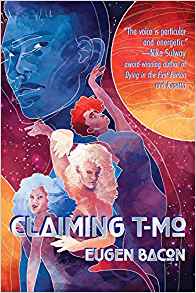
Claiming T-Mo by Eugen BaconClaiming T-Mo by Eugen Bacon:

In this lush interplanetary tale, Novic is an immortal Sayneth priest who flouts the conventions of a matriarchal society by choosing a name for his child. This act initiates chaos that splits the boy in two, unleashing a Jekyll-and-Hyde child upon the universe. Named T-Mo by his mother and Odysseus by his father, the story spans the boy’s lifetime — from his early years with his mother Silhouette on planet Grovea to his travels to Earth where he meets and marries Salem, and together they bear a hybrid named Myra. The story unfolds through the eyes of these three distinctive women: Silhouette, Salem and Myra. As they confront their fears and navigate the treacherous paths to love and accept T-Mo/Odysseus and themselves, the darkness in Odysseus urges them to unbearable choices that threaten their very existence.

The Night Court by Richard Blakemore and Cora BuhlertThe Night Court by Richard Blakemore and Cora Buhlert:

The city of Vanadur suffers under the thumb of the Night Court, whose bailiffs snatch random people off the streets and whose masked judges know only one verdict: guilty.

Meldom, thief, cutpurse and occasional assassin, is one of those who are snatched off the streets and put on trial by the Night Court. The accusation: murder. But while Meldom may have done many questionable things in the past, he knows that he did not commit this particular murder.

However, the Night Court is not inclined to believe him and so it’s up to Thurvok, Sharenna and Lysha to save him from the gallows.

This is a short story of 7100 words or 25 print pages in the Thurvok sword and sorcery series, but may be read as a standalone. Includes an introduction and afterword.

Knight Protector by Lindsay BurokerKnight Protector by Lindsay Buroker:

An arranged marriage she can’t escape.
A sexy bodyguard who will protect her at all cost.
A forbidden love she can’t give in to…

As one of the sultan’s fourteen daughters, and a successful businesswoman who puts money in the family’s coffers, Princess Nalini thought she would escape an arranged marriage.

She thought wrong.

Her father insists that an alliance with the savage and ambitious Star Kingdom is the only way to avoid a war at home, and for some reason, Prince Jorg—a man she’s never met—wants to marry her.

As if that weren’t bad enough, her father believes the betrothal may make her a target and is assigning her a bodyguard, the victor of one of his odious gladiator matches. She doesn’t want some brutish stranger intruding on her privacy.

But her new protector—Tristan—is not the brute she expected. He has a quick wit, a sexy smile, and even sexier things under the smile.

Unfortunately, Nalini can’t let herself fall in love with Tristan, not when she’s soon to be betrothed to another man. As her father’s daughter, it’s her duty to help her people by cementing this alliance. No matter how much she wishes otherwise…

~

As Tristan grew up on the streets, his father a convict and his mother a drug addict, all he ever wanted was to become one of the Star Kingdom’s elite knights, something that very few commoners ever achieve. After Tristan labors for years as a squire, the king is ready to appoint him a knight… if he accomplishes one simple task. He must infiltrate the sultan’s palace, gain the trust of Princess Nalini, and make sure she doesn’t run away from her marriage with Prince Jorg.

There’s just one problem.

Nalini isn’t the spoiled rich brat he expected—she spends her days working as hard as he does—and he soon develops feelings for her. With her betrothal looming, and the career he’s worked his whole life for at stake, Tristan can’t let himself act on those feelings.

But can he stand back while a man who doesn’t deserve her claims her for his wife?

Mermaid's Wish by Stacy ClaflinMermaid’s Wish by Stacy Claflin:

Every other princess prepares to rule her kingdom after her father’s death. Me? I have to get ready to rule all underwater kingdoms—after killing my father.

I already fulfilled the prophecy once. Kind of. I have no interest in killing again.

But no one asked what I want.

It’s this stupid Queen Sirena prophecy. My father—my real, biological father—is obsessed. And he’s the king, so he gets what he wants. Namely me, embracing a destiny I fear.

As I come to terms with my new reality, I find myself alone, cut off from my best friend and boyfriend and unable to convince my parents this is all a terrible idea.

My father, the king, wants me to kill him. He’s set plans in motion to make it happen.

I’m too weak to refuse. And hopefully too strong to succeed.

Peavley Manor by Robert DahlenPeavley Manor (Or, Introducing Macalley) by Robert Dahlen:

Alice Peavley was a sales clerk in a book shop, until her rich uncle left her his estate in his will. She moves to the manor, meets her new tenants and neighbors, and adjusts to life in the eccentric town of Darbyfield with the help of her valet, a sardonic gnome named Macalley. Alice gets mixed up in misadventures involving a concert gone askew, a chaotic baking competition, and a mischievous squatter, but there is a more sinister plot afoot to steal her land and her fortune. Can Alice get to the bottom of the conspiracy and save Peavley Manor? Find out in this comedy of manners, mayhem and magic!

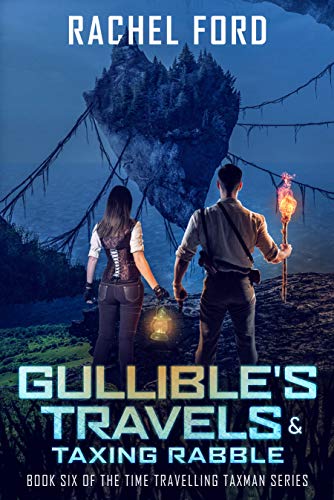
Gullible's Travels and Taxing Rabble by Rachel FordGullible’s Travels and Taxing Rabble by Rachel Ford:

A shadowy interdimensional organization. A special assignment. A bizarre alternate universe.

When a recruitment agent from the Interdimensional Bureau of Temporal Investigations knocked on his door, there was no way Alfred Favero, Senior Analyst with the Internal Revenue Service, could just walk away. How could a man of law and conscience turn down the chance to stop crime across dimensions and times?

Now, he’s in bizarre alternate dimension, where suspicion is fact and fact is suspect. To succeed, he must question everything he thinks he knows about this new world – and even the mission itself.

Otherwise, Alfred Favero might have taken his last trip through time.

The Robin Hood of Couches by Aaron FraleThe Robin Hood of Couches by Aaron Frale:

Reese investigates corporate fraud and discovers some joker has been giving away free couches to the needy, because when a person can no longer afford the subscription service fees, all their furniture disappears. The bearer of sofas ends up in a ditch when blunt force trauma snuffs out the poor’s best chance of not living in an empty room their whole life. Reese rolls up his sleeves. Time to get to work.


Defender by Anna HackettDefender by Anna Hackett:

Rescued from alien slavers, the only place she feels safe is in the brawny arms of a big, gruff cyborg.

Astrophysicist Dr. Jayna Lennox’s life imploded the day her ship was attacked by aliens. Through months of captivity, she’s survived by shutting down and not feeling. Then she’s freed by the House of Rone cyborgs and finds herself in the arms of huge, tough Mace. Struggling to heal, Mace is the only thing that makes her feel safe. The only person who makes her feel like she isn’t broken. But there are more of her crew members imprisoned in Carthago’s desert, and Jayna will have to delve into her darkest memories to help save them.

Born to fight and bred for rage, Mace barely survived his gang-ridden homeworld. Thanks to Imperator Magnus Rone, he’s found a place at the House of Rone. Unlike the other cyborgs, he feels, but only anger and annoyance. When a small, wounded human woman works her way under his skin, Mace finds himself feeling things he’s never felt before…along with a powerful need to keep her safe.

Jayna vows to help find her fellow humans, even if it means revisiting her nightmares and being part of a dangerous mission into the desert. But as the passion between her and Mace explodes, she finds herself with two battles on her hands: the battle to free the humans from their captors, and the war to win Mace’s scarred heart.

Dark Dancer by B.R. KingsolverDark Magic by B.R. Kingsolver:

One Master survived the inferno that destroyed the Order of the Illuminati. He may know that I survived, but does he suspect that I betrayed the Order?

Rudolf Heine has sent Hunters flooding into Westport, wreaking carnage on vampires, shifters, and mages. Normal humans are taking notice, and the shadow world teeters on the verge of being revealed.

The Hunters also may be hunting me. Do I stay and fight for my new life and my friends, or run again?

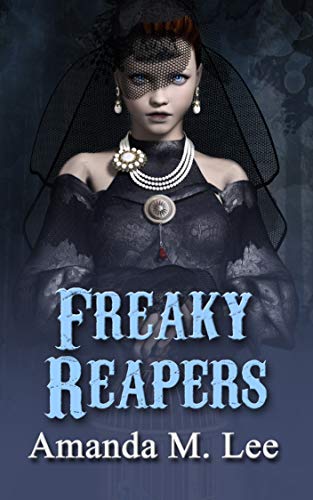
Freaky Reapers by Amanda M. LeeFreaky Reapers by Amanda M. Lee:

Poet Parker put the past behind her. At least she thought she did.

Life on the streets wasn’t what she had in mind for her forever and she jumped at the chance to join Mystic Caravan Circus when an invitation was extended. She didn’t look back.

That was ten years ago, and now Poet is going back to the exact area she used to haunt … and she’s nervous.

The friends she left behind are scattered. Some are dead. Some have moved on to other things. Some turned out to be something else entirely. Others simply disappeared into the wind.

Unfortunately for Parker, forgetting isn’t easy … especially when a group of banshees start infringing on Mystic Caravan’s territory and the creatures seemingly have ties to the people Poet left behind.

Between the reapers also working the case – a crazy family called the Grimlocks who can’t stay out of trouble – and the guilt weighing Poet down given the way she fled, she has her hands full.

Someone is controlling the banshees, stealing girls from the streets and creating a merry band of monsters. It’s up to Poet to find out who and protect two street girls who remind her of herself.

Poet doesn’t want to look back but she has no choice … what she finds might be more evil than she ever imagined.

Rediscovery: Science Fiction by Women (1958 - 1963), edited by Gideon MarcusRediscovery: Science Fiction by Women (1958 – 1963), edited by Gideon Marcus, foreword by Dr. Laura Brodian Freas Beraha

  • Fourteeen uncut Silver Age science fiction stories by women
  • Fourteen introductions providing historical, biographical, and literary context
  • One foreword by Dr. Laura Brodian Freas Beraha
  • One introductory essay by Gideon Marcus

From the team that produces the Hugo-nominated Galactic Journey:

The Silver Age of Science Fiction saw a wealth of compelling speculative tales — and women authors wrote some of the best of the best. Yet the stories of this era, especially those by women, have been largely unreprinted, unrepresented, and unremembered.

Until Now.

Rediscovery: Science Fiction by Women (1958-1963) features fourteen selections of the best science fiction of the Silver Age by the unsung women authors of yesteryear, introduced by today’s rising stars:

Unhuman Sacrifice (1958) by Katherine MacLean, introduced by Natalie Devitt
Wish Upon a Star (1958) by Judith Merril, introduced by Erica Frank
A Matter of Proportion (1959) by Anne Walker, introduced by Erica Friedman
The White Pony (1960) by Jane Rice, introduced by T.D. Cloud
Step IV (1960) by Rosel George Brown, introduced by Andi Dukleth
Of All Possible Worlds (1961) by Rosel George Brown, introduced by Cora Buhlert
Satisfaction Guaranteed (1961) by Joy Leache, introduced by A.J. Howells
The Deer Park (1962) by Maria Russell, introduced by Claire Weaver
To Lift a Ship (1962) by Kit Reed, introduced by Gideon Marcus
The Putnam Tradition (1963) by Sonya Hess Dorman, introduced by Lorelei Marcus
The Pleiades (1963) by Otis Kidwell Burger, introduced by Gwyn Conaway
No Trading Voyage (1963) by Doris Pitkin Buck, introduced by Marie Vibbert
Cornie on the Walls (1963) by Sydney van Scyoc, introduced by Rosemary Benton
Unwillingly to School (1958) by Pauline Ashwell, introduced by Janice Marcus

“Female authors wrote stories about coming of age…cautionary tales…stories set beyond our universe…You’ll find these themes and more in this anthology. I hope that as you read their stories you don’t try to ‘feminine’ versus ‘masculine’ elements. What you are about to read is really good science fiction, plain and simple.” -from the foreword by Dr. Laura Brodian Freas Beraha

Wrecked Intel by Mandy M. RothWrecked Intel by Mandy M. Roth:

Operative: Cody Livingston (Shark-Shifter)

Wereshark and former Immortal Op Cody Livingston has spent decades keeping his head down and staying off the grid. Ever since he volunteered to be part of a test group when the government attempted to create super soldiers, he’s been in a fight for his life and those of the men he sees as brothers—fellow Outcasts. You see, his own government turned against him when the DNA manipulation attempts didn’t go as planned.

Now Cody spends his days trying to right the wrongs left in the wake of the experiments and protecting any innocents caught in the crossfire. This is easier said than done when he’s had to escape the clutches of a madman hell-bent on possessing Cody’s healing gifts and longevity. As old foes resurface, the stakes get even higher when Cody realizes he not only has a mate but that she’s in the crosshairs of the enemy as well.

Origins of the Tainted Bloodline by Rosie ScottOrigins of the Tainted Bloodline by Rosie Scott:

Alastor Cerberius is a troubled man.

After over a century enslaved in the oppressive underground, he and his best friend, Koby Bacia, escape their chains. They emerge onto the surface: a new world full of the unknown, freedom, and discovery. Desperate to leave his tragic past behind, Alastor changes his name to Calder and delves into the dangerous blood science of shapeshifting. With the new ability to transform into a lethal lizard at will, Calder finally has power after a lifetime of captivity.

Calder and Koby answer the ocean’s call with dreams of smuggling illegal goods as mercenary sailors. This is easier said than done, for the seas are full of horrors of their own, and each time Calder transforms into the beast, it further scars his damaged psyche. Worst of all, a botched business deal puts them at odds with a criminal ring of pirates that are determined to remain the greatest threat on the seas.

The Screening Routine by SMAThe Screening Routine by SMA:

[Tell me the secret you keep from yourself.]
It knows your joy.
It knows your fear.
It knows your desire.

After decades of war, a battered Earth begged the Routine—our most powerful artificial intelligence—to take control of the solar system and unite humanity.

Now, forbidden lovers must help the AI solve the mystery of a rising threat:

Itself.

A SCIFI ADVENTURE BEGINS
Weeks away from graduating into blissful civilian anonymity, Owen discovers that his fate has been hijacked by the Routine. Trapped within the Screening Complex, training school for the Routine’s chosen leaders, Owen is determined to resist the influence of his all-seeing artificial taskmaster.

…If only he could stop dreaming of the man with dark eyes.

Who is that stranger, and why has his presence stirred a new hunger in Owen—one more desperate than he’d ever imagined? Questions lurk around every corner, but there’s one truth Owen will never forget:

The Routine is lying to us all.

Join the discovery as Owen pursues the mysteries of the Routine—and learns the endless bounds of love and his own desire.

Exile by Glynn StewartExile by Glynn Stewart:

A dying world, shattered by a broken machine
A desperate flight, their only hope for refuge
A robotic race, ally and destroyer alike

The Republic of Exilium has grown in strength and confidence at the far end of the galaxy from the rest of mankind, sending out scout ships to survey the worlds around them as they try to learn more about the mysterious Construction Matrix AIs.

Finding one of the genocidal rogues of that mysterious “race” in the process of destroying an inhabited world, Captain Octavio Catalan takes his ship into a desperate battle. He is victorious—but he is too late. The world of the strange aliens he has encountered is doomed.

The distant Republic can barely help, but the honor of their leaders will not permit them to stand idly by. Ships and crews are set into motion to commence a desperate evacuation of their newfound friends, and debts with the strange Matrices are called in.

One branch of Matrices destroyed the planet. Another may well save it—but the AIs have their own agenda and the price they ask may be beyond the Republic and its new allies…

Conquest of Earth by James David VictorConquest of Earth by James David Victor:

When all else fails, blow up a bunch of stuff and hope for the best.

Solomon and the Outcast Marines have been pushed to the brink, but are still standing strong. When the Ru’ut plot is fully revealed, they must go on one last desperate mission to save humanity. If humanity has any hope, they must stop the invading aliens from conquering Earth. Can Solomon overcome his past, and his genetics, and save his friends and all of humankind?

Conquest of Earth is the ninth book in the Outcast Marines series. If you like science fiction with “heroes” who are anything but, the Outcast Marines will suck you into their battle to save humanity, from itself and the rest of the galaxy.

Posted in Books, Speculative Fiction of the Month | Tagged , , , , , , , , , , , , , , , , , , , , , , , | Leave a comment

Indie Crime Fiction of the Month for August 2019

Welcome to the latest edition of “Indie Crime Fiction of the Month”.

So what is “Indie Crime Fiction of the Month”? It’s a round-up of speculative fiction by indie authors newly published this month, though some July books I missed the last time around snuck in as well. The books are arranged in alphabetical order by author. So far, most links only go to Amazon.com, though I may add other retailers for future editions.

Our new releases cover the broad spectrum of crime fiction. We have cozy mysteries, small town mysteries, animal mysteries, historical mysteries, jazz age mysteries, paranormal mysteries, crime thrillers, legal thrillers, action thrillers, spy thrillers, police procedurals, private investigators, amateur sleuths, lawyers, FBI agents, missing persons, serial killers, spies, terrorists, cold cases, crime-busting witches, crime-busting realtors, modern day pirates, murders in small towns and big cities, aboard cruise ships and in country inns, in Louisiana, Southern California, London, Hawaii, Maine, Miami and much more.

Don’t forget that Indie Crime Fiction of the Month is also crossposted to the Indie Crime Scene, a group blog which features new release spotlights, guest posts, interviews and link round-ups regarding all things crime fiction several times per week.

As always, I know the authors at least vaguely, but I haven’t read all of the books, so Caveat emptor.

And now on to the books without further ado:

Buy and Spell by Stacey AlabasterBuy and Spell by Stacey Alabaster:

Sometimes you just need to solve a mystery because you’re the main suspect

Ruby Swift is settling into her life as a private investigator while protecting her secret magical life. When her new, unwanted neighbor turns up dead, she must find the real killer to clear her own name. Can Ruby come up with a spell to buy her way out of trouble?

Buy and Spell is part of the Private Eye Witch Cozy Mystery series. If you like fun paranormal mysteries, you will love Ruby Swift and her magical adventures.

Get Buy and Spell and start solving your next supernatural mystery today!

Alex Mercer Thrillers Boxset by Stacy ClaflinAlex Mercer Thrillers Boxset by Stacy Claflin:

Read the first three Alex Mercer thrillers in this convenient bundle…

GIRL IN TROUBLE
He gave up his daughter years ago, but now he’ll risk his life to save hers.

Alex Mercer is no stranger to kidnappings. The emotional scars still run deep from his sister’s disappearance years earlier. His daughter Ariana remains safe long after her adoption, and he cherishes the few times a year he gets to see her. The joy is palpable when he takes her on their first one-on-one outing. At least until he pauses to answer a text and Ariana disappears…

Wracked with guilt and determined to find answers, Alex teams up with an unlikely ally at the police department. As the clues reveal a pattern of missing girls, the kidnapping case becomes a race against time to save Ariana. What cost is Alex willing to pay to keep his daughter alive?

Girl in Trouble is the first book in a series of thrilling stand-alone novels spun off from the USA Today bestselling Gone Trilogy. If you like heart-pounding suspense, page-turning action, and characters you’ll never forget, then you’ll love Stacy Claflin’s engrossing new series.

TURN BACK TIME
A dangerous cult disbanded years ago. Now they’re back, and they want revenge.

Alex Mercer spends his spare time operating a blog for missing children—a pastime inspired by his daughter’s recent disappearance. Another relative goes missing. As he follows up on leads coming into his site, the police department is inundated with a rash of missing persons cases. The incidents seem unrelated until evidence ties the cases to a dilapidated apartment building known for its unsavory clientele. Suspicion falls on a disbanded cult. The same cult Alex’s own relatives had managed to escape from and bring down a decade earlier.

The cult leaders, recently released or escaped from prison, reassemble their members and mandate a new mission to capture and kill all those responsible for the breakdown of their community. After another loved one disappears, Alex is ready to rescue the missing people from certain death. But will he get there in time?

LITTLE LIES
He’s dedicated his life to saving missing persons, but will it be enough to save himself?

Alex Mercer traded in his troubled past to protect the powerless. His blog for tracking down missing persons got his foot in the door at the police academy. But on his first day of training, a heroic act drops him into the hands of the captors he once hunted.

Zoey planned to tell Alex how she felt the night he disappeared. As she and Alex’s family discover the bloody signs of his fate, past regrets and dark secrets begin to come to light. It’s enough to tear Alex’s loved ones apart.

Without hope of rescue, Alex must rely on his cunning to escape captivity. In his line of work, he knows all too well that each passing hour could kill his chances of survival…

Haunting in the Hallway by Kathi DaleyHaunting in the Hallway by Kathi Daley:

A heartwarming cozy mystery series about losing everything, taking a chance, and starting again.

After suffering a personal tragedy Abby Sullivan buys a huge old seaside mansion she has never even seen, packs up her life in San Francisco, and moves to Holiday Bay Maine, where she is adopted, quite against her will, by a huge Maine Coon Cat named Rufus, a drifter with her own tragic past named Georgia, and a giant dog with an inferiority complex named Ramos. What Abby thought she needed was alone time to heal. What she ended up with was, an inn she never knew she wanted, a cat she couldn’t seem to convince to leave, and a new family she’d never be able to live without.

In book 5 in the series, the new bank president, who happens to be the son of the man who founded the community bank, is found dead and buried in his own grave. The man was not popular in the small community after making a lot of changes with his fathers passing and the list of possible suspects who might want him dead is extensive.

Meanwhile, it is October and the inn is hosting Halloween themed events. The haunted weekends are just for fun but when guests report hearing noises in the hallway, Abby wonders if the inn might actually be haunted for real.

La Jolla Law by John EllsworthLa Jolla Law by John Ellsworth:

A California beach town, a murder at a Presidential reception, a detective who finds herself in hot water for sexual harassment…

Add to the mix a gifted boy band traveling cross-country and a tech billionaire who functions on cocaine with a plastic wife who refuses to return home from Paris where her lover does hair for Vogue. Now you have the opening chapters of La Jolla Law, the new series featuring attorney Thaddeus Murfee.

The Maseratis pull over when the President of the United States comes to town to kickoff his reelection campaign. Unfortunately, he has chosen the home of the tech billionaire to spend the night. Suddenly, that night erupts with police streaming through the doors. There, on the golden shoreline, a true American tragedy hits CNN at daybreak. Thaddeus is called into the rock-and-roll world of the beach dwellers when a gifted loner is accused of the crime.

Thaddeus arrives in Southern California thinking he’s already seen everything in his fifteen years of law practice.

La Jolla Law will show him just how wrong he is.

Sleeping Beauties by Skylar FinnSleeping Beauties by Skylar Finn:

The sleepy town of Barksdale, Louisiana isn’t known for much: except for its unusually high rate of disappearances.

When the daughter of a prominent businessman and a wealthy debutante vanishes, Reese Lindley returns to her hometown to cover the case for her podcast. Confronted by the past and her estranged family, Reese learns that the quiet town has more secrets to hide than she ever could have imagined.


Raging seas by Lily Harper HartRaging Seas by Lily Harper Hart:

For years, Rowan Gray has been searching for answers. She’s finally going to get them.

The group of people haunting her, the society that ripped her family apart, are due to arrive on The Bounding Storm … and nobody believes their goals are altruistic. That’s only proven true when death visits The Bounding Storm in their wake, leaving a mountain of questions and not enough answers.

Who are these people?
What do they want?

Quinn Davenport, head of security and Rowan’s boyfriend, is determined to figure out their plan, fight the effort, and eradicate the shadow that’s hanging over the future he plans on sharing with Rowan. They’re going to stand and fight together, no matter the outcome. To carry out the mission, they’re going to need a little help.

Rowan’s father and uncle board the ship in an undercover capacity, so it’s all hands on deck for the final ride. Before it’s over, Rowan will know the truth … and come face to face with an enemy she didn’t see coming.

This is the end, but it could lead to a new beginning.

Mid-Century Modern Murder by CeeCee JamesMid-Century Modern Murder by CeeCee James:

Stella’s mid-century modern listing was on track to be her easiest commission ever… until the buyers asked about the rumors of a girl who drowned nearby.

As part of her due diligence, Stella starts searching for answers and finds a cold case that makes no sense. A teenage girl who was a State swim team champion… drowned. Something about the case keeps tugging at the edges of her memory but Stella can’t quite put her finger on it.

Meanwhile, Stella’s quest to find out exactly what happened with her mother is finally gaining some traction. She’s close to getting the whole story; she can feel it. But the more determined she is to find out the truth, the more her family members warn her that she won’t like the answers.

As the decades-old drowning case becomes clearer, Stella is shocked to find her own history entwined with that of the dead girl. With each new revelation about her mother, she starts to wonder if her family is right but she just can’t stop herself until she knows every secret.

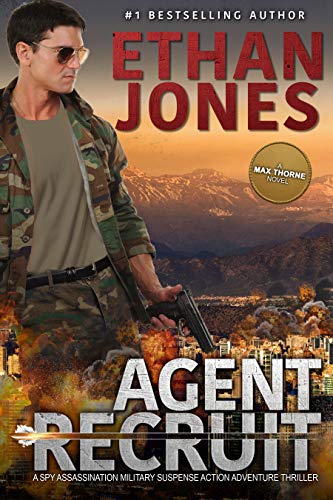
Agent Recruit by Ethan JonesAgent Recruit by Ethan Jones:

What price would you pay to learn the truth?

Russian FSB Agent Max Thorne is recovering from a daring assignment in the United States, which led to shocking discoveries about his mysterious past. As he begins the search to put together the missing pieces, Max learns that the elusive truth is buried deep under decades of secrecy, betrayal, and deception involving the CIA and KGB.

Barely able to stay one step ahead of powerful forces set on protecting those secrets at all costs, Max is determined to do the right thing. But what price will Max have to pay to learn the bittersweet truth, and can he protect the ones he loves?

Join Max as he faces the darkness that is the secret service the only way he knows how … head on.

Freaky Reapers by Amanda M. LeeFreaky Reapers by Amanda M. Lee:

Poet Parker put the past behind her. At least she thought she did.

Life on the streets wasn’t what she had in mind for her forever and she jumped at the chance to join Mystic Caravan Circus when an invitation was extended. She didn’t look back.

That was ten years ago, and now Poet is going back to the exact area she used to haunt … and she’s nervous.

The friends she left behind are scattered. Some are dead. Some have moved on to other things. Some turned out to be something else entirely. Others simply disappeared into the wind.

Unfortunately for Parker, forgetting isn’t easy … especially when a group of banshees start infringing on Mystic Caravan’s territory and the creatures seemingly have ties to the people Poet left behind.

Between the reapers also working the case – a crazy family called the Grimlocks who can’t stay out of trouble – and the guilt weighing Poet down given the way she fled, she has her hands full.

Someone is controlling the banshees, stealing girls from the streets and creating a merry band of monsters. It’s up to Poet to find out who and protect two street girls who remind her of herself.

Poet doesn’t want to look back but she has no choice … what she finds might be more evil than she ever imagined.

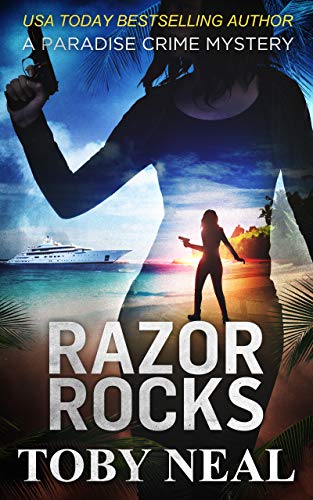
Rzor Rocks by Toby NealRazor Rocks by Toby Neal:

Paradise is plundered by pirates.

Someone is attacking and robbing luxury yachts as they sail the Hawaiian Islands leaving their passengers missing and presumed dead. Sergeant Lei Texeira, with her typical leap first look later style, dives into a case with the Coast Guard to find answers that lie as deep as Davy Jones’ locker.

He’s taking back what was stolen.

The Pirate King has a hidden agenda that’s bigger than the pillage of luxury yachts, and he’ll stop at nothing to reign on the sea.

If She Fled by Blake PierceIf She Fled by Blake Pierce:

When another 50 year old woman is found dead in her home in a wealthy suburb—the second such victim in just two months—the FBI is stumped. They must turn to their most brilliant mind—retired FBI agent Kate Wise, 55—to come back to the line of duty and solve it.

What do these two empty nesters have in common? Were they targeted?

How long until this serial killer strikes again?

And is Kate, though past her prime, still able to solve cases that no one else can?

Never Ever by Willow RoseNever Ever by Willow Rose:

Ex-agent Eva Rae Thomas is on the run. The past month she has done things she never knew she was capable of while hunting for her kidnapped daughter.

Eva Rae has risked everything,

-her career,

-her newfound love,

-her freedom.

She’s looking for the man they call the Iron Fist. The trail has led her to Miami.

Meanwhile, Miami is under attack. Hundreds of passengers in the Metrorail are exposed to a deathly nerve gas on a peaceful Monday morning. When Eva Rae Thomas sees her daughter on the surveillance footage from the attack, she knows it is no coincidence. But by the time she uncovers the chilling truth of how it is all connected, it might be too late.

Murder on Eaton Square by Lee StraussMurder on Eaton Square by Lee Strauss:

Murder’s Bad Karma. . .

Life couldn’t be better on Eaton Square Gardens where the most prestigious families lived, until one of their own dies and it’s murder.

Ginger and Basil are on the case, but it’s not a simple glass of bubbly fizz. The more the clues present themselves, the trickier the puzzle gets, and Ginger feels she’s on a wild goose chase.

But as someone close to the victim so aptly quips, “One shouldn’t commit murder. It’s bad karma.”

Reaping what one sows is hardly a great cup of tea.

Posted in Books, Indie Crime Fiction of the Month | Tagged , , , , , , , , , , , , , , , , | Leave a comment

Brief WorldCon and TitanCon Update

I’m still in Ireland, though now in the Northern part at TitanCon, the 2019 EuroCon in Belfast.

My hotal WiFi is pretty bad, plus I caught a virus that was going around at WorldCon. So if you’re waiting for my 2019 Hugo analysis, you’ll have to wait a bit longer.

But in the meantime, if you check out my Twitter, you can see all the photos I’m posting there.

Posted in General, Personal | Tagged , , , , , , , , | Leave a comment

Some Comments about the 1944 Retro Hugo Awards Winners

So the 1944 Retro Hugos were awarded during the opening ceremonies of WorldCon 77 in Dublin last night. I didn’t go to the opening ceremonies, but was having dinner at The Drunken Fish, a Korean restaurant in Dublin.

But of course, the 1944 Retro Hugo winners were also announced online almost as soon as the ceremony was over. The hardworking Hugo administrator Nicholas Whyte also shares some voting and nomination stats.

So let’s take a look at the winners: Conjure Wife by Fritz Leiber jr. takes Best Novel and the Leiber family can add another Hugo to Fritz Leiber’s already big collection. It’s a highly worthy winner, though personally I preferred Gather, Darkness, the other Fritz Leiber novel in this category, to Conjure Wife. But I guess the religious satire cum dystopia of Gather, Darkness found less fans than the proto-urban fantasy of the surprisingly timeless Conjure Wife. Besides, Conjure Wife is still in print and has been continuously in print for seventy-six years. As far as I know, Gather, Darkness is no longer in print. I’m surprised that the pretty bad The Weapon Makers came in third, but then A.E. van Vogt simply isn’t the author for me and The Weapon Makers has a distasteful message, too.

Finally, I’m really glad that Perelandra by C.S. Lewis didn’t win, especially since Lewis was (Northern) Irish and WorldCon is in Ireland this year, so he is the hometown champion. Now I freely admit that I just cannot connect to C.S. Lewis’ fiction (I like his non-fiction just fine), probably because I never read the Narnia books as a kid and never bothered to read them as an adult, because whatever magic they possess wouldn’t work on me anymore. Also, I don’t like religion in the speculative fiction and C.S. Lewis was very religious. But however you feel about the Narnia books, Perelandra is just bad. It’s dull and preachy and I was actually rooting for the bad guy. After plodding through the terrible, terrible Perelandra, Fritz Leiber’s religion satire Gather, Darkness was even more enjoyable.

The Little Prince by Antoine de Saint-Exupéry wins Best Novella, which was probably inevitable, because it is such a greatly beloved classic that is quoted at every second wedding or funeral it seems at times. I don’t mind The Little Prince winning either, though my personal favourite was the excellent, but underrated “We Print the Truth” by Anthony Boucher, another proto urban fantasy story about fake news and the dangers of getting what you wish for that’s surprisingly timely for something that’s seventy-six years old. Alas, Anthony Boucher seems to have fallen somewhat into obscurity, whereas every single bookshop in the world carries The Little Prince.

Best Novelette goes to “Mimsy Were the Borogroves” by Henry Kuttner and C.L. Moore. It’s a highly deserved win, because the story is a classic and a cracking good one, too. But then, the novelette category at the 1944 Retro Hugos was extremely strong this year, as discussed here. For me, “Mimsy”, “Thieves’ House” by Fritz Leiber and “The Citadel of Lost Ships” and “The Halfling” by Leigh Brackett were pretty much equal in quality. And Fritz Leiber did get a Retro Hugo this year (plus I think six in his lifetime) and everybody’s favourite duo of rogues Fafhrd and Gray Mouser won a Hugo in 1970 for the superlative “Ill Met in Lankhmar”. Though I’m sad that Leigh Brackett still hasn’t got a Hugo or Retro Hugo yet. Maybe when we get to 1949 or 1951 and the Eric John Stark stories I just reviewed for Galactic Journey.

“R is for Rocket” by Ray Bradbury takes home a highly deserved Retro Hugo, because it is a great story that still holds up in spite of dated tech, though I’m a bit sad that “Yours Truly, Jack the Ripper” by Robert Bloch, which is not just a great story, but also the start of the modern fascination of serial killers in general and Jack the Ripper in particular, only finished in fourth place behind two lesser works by big names. I also wonder why “Death Sentence” by Isaac Asimov finished in second place, because – and I’m saying this as an Asimov fan – it is a weak story, which hasn’t even been reprinted in ages. Did anybody except for me actually read the Retro Hugo finalists or do they just vote by name recognition?

Wonder Woman wins Best Graphic Story, which is frankly puzzling. Now I like Wonder Woman, the character, as much as everybody else, but early Wonder Woman from the 1940s is frankly not very good and more of historical interest than anything else. And this particular story is WWII propaganda as well, complete with racist stereotypes. Of course, it’s difficult to avoid WWII propaganda in 1943, but we don’t necessarily have to recognise with the highest honour our genre has to offer. Especially since we did have two very good finalists in this category, Flash Gordon (pretty much the last chance to recognise Alex Raymond’s work, too) and Tintin, which is only very tangentially SFF. I would have been fine with either one of those winning, but Wonder Woman? Honestly, did anybody actually read the finalists or did they just vote for Wonder Woman, because they like the recent movie?

Heaven Can Wait wins Best Dramatic Presentation Long in what must be another name recognition vote, because it’s an Ernst Lubitsch movie, albeit a very minor one. Plus, Heaven Can Wait has the same basic plot as two other finalists in this category and IMO Cabin in the Sky was better, if only because it had better music. I obviously feel that Münchhausen should have won, because it was the best finalist in this category by the huge margin. But it seems that many Retro Hugo voters still cannot bring themselves to vote for a German movie from the 1940s that’s not propaganda and was made by many people who didn’t get along too well with the Nazis, but have absolutely no problem voting for a WWII propaganda comic that’s not even good.

Best Dramatic Presentation Short was the weakest category on the Retro Hugo ballot with the finalists being flawed at best and unwatchable trash at worst. Even the two cartoons, which are normally at least fun and well made, were bad and both were WWII propaganda, too. One of them, Der Führer’s Face, was an outright piece of xenophobic trash. IMO, the two Val Lewton/Jacques Tourneur collaborations were the best of a weak bunch, even if the colonialist undertones of I Walked With a Zombie are uncomfortable today and The Seventh Victim is a suspense movie that’s not actually SFF and only shoehorned Satanists into the plot, because Satanists were considered less horrifying in 1943 than lesbians. Alas, of this sorry bunch of finalists, the Hugo voters picked Frankenstein Meets the Wolfman.

John W. Campbell wins Best Editor again, but then he really was the most influential editor of this area of SFF. Though Donald Wollheim coming in in second place must be due to name recognition again, because Wollheim – while a great editor in later decades – only edited a single anthology in 1943.

Virgil Finlay wins Best Professional Artist once again. Now I love Finlay’s art as much as everybody else, but voters might pick somebody else in this category for a change. I’m also sad that Margaret Brundage was overlooked once again, especially since we are rapidly running out of time to recognise her unique artwork. But then, I really think that Margaret Brundage’s work is both too sexy and not male gazy enough for many people.

Le Zombie wins Best Fanzine and Forrest J. Ackerman wins Best Fan Writer once agin. Now Ackerman is a hugely important figure in the history of fandom, but could we maybe acknowledge one of the other fine fan writers from the 1940s for a change?

And that’s it for the 1944 Retro Hugos. It may take a day or two for me to get the 2019 Hugo Award post up, because I will be at the ceremony and at the Hugo Losers’ Party after and then I’ll leave Dublin for Belfast on the next day.

ETA 1: Nicholas Whyte has now put up the full Retro Hugo stats, which you can access here. It seems that my Mom and I are the only Phantom and Mandrake fans among the Retro Hugo electorate.

ETA 2: I talked to a German fan who interviewed me for his podcast yesterday and he was absolutely stunned that Tintin did not win. The impression at my panel on international comics today was similar: How on Earth can anybody overlook Hergé


Posted in Books, Comics, Film | Tagged , , , , , , , , , | 1 Comment

The Dublin Travel Travails Saga

Those who follow me on Twitter may already have seen that I had the hardest time travelling to Dublin. I got up at 4 AM and my plane left Bremen at 6:20 AM. I was supposed to reach Dublin at 11 am local time with a stopover in Amsterdam. But when I finally reached my hotel in Dublin, it was 10:20 PM, i.e. sixteen hours after I left Bremen.

By the time the plane from Bremen landed in Amsterdam, everything was okay. My Mom, who was supposed to travel to Dublin with me, and I disembarked. We had two hours of transfer time and headed to our next flight.

Now anybody who’s ever been to Amsterdam Schiphol airport will know that it’s a huge and sprawling airport and that depending at which terminal your plane arrives and leaves, it can be a lot of walking. Normally, this isn’t much of a problem, because the terminals at Schiphol airport are equipped with moving walkways, which are very reminiscent of the ones often found in golden age science fiction (think Heinlein’s “The Roads Must Roll”). Yesterday morning, however, three of the moving walkways in the terminal building were out of order. And our flight had arrived at a gate at the far end of the terminal. So that meant a lot of walking.

Again, this wouldn’t have been much of a problem, at least for me. But my Mom is 77 years old and cannot walk very well. She also has a known problem with a heart valve not functioning properly, though her doctor cleared her for travelling last month. I asked my Mom whether I should request assistance services for her, but she said, “Oh no, I’m not sick. I can walk and besides, it’s mostly moving walkways anyway.”

However, as mentioned above, three walkways weren’t working yesterday morning. Two of the broken walkways came after a stretch with no walkways at all, so that was a pretty long stretch without any walkways and also nowhere to sit down. And as it turned out, that stretch was too long for my Mom. Because at the beginning of the third non-functioning walkway, she became dizzy and held on to the handrail. I tried to coax her forward with “We’re almost at the main building, then you can sit down.” My Mom slumped forward and I said to hear, “Now please don’t fall down here.” But of course, she did and collapsed right there on the non-functioning walkway.

The next minutes were something of a blur. I asked a male passenger if he could help me pick my Mom up, but she had passed out. A cluster of people arrived, passengers and airport personnel. Two nice people, a man and a woman whom I took for medics at first, asked me questions about my Mom’s medical history which I answered. I wondered why medics at Schiphol airport were wearing armoured vests and it was only when I noticed that the “medics” also had handcuffs and guns that I realised they were airport police. Someone fetched a wheelchair and – when my Mom threw up – a pitcher from a nearby smoothie shop. The real medics arrived and I answered all questions again in a mix of English, German and Dutch, the latter usually to explain that I do speak Dutch, but don’t know the medical terms. My Mom was responsive again by now and said she was tired. She also had a bruise on her forehead from the rough surface of the walkway.

The medics hooked my Mom up to a mobile monitor and took her to an ambulance and then to the first aid station at the airport that the doctors there could check her out. The doctors at the first aid station were very nice and checked her out. My Mom was feeling a bit better by now, but still very tired. Meanwhile, I explained her whole medical history again. Now my Mom is taking anti-coagulant medication and so she bruises easily and the small bruise on her head looked more lurid than it normally would. This worried the doctors at the airport and so they wanted to do a CT scan of my Mom’s head to make sure that she didn’t have any intercranial bleeding or other damage. Alas, the airport first aid station doesn’t have a CT machine, so they had to send my Mom to a regular hospital. This was around the time the gate for our flight was about to close.

So we were both loaded into an ambulance and taken to VUmc, the Amsterdam University Medical Center. It’s supposedly the best hospital in the Netherlands and also happens to be only about ten minutes from Schiphol airport. Coincidentally, this was the first time I’d been outside Schiphol in twenty-five years or so, though I’ve been inside many times, because Schiphol is the most convenient hub for me. After a short ride past some very science fictional architecture (but then most big Dutch cities are a curious mix of very old and very futuristic architecture) we arrived at the emergency department of VUmc.

A very nice young doctor from the neurology department arrived to do some tests. Actually, all of the doctors we saw at VUmc were on the young side, probably because it is a university and teaching hospital. I explained my Mom’s medical history again. The nice young doctor was satisfied with the tests and didn’t think there was any intercranial bleeding, but we still needed to wait for the CT scan. Meanwhile, the medical monitors to which my Mom had been hooked up showed the heart valve problem, which drew another nice young doctor from the cardiology department. I explained again that yes, it’s a known problem and yes, it’s under supervision. The young cardiology doctor wanted to know which hospital had diagnosed my Mom and the name of her cardiologist. I told them which hospital it was, but I couldn’t remember the name of the cardiologist and didn’t have her number either, so I told the nice Dutch doctor that she should call my Mom’s regular doctor, because he has all the info.

By now it was almost noon. The plane would have just touched down in Dublin, if we had made the flight. I was also really hungry, because I hadn’t eaten or drunk anything in hours. I ate a joghurt at 4 AM at home and later I had a stroopwafel and water on the plane from Bremen to Amsterdam. Eventually, a nice orderly (who was about twice the age of most of the doctors) brought me a Cup-a-Soup, tomato-flavoured, and pointed me to the coffee machine in the hall. My Mom wasn’t allowed to eat anything until the doctor had cleared it.

Finally, they did the CT scan. Then the first young neurologist showed up with another nice and slightly older neurologist in tow. They ran some more tests and said everything was fine and that we could travel onwards. “What about the cardiologist?” “We’ll talk to her”, the two young doctors said and left. A few minutes later a nurse showed up to unhook my Mom from the monitors. One of the nice young doctors brought a letter for my Mom’s doctor at home and reception called a taxi to take us back to the airport. By now, it was maybe twenty past two. A lot later than we thought we’d fly, but it should still be possible to rebook and fly to Dublin on Tuesday.

While we were in the taxi and almost at the airport, my phone rang. I thought it was my Dad, whom I hadn’t been able to reach, and answered. It was the nice young cardiologist from the hospital. “We wanted to do a heart ultrasound on your mother”, she said, “But you were already gone.” I explained that the neurologist had cleared my Mom for travel and that I assumed she’d talked to the cardiologist as well. And then I asked, “How important is this heart ultrasound?” I asked, “Do we need to do it now or can we do it at home or – if need be – in Ireland?” The cardiologist insisted that we needed to do it now, just in case my Mom’s collapse had been caused by the bad heart valve. My Mom’s German doctor agreed. And if it was caused by the heart valve, travelling onwards could be dangerous.

So we told the taxi driver to turn around and return to the hospital. We already were at the exit to the airport by now. At the hospital, I got another bad surprise, when the taxi driver told me the prize, because it turned out that this ten minute (and back) taxi drive cost 64 Euros plus tip.

Then we were back at the hospital. The neurologist apologised for the mix-up and then we waited. And waited. My Mom dozed on the gurney and I dozed a little in the visitor’s chair. And it got later and later and no sign of any cardiologist or heart ultrasound. My Mom and I decided that even if she couldn’t go to Dublin, I should travel onwards, because the hotel, the flights, etc… had already been paid for anyway and two days in advance was very late to cancel all my WorldCon commitments, etc…

And we still waited. It was getting later and later and it looked increasingly doubtful that anybody would go to Dublin that day. I had no luggage beyond a handbag with spare underpants. Worse, cellphone reception at the hospital was terrible and you had to go outside to even use your phone. And since there was no WiFi, there was no internet. I still hadn’t reached my father and I also needed to call the hotel to inform them that I’ll be late, but that I’m coming and that they shall hold my room. And if I couldn’t fly on Tuesday, I also needed someone to inform WorldCon, because I had promised to help with move in on Wednesday. Alas, I couldn’t reach anybody. In the end, I called a colleague of my Dad’s, because I knew they had gone together to Koblenz for work-related reasons. Some other person from the same company answered, because the cellphone had been reassigned to someone else. I told the other person that I really, really need to talk to my father and whether he could contact him and tell him to call me. “That’s difficult”, he said, “Cause I’m on a ship in the middle of the North Sea. But I’ll see what I can do.” Apparently, he did manage, because my father finally called me back, though I still couldn’t reach the hotel.

Meanwhile, an ultrasound technician was scanning my Mom’s heart for what seemed like a very long time. And after the first technician had gone, another technician appeared to do another scan. And then we waited again, while they evaluated the results. Finally, the cradiologist appeared and said that my Mom couldn’t go on to Dublin. She could either stay at the hospital in Amsterdam or return home. My Mom of course wanted to go home, because if you have to be in hospital, it’s better to be in a hospital half an hour from home than four hours away in another country. However, my Mom couldn’t go on a regular flight, but would need to be taken home under medical supervision in an ambulance. I asked the doctors to arrange everything and dumped two weeks worth of medication for my Mom, already prepared in day to day boxes, into the hands of the nice young cardiologist. Then I said good-bye to my Mom and asked reception to call a taxi.

Mind you, the hospital stay in Amsterdam and the many tests they did are all covered by my Mom’s German health insurance. The ambulance trip home might be a problem, but we’ll try to reclaim that from her German health insurance, because there is no other way for her to go home. Try to imagine the financial disaster, if something like this had happened to someone from the US.

The taxi back to the airport cost me another 35 Euros plus tip, so I paid an extra 100 Euros only in taxi fees (which I will try to reclaim from my Mom’s health insurance as well). By now it was 5 PM. At the airport I went to the KLM travel services desk and explained the situation. Turned out that there still was a flight out to Dublin that night. However, I needed to pay 202 Euros, because my ticket didn’t include schedule changes. I said, “Well, it’s not my fault that my Mom collapsed on your non-functioning walkways. Should I just have left her lying there and gone on to my flight?” The lady at the KLM desk apologised, but policy is policy. So I grudgingly whipped out my credit card and paid. I can probably reclaim those 202 Euros from our travel cancellation insurance.

I also asked what happened to our luggage and learned that it was still in Schiphol, because someone had informed KLM that we weren’t flying. “I still need both suitcases”, I told the lady, “Because my Mom’s and my stuff is all mingled up and whichever suitcase I get means I don’t have half the stuff I need.” So now our luggage and I were once more on the way to Dublin.

In the terminal at Schiphol, I bought a grossly overpriced phone charger, because mine had broken down the day before. I ate a ramen noodle soup – also grossly overpriced and no longer nearly as good as before the renovation of the international terminal. Alas, I still couldn’t reach the hotel and sent a text to my father and a cry for help via Twitter that someone really needed to contact the hotel for me. My father finally managed to reach the hotel and I went to my gate. I also called the hospital to ask after my Mom and ask them to tell her that I still got a flight tonight

And guess what? My already late flight to Dublin was delayed by half an hour. On the plane, I sat next to a very nice Dutch lady. I had a coronation chicken sandwich and a small bottle of red wine (which KLM gives you at no extra charge), because after everything that had happened, I really needed a drink.

The sun had just risen, when I left Bremen. It was about to set, when I left Amsterdam. By the time I finally got to Dublin, it was dark. At the airport, I had a new problem, because I had two pretty heavy suitcases. I could put them onto a baggage trolley at the airport, but getting them onto the airport bus was already a problem, though a kindly gentleman helped me.

On the Dublin airport bus, I also met the first WorldCon people, two nice Swedish fans who’d flown in on the same plane. The bus driver told us that he’d announce the stations so we’d know when to get off. Alas, because we were all attending WorldCon, he only announced the Convention Centre. However, I needed to get off at The Point, one stop earlier and approximately 800 metres away. Which isn’t that much of a walk under normal conditions, but I was bone tired and had two heavy suitcases.

So I thought, “Okay, I’ll just go into a Convention Centre and ask them to call me a taxi. I already paid 100 Euros in taxi fees, so what’s a few more?” Alas, the Convention Centre was already closed, because it was almost ten PM. I knew there was supposed to be a tram, but I could see neither a station nor tram tracks. So I did the only thing I could do. I took my two heavy suitcases and started to walk in what should be the right direction. I thought, “If I find anything that’s open – a pub, a bar, a restaurant – I’ll go in and ask them to call a taxi.” However, the Dublin Convention Centre is in a newish neighbourhood – reclaimed harbour land – which is full of offices and banks and a lot of buildings still under construction, but had neither pubs nor anything else that was open at 10 PM. There were hardly any pedestrians either and the first one I asked had never heard of either the Gibson Hotel or The Point. So there was nothing left to do but walk. And then, on top of everything, it started to rain.

By this point, I was pretty much close to crying. But just sitting down on the sidewalk in the rain or jumping into the river Liffey wasn’t an option, so I just kept on walking. I found another pedestrian, who at least pointed me in the right direction. I found tram tracks, too, so I knew I was on the right track.

Then I met a third pedestrian and asked him for the way. And this time I got really lucky, because the third pedestrian was Phil Dyson who’s on the Dublin con com and who was actually on his way to the Gibson Hotel himself. He helped me with my suitcase and I also got to meet his wife, whom he was meeting at the Gibson. Phil also showed me where the reception of the Gibson Hotel actually was (on the third floor, which was… unexpected). I thanked him and checked in. And I actually still had a room, because my Dad had managed to reach the hotel.

I don’t think I’ve ever been so glad to be inside a hotel room before. And I was even happier, when I found a kettle and a tea tray. I unpacked some of my luggage – if only because many of the things I needed like my pyjama, new underwear, my toothbrush and other cosmetics stuff – was at the bottom of one of the suitcases. Then I hopped into the shower, unpacked some more and also separated my own stuff from my Mom’s. Then I finally went to bed, bone tired, but still couldn’t sleep.

Mind you, in spite of the truly hellish day I had, every single person I met – whether fan or mundane – was nice. Otherwise, it would have been even more awful.

I did eventually fall asleep. On Wednesday morning, I headed to the Convention Centre (and walked into the Central Bank of Ireland by mistake first, because both are buildings with jutting glass facades on the banks of the River Liffey populated by people with badges on lanyards, though I did wonder why do many folks were male and wearing suits) to get my badge and my programme participant and Hugo acceptor package. Then I spent the rest of the day helping with set up in the Point Square venue, assembling shelves, taping down tablecloths, carrying boxes and the like. I also talked to my Mom on the phone, who was doing much better, though still in Amsterdam. In the evening, I had a burrito with Shaun Duke of The Skiffy and Fanty Show who’d just flown in from Minnesota and had no luggage, because KLM lost an entire plane’s luggage. He’s far from the only one – almost everybody had problems getting to Dublin for WorldCon.

On Thursday, I had a the “International television” panel, which went well, as well as the speedcrafting workshop, which went pretty well, too, I think. I met lots of great people, though I was hastening from one location to the other and trying to find where everything was at the Convention Centre (I did know where everything was at Point Square, because I had helped to set up). I didn’t even get to see the dealers’ room yet. But I did meet a lot of great people.

And that was my WorldCon so far.

Posted in General, Personal | Tagged , , , , , , | 5 Comments

Cora goes to WorldCon 77 in Dublin, Ireland, and TitanCon in Belfast, Northern Ireland

Related image

This week, I’m off to Ireland for WorldCon 77 in Dublin and TitanCon, the 2019 EuroCon in Belfast the weekend after. I’ll be leaving early on Tuesday morning and am really looking forward to the experience. I’m particularly excited to the be attending the Hugo ceremony as the designated accepter for best fanzine finalist Galactic Journey.

So there will be light to no blogging for the next two weeks and plenty of photos and con reports, Retro Hugo and Hugo discussion (come on, you know there’ll be Hugo discussion) once I get back. You can also get live updates of what I’m up to on Twitter.

In the meantime, the Speculative Fiction Showcase and the Indie Crime Scene will still be chugging along, including (somewhat truncated) link round-ups.

But should you find yourself in Dublin for WorldCon 77 or Belfast for TitanCon, say hello to me.

You can also find me and several other fine folks on the following panels:

Non-English language SFF television

Format: Panel

15 Aug 2019, Thursday 13:00 – 13:50, Wicklow Room-2 (CCD)

Interest in TV from different countries is increasing. There are many good SFF TV shows produced in non-English speaking countries, and they are getting easier to find. The panel discusses their favourites and what makes them worthwhile to watch.

Harun Šiljak (Trinity College Dublin, CONNECT SFI Centre for Future Networks and Communications), Cora Buhlert, Lionel Davoust, J. Sharpe (Zilverspoor), Claudia Fusco (M)

Notes

Example of shows: Ad Vitam (France), (Ijon Tichy, Raumpilot (Germany), Dark (Germany), The Rain (Denmark), Äkta människor (Sweden), Goblin (Korea), but there are a lot more.

Speed crafting – session 1

Format: Workshop

15 Aug 2019, Thursday 15:30 – 17:20, Warehouse Art Demo Area (Point Square Dublin)

It’s like speed dating for handicrafts. Have you ever wanted to try your hand at something new, but haven’t managed to take the ‘plunge’? We will provide the materials and instructors. Each session will have different handicrafts, and you will try each one. You won’t end up with something you can take away, but maybe you’ll be inspired. Sign-ups in advance will be required for this workshop (limited to 15 people).

Session 1: knitting, crochet, lucet.

Rebecca Hewett (M), David Demchuk, Nina Niskanen, Cora Buhlert

Introduction to SFF romance

Format: Panel

16 Aug 2019, Friday 15:00 – 15:50, Wicklow Hall 2B (CCD)

SFF romance is as varied and creative as the speculative genre as a whole but, along with other romantic sub-genres, has often been dismissed and undervalued. From shapeshifting billionaires to far future secret agents, vampire brides to Highland flings, this panel will provide a broad introduction to SFF romance in all its glory as well as providing a range of reading recommendations.

Darlene Marshall, Cora Buhlert (M), D.A Lascelles (Zig Zag Education), Jeffe Kennedy (SFWA)

The global multiverse: the comics scene worldwide

Format: Panel

17 Aug 2019, Saturday 13:30 – 14:20, Odeon 3 (Point Square Dublin)

Darna! Storm Riders! The Metabarons! These are just some of the comic book titles found outside the dominant US comics or manga industries. Whether it’s bande dessinée from France, manhua from China, or self-published ’zines from the Philippines, come and discover not just one new world, but a multitude!

Christopher Hwang (Dublin 2019) (M), Cora Buhlert, Fulvio Gatti, Geoff Ryman (African Speculative Fiction Society)

The full programme is available here.

TitanCon presents EuroCon 2019

At TitanCon, you can find me on the following panel:

Food. glorious food

24 Aug 2019, Saturday 11:00 – 12:00, Lagan A (Hilton Belfast)

A look at the nature and significance of Food in SFF

Cora Buhlert , Dr Gillian Polack

You can find the full TitanCon programme here.

Posted in General, Personal | Tagged , , , , , , , , , , , , , , , , , , | Leave a comment

Eric John Stark – Social Justice Warrior of Mars

Today, I’m over at Galactic Journey again, reviewing The Secret of Sinharat and People of the Talisman by Leigh Brackett, the 1964 expansions of the novellas “Queen of the Martian Catacombs” and “Black Amazon of Mars” from 1949 and 1951 respectively. These are two of the three novellas about Eric John Stark that Leigh Brackett wrote for Planet Stories in the late 1940s/early 1950s. The third, “Enchantress of Venus” from 1949, was not reprinted in the 1964 edition and has never been expanded to novel length either.

With the 1944 Retro Hugos and this review for Galactic Journey, I have been reading a lot of vintage Leigh Brackett. And one thing that struck me was that even though Leigh Brackett has never been considered a left-leaning writer in any way, her space opera adventures from the 1940s and 1950s show a lot of sympathy for marginalised people, particular for downtrodden and exploited indigenous people. Furthermore, Leigh Brackett’s stories featured quite a few protagonists of colour, including Eric John Stark himself, and women with agency (even if that agency all too often manifested as typical 1940s femme fatale villainy) at a time when that was far from common in science fiction.

I’ve already written at length about the 1944 Retro Hugo finalist “Citadel of the Lost Ships” and its protagonist Roy Campbell here. Now Roy Campbell very much struck me as a prototype for Eric John Stark, who showed up a few years later to the point that both characters are men of colour, even if the cover artists inevitably ignored that fact until well into the 21st century. Campbell and Stark are very similar characters with similar outlooks, though Stark is much better developed and indeed one of the most interesting characters of the Golden Age, which was usually not particularly strong on characterisation.

But as I reread the three stories about him (cause I reread “Enchantress of Venus, too, while I was at it) it struck me that Eric John Stark is a literal social justice warrior. Nominally, Stark is a mercenary, though he himself admits that “mercenary” is just a kinder word for “outlaw” in his case (and it’s striking how many outlaw protagonists there are in Golden Age SFF, e.g. Conan, Fafhrd and Gray Mouser, Northwest Smith, Roy Campbell and of course Eric John Stark). However, unlike most mercenaries, Stark doesn’t go where the money is, but inevitably sides with various oppressed native people throughout the solar system who have the misfortune to get in the way of the expansion of the Terran empire. And so Stark is involved in an endless series of uprisings and guerilla wars, usually against the twin forces of colonialism and capitalism. We only get brief flashbacks of these uprisings and hints that most of them failed.

The fact that Stark inevitably sides with the underdog is due to his unusual upbringing as an orphaned human child adopted by native people on Mercury and then orphaned a second time, when greedy miners exterminated his tribe and put young Stark in a cage. He was rescued by Simon Ashton, a Terran police officer who took Stark in and raised him to adulthood. Given Stark’s history, it’s not surprising that he fights to protect other indigenous people when he could not protect his own tribe. And Simon Ashton, though theoretically a representative of a system that sides with the oppressors instead of the oppressed, nonetheless has a lot of sympathy for Stark’s less than legal activities, as becomes clear in the opening pages of Queen of the Martian Catacombs/The Secret of Sinharat. Coincidentally – and this is something I had forgotten – Simon Ashton is described as dark-skinned as well.

In the first of his three adventures chronicled in Planet Stories between 1949 and 1951, Eric John Stark tries to keep a charismatic con man and his retinue of interplanetary gangsters from trying to incite a holy war on Mars, because the indigenous people would be the ones who suffer the most. Later, he starts a slave revolt on Venus and takes down a decadent aristocratic family and finally, he helps to defend the Martian city of Kushat, a city he has no connection to beyond the fact that a dead friend hailed from there, against yet another warlord who wants to conquer the city as well as against sinister aliens from the polar regions of Mars. Stark always fights for justice and freedom for the oppressed, both in his chronicled adventures as well as in the ones we don’t see. So yes, he’s definitely a social justice warrior and he’s far from the only one in Leigh Brackett’s Golden Age stories.

Of course, there’s also the Skaith trilogy from the mid 1970s, where Eric John Stark travels to the dying planet of Skaith to rescue his mentor and surrogate father Simon Ashton from the planet’s evil rulers, who have installed a socialist nightmare regime right out of central casting which taxes the hardworking population half to death, keeps them subjugated with superstition and tries to prevent them from emigrating to greener pastures (that is why Ashton was kidnapped) and also floods the planet with hordes of evil space hippies who form a sort of instant army deployable wherever needed. So how does the anti-leftwing slant of this trilogy square with the social justice slant of the earlier stories?

Well, for starters political views often change over a lifetime and many people become more conservative as they age. Leigh Brackett was in her thirties when she wrote the earlier Stark stories and around sixty when she wrote the Skaith trilogy, so she probably moved further to the right as she aged. Heinlein from the 1940s also reads very differently from Heinlein in the 1970s. And besides, Stark only comes to Skaith to rescue Simon Ashton and initially has little interest in the local conflict, though the local conflict won’t leave him alone. Stark does eventually side with the locals, as he comes to know them (and falls in love with one of them). And besides, the inhabitants of Skaith genuinely are oppressed, even if their oppressors are evil space Socialists rather than evil space capitalists.

As for the evil space hippies, who very much puzzled my younger self, because I couldn’t imagine less likely villains than hippies of all people. My theory at the time was, “Well, Leigh Brackett is from California and The Ginger Star was published in 1974 and California was hippie central in the 1960s and 1970s. Who knows, maybe she found drugged out hippies asleep in her garden, the needle still in their arm, every morning. If I had to step over drugged out hippies every time I went to fetch the newspaper, I’d be pissed off, too.” Now drug addicts sleeping and sometimes dying in other people’s gardens and doorways was big problem in the Steintor neighbourhood of Bremen around the time I first read the Skaith trilogy, so I simply projected an issue I was familiar with elsewhere.

However, thanks to Quentin Tarantino and an endless number of articles and essays commemorating the fiftieth anniversary of the Manson murders, we know that much of Hollywood really was deadly afraid of hippies – not just Charles Manson and his followers, but anybody who even remotely looked like a hippie – in the late 1960s and early 1970s. Now I was certainly aware of the Manson murders at the time I first read the Skaith trilogy – if only because I remember watching The Fearless Vampire Killers at movie night at my school with a bunch of friends and whispering, “That’s her. That’s the one who got murdered,” followed by lurid and probably incorrect details about what had happened to Sharon Tate – but to me those murders were only something terrible that had happened a long time ago in a place far away. It wasn’t until the deluge of articles about the fiftieth anniversary of the Manson murders and that bloody Tarantino film that I realised that those long ago murders apparently had a much bigger psychological impact on the American psyche, particular that of people living in Los Angeles at the time, than I thought.

Though I still roll my eyes at the narrative about how the Manson murders marked the end of the peaceful flower power sixties, because from my point of view, the various countercultural movements of the 1960s have always been intertwined with violence from all sides. The brutal attacks on peaceful protesters during the state visit of the Shah of Persia in 1967, the murder of Benno Ohnesorg during said protests (yes, I’m calling it murder), the attempt on the life of student activist Rudi Dutschke in 1968, the riots in Paris and the violent suppression of the Prague spring, both in 1968, and let’s not forget the 1967 L’Innovation department store fire in Brussels, which left 251 people dead and has long been suspected to have been caused by arson attack by a leftwing group protesting the “American weeks” at the department store. And while it has never been proven whether the L’Innovation fire was arson, the leftwing German Kommune 1 were gloating in this disgusting leaflet and members of what would eventually become the Red Army Fraction started their terrorist careers by committing arson attacks on German department stores inspired by the Brussels fire, which thankfully did not cause any deaths or injuries, because Andreas Baader and his friends had no idea that sprinkler systems were a thing. So in Europe, the peace and love sixties were never peaceful. Nor were they in the US, as the violent attacks on and murders of civil rights activists, the murders of Martin Luther King and Robert Kennedy in 1968 (and the murder of John F. Kennedy earlier in the decade) and the bloody war in Vietnam show. In fact, given all this carnage in what was a very violent decade, I’m surprised that the admittedly horrible murders of a young actress and her friends and a couple of supermarket owners had such an outsized impact.

But to get back to the point (sorry, but I wanted to write the above ever since that bloody Tarantino movie came out), much of Hollywood and much of America in general was terrified of hippies after the Manson murders. Leigh Brackett worked as a screenwriter and wrote the screenplay for Rio Lobo, which came out in 1970, i.e. she may well have been in Hollywood at the time of the murders and would certainly have been aware of the general atmosphere of fear. The Ginger Star came out in 1974, so it’s well possible that it was influenced by the mood of the time.

However, the Skaith trilogy is late period Brackett. And her works from the 1940s and 1950s show a lot of sympathy for anti-colonialist and anti-capitalist causes. Which in turn makes me wonder why Leigh Brackett has been embraced by the Sad and Rabid Puppies, particularly the Pulp Revolution offshot movement. Now on the surface, Leigh Brackett’s Golden Age stories are very much what the Puppies claim to want, chockfull of adventure and action (and Brackett is listed in Appendix N in the original Dungeons & Dragons handbook from the 1970s, which is a sort of literary Bible to the Pulp Revolution movement). The protagonists, including Eric John Stark, are generally macho types who just grab a woman they like and plant a “kiss brutal as a blow” (actual quote from “Black Amazon of Mars”) on her lips. On the other hand, Leigh Brackett had a lot more characters of colour than was common in the Golden Age and Brackett’s women are usually strong women with agency, even if a lot of them are villainesses or at least antiheroines. Ciaran, the antiheroine of People of the Talisman even delivers a very feminist statement, when Stark asks her how such a nice girl came to be a battle axe wielding Martian warlord. “I did not ask for my sex. I will not be bound by it,” is Ciaran’s reply. But I suspect that the puppies are willing to overlook those bits, especially since Brackett delivers thrills and action aplenty. Though I do wonder how they managed to miss the anti-colonial and anti-capitalist bits in many of Brackett’s Golden Age stories.

Comments are closed. Not interested in arguing with puppies or Tarantino fans.

Posted in Books, Film | Tagged , , , , , , , , , , , , | 2 Comments