The disparate reviews of Jupiter Ascending

The Muggle mainstream world is all agog about the Fifty Shades of Grey movie at the moment. I have zero interest in either seeing or discussing that film, so I’ll leave you with this article from the New Statesman and this blogpost by Kyoko M. instead.

Besides, in my geeky little SFF corner of the universe, the movie everybody is talking about is not Fifty Shades of Grey but Jupiter Ascending, the Wachowski siblings’ forray into the space opera genre. And if you follow the online conversation around Jupiter Ascending, you might be forgiven for thinking that there is not one but actually two very different films called Jupiter Ascending, one of which is the worst movie ever that will inevitably destroy the careers of everybody involved and the other of which is a flawed, but thoroughly enjoyable movie that is cracking good fun and even has something interesting to say.

Here is a tweet that sums it up better than I could:

And indeed this is exactly what happened. Officially annointed film critics wrote at length about how awful and bloated, boring and unoriginal, reactionary and faux feminist Jupiter Ascending was, how it’s one of the worst movies of 2015 and that supporting it will only encourage more bad movies, how it represents peak special effects in an analogy to the concept of peak oil, how it would cost Eddie Redmayne the Oscar (well, they were wrong on that count), ruin the career of the Wachowski siblings and spell the end to original science fiction film making for the next three decades at least.

Meanwhile, on blogs, Twitter, Tumblr and social media in general, the picture was entirely different. According to these reviews, Jupiter Ascending was great fun, plays beautifully with classic YA and fanfic tropes, is a giant gooey mess like a particularly tasty doughnut, is like a particularly cracktastic fanfic that’s so cool you don’t even notice that it’s also totally bonkers, is your every pubescent fantay become flesh on screen, is The Matrix with a female protagonist, offers a neat twist on the Cinderella myth and has some interesting things to say about class relations and the plight of illegal immigrants, is full of glitter and regency romance tropes and does not conform to the Campbellian monomyth, is an entry in the usually male dominated space opera genre which features living mothers, relationships between women and toilet cleaning and passes the Bechdel test. Oh yes, and would someone just give Eddie Redmayne that Oscar already?

Zen Cho sums it up as follows:

Now it’s not all that unusual that movies unanimously hated by critics are nonetheless popular with moviegoers, as e.g. the Transformers or Fast and Furious franchises prove. But this doesn’t apply to Jupiter Ascending either, since it is actually considered a box office flop. If anything, Jupiter Ascending seems to have all the characteristics of a cult movie in the making. But then film critics generally do like cult movies or at least come around to liking them in time.

Of course, we also know the phenomenon of mainstream film critics just failing to get an SFF film, even a highbrow, arty one. We’ve seen it before when critics or festival juries failed to get Twelve Monkeys or Brazil or The Fifth Element or even The Matrix. Science fiction films can be hard to decode if you haven’t internalised the respective reading/viewing protocols.

In fact, I remember watching Twelve Monkeys and The Fifth Element and The Matrix, all of which had gotten some very baffled reactions at the festivals where they premiered, with a friend back in the 1990s. After each movie, we walked out of the theatre and said, “What on Earth were those critics smoking that they didn’t understand the movie? Cause the plot is perfectly comprehensible.” I eventually lost contact with that friend, though I hope she watches Jupiter Ascending, because it’s exactly the sort of movie she would have enjoyed a lot back in the 1990s.

Actually, this phenomenon might also be the reason behind the intense dislike of those who consider themselves serious filmcritics for superhero movies. Unlike those of us who are longtime comic readers and fans, these critics lack the respective reading/viewing protocols and don’t understand the tropes. I suspect this might also account for the popularity of Christopher Nolan Dark Knight trilogy among those same critics, because it keeps the comic book tropes to a minimum and replaces them with faux relevant themes about the war on terror and necessary sacrifices and the Occupy movement instead.

However, there is something else going on than just “serious film critics fail to get science fiction movie” in the case of Jupiter Ascending. Because it’s notable that those who dislike the film are overwhelmingly male, whereas those who like or even love the film are overwhelmingly female (though at least one of the reviews on the pro-side I linked to was written by a man). Because Jupiter Ascending is a comparatively rare beast, a science fiction film that appeals primarily to women. And we all know how seriously critics take things that primarily appeal to women.

Coincidentally, this makes Jupiter Ascending an interesting companion piece to Fifty Shades of Grey, another movie widely (and IMO rightly) disliked by critics that was intended to appeal mainly to women, even though plenty of women don’t like it because of the creepy stone-age gender relations masquerading as BDSM.

So in short, we have two movies coming out within a week of each other, one of which (Fifty Shades) was quite cynically created to appeal to women and marketed respectively and the other of which (Jupiter Ascending) was probably not specifically intended to appeal to women (though only the Wachowskis know for sure) and certainly wasn’t marketed that way, but turned out to appeal to women anyway, while confusing and/or annoying both critics and male SFF viewers.

What I found particularly interesting is how many mainstream reviews negatively compared Jupiter Ascending to the Wachowskis’ breakthrough movie The Matrix. Because Jupiter Ascending and The Matrix are actually very similar. Both are the story of an ordinary person (cubicle monkey Neo and illegal Russian immigrant housecleaner Jupiter Jones respectively) who find out one day that the world is much bigger and much different than they thought it was and that they are the chosen one. They both find themselves hunted by assassins and protected by an attractive arse-kicking love interest (Trinity and Caine White respectively) and realise that they alone can save humanity from a horrible fate, a horrible fate that is remarkably similar in both movies, namely humans being harvested and exploited as a resource.

Given the thematic and plot similarities of both movies, the differences in reception are striking. Now The Matrix really tapped into late 1990s zeitgeist, mixing the legacy of Cyberpunk and the still novelty of the Internet with extremely cool visuals. In fact, the visuals of The Matrix were so cool that after leaving the theatre I said to a friend, “Damn. For the next few years it’s gonna be impossible to wear long leather coats and cool shades without being accused of ripping off The Matrix.”

What is more, this whole “The world around us isn’t real” shtick really appeals to philosophically inclined teens. In fact, my first reaction to The Matrix (beyond “Damn, I can’t wear long leather coats and shades again without making a fool of myself.”) was, “Wow! Someone made a film about all those philosophical discussions about the nature of reality we had in our religious education class in 10th grade.”

So in short, The Matrix was the filmic embodiment of the typical late 1990s white geek dude power fantasy (even though it’s notable that the cast of the Matrix movies is a lot more diverse than in many more recent movies). That’s why it was such a huge financial and critical success – because it tapped into the fantasies of a lot of young men that were floating around the zeitgeist. Indeed, it’s probably no accident that the disgruntled white dudes of the so-called Men’s Right Movement have adopted the red pill/blue pill imagery of The Matrix for themselves, an association which would probably horrify the Wachowskis.

In short, the Wachowski siblings basically managed to bottle lightning with The Matrix by making a film that perfectly embodied both the fantasies of many young geeky men and the zeitgeist of the time in which it was made. That’s an achievement that a filmmaker usually manages only once in a lifetime. In fact, most never manage it at all. However, the Wachowskis managed to create the perfect mix of adolescent power fantasies and zeitgeist not once, but twice. Because Jupiter Ascending is just as perfect a mash-up of teenage power fantasies and themes floating around the zeitgeist. However, whereas The Matrix taps into the power fantasies of geeky young men, Jupiter Ascending taps into the power fantasies of geeky young women. In fact, a lot of positive reviews of Jupiter Ascending have mentioned how the movie feels like a mash-up of their every adolescent fantasy into the coolest fanfic ever.

At its heart, Jupiter Ascending is a secret princess story, a fantasy that most young girls have entertained at some point of their lives. It’s a space opera, because we are currently experiencing something of a space opera renaissance, whereas Matrix provided a sort of tail-end to the Cyberpunk boom. The glitter and over-the-top costumes – well, lots of young women happen to like glitter and over-the-top gowns just as lots of young men happen to think that long black leather coats and shades are the epitome of cool. As for half-human, half-wolf tortured galactic mercenary Caine White, he seems to have stepped right out of a paranormal romance novel or rather a fanfic take on a paranormal romance novel.

The Wachowskis even give Jupiter a stereotypically feminine coded low-status job that consists of cleaning up the dirt of others. And it’s really telling how many male critics hate the fact the Jupiter cleans toilets for a living, just as many male critics in the past hated all those romance novels where governesses and chamber maids fall in love with and end up marrying the lord of the manor, because such literature would just give young women wrong ideas about their lives and their prospects. Those who criticise Jupiter Ascending for having a heroine who cleans toilets sound very similar to the literary critics of old who hated on romance novels for telling governesses and chamber maids that they could be more than just “the help” and might even aspire to the lord of the manor.

Let’s have another tweet:

So in short, the Wachowskis managed a remarkable feat by making two very different movies that managed to tap into both the zeitgeist and into the adolescent power fantasies of many young people. One of these movies, The Matrix is aimed at men and was both financially successful and critically lauded, though The Matrix has its share of flaws even before the lackluster sequels. Indeed, The Matrix is not a movie I rewatch, even though I liked it a lot at first viewing.

Meanwhile, the other movie, Jupiter Ascending, is aimed at women in a way that big budget special effects spectaculars rarely are, because women are expected to enjoy romantic comedies and Fifty Shades of Grey, not space opera spectaculars. And guess what? Overwhelmingly male critics slam the movie because they either don’t recognise the fantasies Jupiter Ascending taps into or don’t care, if they do, because women’s fantasies are not appropriate fodder for big budget Hollywood movies

Here are two more tweets that sum up the issue:

Posted in Film | Tagged , , , , , , , , , | 24 Comments

Cora does a podcast interview and other mixed updates

First of all, I’ve been interviewed by Señor Rolando for the podcast Büchergefahr (book danger) and talk a bit about writing, indie publishing and pulp fiction.

You can listen to the podcast here. Alas, it’s only in German.

Meanwhile, yesterday’s edition of the monthly translators’ meet-up was derailed, because our usual venue had not just messed up our reservation, it was also packed to the rafters with people looking to watch the Werder Bremen versus Arminia Bielefeld match in the round of the final 16 in the German cup. A match which Werder Bremen promptly lost 1:3 BTW and to Arminia Bielefeld at that.

The landlord of our usual venue expressed his regrets at the messed up reservation. He phoned around on our behalf and found a bar in a nearby side street that had enough empty seats for all of us (there were eight of us). So of we went to what turned out to be a gay bar with a really nice selection of cocktails. I flirted with a Planter’s Punch (which I really like in spite of the colonialist associations of the name), but decided it wouldn’t be a good idea on top of red wine, so I stuck with the wine.

The bar offered food as well, though the selection was limited to Flammkuchen, nachos and hot soup, which was a problem for the one gluten allergic in our group. I had the Flammkuchen BTW. Quite nice and filling, but then I like Flammkuchen.

Posted in Books, Personal | Tagged , , , , , , | 2 Comments

Meet My Character, Richard Blakemore

“Meet my Character” is a new blog hop similar to the speculative fiction blog hop, only that it allows a writer to introduce a particular character.

I already took part in this blog hop, introducing Holly di Marco from the Shattered Empire books, back in October, but since there were no takers for this weekend, I decided to do it again.

Some previous entries may be found in this round-up post at the Speculative Fiction Showcase. But today, I’m taking over the baton from Kyra Halland who introduced her character Lainie Banfrey last week.

Bad Hunting by Kyra HallandSo who is Kyra Halland? She is the writer of the Daughter of the Wildings weird western series and she lives in southern Arizona. Complicated, honorable heroes; heroines who are strong, smart, and all woman; magic, romance, and adventure; and excursions into the dark corners of life and human nature mixed with a dash of offbeat humor – all of these make up her worlds. She has a very patient husband, two less-patient cats, and two young adult sons. Besides writing, she enjoys scrapbooking and anime, and she wants to be a crazy cat lady when she grows up.

Visit Kyra’s website, Facebook, Twitter and Google+ to find out more about her and her work. You can also buy her books at Amazon and other major e-book stores.

And now it’s time to meet my character:

Countdown to Death cover1) What is the name of your character? Is he fictional or a historic person?

His name is Richard Blakemore and he is entirely fictional.

2) When and where is the story set?

The story is set in New York City in the 1930s.


3) What should we know about him?

Richard Blakemore is a pulp fiction writer in Depression era New York. Just why he chose this particular profession is unknown. It’s certainly not for the money, because Richard is independently wealthy. No one is quite sure where that wealth comes from. He certainly didn’t earn it by writing pulp novels, because half a cent per word doesn’t make anybody wealthy.

Like most pulp writers, Richard can write pretty much every genre (though he does feel a bit awkward about writing romance), but his main work is a series about the adventures of the Silencer, a masked crimefighter who takes on the underworld and protects the downtrodden, motivated by the urge to make up for a criminal past.

However, Richard doesn’t just write about the Silencer, he actually dons the Silencer’s cloak, steel mask, fedora and silver-plated twin .45 automatics and goes out to fight crime.

The Spiked Death cover4) What is the main conflict? What messes up his life?

The main source of conflict are obviously Richard’s nocturnal activities, because normal and well adjusted people don’t become costumed crimefighters. Plus, there is the pressure of living a double life and keeping it hidden from everybody except for those closest to him.

What is more, his nocturnal activities bring Richard to the attention of both the criminals the Silencer busts and the police who don’t take too kindly to a guy with a mask infringing upon their territory. Even worse, in his pulp writer persona Richard is close friends with Captain Justin O’Grady of the NYPD, who suspects that Richard might be the Silencer and is only too eager to prove it.

But Richard’s activities don’t just put himself at risk, but also those who are near and dear to him such as his butler/chauffeur/friend and occasional helper Neal Cassidy and his fiancé, socialite Constance Allen. Constance and Richard fell in love, after the Silencer saved her from a villain known as the Scarlet Executioner, and she is one of the very few people who know the Silencer’s true identity.

Finally, Richard is a pulp writer and trust me, deadlines in the pulp era were brutal.

At one point, Richard actually finds himself unmasked and accused of a murder he did not commit (for once, because the Silencer has few scruples about killing, if it cannot be prevented). He is even found guilty and finds himself facing the electric chair, but is saved at the last minute by… – well, you’ll have to read the book to find out.

Flying Bombs cover5) What is the personal goal of the character?

Richard wants to fight crime and injustice and protect the poor and the downtrodden whom the police cannot or will not protect.

Living in Depression era New York, Richard sees poverty and desperation around him every day. And he sees criminals preying on hardworking people who only want to make a living and provide for themselves and their families. Many people see what Richard sees, but unlike most he doesn’t want to look away.

At first, he thought that writing about what he saw and writing about it in the pulp magazines that people are actually reading instead of leatherbound tomes that few can afford would be enough. But it wasn’t, so he donned the mask and costume of the Silencer to go out and do something about it.

Richard always operates out of a sense of guilt to atone for sins of his past, which he won’t talk about, not even to Constance. There are hints that he wasn’t always fighting on the side of the angels and that he was once a criminal very much like those he is fighting now.

The Great Fraud by Cora Buhlert6) What is the title of the novel, and where can we find out more?

It’s not a novel, but a series of novelettes, the Silencer series. The first story, in which Richard faces the electric chair for a crime he did not commit and has to clear his name is called Countdown to Death. Further stories in the series are Flying Bombs, The Spiked Death, Elevator of Doom, The Great Fraud and Mean Streets and Dead Alleys with more stories forthcoming. The next one has the working title Crossroads of the World. The books are available at all major e-book stores and there’s also a handy bundle available exclusively at DriveThruFiction.

7) When was the book published?

The first Silencer novelettes were electronically published in 2011, the last one to date came out in the summer of 2014. Some of the stories are reprints of stories published in various magazines in the early 2000s.

And next week? Actually, there is no next week at the moment, because we have no takers. If you’d like to take part in the “Meet My Character” blog hop, please contact me.

The Opposite of Living by Genevieve McKayETA: We skipped a week, but on Sunday, March 15, I will hand over the baton to Genevieve McKay.

Genevieve Mckay is a freelance writer, short story author, and first time novelist. She lives on the West coast with her two and four-legged family in the wilderness. When she isn’t busy creating new worlds she enjoys playing outside, riding horses and preparing for the zombie apocalypse.

Posted in Books, Writing | Tagged , , , , , , , , | Leave a comment

Indie Speculative Fiction of the Month for Feburary 2015

Indie Speculative Fiction of the MonthIt’s that time of the month again, time for “Indie Speculative Fiction of the Month”.

So what is “Indie Speculative Fiction of the Month”? It’s a round-up of speculative fiction by indie authors newly published this month, though some January books I missed the last time around snuck in as well. The books are arranged in alphabetical order by author. So far, most links only go to Amazon.com, though I may add other retailers for future editions.

Once again, we have new releases covering the whole broad spectrum of speculative fiction. We have hard science fiction, military science fiction, space opera, science fiction romance, paranormal romance, dystopian fiction, post-apocalyptic fiction, horror, weird western, epic fantasy, urban fantasy, young adult fantasy, werewolves, vampires, witches, dragons, ghosts, djinns, magic schools, pirate airships, monkey queens, demon hunters, repentant assassins, erupting super-volcanoes and much more.

Don’t forget that Indie Speculative Fiction of the Month is also crossposted to the Speculative Fiction Showcase, a group blog run by Jessica Rydill and myself, which features new release spotlights, guest posts, interviews and link round-ups regarding all things speculative fiction several times per week.

As always, I know the authors at least vaguely, but I haven’t read all of the books, so Caveat emptor.

And now on to the books without further ado:

Exit Ruinland by C.J. AndersonExit Ruinland by C.J. Anderson

2131: PREPARE FOR WAR
Beautiful and impoverished, Lauren Vasquez joined the United States military in her youth. She never expected to witness the destruction of Earth. In the year 2131, nuclear and chemical war fueled by religion obliterates all of civilization. Trapped in underground bunkers Lauren and other survivors face homicidal artificial intelligence and fabricated metal assassins who police their new dystopian reality. An unplanned pregnancy by a sociopath further complicates her situation and Lauren will do whatever it takes to protect her unborn child. She holds on to the dream that her baby will not be formed with the emptiness of the father. Explore a possible future of human and synthetic beings as Vasquez enters, survives, and fights to find an exit from the ruined land. You will question the origin of life and embrace the dreams of androids. This is a powerful story about the mystery of love, the finality of death, and the struggle to find hope in a devastated world. Exit Ruinland contains the first four books in the Ruinland series.

Fairies and Felicitations by Eleanor BeresfordFairies and Felicitations by Eleanor Beresford

Anne has always thought of herself as middling. Middling looks, middling position in the form, middling magical Gift and just a middling curve to the tip of her ears.

Her best friend, Lady Emmeline Eversleigh, commonly known as Kitty, is not middling anything. And when Kitty drags Anne into playing a Saint Valentine’s Day prank of truly wicked–and magical–proportions on one of the prefects, Anne finds herself in more than a middling muddle of trouble.

A stand alone novelette of 10,000 words in the Sorcery and Scholars series.

The In-Betweener by Ann ChristyThe In-Betweener by Ann Christy

Two years ago a new medical nanite advance divided humanity into three types: humans, deaders and the frightening in-betweeners that crave human flesh. Emily’s world has grown quiet and ordered, her day bounded by mornings killing deaders at her fence and nights huddled alone in a warehouse office. She’s begun to believe life will always be this way, alone with the dead or fighting in-betweeners for her life. But even that life is better than the alternative.

Everything changes when one of the deaders at the gate isn’t a deader at all. He’s an in-betweener different from any Emily has seen before…and he has a message.

The In-Betweener is book one of the Between Life and Death series. Book two, Forever Between, will release in March 2015. Book three, Between Life and Death, is scheduled for release in May 2015.

The Between Life and Death series is suitable for ages 16 and up, with occasional violence and mild language.

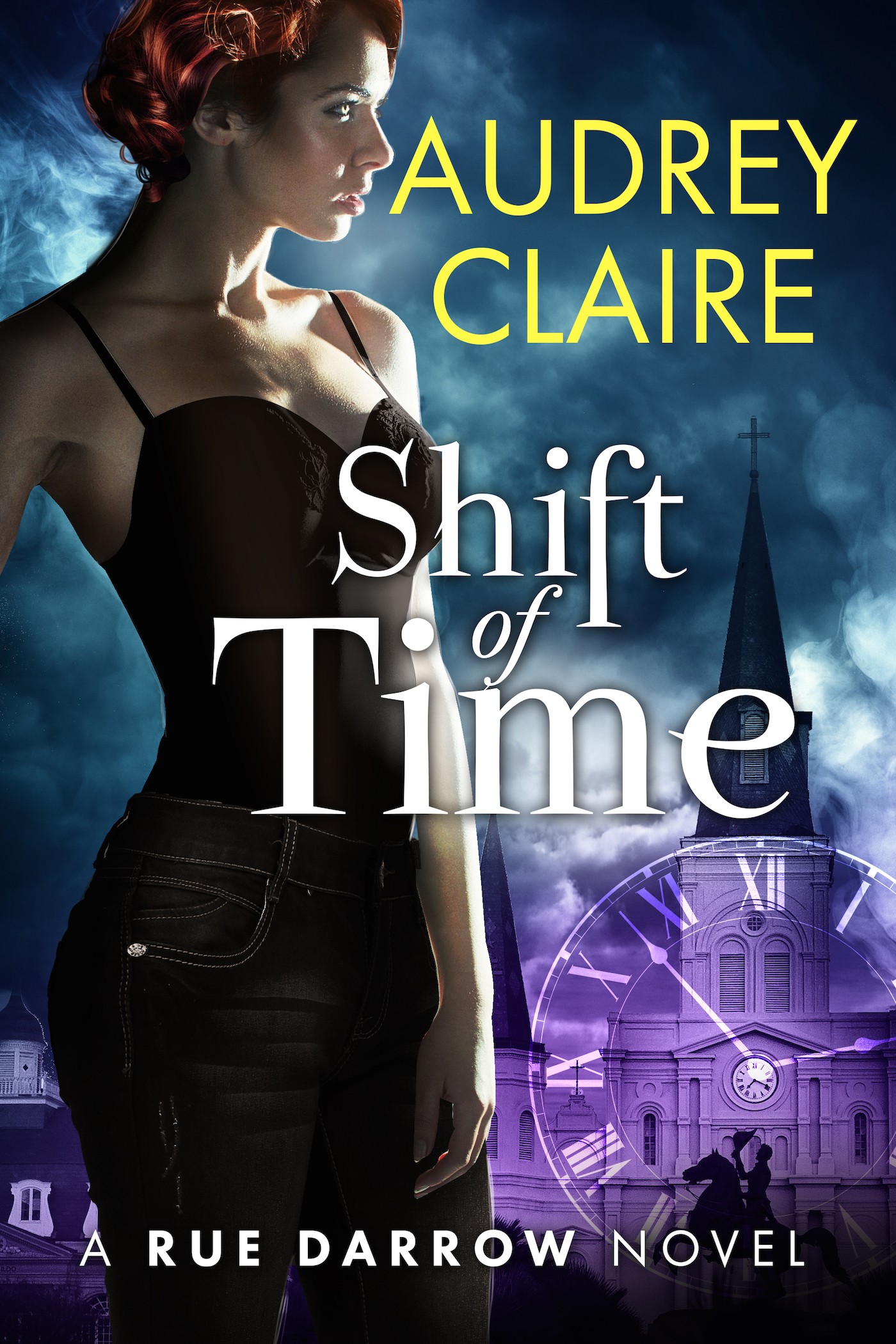
ShiftofTimeBIGShift of Time by Audrey Claire

Rue Darrow is a newly made vampire, and she’s alone in New Orleans, no boyfriend, no son, and no friends. All she sees is an eternity spent working at menial jobs just to pay the bills, hunting where it’s safe, and holding onto the her flagging human emotions.

Then Rue saves the life of a man in a dark alley. What she didn’t realize was the man was Fae, and the attackers were demons. The grateful Fae wants to hire Rue to get back a treasure that was stolen from him, but he won’t tell her what it is. Rue, who has never been in a fight in her life–before the alley scuffle–is thrust into a new, darker world where there are not only Fae but werewolves, demons, unidentified creatures, and even her old “buddy” Death.

Rue’s not sure if she should take on the job, but well, it beats shift work.

Star Splinter by J.G. CresseyStar Splinter by J.G. Cressey

Lieutenant Callum Harper hadn’t intended on punching his commanding officer quite so hard. But maybe it wasn’t such a bad turn of events. Court-martialed and dumped on a reject raft bound for Earth, Cal feels optimistic about a life where getting blown up, shot, or even eaten is altogether less of a concern. And, more importantly, a life where the only person he’s responsible for is himself.

Unfortunately, fate doesn’t favour the mundane. Crash-landing on a lethal planet, and with technology failing all around him, Cal must take his fellow passengers under his wing in order to survive and unravel the reasons behind their situation.

But the cause is far worse than any of them could have imagined, for theirs is a small part of a much larger crisis. Colonized space is under attack. Humanity is on the verge of chaos. And those who enjoy such anarchy are already beginning to thrive.

Yet Cal and his new companions will discover that mankind isn’t the true threat” – not by a long shot.

Under the Stars of Faerie by Robert DahlenUnder the Stars of Faerie by Robert Dahlen

“You were right about her. She is a hero.”

When a love-crazed gremlin kidnaps pixie waitress Mandy, Michiko Koyama, a.k.a. the Monkey Queen, and her partner in adventure Beth McGill journey to Faerie to rescue their friend. Circumstances force them to ally with the crew of a pirate airship, led by the mysterious Captain Ash. Dangers await them in the sky, on the ground and in their hearts.

And an old enemy waits for them, his trap set and ready to be sprung…and it could mean the end of the Monkey Queen.

This is book 3 of the Monkey Queen series.

81kMye+KhQL._SL1500_The Family Business by Marina Finlayson

Renardo and his brothers are up to their eyeballs in debt, with one last chance to save their merchant business (and their gonads) from the moneylender. The great city of Tebos is holding its Festival of Song in three days’ time, and they have a wagonload of songbirds to sell.

There’s just one large, man-eating problem: the bored sphinx who guards the city’s gates, and her deadly riddle game. Renardo doesn’t even want to be a merchant, but somehow it falls to him to outwit the sphinx. No pressure. All he has to do is come up with an unanswerable riddle.

A short story (4,000 words) for lovers of humorous fantasy.

The Gate by Charlotte GreyThe Gate by Charlotte Grey

When Shannon wakes up in the middle of a forest, confused and disoriented from her sudden and unexpected death, she follows a path that leads to a small, dilapidated town full of silent spirits who repeat the same tasks over and over again, completely unaware of their surroundings. And the worst part? She might be trapped there forever.

She’s alone and terrified until she runs into Ben, a charming but cautious man from Victorian England who’s been trapped in the town since his death in 1894. He tells her she’s the only person who’s spoken to him since he arrived. With his experience and her creativity, will they be able to find a way out of the town and into a better afterlife?

“The Gate” is the beginning of an emotional and haunting story that depicts a budding romance between two people who never met in life, and can only be united in death.

This is Part 1 of a series of novelettes, and is approximately 9,000 words.

Bad Hunting by Kyra HallandBad Hunting by Kyra Halland

Cowboys and gunslingers meet wizards in this high fantasy series inspired by the American Wild West. Silas Vendine is a mage and bounty hunter, on the hunt for renegade mages. He’s also a freedom fighter, sworn to protect the non-magical people of the Wildings from ambitious mages both lawless and lawful. In his line of work, Silas knows to expect the unexpected, but he never expected to end up with a partner like Lainie Banfrey, a young woman born in the Wildings who is both drawn to and terrified of her own developing magical powers.

Silas and Lainie have defeated the dangerous rogue mage who brought Lainie’s hometown to the brink of open warfare. But the town of Bitterbush Springs isn’t big enough for two wizards, or even one, so they’ve hit the trail. Then Silas gets word that another mage hunter down in the dry and desolate Bads is onto something big and needs backup. He and Lainie head into the badlands only to find one mage hunter dead and another one missing… And Silas could be next.

This is book 2 of Daughter of the Wildings, following Beneath the Canyons.

Hondus Pointe by R.D. HendersonHondus Pointe by R.D. Henderson

The first book in a fantasy novella series takes place in the Nether Realm featuring a cadre of rogue black elven intelligence operatives believing black elves should return to the surface to rule the Earth Realm like they did nearly two thousand years ago.

Author’s Note: The word count is 30,043.


91f-Bes8nlL._SL1500_Rynlee’s Song by Eliza Marie Jones

Rynlee Nalis is a demon hunter. She is a Purator, belonging to an organization who slay demons to serve their King. Even though she’s a candidate to succeed the High Purator, eighteen-year-old Rynlee doesn’t want the responsibility.

Her entire world is turned upside down when Jeynen shows up at the temple that is her school and home. She thought he died five years ago.

And he has no idea who she is.

When an assassin comes for Jeynen and he manages to flee for his life, Rynlee rushes after him. As she tries to discover the truth about him, she stumbles onto an ancient prophecy and challenges those who want to destroy the balance of magic.

Birthright by Tammi LabrecqueBirthright by Tammi Labrecque

At the request of an agent of the Crown, Tyrnill helps investigate a series of unexplained deaths.

This is a novella length sequel to SongHealer.


Carus & Mitch by Tim MajorCarus & Mitch by Tim Major

Carus is only fifteen but since their mum disappeared, looking after her little sister Mitch is her job. There’s nobody else. Not in their house and not outside, either. There’s something out there, scratching and scraping at the windows.

The barricades will hold.

They have to.


The Smoke-Scented Girl by Melissa McShaneThe Smoke-Scented Girl by Melissa McShane

In a world very much like our own Victorian England, the country of Dalanine is at war. The implacable, unstoppable Despot has been pushing northward for over a year, conquering everything in his path with military and magical force, leaving nothing but destruction in his wake. For Evon Lorantis, Dalanine’s most promising young magician, the war represents the same kind of work he’s always done, inventing and developing new spells for his country’s defense. But as good as he is, he’s still stumped by the mystery the government’s department of Home Defense brings him: a rash of spontaneously occurring fires, hotter than any natural force can produce, melting stone and vaporizing flesh wherever they strike. Home Defense believes it’s a weapon that will finally defeat the Despot. And they want Evon to harness it.

In investigating the problem, Evon discovers these fires are no accident; there’s a magician behind them, a woman using the fire to prosecute justice on her own terms. Evon sets off on a journey across Dalanine to track down this rogue magician, hoping to persuade her to turn aside from her vigilante crusade to serve her country, afraid of finding only a madwoman at the end of his quest. But the woman he does find is nothing like he expected, the mystery far greater—and older—than he’d imagined, and the secret of the fire more potent than anyone could have guessed. As Evon attempts to untangle fact from myth, what began as an assignment becomes a challenge that will require every ounce of magical ability he has—and will irrevocably change the course of his life.

Chosen by Christine PopeChosen by Christine Pope

It began as a fever of unknown origin that its victims dubbed “the Heat,” but as it burned through most of the world’s population, it became known simply as “the Dying.” And for those left behind, the struggle has just begun….

In the aftermath of the Dying, survivor Jessica Monroe is protected and guided by the gentle voice of an invisible being she thinks of as her guardian angel. When she reaches the sanctuary he’s provided for her, however, she realizes that her unseen companion is no angel at all. The destruction of humanity was only the first step in a much larger plan, and now Jessica must struggle to discover her own role in a frightening new world where everything has changed.

Crone by Jennifer R. PoveyCrone by Jennifer R. Povey

Bruton is a community struggling to survive – and to retain some of the values of the old world. Led by tough former lawyer Helen Locke, it’s a small town where people struggle to remain civilized, to keep their technology and to survive. Until Tom Milkins shows up – and Locke knows he’s trouble right away. When a young scout is brutally murdered, it’s clear that Bruton – and Locke – might have more than they bargained for. Can they keep the light of civilization in a world full of wild children and dangerous, patriarchal men?

This is part 2 of the Silent Years series and the sequel to Mother.

Fire from the Ashes by B.E. PriestFire from the Ashes by B.E. Priest

A DRAGON IS BORN
“Come, Little Dragon. The sun rises, and so must you.”

The Scion King sits Riverdale’s throne.
Rebels mass near the Western Sea.
Having lost everything,
Asher flees to the edge of the broken realm,
where he must find redemption
or die alone.

Book 5 in the Southwind Knights series.

Entropy's End by Chris ReherEntropy’s End by Chris Reher

Ships are disappearing in subspace. Traders, rebels, pirates, and even military vessels are losing their way in the Big Nothing that makes space travel possible. Deep-cover agent Sethran Kada joins the investigation after his own navigator, Ciela, barely escapes the void with her mind intact. It soon becomes clear that this subspace trap is more than some natural phenomenon,

Seth’s search for answers leads him to a brutal penal colony on the brink of revolt, and uncovers a plot to destroy an entire planet. When evidence points to the return of the dangerous subspace entities known as Dyads, Air Command mobilizes to annihilate the threat at any cost.

Seth and Ciela pursue a Dyad who has infiltrated a key research complex where they discover that the inexorable subspace peril will not just threaten a single planet. It will mean the end of interstellar travel and destroy their Commonwealth civilization.

This is book 3 in the Targon Tales – Sethran series.

Suckers by Z. RiderSuckers by Z. Rider

“What we have here is a very high-quality junkie novel that happens to be about a unique case of vampirism.” —Evan Clark, author of Movers

WHEN WORN-OUT MUSICIAN DAN FERRY decides to take a shortcut back to the band’s hotel, he picks the wrong dark alley to go down. Within days of being attacked by a bat-like creature, he becomes consumed with the need to drink human blood. Terrified of what will happen if he doesn’t get his fix–and terrified of what he’ll do to get it–he turns to his best friend and bandmate, Ray Ford, for help. But what the two don’t know as they try to keep Dan’s situation quiet is that the parasite driving Dan’s addiction has the potential to wipe out humankind.

Poignant and terrifying, heartfelt and ingenious, Suckers is a story of sacrifice and friendship in the face of an alien contagion that threatens to destroy humanity.

Finding Faded Light by Jarrett RuschFinding Faded Light by Jarrett Rush

The government has collapsed, RomaCorp is rising in its place, and Weber Rexall threw the first punch in a fight with Roma that he and his friends weren’t ready to finish. With Roma looking for him, he’s fled New Eden for the Outer West, hoping to give his friends time to prepare for an inevitable second round. He just never expected that to take two years.

Scratching out a new life far from home, Rexall thought he had longer to stay out of Roma’s reach. But with a hefty reward on his head, desperate thugs are eager to turn him in, and a relentless Roma security agent he knows all too well has come to bring him back.

Rexall could run again, but RomaCorp won’t stop unless he can finish the fight he started. Yet to do that, he needs more help and resources than the Outer West can offer–and if he fails a second time, there won’t be a third.

This is book 2 of the New Eden Series/Rexall Cycle, following Chasing Filthy Lucre.

My Partner and Me by Hollis ShilohMy Partner and Me by Hollis Shiloh

Being mates makes everything perfect—doesn’t it?

Sean is happy with his mate, Tom. As far as he’s concerned, life is golden. Except for when it isn’t. Their work is dangerous. While Sean’s recovering from his most recent injury, he hears a little girl in his head, calling for help. And his wolf side is acting up: too sensitive, too vulnerable. He needs Tom more than ever, especially when it means facing his family and old wounds. Even if things are never truly right for his wolf side, at least he has a mate who will never leave him…right?

Takes place after My Partner the Wolf

89,000 words. Some angst. Some wolf stuff. Lots of love. Happy ending. (I promise!)

Sexiness level: Medium-ish

Mutineer by J.A. SutherlandMutineer by J.A. Sutherland

Just as Midshipman Alexis Carew thinks she’s found a place in the Royal Navy, she’s transferred aboard H.M.S. Hermione. Her captain is a Tartar, free with the cat o’ nine tails and who thinks girls have no place aboard ship. The other midshipmen in the berth are no better. The only advice she’s offered is to keep her head down and mouth shut – things Alexis is rarely able to do.

This is the sequel to Into the Dark.


Outland by Dennis TaylorOutland by Dennis Taylor

When the Yellowstone supervolcano erupts, it’s up to six university students and their experimental physics project to prevent the end of civilization.

When an experiment to study quantum uncertainty goes spectacularly wrong, physics student Richard and his friends find that they have accidentally created an inter-dimensional portal. They connect to an alternate Earth with identical geology, but where humans never evolved. They go panning for gold and become millionaires overnight, while fantasizing about Nobel Prizes and patents.

Then the Yellowstone supervolcano erupts on Earth in an explosion large enough to destroy civilization and kill half the planet. Richard and his friends have less than an afternoon to get as many people as possible across to Outland before Nebraska is covered in a lethal cloud of ash.

Now Richard finds himself in charge of a disorganized and frightened band of reluctant pioneers, on a world with none of the modern infrastructure that people have come to depend on. Richard has been a loner all his life, and has always wanted to be part of something bigger– but this is far more than he bargained for. If he doesn’t get this right, it’s not just the lives of the people in his care that could be lost– it may very well be the end of human civilization.

Epiphany - The Golding by Sonya Deanna TerryEpiphany – The Golding by Sonya Deanna Terry

A MYSTICAL FOREST
AN ANCIENT PROPHECY
A LOVE THAT SPANS LIFETIMES

First in the two-volume Epiphany series, The Golding is a captivating story-within-a-story that alternates between the work of an 18th-century author and the present-day lives of those who study his book.

Rosetta Melki, part-time tarot reader, struggling sole parent and full-time idealist, begins a reading group to examine a fantasy novel, and discovers the book to be anything but fiction.

The book, written in the 1770s by Edward Lillibridge, is a hidden history that reveals the true beginnings of the global monetary system. Lillibridge’s tale surrounds ancients from a gold-obsessed empire and the sprites they oppress: intuitive clan dwellers whose currency of choice is kindness.

Whether discontent in rich and poor alike will ever make way for the Currency of Kindness, whether anyone can believe enough in humanity’s true ancient history to activate the dawn of a benevolent new era, remains to be seen, but the time-crossing sprites of Lillibridge’s descriptions have set their sights on Rosetta. Their attempts at providing a companion to assist in the quest they have planned for her leads to a clumsy introduction to Matthew Weissler, a feet-on-the-ground finance executive who is disturbed to find he’s being followed by an elf.

It would seem Matthew and Rosetta have nothing in common, and yet the sprites believe if the two work together, a renaissance known as The Silvering will occur. But someone from the empire of the past is intent on preserving Earth’s pattern of pain, and is determined to prevent the sprites from succeeding.

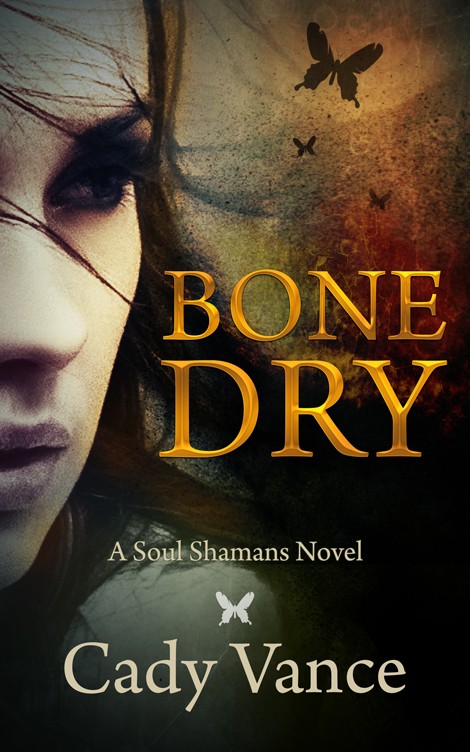
Bone Dry by Cady VanceBone Dry by Cady Vance

Sixteen-year-old Holly Bennett is a comic book nerd, a con artist, and a shaman. Ever since her mom’s mind got stuck halfway between the spirit world and ours, Holly’s been forced to act as the breadwinner of the family. She uses her burgeoning shaman powers to set up fake hauntings and “banish” the so-called ghosts from her wealthy classmates’ bedrooms. For a fee, of course.

But when actual spirits start manifesting, Holly discovers that other shamans have come to town, summoning life-sucking spirits for their own ends. And as her mom’s mind slips further away, Holly has to fight to save her, and the rest of the town, before they get sucked into Lower World permanently.

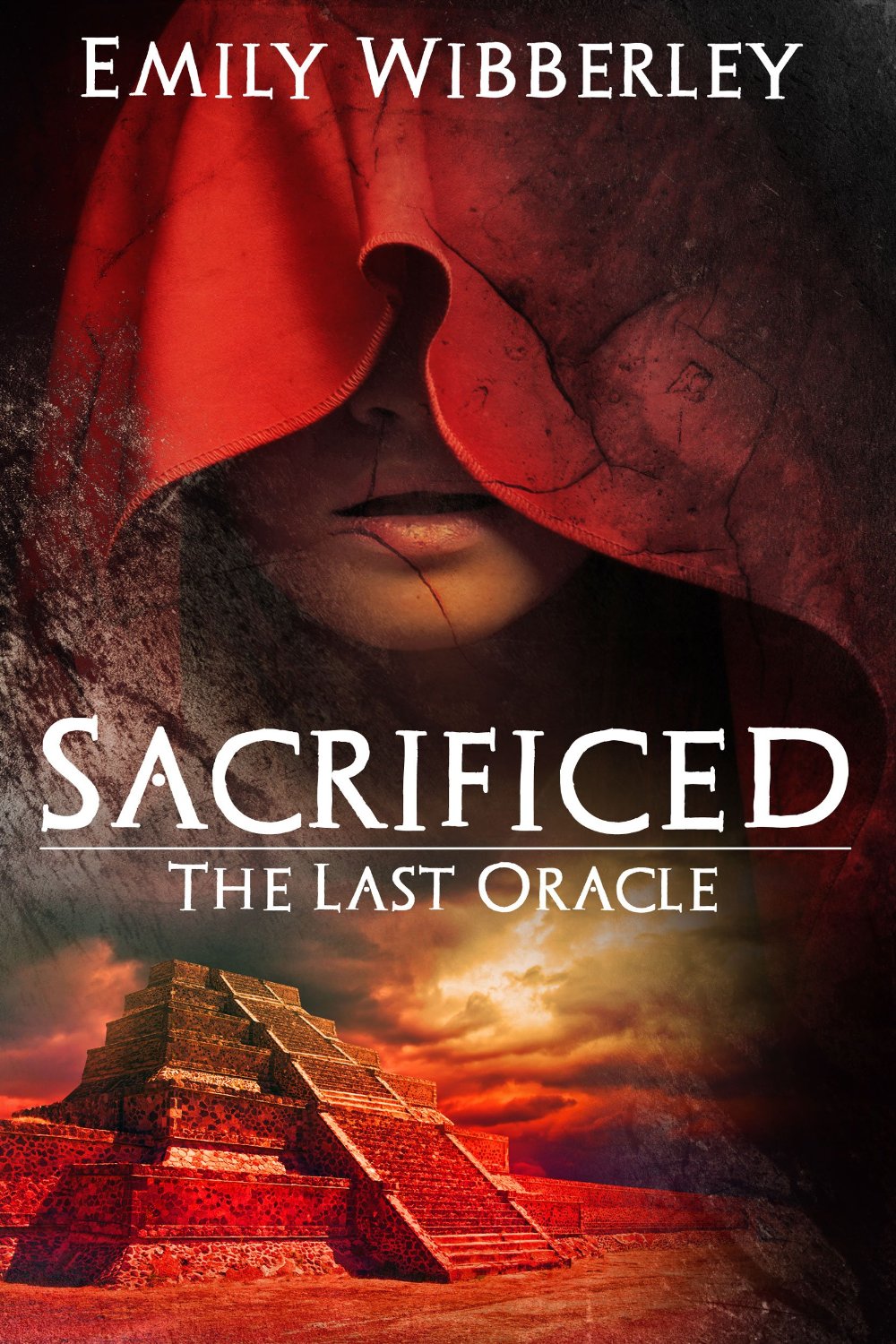
Sacrificed by Emily WibberleySacrificed by Emily Wibberley

Fifteen-year-old Clio should have never been the Oracle of Sheehan. That power is passed from mother to eldest daughter, and Clio is the youngest of four sisters. But when her entire family is murdered by Mannix, the king’s adviser, Clio is left all alone and heir to a power she never wanted and doesn’t understand.

Hunted by Mannix, Clio seeks refuge in a foreign city where oracles are absolutely forbidden. If she’s found out, she will be sacrificed atop its great pyramid.

Clio has no choice but to win the trust of Riece, an enemy warrior. Despite the growing feelings between them, Clio knows that if he finds out who she really is, he won’t hesitate to kill her.

Clio tries to hide her budding powers, longing to be a normal girl who can fall in love, but the visions she has of Mannix bringing a barbarian army into Sheehan torture her conscience. She alone has the strength and foresight to stop him, but only if she can embrace her destiny and sacrifice everything.

Solstice Magic & Mayhem by Stella WilkinsonSolstice Magic & Mayhem by Stella Wilkinson

It’s the Summer Solstice and it’s a full moon too. Natural Witch Emily Rand has been doing her best to keep her distance from gorgeous Werewolf Aaron Fletcher, but fate has other plans. Fletch’s new pack Alpha has heard of Emily’s powers and is coming for her. He wants to bond his wolf to her witch and make himself the most powerful Werewolf in Britain. Can Emily and Fletch combine forces to outsmart the Alpha before the Solstice magic takes away their choice? Emily has never had great control over her powers and being forced into a battle to stop the Alpha can only result in complete mayhem.

A humorous paranormal romance. Book Three in the Magic & Mayhem series.

Winemaker of the North by J.T. WilliamsWinemaker of the North by J.T. Williams

Sviska is an assassin questioning the sanctity of his lifetime of bloodshed in service to an ancient sect. Perceiving their acts have become random and senseless, he refuses to murder a young child. He wishes to leave his life with the Order, but they have another assignment for him and if he refuses this too, he will be killed.
Sent to an isolated mountain city called Elinathrond, Sviska finds a place where a plague is rampant; a wine used to prevent the ailment has run out. Sviska’s task is to ferment a medicinal wine for the people and it is here he discovers that magic, an extinct force in his lands, is very much alive. But why the Order would send him here to procure this life saving elixir for those they wish dead, confuses him.
In this last refuge for magical peoples, a weakening spell exposes more of them to the sickness with every moment. Rumors are spreading that the city is no longer safe, and a malicious evil is growing beneath the streets. If he fails to procure the wine, Elinathrond faces desolation, but the death of the last winemaker was no accident, and Sviska may be next.

Posted in Books | Tagged , , , , , , , , , , , , , , , , , , , | 4 Comments

Some reactions to the jabs against superhero movies at the Oscars

In my Oscar reactions post, I already addressed the jabs against superhero movies during the ceremony and explained why they sat badly with me. Hell, even Birdman winning the Oscar for best picture can be seen as a slam against superhero movies, since it’s a movie about an actor who used to star in a popular superhero franchise, starring three actors who used to be in popular superhero franchises, trying to make a comeback with a serious Broadway role and yet being haunted by his superheroic past.

It seems I wasn’t the only person who had that reaction, because in the past few days several posts and articles have popped up commenting on why the Oscars seem to hate science fiction and superhero movies, a question posed by Entertainment Monthly.

Hence, the International Business Times points out that the Oscars are biassed against science fiction, fantasy and horror films as well as foreign language films. Even worse, non-English-language that are massive successes around the world such as Run, Lola, Run, Good-Bye, Lenin, The Intouchables, Monsieur Claude and his Daughters as well as any number of Indian, Chinese, Japanese and Korean films are regularly snubbed even in the foreign language category. Apparently, playing very ill or disabled people only nets you an Oscar, if you’re American or British, as Francois Cluzet and Katrin Sass can attest.

And should a science fiction, fantasy or horror movie manage to win any Oscars in one of the prestigious categories, critics and cultural pundits usually view it as a sign that the world is about to end and that Hollywood has fallen to the barbarians. View the reactions to the many Oscars won by The Return of the King (which even took best picture, the only SFF film ever to do so), Avatar and Gravity. View the reaction to Silence of the Lambs, a horror movie, becoming only the third movie ever to win the quintuple, i.e. best film, best actor, best actress, best director and best screenplay (the other two were Frank Capra’s It Happened One Night in 1935 and One Flew Over the Cuckoo’s Nest in 1976 BTW). View the reactions to Kathy Bates winning an Oscar for Misery (“She’s old. And fat. And won for a horror movie.” – Yeah, cause she was amazing). I guess Heath Ledger was only spared those reactions when he won for his marvellous portrayal of the Joker in The Dark Knight (and for the record, I don’t even like that movie), because he was dead by the time he won the award and besides, it’s kind of obvious that his posthumous win for The Dark Knight was an attempt to make up for the snub for Brokeback Mountain earlier.

The Wrap makes a point I made as well, namely that slams against superhero movies look kind of hypocritical when many present and past Oscar winners and nominees have appeared in such movies. Also kudos for remembering that J.K. Simmons used to play J. Jonah Jameson, that Felicity Jones was Felicia Hardy and Marion Cotillard was Talia al Ghul and that Benedict Cumberbatch will soon be Doctor Strange. Oh yes, and apparently Viola Davis is in the running for the role of Amanda Waller in Suicide Squad now, which makes me happy, because I find her so much more suitable for the part than Oprah Winfrey of all people.

Meanwhile, James Gunn, director of Guardians of the Galaxy, points out that he didn’t feel offended by those remarks but resents the implication that directors of superhero movies and other big budget spectaculars put less care into their films than directors of arty indie fare. There’s also a nice little counterjab against Dan Gilroy, who apparently made disparaging remarks about a “tsunami of superhero movies” at the Independent Spirit Awards, when Gunn points out that Gilroy’s wife Rene Russo actually played Frigga in the two Thor movies (and was great in the role, too, particularly in The Dark World), so stones and glasshouses and all that.

Blastr comments on James Gunn’s comments and adds a few of their own.

ETA: Den of Geek discusses why the Academy seems to hate Christopher Nolan in particular, since Interstellar was only nominated in a few technical categories, while Christopher Nolan was not nominated at all. Now I’ve never much cared for Christopher Nolan’s work ever since I watched Memento and wondered what all the fuss was about. Nonetheless, both Nolan and Interstellar are better than some of what was nominated.

If the Academy was merely biassed against entertainment movies, the snubs against SFF movies might be more bearable. But it simply isn’t true that the Academy only awards adventurous arthouse movies, because it doesn’t (never mind that some SFF and comic book movies are artistically adventurous such as Sin City or From Dusk Till Dawn or Under the Skin or Only Lovers Left Alive). For every Boyhood and Birdman, which tries to do something different artistically, there are lots conventional biopics and sick people dramas and bloated historical epics and propaganda epics that don’t do anything we haven’t seen a thousand times before in the past eighty years. Nor does the Academy hate fluffy entertainment as the many wins for musicals even in the best picture category over the years attest. Ditto for tearjerking melodramas, which frequently win as well in spite of being blatantly manipulative. I mean, in what world is Titanic a better movie than Aliens or the first two Terminators or even Avatar? In what world is Chicago a better film than The Two Towers? In what world is Annie Hall a better film than either Star Wars or Close Encounters of the Third Kind?

In many ways, the Oscars have never moved on since the 1930s. Studios are still producing a lot of what they deem “popular trash for the masses” to finance the prestigious Oscar-bait pictures, the biographies of “great men” (and they’re still overwhelmingly men), the blatant propaganda flicks disguised as high art, the tearjerking melodramas about people being ill or dying in dramatic ways. And in twenty or fifty or eighty years, film fans will react to those choices just as we do to the Oscar winners of the 1930s. “What do you mean, Eddie Redmayne won his Oscar for The Imitation Game rather than Jupiter Ascending?” – “They could have awarded the 2012 Oscar for best picture to The Avengers and instead they chose Argo? What the fuck is Argo anyway?” – “Slumdog Millionaire honestly won best picture instead of The Dark Knight, which wasn’t even nominated?”

Posted in Books, Comics | Tagged , , , , , , , , , | 1 Comment

Some Reflections on the 2015 Oscars

Yes, it’s the annual Oscar post. And yes, I did watch, even though I had little interest in any of the nominated films. In fact, I was considering going to bed all the way through the endless red carpet interviews. In fact, the only reason I didn’t go to bed was that I wanted to see the opening number. “I’ll go to bed afterwards”, I thought. But by the time “afterwards” rolled around, my peak fatigue had passed and I held out until the end.

So how was it? Better than I thought it would be, given I don’t really like any of the nominated films. Let’s start with the host. Neil Patrick Harris was probably the best Oscar host we’ve seen in the past five years or so. He’s a fine singer and dancer and looks good both in a tuxedo and white briefs, his jokes were pointed, but didn’t go under the belt too often, he managed not to ask Clint Eastwood why he didn’t just go and die already, which Steve Martin did a couple of years ago, he didn’t sing about anybody’s boobs like Seth MacFarlane in 2013. In short, he was a pretty damn good Oscar host, though I still prefer Hugh Jackman, who hosted in 2009, if only because seeing Hugh Jackman exclaiming “I am Wolverine” on the Oscar stage is still a tad cooler than watching Neil Patrick Harris dance with a ballet of Stormtroopers (and Roman legionaires and modern day soldiers and 1930s style chorus girls). Continue reading

Posted in Film | Tagged , , , , , , , , , , , | 3 Comments

Some Thoughts on the 2014 Nebula Nominees

So the 2014 Nebula Award nominees have been announced and I could basically just recycle my Nebula reactions post from last year and switch out the names, because my thoughts are largely similar.

All in all, this year’s Nebula shortlist is once again pleasantly diverse with lots of women, writers of colour and non-US writers included. But then – see, I am copying last year’s post – the Nebulas have generally been much better with regard to diversity than the Hugos, probably because they are less dependant upon “popular taste”, whatever that may be, and less vulnerable to ballot stuffing attempts. Continue reading

Posted in Books, Film | Tagged , , , , , , , , , | 3 Comments

Gotham, Agent Carter and expanding universes

We’re currently experiencing something of a golden age of comic book adaptations both on the big and the small screen. As a longtime comic book reader, I’m thrilled about this, though I realise not everybody is.

For example, I just saw some coverage of the Berlin film festival (the list of winners is here BTW) wherein some German dude – probably Andreas Dresen, but don’t quote me on that – waxed poetic about HBO-style dramas like Breaking Bad and Homeland, because they feature broken characters, whereas Hollywood cinema is just concentrating on putting out silly comic book and superhero movies with zero depths. And I yelled at the screen, “Dude, you can watch predictable muslim bashing and the pains of a white middle class dude facing mortality and reacting by becoming a fucking drug dealer, but I’ll be over here watching one of those silly comic book stories tackle sexism instead of more white dude pain.”

As a matter of fact, the German cultural press is sticking with its traditional hostility to anything genre to the point that our oh so highbrow cultural journalists are fawning about Fifty Fucking Shades of Grey, which premieres at the Berlin Film Festival instead of e.g. Jupiter Ascending, which would’ve at least been interesting, and calling it the highest grossing movie of the year. Now Fifty Shades of Grey wouldn’t even have made highest grossing movie of the year in a regular cinema year, especially not since it is widely expected to be terrible. But in a year that will see both Avengers: Age of Ultron and The Force Awakens, i.e. long awaited new installments in two of the most popular franchises on the planet? Forget it, Fifty Shades doesn’t even have a fighting chance.

Though interestingly many German friends have problems believing that both Age of Ultron and The Force Awakens will thoroughly trounce Fifty Shades, because “lots of people want to watch Fifty Shades” and “well, maybe you want to watch this other stuff, but no one else has even heard of that.” Because many of my German friends live in a world where Fifty Shades still cannot be avoided unfortunately, but where neither Star Wars nor the Marvel Cinematic Universe are something that is on their radar at all. Ditto for Game of Thrones, as evidenced by the fact that Sibel Kekili, who plays Tyrion’s lover Shae, was in the Berlin Film Festival jury (well, she is a former winner of the Silver Bear) and yet none of the journalists even thought to ask her about her Hollywood success in Game of Thrones.

However, the German cultural press and what passes for a cultural elite in this country are wrong to focus on Breaking Bad and Homeland and squinting very hard to figure out just why Americans like this stuff so much (because if they are honest for once, very few Germans see the appeal), while ignoring the very interesting work that is currently done in genre and particularly in comic book based film and television. Marvel is ahead of the competition this time and it pains me that the German cultural press is so slow to take notice of the Marvel Cinematic Universe phenomenon (which is interesting and something new for movies, whether you actually like the films or not). DC so far seems to be focussed mainly on giving as 57 flavours of Batman and/or Superman with some Arrow and Flash thrown in for good measure.

In fact, it just struck me today how much this new wave of comic book based media differs from the works we had before. Because let’s face it, we’ve had comic book based film and television for a long time now. We had serials in the 1930s and 1940s, we had Adam West’s Batman and The Green Hornet on TV in the 1960s, we had the Christopher Reeves Superman movies in the 1970s and 1980s, we had the Tim Burton and later Joel Schuhmacher Batman movies in the 1980s and 1990s, we had Blade and Spawn and Spider-Man and the X-Men on the big screen since the 1990s and we had The Flash and various versions of Superman (Superboy, The Adventures of Lois and Clark, Smallville) and even Birds of Prey on the small screen. We even had more or less successful attempts to adapt Watchmen and Sin City and V for Vendetta and From Hell and Road to Perdition and Ghost World and Kick-Ass and 300 and so on… So yes, we’ve had a lot of comic book based media, including good comic book based media, in the past 25 years to the point that I can understand why it would bother people like Andreas Dresen, who is from East Germany and thus had less chance to develop a connection to these characters even if he had wanted to.

But then even many people who are not traditional comic book fans are finding something to enjoy in the current flood of comic book based media. Case in point: My Mom is not a comic book fan and didn’t even want me to read them, when I was a child because of some misguided ideas about comic books harming reading skills. Yet she happily watches Marvel’s Avengersverse movie on DVD with me (except for The First Avenger, WWII not being a cool setting for those who’ve actually experienced it) and has enjoyed the X-Men and Sam Raimi’s Spider-Man movies with me in the past. Regarding comic book tales on the small screen, she’s very fond of Arrow.

Now the current surfeit of comic book adaptations has also reached the small screen and the US is currently enjoying no less than six comic book based live action TV series, namely Arrow, The Flash, Gotham and Constantine for DC and Agents of S.H.I.E.L.D. and Agent Carter for Marvel with more on the way. And three of those series, The Flash, Gotham and Agents of S.H.I.E.L.D. just had their German TV premieres in the space of a week.

I made a point of watching them together with my Mom, just in case it’s necessary to explain some comic related bit to her. Though the films and TV shows usually are perfectly understandable even without comic book background knowledge, since they are aimed at a general audience.

Now my Mom thoroughly enjoyed The Flash, but then I thought she would. Though she was a bit confused when Arrow showed up in the pilot, since she had already forgotten Barry Allen’s guest appearance in that show and both shows are sadly not running on the same network in Germany.

She also thoroughly enjoyed Agents of S.H.I.E.L.D., of which I wasn’t quite so sure, because that show needs quite a few episodes to get really off the ground. Coincidentally, I also enjoyed watching Agents of S.H.I.E.L.D. again, even the slower early episodes, because upon second viewing I was able to catch all sorts of sly hints at what is to come, such as Ward mentioning his SO (Hydra agent pretending to be S.H.I.E.L.D. agent John Garrett, who is as close as the first season has to a Big Bad), Coulson lamenting that they failed to cut off Centipede’s head (and since Centipede is Hydra, that’s an interesting statement), someone mentioning Journey into Mystery, the 1960s Marvel comic wherein Skye’s father Dr. Calvin Zabo debuted (so did Thor BTW), Skye saying that since the rest of the team is just as inexperienced as she is, she might just as well be director of S.H.I.E.L.D. (which her comic book counterpart actually was for a while). Indeed, I frequently found myself exclaiming, “Oh, Joss Whedon, you are good”, much to my Mom’s confusion.

However, much to both our surprise, my Mom and I also found ourselves enjoying Gotham. Now I didn’t watch Gotham when it had its TV premier last fall. Partly because it was just another of the 57 flavours of Batman DC has been dishing up regularly in the past 25 years (Batman – now 100% Batman free) and partly because the trailers looked so uninspiring. However, the German network in its infinite wisdom scheduled Gotham after The Flash, so we started watching it and actually found ourselves enjoying the show.

Now my Mom knows who Batman is, who Catwoman is, who Robin is and probably also who the Joker is, but she doesn’t know much about the background of the character. And so, when that robber shot the Waynes in that alley, she actually flinched. “Wait a minute”, I said, “Don’t tell me you didn’t see that one coming. Cause it wasn’t just totally obvious, it was also an iconic moment in comics history.”

My Mom said that she had never read any of those comics (though she has seen at least the Tim Burton Batman films, if not the Nolans). “The little boy…”, I told her, “…the son of the murdered couple is Bruce Wayne. He’ll grow up to be Batman and this is the moment that inspires him to become a superhero.”

Since she didn’t even recognise Batman’s origin story, my Mom of course didn’t get all the other cameos by future Batman friends and villains either, though I pointed them out to her. All right, so she did get that homeless teen burglar would grow up to be Catwoman one day. “Oh, look it’s love at first sight with her and Batman”, she said, “And she’s actually older than him.”

From the POV of someone who’s familiar with the comics, I felt that Gotham was maybe a bit too blatant with giving us future Batman villains before they were villains. I mean, even in the first episode we had the Penguin (even namechecked), Catwoman, Poison Ivy, the Riddler (also namechecked) and a potential Joker in the hapless comedian auditioning at Fish Moony’s bar. I also have a feeling that the big suspect Jim Gordon was tackling might turn out to be Bane. On the non-villainous side (I’m leaving Catwoman on the villain side for now), we had Jim Gordon, Barbara Gordon (though I suspect that the future Batgirl/Oracle will be her daughter rather than this Barbara) and Alfred Pennyworth, who – though a shining beacon of a good superhero parent figure later on – is actually very much at a loss regarding what to do about the grieving child he suddenly finds himself in charge of. Though I did enjoy seeing where all those familiar characters come from and also the fact that young Bruce actually seems more troubled than some of his future antagonists and the resulting implications that Batman is as psychologically disturbed in many ways as the villains he fights, which will surprised absolutely no one who has ever read a Batman comic or seen a Batman movie.

However, since I was watching with my Mom who didn’t recognise any of the rather blatant hints dropped about the “Before they were evil” personnel of Gotham, I also envisioned what Gotham must look like to someone who has either no knowledge of Batman or at least not enough to make the connection. To such a viewer, Gotham looks like a cop show with a slight retro feel*, more Life on Mars/Ashes to Ashes sans coma and time travel than Batman. And amazingly it works on those terms.

That also got me thinking what Agents of S.H.I.E.L.D. and Agent Carter might look like to someone who is not familiar or at least not intimately familiar with the Marvel Cinematic Universe (e.g. I don’t think my Mom would necessarily have recognised Coulson from the Avengersverse movies without prompting). And at least Agent Carter‘s connection to the Avengersverse is actually more tenuous than Gotham‘s to Batman. However, both shows are still perfectly watchable and enjoyable without that connection, though you’ll get more out of them, if you spot the many little links and Easter eggs.

Without the Avengers connection, Agents of S.H.I.E.L.D. is a mixture of the various flavours of NCIS and “hunting down the supernatural/alien artefact or monster of the week” shows in the vein of The X-Files, Torchwood and Fringe. If anything, Agents of S.H.I.E.L.D. looks and feels more like NCIS (which is probably why my Mom enjoyed it so much) than like Torchwood or The X-Files.

Meanwhile, Agent Carter is stylish retro-sexism in the Mad Men vein with added buttkicking. It doesn’t even matter that Howard Stark’s stolen tech is futuristic/fantastic in nature, nuclear secrets or indeed any old Macguffin would have done just as well. In many ways, Agent Carter is more Mad Men with spies than it is “Whatever happened to Steve’s girlfriend” or “The Secret Origin of S.H.I.E.L.D.” I also think it’s actually a better take on the retro sexism theme than Mad Men, because it’s told from a female POV, but then I’ve always felt Mad Men would have been a better show, if it had focussed more on Peggy Olsen with Don Draper as her mysterious boss, which would also have cut down on the draggy Don Draper family and marriage drama. It’s also interesting that both shows just happen to have a protagonist named Peggy.

Now spin-offs are nothing new. We’ve had both TV series spinning off each other as well as TV shows spun off from movies for decades now. However, the old spin-offs always stuck to the same genre and usually told a variation of the same story the original had told. The various flavours of CSI are always shows about forensics specialists solving crimes in various US cities. The various flavours of NCIS are always shows about investigators of the US Navy solvings crimes and hunting terrorists and exchanging banter, while they’re at it. There might be the occasional shift in tone, e.g. Deep Space 9 was darker than Star Trek: The Next Generation, Angel was more adult than Buffy and The Originals is more adult than The Vampire Diaries, but spin-off and original always stayed in the same genre. Meanwhile, TV shows spun off from movies usually retold the same story with different actors. In many cases, the TV shows also expanded upon the movies that spawned it, e.g. the various Stargates and Highlander vastly expanded their respective worlds, which is also why the TV shows are often better remembered than the movies.

In contrast, Marvel’s TV spin-offs generally keep the same actors as the movies and instead focus on a popular supporting character like Phil Coulson or Peggy Carter. DC, on the other hand, seems to prefer to keep its movie and TV universes separate and even offers different versions of the same characters on film and TV. For example, the Suicide Squad movie that DC has planned for 2016 has entirely different cast than the Suicide Squad we saw in Arrow. Personally, I prefer the Marvel approach of having one big universe to DC’s of having several universes coexisting. In fact, we don’t even know if the TV show Gotham exists in the same universe as either DC’s big screen Batman movies (which don’t exist in the same universe either – in fact, we probably have at least two different Batman movie universes) or Arrow and The Flash. IMO it just adds useless confusion, but DC seems to want big name stars in its movies rather than the actors who successfully played these characters on TV.

It is also notable that comic book based TV series are not necessarily in the same genre as their parent movies. True, The Flash and Arrow are superhero shows, but Gotham is a cop show, Agents of S.H.I.E.L.D. is a spy thriller/action show, Agent Carter is a Mad Men style period piece. What is more, neither Gotham nor Agent Carter even directly feature any superheroes (Bruce is still a kid in Gotham, while Captain America merely casts a shadow upon Agent Carter), while Agents of S.H.I.E.L.D. only features superheroes tangentially for much of its run. And this is something new, because in the past movies and/or TV shows set in the same universe generally also belonged to the same genre.

The five Star Trek TV shows were all variations on the theme of spaceships (and a space station in the case of Deep Space 9) in space exploring strange worlds. The three Stargate shows were all variations on the theme of intrepid explorers stepping through a portal to visit new worlds or receive visitors from there. The X-Files, Millennium and The Lone Gunmen were all variations on “Weird shit happens, our hero(es) investigate, it’s probably a conspiracy”.

Examples where parent show and spin-off drastically vary in style and genre are fairly rare and don’t seem to exist at all before 2000. Buffy and Angel are on such example. Buffy was a highschool drama with added vampires, while Angel was a supernatural detective tale in the vein of Lee Killough’s Blood Walk series, P.N. Elrod’s Vampire Files and the TV show Forever Knight. Doctor Who and its two spin-offs Torchwood and The Sarah Jane Adventures are not just drastically different from each other, they are even aimed at different audiences. But then Doctor Who usually cannot even decide what genre it wants to be from episode to episode and Torchwood‘s four seasons are so different from each other that they might as well be four different shows. And indeed, hardly anybody likes all four seasons of Torchwood – most people like only one or two seasons and loathe the others**. The 2005 Battlestar Galactica and its spin-off Caprica finally were also two very different shows (and neither had anything in common with the original Battlestar Galactica). The new Battlestar Galactica was faux relevant political drama in space, Caprica was something about scientists creating androids apparently (I’m not sure since I never watched it).

Marvel has done these shows one better by giving us a universe of interconnected stories that – as I’ve pointed out before – are very different from each other and often not even in the same genre, although they all have the same core story about becoming a better, more rounded person, superpowers optional, though they help (interestingly, Phil Coulson explicitly states this Marvel mission statement near the end of the first episode of Agents of S.H.I.E.L.D.), and finding friends, a new family and true love in the bargain (Marvel mission statement 2 is uttered by Skye in the second episode of Agents of S.H.I.E.L.D. and also by Jarvis to Peggy in an episode of Agent Carter) and often the same plot as well, namely let’s all hunt the glowy cosmic thing that will eventually be revealed as an Infinity Gem.

What happened is that somewhere along the way, Marvel and to a lesser degree DC realised that they have enormous fictional universes built up over more than seven decades. They also noticed that there are a lot of stories to be told in those universes and those stories are not always about superheroes. Instead, the supporting casts of those superheroes, the cops and spies, reporters and butlers all have stories of their own, stories well worth telling. And as a result, we don’t just get an unprecedented bounty of superhero tales, we also got Gotham, Agent Carter and Agents of S.H.I.E.L.D. which are not really about superheroes at all.

*I did like the retro feel of Gotham, though I wish the producers would have settled on what time this was supposed to be, for the sets looked Art Deco (well, it is Gotham City, world capital of Art Deco), the cars looked 1970s, the cell phones looked 1990s and the costume design was all over the place from a vaguely 1950s feel to a 1980s feel. All right, so time probably does move differently in the DC Universe, but I doubt it oscillates along a 60 year span from approx. 1930 to approx. 1990.

**I was a big fan of season 1 of Torchwood and am still bitter about the fact that a mix of white male geek entitlement and American prudishness killed the great show we might have had.

Posted in Comics, TV | Tagged , , , , , , , , , , , , , , , , , , , , , , , , , | 4 Comments

New Shattered Empire novella available: Partners in Crime

It’s been a while (December in fact) since my last new release announcement, but I’ll make up for that with three new release coming up in February.

Let’s start with a new entry in my Shattered Empire space opera series: Partners in Crime features Holly di Marco and Lord Ethan Summerton, who have been the focus of three of the four Shattered Empire stories to date, going on a mission for the Rebellion, a mission that involves robbing a bank. Yup, it’s a science fiction heist story.

Partners in Crime is something of a departure from the other stories in the Shattered Empire series, since it is the first story in the series to feature a male point-of-view character. So if you’ve been wondering just how Ethan is adjusting to his new circumstances or simply wanted to take a peek into his head, here’s your chance. And if you enjoy the Shattered Empire series mainly for its variety of female characters, have no fear. Partners in Crime still contains plenty of Holly and Carlotta as well as new Rebel character Isabelle Kwan and passes the Bechdel test, too.

Oh yes, and if you’ve been wondering about which order my various series go in, I now have a “Series in order” subpage to help you.

Partners in Crime
Partners in Crime by Cora BuhlertThe Premier Imperial Bank of Houshou is the financial institute of choice for the rich and the crooked of the Fifth Human Empire. The bank boosts a two thousand year history of excellent but discreet service and its vaults and computers are thought to be impenetrable.

However, the Premier Imperial Bank of Houshou has not counted on Ethan Summerton and Holly di Marco, ex-aristocrat and ex-mercenary respectively, finding a way to breach its impenetrable security system and redirect the ill-gotten gains stored at the bank to the coffers of the Galactic Rebellion.

On the other hand, Holly and Ethan, whose murdered family was among the select clientele of the bank, have not counted on the Premier Imperial Bank of Houshou‘s rather eccentric idea of good customer service.

For more information, visit the Partners in Crime page.

Buy it for the low price of 3.99 USD, EUR or 2.99 GBP
at Amazon US, Amazon UK, Amazon Germany, Amazon France, Amazon Netherlands, Amazon Spain, Amazon Italy, Amazon Canada, Amazon Australia, Amazon Brazil, Amazon Japan, Amazon India, Amazon Mexico, Kobo, Barnes & Noble, Apple iTunes, Scribd, Oyster, Smashwords, Inktera, txtr, Thalia, Weltbild, Hugendubel, Der Club, Libiro, Nook UK, DriveThruFiction, OmniLit/AllRomance e-books, Casa del Libro, Flipkart, e-Sentral, You Heart Books and XinXii.

Posted in Books | Tagged , , , , , , , , , | Leave a comment

1965 Wedding Photos

My parents are celebrating their golden wedding anniversary this year and I was drafted to design the invitations. And just in case you’re wondering, no, I’m not that old. My parents had already been married for several years when they had me.

In order to design the invitations, I also had to scan in some wedding photos. I can’t share the invitations yet, because my parents are paranoid about gatecrashers, but here are some wedding photos from 1965:

1965 wedding photo

This photo was taken after the civil wedding. The suit is boring, but check out my Mom’s marvellous beehive hairdo, which supposedly took hours to do. The location seems to be the same building that still serves as the Bremen registry office 50 years later.

Here is a contemporary photo of the registry office.

1965 wedding portrait

And here is the official wedding portait. That marvellous beehive is back. The bouquet is quite interesting as well. According to my Mom, the dangling eight-shape were two small myrtle wreaths, myrtle being the traditional choice for wedding wreaths and bouquets in Germany.

My Mom told me that she modelled her hairstyle after the style that Princess Margaret had worn at her wedding to Lord Snowdon in 1960. Now Princess Margaret was certainly a breathtaking bride, though personally I don’t see many similarities beyond the beehive. And Princess Margaret’s looks more like a Modesty Blaise type topknot than a beehive.

1965 wedding portrait

The newly-weds are leaving the church. Mom and Dad seem happy enough, as do the blonde bridesmaid and the jolly looking priest. The two flower kids look considerably less than happy, as does the dark-haired bridesmaid.

This is the church in question BTW. The flower girl is my cousin Ulrike (who once told me she was a flower girl all the time and always had to wear the same dress), the flower boy was a neighbour’s kid named Joachim. The smiling blonde bridesmaid (Doesn’t she look just like Betty Draper? – shudder) is married to a cousin of my Mom. As for the darkhaired bridesmaid, no one even remembers her name. Apparently, she was the girlfriend of the best man or something and they broke up not long thereafter.

1965 wedding photos

At midnight on your wedding day, they made you take off your veil and wear a nightcap instead. My Mom’s looks more like a swimming cap though, probably to accomodate the beehive. My Dad looks very silly and about twelve.

I have no idea what the reasoning behind the nightcap custom is, though it seems creepily reminiscent of relatives making sure you’re properly celebrating your wedding night. The nightcap is usually preceded by the bride having her veil literally ripped to shreds by the other guests for good luck. The veil ripping and nightcap wearing custom seems to have largely died out, because the brides hate it. Good riddance IMO, because it is a weird custom.

Posted in Personal | Tagged , , , , , | 1 Comment