Free Halloween themed anthology “Monster Maelstrom” available

Yes, I have another new release announcement to make. I promise that eventually there will be regular blogposts again, but at the moment, the new releases are coming hard and fast, so please bear with me.

Today, I am pleased to announce Monster Maelstrom, a Halloween themed flash fiction anthology edited by George Donelly. There are 24 stories about monsters in this anthology, including one of mine.

Monster Maelstrom – A Halloween Anthology
Monster Maelstrom, edited by George DonellyFrom a Hillary Clinton stripper to mythical beast-women in the harsh Scandinavian tundra and from an unusual band of steadfast teddy bears to the last man in zombie-occupied Chicago, fill your briefest moments with pulse-pounding frights and off-beat chuckles with this collection of 24 flash fiction stories.

Commuting to work? Grabbing a quick coffee? Each story tells a complete tale in but a few short minutes with the added promise of a lifelong introduction to new indie writers.

You never know, you might just find your next favorite author.

Monster Maelstrom, the second anthology in the Flash Flood series, is a hand-picked selection of master works in humor, horror and fantasy themed for Halloween and guaranteed to keep you engaged.

Best of all, it’s free, so grab your copy now at the retailer of your choice:

Get it at Amazon US, Amazon UK, Amazon Germany, Amazon France, Amazon Netherlands, Amazon Spain, Amazon Italy, Amazon Canada, Amazon Australia, Amazon Brazil, Amazon Japan, Amazon India, Amazon Mexico, Kobo, Barnes & Noble, Apple iTunes, Smashwords and Google Play.

***

Our editor George Donnelly blogs a bit about the anthology here. Monster Maelstrom is part of a whole series of flash fiction anthologies and you can find out how to get the first volume, Bite-Sized Stories, and the next one, Christmas in the Family, for free at George’s blog.

My story in Monster Maelstrom is called “The Reanimated Reunion Tour” and is another story to come out of the 2016 July short story challenge. It’s a comedy horror story about a group of zombie opera singers, The Undead Tenors, post-humously reunited for one final performance.

Like many other stories to come out of the July short story challenge, “The Reanimated Reunion Tour” was inspired by a piece of fantasy art, namely this one.

However, “The Reanimated Reunion Tour” also draws on the love for opera I developed as a teenager. Because the five Undead Tenors (only three of whom are actually tenors, the other two are a baritone and a basso) were once the greatest opera stars of their time, they played all the great parts in all the big houses and festivals and they sure as hell won’t let anybody forget that. Resemblances to any actual opera singers living, dead or undead are entirely coincidental, of course.

I even managed to sneak in a reference to my all-time favourite opera aria, “Oh, wie will ich triumphieren” from The Abduction from the Seraglio by Wolfgang Amadeus Mozart with lyrics by Christoph Friedrich Bretzner. You can see and hear it here, performed by the master himself, Kurt Moll (sorry, Anselmo).

However, my little quirky tale of zombie opera singers is only one of 24 stories about some common and very uncommon monsters to be found in Monster Maelstrom.

Oh yes, and did I mention that the anthology is free?

So what are you waiting for? Grab your copy today.

Posted in Books | Tagged , , , , , , , , , , , , | Leave a comment

“Bullet Holes” and the Creativity Pressure Cooker

Lately, I’ve been writing quite a bit about the 2016 July short story challenge, a writing challenge where the objective was to write a short story every day in July 2016. I’ve written a bit more about the July short story challenge over at the Pegasus Pulp blog – and yes, it is absolutely possible to do this.

One of the most interesting effects of doing something like the July short story challenge is that it get the stewpot of your subconscious working overtime and acts like a pressure cooker for your creativity. This becomes particularly apparent later in the challenge, when all the “easy ideas” have been used up, but you still have to produce a story, so your mind starts to combine all sorts of different influences in new and fascinating ways.

I’d like to illustrate how this works, using Bullet Holes, a science fiction story in the In Love and War series, as an example:

When you’re trying to write 31 short stories in as many days, you need to use writing prompts to spark ideas. I used all sorts of prompts for the July short story challenge, but one method that usually got results for me was using images as prompts. So among other sources, I perused io9‘s list of concept art writing prompts. I looked through the images and if one sparked an idea, I’d start writing.

This is the fairly straightforward version of the idea generation process. See image, start writing. However, sometimes an image would also sink into a great stewpot of my subconscious and spark an idea further down the line. This is what happened in the case of Bullet Holes.

The story was written fairly late in the challenge. It was July, a hot night and even hotter day, and I was trying to fall asleep. But the heat made it difficult and so I drifted in and out of sleep, while my mind was hard at work combining story ideas.

Now I had been writing a short story per day for almost a month at this point, so my brain was in story generation mode anyway. What is more, two of the stories I had written plus one I set aside (which later became Graveyard Shift) had been in the same series, the In Love and War space opera/science fiction romance series, so Anjali and Mikhail were also pretty close to the surface of my mind.

The 2016 Hugo votes also happened to be due by July 31, so I did part of my Hugo reading during the challenge period and had in fact just filled out my Hugo ballot. And while I was drifting in and out of sleep, my mind was fishing for story ideas, mentally reviewing the concept art writing prompts again and also thinking about the Hugo nominees and the way I’d ranked them.

For some reason, I found myself thinking about one particular story, Slow Bullets by Alastair Reynolds, a nominee in the novella category. At the start of that story, the protagonist is tortured with a so-called “slow bullet”, a projectile/data chip which slowly bores its way through her body. Now the “slow bullet” idea isn’t exactly new – I’ve come three variations in the past year or so – and the novella eventually went off into a completely different direction. Nor was Slow Bullets the top-ranked story on my novella ballot – I think I ranked it at number 3. Nonetheless, the opening scene stuck with me and so I found myself thinking about it, while drifting in and out of sleep.

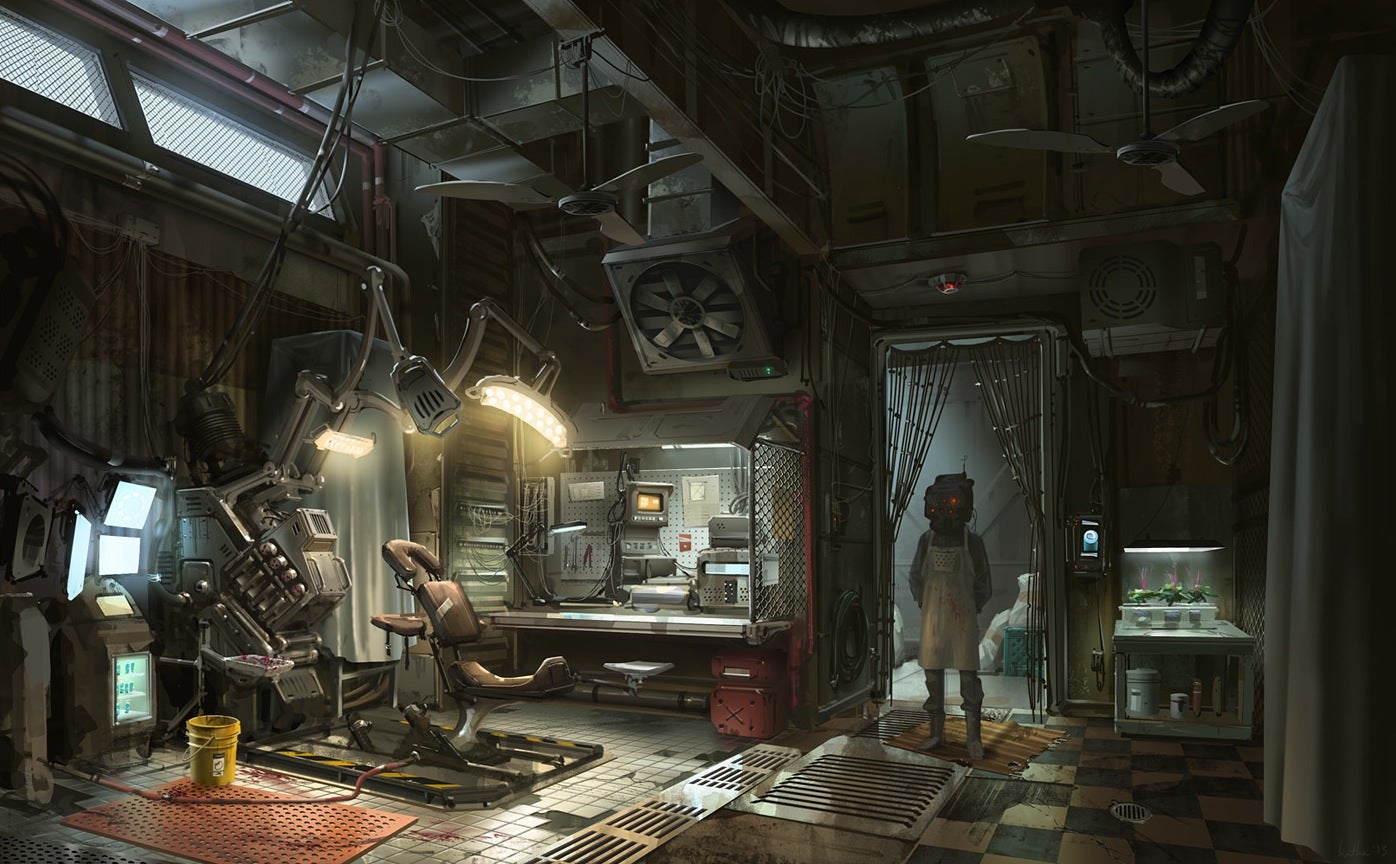
Meanwhile, my mind in its infinite wisdom dug up an image I had seen among io9‘s concept art writing prompts, namely this one of a very dodgy Cyberpunk clinic/treatment room. Once again, this image did not speak to me immediately. In fact I initially dismissed with “Uhm, nope, next one please” after a quick glance. I didn’t even bookmark the image and had to hunt it down again. Nonetheless, my brain remembered it and combined it with the smart bullets from the Alastair Reynolds story and came up with an idea about someone hit in the leg with a smart bullet that was slowly boring its way towards their heart. And the only hope to remove the bullet lay in a dodgy backalley cyber-clinic.

While I was drifting in and out of sleep, my mind mused over the idea and eventually it hit me that this would make a great In Love and War story. Once I had that realisation, I was instantly a lot more awake. I worked over the idea, while lying awake in bed, and came up with a basic plot. Then I got up, switched on the air-conditioning (because I needed to work, damn it), sat down at my computer and wrote the story pretty much straight through with only a handful breaks to make tea and eventually lunch (because writing always makes me hungry).

Bullet Holes is the fourth story in the In Love and War series to date (you can get all four at a reduced price in this neat bundle available exclusively at DriveThruFiction, by the way) and the second to feature Anjali and Mikhail having adventures as an established couple.

In addition to Anjali and Mikhail as well as the new characters Draco and Sladjana Dragovich (Sladjana was named for a teacher colleague of mine, by the way), we also meet (well, hear, since he only appears as a voice in Mikhail’s ear) Colonel Brian Mayhew of the Republican Special Commando Forces, Mikhail’s former commander and mentor, again, who also appears in Dreaming of the Stars and Graveyard Shift.

When I first came up with the idea for what would eventually become the In Love and War series, Mayhew was something of a one-note villain, an SF-nal version of the doggedly relentless pursuer so common in “troubled difter solves problem of the week and moves on” TV-shows such as The Fugitive, The Pretender and the 1970s version of The Incredible Hulk (and indeed, such TV-shows were an influence on the In Love and War series).

However, as I wrote more stories in the In Love and War series, something odd happened, namely Brian Mayhew flat out refused to cooperate and made it very clear that he did not want to be a one-note villain or even a villain at all. And so Mayhew became an a lot more complex character, which thoroughly messed up some of my plans, but also made the overall storyline so much better.

The version of Brian Mayhew seen or rather heard in Bullet Holes is about as close to my original conception of the character, as he is likely to get. Because in Bullet Holes, he needed to be a fairly one-note villain, though even here it becomes noticeable that Mayhew isn’t entirely happy with all the things he’s forced to do in the name of the Republic.

But enough blathering about the writing process. Let’s get to the story itself (yes, this is a new release announcement, albeit one with a little bit of extra added) and follow Mikhail and Anjali onto the streets of the rim world of Varishka, as they deal with some very lethal…

Bullet Holes
Bullet Holes by Cora BuhlertOnce, Anjali Patel and Mikhail Grikov were soldiers on opposing sides of an intergalactic war. They met, fell in love and decided to go on the run together.

Now Anjali and Mikhail are trying to eke out a living on the independent worlds of the galactic rim, while attempting to stay under the radar of those pursuing them.

When a seemingly routine courier job turns out to be a trap, Anjali is hit by a so-called smart bullet, a Republican weapon that slowly and inevitably kills its victims. Mikhail is given a choice by his former commander Brian Mayhew: Surrender or watch the woman he loves die in excruciating pain.

It is a choice between two equally horrifying fates. But maybe, there is a third option…

More information.
Length: 6200 words
List price: 0.99 USD, EUR or GBP
Buy it at Amazon US, Amazon UK, Amazon Germany, Amazon France, Amazon Netherlands, Amazon Spain, Amazon Italy, Amazon Canada, Amazon Australia, Amazon Brazil, Amazon Japan, Amazon India, Amazon Mexico, Kobo, Barnes & Noble, Apple iTunes, Scribd, Smashwords, Inktera, txtr, Thalia, Weltbild, Hugendubel, Buecher.de, DriveThruFiction, OmniLit/AllRomance e-books, Casa del Libro, e-Sentral, 24symbols and XinXii.

Posted in Books, Writing | Tagged , , , , , , , , , , , , | 1 Comment

Indie Speculative Fiction of the Month for September 2016

Indie Speculative Fiction of the MonthIt’s that time of the month again, time for “Indie Speculative Fiction of the Month”.

So what is “Indie Speculative Fiction of the Month”? It’s a round-up of speculative fiction by indie authors newly published this month, though some July books I missed the last time around snuck in as well. The books are arranged in alphabetical order by author. So far, most links only go to Amazon.com, though I may add other retailers for future editions.

Once again, we have new releases covering the whole broad spectrum of speculative fiction. We have a whole lot of space opera this month, but also epic fantasy, urban fantasy, portal fantasy, military science fiction, dystopian science fiction, science fiction romance, time travel, vampires, witches, demons, dragons, aliens, nanitechnology, starship mages, disasters in space, intergalactic mercenaries, turncoat princes, outlaw swordfighters, FBI witches, psychedelic coffee and much more.

Don’t forget that Indie Speculative Fiction of the Month is also crossposted to the Speculative Fiction Showcase, a group blog run by Jessica Rydill and myself, which features new release spotlights, guest posts, interviews and link round-ups regarding all things speculative fiction several times per week.

As always, I know the authors at least vaguely, but I haven’t read all of the books, so Caveat emptor.

And now on to the books without further ado:

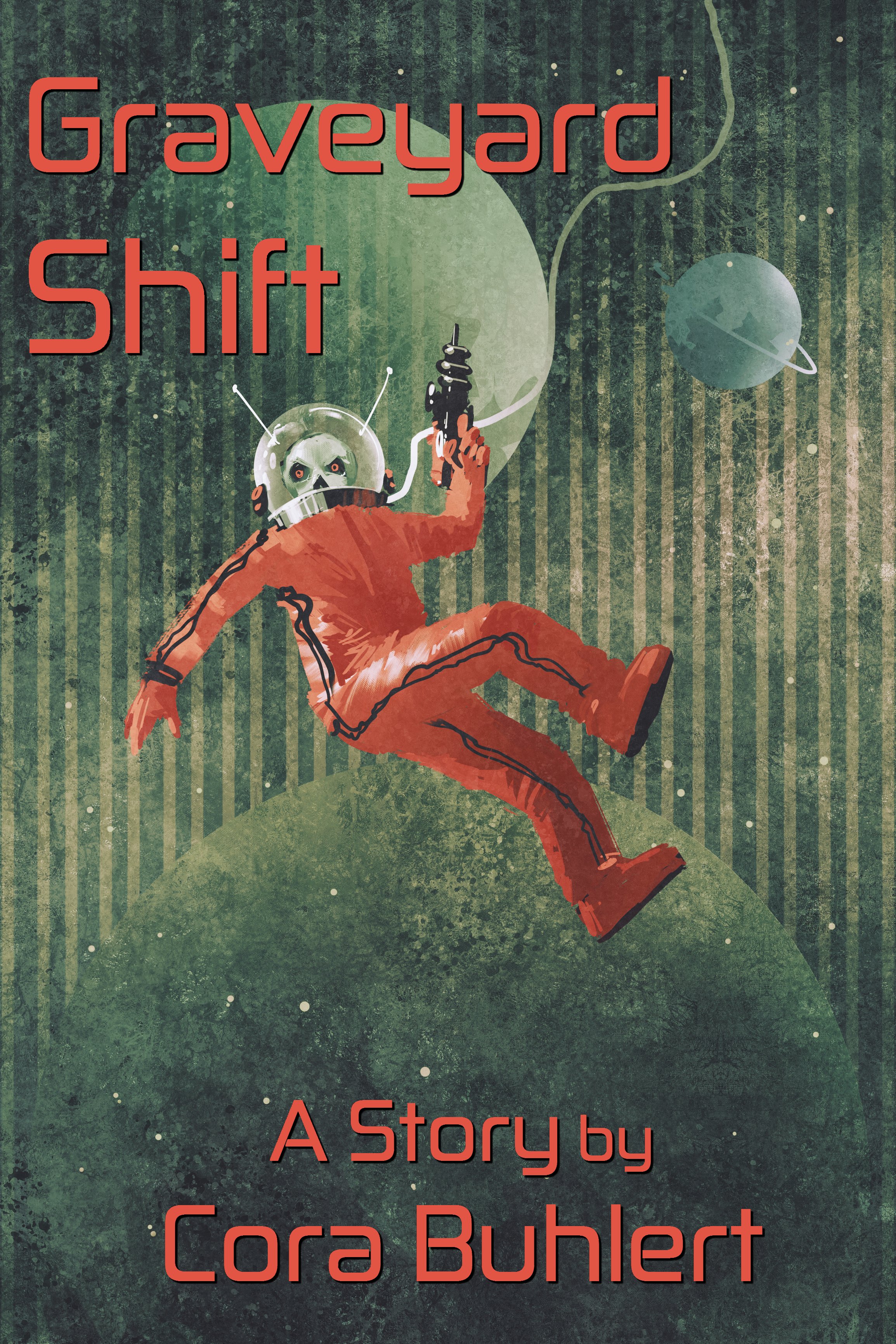
Graveyard Shift by Cora BuhlertGraveyard Shift by Cora Buhlert

While docked at the civilian space station Unity for repairs, the Republic of United Planets battlecruiser Great Endeavour undertakes a trial flight with an inexperienced bridge crew. Disaster strikes and the Great Endeavour crashes into Unity‘s shopping concourse, killing more than three hundred people.

A tragic accident, but in times of war, the public is not willing to accept tragic accidents. And so the Republic’s government sends its best troubleshooter, Colonel Brian Mayhew of the Republican Special Commando Forces to initiate a cover-up.

This is a novelette of 14100 words or approx. 48 print pages in the In Love and War series, but may be read as a standalone.

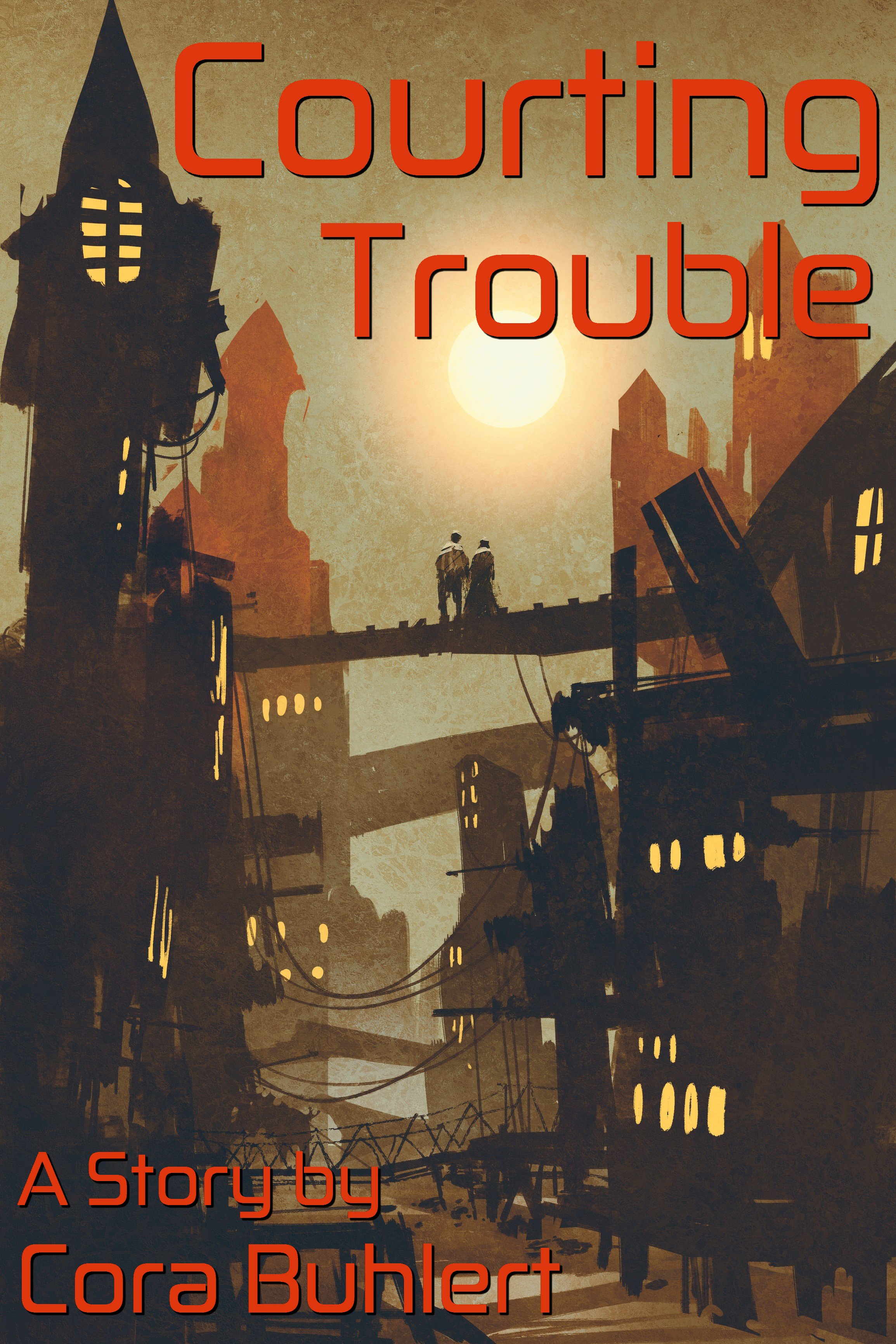
Courting Trouble by Cora BuhlertCourting Trouble by Cora Buhlert

Once, Anjali Patel and Mikhail Grikov were soldiers on opposing sides of an intergalactic war. They met, fell in love and decided to go on the run together.

Now Anjali and Mikhail are trying to eek out a living on the independent worlds of the galactic rim, while attempting to stay under the radar of those pursuing them.

But when Anjali and Mikhail stumble upon a protection racket during a routine shopping trip, they have to make a choice: Lay low to avoid attracting attention or stay true to their personal ethics and intervene?

This is a story of 6700 words or approx. 23 print pages in the In Love and War series, but may be read as a standalone.

Arkadian Skies by Lindsay BurokerArkadian Skies by Lindsay Buroker

With the man who kidnapped her daughter imprisoned aboard her ship, Captain Alisa Marchenko is closer than ever to reuniting her family. But her new guest has been in a coma for weeks, with the secret to her daughter’s location locked away in his mind. She must find a way to sneak him into a state-of-the-art hospital on Arkadius, a planet in the heart of Alliance territory. Not an easy task when she and the cyborg Leonidas, her most trusted ally, are wanted by the Alliance army.

As if that mission weren’t daunting enough, the Staff of Lore has appeared on the planet. As has the man who stole it: Alisa’s father.

Bloodless by Tori CentanniBloodless by Tori Centanni

Henri Dunn would love to avoid all vampire bullshit for the foreseeable future, but the universe has other plans.
When an exsanguinated corpse is left in the dumpster behind her workplace, Henri knows it’s a some kind of twisted message meant for her. It’s just not one she can decipher.

In addition to that terrifying puzzle, Henri’s new ex-vampire roommate is not adapting well to human life and a Cure-obsessed vampire is stalking her. And of course, her enigmatic vampire sire, Sean, is being his usual elusive and infuriating self.

When a second body that’s been drained of blood is left in front of Henri’s apartment building, it becomes clear that a vicious serial killer is fixated on her. Using her ability to read memories in blood, Henri must figure out who’s behind these terrible killings and stop them before she becomes the next victim.

Bloodless is the second installment of The Henri Dunn Urban Fantasy Series, which features a snarky protagonist, intriguing mysteries, a captivating cast of characters, and elements of humor. Book 1, The Immortality Cure, is also available.

Osdal by Michael ChatfieldOsdal by Michael Chatfield

Masoul wasn’t just an uprising, it was the starting of a war. Harmony didn’t start on Masoul; they were using it as a testing ground.

Moretti has a lead on where Harmony might have come from. First they need to defeat Harmony’s forces in Osdal.

Nerva’s not going to throw his people at Harmony, this is not just a colonist uprising, this is a well-armed and backed military. They need more information. It comes down to the Triple-Two’s to find out that information.

Once again the Victor brothers and their platoon will be right at the heart of Harmony.

Nothing will be the same after Osdal.

Blooded by Shei DarksbaneBlooded by Shei and Annathesa Nikola Darksbane

Dakota Shepherd gained Hellfire from a demoness on the day she Awakened. She never asked for that power, but it worked out well…until the deadly fire turned against her, forcing her to strike a deal with her even deadlier benefactor.

A bloody quest. A score unsettled. A lesson finally learned.

Dakota must recover the demoness’ stolen blood before a thief with unparalleled power can turn it to his own dark purposes. Even with her wealthy and powerful girlfriend on her side, Dakota is way out of her league.

But when a demoness calls, only a dead girl says no.

The Captain by Brian W. FosterRepulsive Origins – The Captain by Brian W. Foster

When a supervillain attacks civilians, the US Army is first on the scene. Lieutenant Samuel Shields is given the impossible task of protecting lives and property. His weapons won’t hurt a three-story tall enhanced hostile, and even if he could figure out a way to take the enemy out, he’s not allowed to engage under any circumstances. Instead, he must wait for the so-called superheroes to show up.

Leave it to the politicians to create such a FUBAR situation.

Two children are put in danger, and Samuel is forced to make a life-altering decision. If he follows orders, he’ll have the deaths of two kids on his conscience. But if he disobeys, he risks his life and, worse, a court martial.

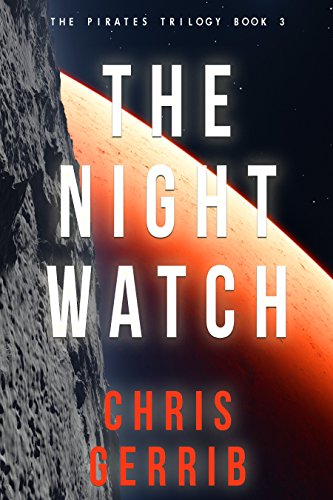
The Night Watch by Chris GerribThe Night Watch by Chris Gerrib

In the chaotic and crime-ridden settlement of Boxtown on Mars, Minty Storey witnesses a bar fight she has no idea will change the course of her life.

Halfway across the planet, Janet Pilgrim and the Volunteer Space Rescue Service struggle to do something about the pirate menace on the spaceways between Earth and Mars.

But the problems both face are much bigger than pirates and bar fights. When a leader of Earth’s Manifest Destiny movement makes an appearance on Mars, events begin to roll to a climax that will hold the fate of the planet in the balance.

One Down by Bryce T. HughesOne Down by Bryce T. Hughes:

An impenetrable barrier keeps Earth’s ships from leaving. Teams of specially-trained heroes fly the limited allowed space wiping out the debris specialists suspect offended an alien force. Separated from her lover, Jane treasures her team and performs her duty, but she suspects a lie fuels the international sport. With her friend Julio’s life hanging in the balance, she faces the deadly force penning her planet and battles the hypocrisy of her government.

This is a LGBT short story with lesbian and gay content, and mild swearing.

True Colors of Betrayal by J.C. KangTrue Colors of Betrayal by J.C. Kang

The world knows Kaiya as the Dragon Charmer.

After vanquishing the Last Dragon with the power of her voice, all she wants is to return to a quiet life of anonymity. Instead, the Emperor assigns her an onerous task: negotiating with the aggressive Teleri Empire for the extradition of her cousin, who tried to murder the imperial family and usurp the Dragon Throne.

The mission reunites her with her childhood friend Tian, now an assassin-spy who loathes killing. He is no longer the adorable, gullible boy from her memories, any more than she is the adventurous, sweet girl from his. Instead of rekindling nostalgia for a youthful innocence they both yearn for, their reunion ignites a mutual hatred.

When the Teleri Empire breaks off negotiations, Tian must help Kaiya escape. Orcs, Ogres, and enemy soldiers stand between them and home, and their volatile relationship could get them captured… or killed.

Stem by Aaron D. LambStem by Aaron D. Lamb

After escaping the extermination of everyone they loved, Rome and Mae seek revenge.

However, the world outside their city sized prison is too busy to care. They form a desperate friendship with an unlucky Zoo guide, caught in the wrong place at the right time. Together they face the forces of a corrupt government, a sensationalist media, and an apathetic public.

And they only have a week left to live.

Suspenseful, political and awash with colourful characters and epic set pieces.

Stem the sequel to sci-fi hit Pollen, builds to a finale that pits hero against hero.

Cargo by V.M. LawCargo by V.M. Law

On the Age of Discovery, a massive cargo hauler, Kasey Lee works as a Custodial Technician, essentially a glorified janitor.

When the Ides, a hostile alien race, attacks Earth’s outposts, the Age must assist in the war effort.

But Kasey discovers that there is a conspiracy on board, one which led the Ides straight to the outposts, and is now pointing them right at Earth.


You Don't Belong Here by Tim MajorYou Don’t Belong Here by Tim Major

Daniel Faint is on the run with a stolen time machine. As the house-sitter of a remote Cumbrian mansion, he hopes to hide and experiment with the machine. But is the Manor being watched by locals, his twin brother or even himself? Daniel is terrified about what the future may hold but, as he discovers, there can be no going back.


Dragon's Trail by Joseph MalikDragon’s Trail by Joseph Malik

“I didn’t come here to sell my soul. I came here to buy it back.”

Once dubbed “The Deadliest Man Alive,” Jarrod Torrealday is a former Olympic saber hopeful and medieval weapons expert banned from competition for killing another fencer in a duel. Despondent, volatile, alcoholic, yet still one of the greatest swordsmen alive, he now works for third-rate fantasy films as a technical consultant and stuntman.

When Jarrod accepts the gig of a lifetime from a sorcerer looking for a hero, he finds himself facing an invading army in a world inhabited by creatures from Earth’s mythical past. He soon learns that the enemy mastermind is also from Earth, and has laid the foundations for a new kind of war.

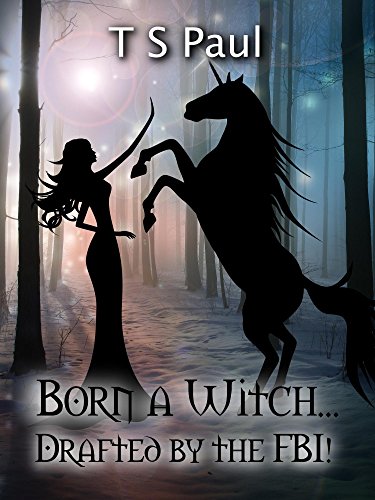
Born a Witch by TS PaulBorn a Witch… Drafted by the FBI by T.S. Paul

Agatha Blackmore came into her powers early as a child. Her first spell was a thing of beauty and wonder. It brought terror into the hearts of her family. Who wanted to accidentally become a pink chicken? Now that she’s older her magic is out of control. She needs a teacher and none of the Witch Schools will take her. How about a career in law enforcement? The FBI needs serious help in catching law breaking Paranormals. It’s a match made in heaven or is it in Hell? God only knows what happens next.


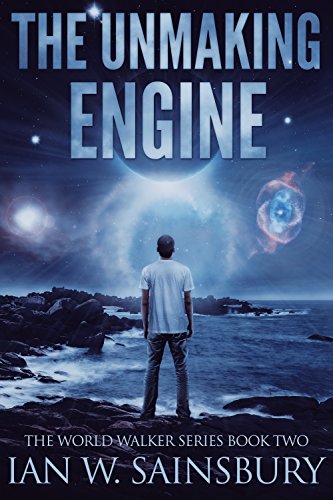
The Unmasking Engine by Ian W. SainsburyThe Unmasking Engine by Ian W. Sainsbury

An experiment that began 2.8 billion years ago is about to end…

Seb Varden is starting to get used to life as a World Walker. With a body full of alien nanotechnology, the ability to travel anywhere instantly and – most surprising of all – a steady relationship with Meera Patel, things are finally looking up.

Until Seb has his first blackout, starts meeting aliens and discovers a plan that threatens the entire human race. And, of course, Mason, the most dangerous Manna user, picks this particular moment to come after him and Meera.

Scariest of all, Seb is learning his transformation into a World Walker is far from complete…

Monkeys, aliens, technology, parallel universes, music, psychopaths, A.I., a magic tech spider, The Unmaking Engine has it all, including the explanation of how all life on earth began. Did I mention monkeys?

The Unmaking Engine is book 2 in the The World Walker Series.

The Turncoat Prince by Amelia PrinceThe Turncoat Prince by Amelia Smith

Darna is just a guildswoman, or so she’d like to think, but her alleged father was the prince of a backwater province. Her uncle assassinated him to claim the throne, and now he’s coming after her.

With assassins on her heels, Darna takes on a job in the remote province of Slaradun. The prince is irate to find that this limping woman has replaced the able-bodied man he hired, but according to the contract, he’s stuck with her for the season. Darna finds the prince arrogant and high-handed, but he’s also intelligent and well-read. As winter closes in on Slaradun keep, late night conversations turn from sea walls to more intimate territory, and the province’s lost dragon reappears.

This book is the second in the Dragonsfall trilogy. To enjoy it properly, read The Defenders’ Apprentice first, and perhaps also the beginning of Darna’s story in the prequel novels, Scrapplings and Priestess.

Phobos Eclipse of the Heart by Colin SpindlerPhobos Eclipse of the Heart by Colin Spindler

Colin Spindler’s CULT Group Coffee Sequence is a mystical space yarn for lovers of psychedelic science fiction.

Phobos Eclipse of the Heart picks up the wild tale where Of Bots and Beans left off.

Follow the mysterious Participant’s continuing misadventures in Sequencing. Learn about The Scullythorne Thesis, an authoritative document which can be twisted into providing support for any and every argumentative perspective. Uncover a nefarious plot to bring down the Dos Boletos facility. Mourn the tragic end of Sir Francis Buildobare and the loss of the Vladimarino Gripebagger Expedition. Puzzle over the controversial Alley Cat Initiative.

Revel in the mysteries of the nanobot-haunted Cosmos!

Alien Arcana by Glynn StewartAlien Arcana by Glynn Stewart

An alien ruin
A murdered archeologist
An ancient secret—and a conspiracy that will kill to keep it!

When a scientist is murdered after finding signs of alien magic in an archeological dig, Mage Damien Montgomery, Hand of the Mage-King of Mars, is sent to investigate both the murder and the alien runes.

His investigation is interrupted when a mysterious ship attacks the ruins with weapons only available to the Martian Navy. Despite saving the dig site, Montgomery is left with more questions than answers.

His investigations reveal questions about the origin of his magic and his nation—and lead him back to the one place that should be safe: the court of the Mage-King of Mars.

Posted in Books | Tagged , , , , , , , , , , , , , , , , , , , , , , | Leave a comment

New Release: Courting Trouble, an In Love and War story

Two weeks ago, I announced the start of a new space opera series and also that there would be more books coming soon. Then, three days ago, I announced the second novelette in the In Love and War series, again with the promise of more stories coming soon.

And today, I’m happy to announce Courting Trouble, the third story in the In Love and War series. Whereas both Dreaming of the Stars and Graveyard Shift are prequels of sorts, Courting Trouble features Mikhail and Anjali as an established couple on the run from their respective regimes.

The seeds for the In Love and War series were laid sometime last year, when a scene popped into my head: Two intergalactic mercenaries, a man and a woman, bantering while walking through a grimy spaceport. I knew at once that they were a couple and that they came from very different backgrounds which they had left behind to be together. They worked as mercenaries now, not because they wanted to, but because it was the only option left open to them. They were also on the run.

I was intrigued by the bantering couple, so I started writing. As I followed them through the spaceport, I learned a lot more about them: Their names – Anjali Patel and Mikhail Alexeievich Grikov – that they had both been elite soldiers on opposite sides of an endless intergalactic war, that they had fallen in love and run away together. I also got, in bits and pieces, the story of how they’d met and fallen in love and what had prompted them to leave behind everything they’d ever known and run away together. It was a pretty good story, so I decided to write it. I worked on that story on and off for several months, while it eventually blossomed into a novel or rather two.

However, I had always intended to give Anjali and Mikhail standalone adventures working together as an established couple. In many ways, Anjali and Mikhail are the ideal candidates for a series of standalone adventures. They are fugitives working as mercenaries, hopping from planet to planet trying to evade their pursuers. This gives them the opportunity to have a lot of different adventures on different worlds, solving other people’s problems, while trying to stay a step ahead of their own. Hey, it worked for Dr. Richard Kimble and the 1970s TV version of The Incredible Hulk. It’s still working for Jack Reacher.

Then July came along and I decided to take the 2016 July short story challenge. At this point, Mikhail and Anjali had been living in my head for several months. And while I was looking at SF concept art, trying to spark ideas for the story of the day, I came across this image and thought, “That place would make a great setting for an Anjali and Mikhail story.”

So I started writing and sent Mikhail and Anjali shopping. Or rather, I sent Anjali shopping, since Mikhail merely tags along. It wasn’t long until they found trouble or rather trouble found them.

By now, it has become something of a pattern that the In Love and War stories all have pretty extensive descriptions of food and Courting Trouble is no exception. I’m not sure why I write about food so much, both in this series and elsewhere, except that food is an element that’s traditionally missing in a lot of science fiction or is reduced to things such as food pills or protein sludge, which few people would willingly consume.

Food is also significant for Mikhail in particular, because his deprived childhood (chronicled in Dreaming of the Stars) has left him with massive food issues. These issues come to the fore in Courting Trouble, when going grocery shopping with Anjali triggers memories of Mikhail’s lost family and homeworld, which once again focus mostly on food and drink.

So follow Mikhail and Anjali, as they are…

Courting Trouble
Courting Trouble by Cora Buhlert Once, Anjali Patel and Mikhail Grikov were soldiers on opposing sides of an intergalactic war. They met, fell in love and decided to go on the run together.

Now Anjali and Mikhail are trying to eek out a living on the independent worlds of the galactic rim, while attempting to stay under the radar of those pursuing them.

But when Anjali and Mikhail stumble upon a protection racket during a routine shopping trip, they have to make a choice: Lay low to avoid attracting attention or stay true to their personal ethics and intervene?

More information.
Length: 6700 words
List price: 0.99 USD, EUR or GBP
Buy it at Amazon US, Amazon UK, Amazon Germany, Amazon France, Amazon Netherlands, Amazon Spain, Amazon Italy, Amazon Canada, Amazon Australia, Amazon Brazil, Amazon Japan, Amazon India, Amazon Mexico, Kobo, Barnes & Noble, Apple iTunes, Scribd, Smashwords, Inktera, txtr, Thalia, Weltbild, Hugendubel, Buecher.de, DriveThruFiction, OmniLit/AllRomance e-books, Casa del Libro, e-Sentral, 24symbols and XinXii.

BTW, if you want to read the entire In Love and War series, there is a series bundle available at a reduced price exclusively at DriveThruFiction.

Posted in Books, Writing | Tagged , , , , , , , , , | 1 Comment

New Release: Graveyard Shift, an In Love and War novelette

Two weeks ago, I announced the start of a new series and also that there would be more stories coming soon.

So today, I’m happy to announce the second In Love and War story, a novelette called Graveyard Shift. Like Dreaming of the Stars, Graveyard Shift is a prequel of sorts, set approximately three years before the series proper.

I started writing the story that would eventually become Graveyard Shift during the 2016 July short story challenge, but set it aside, once I realised that the story was too big for the constraints of the challenge. Then, once July was over, I picked up the abandoned story and finished it.

As with many of the July challenge stories, Graveyard Shift also began with a piece of concept art, namely this rather cheerful image of a space station interior. So I spent a page or two describing the station and sending a character on a stroll through the concourse and then did something horrible to the station, the concourse and the character.

There is another inspiration for Graveyard Shift, namely my work as a translator. In the course of this work, I occasionally get what I privately call “It wasn’t my fault, honest” reports, blow-by-blow accounts of absurd, stupid and usually extremely expensive accidents. The intent of these reports is always to prove – sometimes even with lots of graphs and charts – that whatever unfortunate thing happened was totally not the fault of whoever commissioned the report. Those “It wasn’t my fault, honest” reports are more amusing than the usual stuff I get to translate, if only because so many of them are documents of truly stunning human incompetence. Luckily, so far none of these accidents killed anybody, though they cause a lot of property damage.

I always wanted to write an SF version of an “It wasn’t my fault, honest” report, a blow by blow account of human incompetence resulting in a huge accident. Since a lot of these accidents involve a ship crashing either into another ship or a stationary structure, I wanted my fictional incident to be similar, only involving a spaceship. And when I saw the image of the space station linked above, something clicked and Graveyard Shift was born.

Somewhere along the way, I decided that this story took place in the In Love and War universe, though it’s quite an unusual story for the series. For while the other In Love and War stories focus on Mikhail and Anjali, Graveyard Shift has six different POV characters, most of them new. Mikhail appears briefly during his time as a Republican operative, though he doesn’t get a POV. Anjali doesn’t show up at all, since Graveyard Shift is set entirely in the Republic.

Mikhail’s commander/mentor Brian Mayhew is one of the six POV characters and the only series regular. I’d initially intended Mayhew to be a fairly one-dimensional villain, who ruthlessly hunts Mikhail and Anjali (he has an Imperial counterpart as well). However, Mayhew steadfastly refused to cooperate and clearly did not want to be a villain. He also turned out to be rather conflicted about his job and his duty. I also realised that his connection to Mikhail goes a lot deeper than I’d initially assumed. This upset my plans for the series, though it also made Mayhew a more nuanced and interesting character. We will eventually see Mayhew in villain mode, but he’s a lot more than that.

Regarding the tribunal scene at the end, I gave a couple of friends the first half of the story to read and asked them who they thought was to blame for the accident. Though I didn’t tell them just what would happen to the parties found guilty, because I did not want their eventual fate to influence the decision. Coincidentally, all beta readers agreed that Commander Flynn and Lieutenant Kim should be held responsible, even though I initially hadn’t intended for Lieutenant Kim to be held responsible at all – but rereading the scene in question, I realised that she does goad Commander Flynn into taking that fatal trial flight. No one believed that Captain Woywood and Cadets Adeboye, Merrill and Watanabe should be held responsible. Opinions were divided on Cadet Giantano.

Just in case it wasn’t clear already, Graveyard Shift shows that the Republic of United Planets is a pretty awful place – and the Empire of Worlds isn’t any more pleasant, though a tad more competent.

Two days ago, I blogged about the 50th anniversary of the German science fiction series Raumpatrouille Orion, which was one of my big foundational SF influences. As a result, there are a lot of Orion references in the In Love and War series. It started when I needed a name for Mikhail’s lost homeplanet and decided to name it Jagellowsk, after the Orion‘s security officer Tamara Jagellowsk. Then it became something of a running gag that Republican worlds are named after Raumpatrouille Orion characters. There are a couple of other Orion references as well, six or seven altogther. Bonus points to anybody who manages to find them all.

However, the planet Burrichter, source of excellent cookies and pastries, is not a reference to Raumpatrouille Orion at all. Instead, I named it after one of my favourite bakeries, Café Burrichter in Vechta, one of whose specialties are Spekulatius cookies. You can see two photos of the real Café Burrichter here.

I included the coffee and pastries in the tribunal scene to give the characters something to do while discussing the case and also to show how blasé and desensitized Brian Mayhew, Roland Cox and Michelle Abasi are that they argue about whom to send to the firing squad, while having coffee and pastries.

Though I realised that all In Love and War stories to date have pretty extensive food scenes. And of course, Mikhail’s deprived childhood (chronicled in Dreaming of the Stars) have given him massive food issues, which also come to the fore in Graveyard Shift. But then, many of my stories include descriptions of food. I guess food is just something I like writing about and coincidentally also an aspect all too often ignored in science fiction.

So here’s a story of tragic disasters, rank incompetence and chilling ruthlessness:

Graveyard Shift
Graveyard Shift by Cora BuhlertWhile docked at the civilian space station Unity for repairs, the Republic of United Planets battlecruiser Great Endeavour undertakes a trial flight with an inexperienced bridge crew. Disaster strikes and the Great Endeavour crashes into Unity’s shopping concourse, killing more than three hundred people.

A tragic accident, but in times of war, the public is not willing to accept tragic accidents. And so the Republic’s government sends its best troubleshooter, Colonel Brian Mayhew of the Republican Special Commando Forces to initiate a cover-up.


More information.
Length: 14100 words
List price: 2.99 USD, EUR or 1.99 GBP
Buy it at Amazon US, Amazon UK, Amazon Germany, Amazon France, Amazon Netherlands, Amazon Spain, Amazon Italy, Amazon Canada, Amazon Australia, Amazon Brazil, Amazon Japan, Amazon India, Amazon Mexico, Kobo, Barnes & Noble, Apple iTunes, Scribd, Smashwords, Inktera, txtr, Thalia, Weltbild, Hugendubel, Buecher.de, DriveThruFiction, OmniLit/AllRomance e-books, Casa del Libro, e-Sentral, 24symbols and XinXii.

Posted in Books, Writing | Tagged , , , , , , , | Leave a comment

Rücksturz in die Zukunft – “Raumpatrouille Orion” at Fifty

1966 was a landmark year for science fiction television. It saw the premieres of Time Tunnel, Mission Impossible, the Adam West Batman series, The Green Hornet (which also introduced Bruce Lee to western audiences) and of course, Star Trek. What is more, 1966 also marks the first appearance of the Cybermen in Doctor Who as well as the first time the world saw the Doctor regenerate.

Amidst all these international anniversaries, one anniversary remains a bit overlooked. For 1966 was also the year that science fiction arrived on (West) German television, when the space cruiser Orion 6 took off from its underwater base for the first time in the TV series officially called Raumpatrouille – Die phantastischen Abenteuer des Raumschiffs Orion (Space Patrol – The fantastic adventures of the space ship Orion), though it’s mostly referred to as Raumpatrouille Orion these days.

Want to see what it was like? The entire seven episode series is available on YouTube. Here is the first episode: Continue reading

Posted in TV | Tagged , , , , , , , , , , , , , , , , , | 4 Comments

The Three Fractions of Speculative Fiction

A few days ago, Mike Glyer of File 770 linked to this post by Nathaniel Givens at a site called The Loose Canon about the Hugos and the Dragon Awards.

It’s a curious post that attempts to offer a neutral assessment of the conflict. Nathaniel Givens is clearly no puppy, though he is sympathetic to some puppy talking points such as that US SFF publishing* is dominated by what passes for the far left in the US, that WorldCon is a monoculture and that the Hugos are broken and have been awarding substandard work in the past few years. However, unlike most puppies of either stripe, Givens is also critical of the Dragon Awards and criticises them for having too many novel categories, which make it difficult to read everything and cast an informed vote, and for ignoring short fiction, in spite of its importance to the field.

As for which recent Hugo winners Nathaniel Givens considers substandard, he names Redshirts by John Scalzi (slight and forgettable, nadir of the best novel Hugo), Among Others by Jo Walton (unreadable, but not overly political), “If you were a dinosaur, my love…” by Rachel Swirsky (kind of liked it, but it’s not SF and makes a loaded political point) and “The Water that Falls on You From Nowhere” by John Chu (not SF and makes a loaded political point).

In short, it’s the same names we hear over and over again from the puppy camp as an example of how the Hugos are broken, except for Among Others, which the puppies rarely talk about. Add in Ancillary Justice by Ann Leckie (which Nathaniel Givens liked, though he found it provocatively political), The Fifth Season by N.K. Jemisin, the non-fiction anthology Chicks Dig Time Lords, “The Day the World Turned Upside Down” by Thomas Olde Heuvelt and “Cat Pictures, Please” by Naomi Kritzer (both works that were ironically handed victory by the puppies themselves) and you’ve got the puppy canon of works that ruined the Hugos. If you’re wondering what on Earth could be objectionable about “Cat Pictures, Please” of all things, S. Schwartz has the answer. It’s the same thing that makes the puppies hate “The Water That Falls On You From Nowhere”, namely the fact that it includes gay people and said gay people are neither unhappy nor dead.

As I’ve pointed out before, the puppies’ intense dislike for Redshirts, Ancillary Justice and Chicks Dig Time Lords make little sense, since these are exactly the populist core genre works they claim the Hugos are ignoring. Of course, Ancillary Justice has feminine pronouns used throughout and taverns in the snow, which have no place in science fiction, and Chicks Dig Time Lords had the misfortune of beating the collected columns of Brad Torgersen’s mentor Mike Resnick and Barry Malzberg, plus it’s by and about women. But Redshirts? What on Earth could be objectionable about a Star Trek parody, except for the fact that it’s written by John Scalzi who is a hate figure for many puppies?

Now let’s take a trip back in time to the 2013 Hugo Awards, the year before the puppy wars broke out. The nominees in the best novel category that year were Captain Vorpatril’s Alliance by Lois McMaster Bujold (my personal favourite), Throne of the Crescent Moon by Saladin Ahmed, 2312 by Kim Stanley Robinson, Blackout by Mira Grant a.k.a. Seanan McGuire and of course the eventual winner Redshirts by John Scalzi. At first glance it doesn’t seem an overly controversial ballot: All five nominees are core genre works, nothing experimental or borderline literary about them. Lois McMaster Bujold, John Scalzi, Kim Stanley Robinson and Mira Grant/Seanan McGuire are all established and popular authors with multiple Hugo nominations and a few wins under their belt, while Throne of the Crescent Moon was a debut novel by an author who’d been nominated for the Campbell Award the year before. It seems to have been a bit forgotten since then, probably because the sequel won’t be out until 2017, but at the time Throne of the Crescent Moon certainly got a lot of buzz.

Nonetheless, I did remember that there was a controversy involving the 2013 Hugos at the time, a controversy I chronicled in several posts here, here and here.

Interestingly, most “The Hugos are broken” complaints that year came not from the puppy side (though Larry Correia waded into the fray, being his usual charming self) but from overwhelmingly British critics, who complained about the alleged lack of sophistication of the nominees. For examples, check out these posts by Justin Landon, Aidan Moher, Adam Callaway and Jonathan McCalmont.

ETA: According to Shaun Duke, Justin Landon, Aidan Moher and Adam Callaway are not actually British.

The critics who wrote those posts are not puppies. Quite the contrary, they are probably the polar opposite. Where the puppies complain that the Hugos aren’t populist enough and reward obscure literary works, these critics complain that the Hugos are too populist and not sophisticated enough. However, if you read through those posts (and particularly Justin Landon’s remains a marvel of condescension) you’ll notice that their criticisms of the Hugos eerily mirror those made by the sad and rabid puppies a few years later: The Hugos are broken, they are dominated by a small and incestous clique of aging babyboomers who have been attending WorldCon for decades and/or an equally incestous clique of livejournal posters voting for their friends, those cliques are hostile to outsiders and disregard everybody who doesn’t attend cons as “not a real fan”, only works that appeal to that clique of insiders are nominated and the books/authors the critics like are never nominated. So the Hugos should be burned to the ground or reformed to represent all of fandom or maybe a new award should be established to better represent what’s best in SFF. And as if the puppy parallels weren’t striking enough, many of those posts also contain some bonus condescension towards women writers and writers of colour. Oh yes, and they all agree that Redshirts is an unworthy nominee. Ditto for Lois McMaster Bujold and Mira Grant/Seanan McGuire. Opinions are divided on Saladin Ahmed.

So what is going on here? Why do two seemingly diametrically opposed groups make so very similar points?

Let’s take another trip on the time machine, this time to February 2015, when the Nebula nominees for 2014 had just been announced to the usual controversy. At the time, I wrote:

In general, I think that this year’s Nebula shortlist and indeed many genre awards shortlists of recent years are indicative of a generational and demographic shift in the larger SFF community. Speculative fiction is getting younger, more diverse and more international, which influences the works we see nominated for or even winning awards. This is also why we see so many names on this year’s Nebula shortlist we haven’t seen there before.

Now not everybody is happy with this shift. On the one side, we have a block of more conservative and traditional readers and writers, spearheaded by the so-called “Sad Puppies”**, who are not happy with the shift away from stories heavy on the engineering and explosions (and often, but not always, rightwing politics in space) and light on the characterisation (as well as on women, people of colour, LGBT people and anyone who is not a straight white man) towards more diversity and more literary stories. They just want what they consider fun and entertaining stories and are often unaware that “fun” and “entertaining” are both subjective.

On the other side, we have a group of critics who want the genre to blow up and burn down all the old paradigms and who are vehemently opposed to anything they consider nostalgic. These people are actually in favour of more diversity and more literary speculative fiction, but often the writers and stories that actually find their way onto the ballot are not radical enough for those folks.

[…]

Both groups, the traditionalists and the anti-nostalgics, would probably never agree on what makes a good SFF story, though they are eerily united on which works they dislike, namely Ancillary Justice by Ann Leckie, last year’s Nebula award winning short story “If you were a dinosaur, my love” by Rachel Swirsky (okay, so I don’t particularly like that one either, though I can see why many do) and John Scalzi’s Redshirts (which I do like, but don’t necessarily consider it awards worthy). Both groups are also overwhelmingly white and overwhelmingly male, though the traditionalists lean American, while the anti-nostalgics lean British.

The traditionalists and anti-nostalgics have both been part of SFF almost since the establishment of science fiction as a defined genre and their struggles for dominance have been at root of many a genre conflict over the years. Campbellian SF vs. New Wave is the classic example, the rise of Cyberpunk and the debate about Mundane Science Fiction. In fact, you could probably trace this general conflict all the way back to the exclusion of the Futurians from the very first WorldCon back in 1939. Sometimes, traditionalists and anti-nostalgics reverse position, as the genre moves on, e.g. the Campbellians started out as the radical new kids on the block opposed to Gernsbackian pulp SF in the 1930s and 1940s and wound up the staid old guard resistant to change by the time the New Wave rolled along in the 1960s.

However, there is also a third group of readers and writers, which neither uncritically worships the (largely imaginary) past of the genre nor wants to burn it all down. This group tends to prefer stories that privilege characters over big ideas. They love SFF and its tropes, but don’t mind if genre elements are merely used as furniture for whatever story they want to tell, stories which often contain protagonists (women, characters of colour, LGBT characters, disabled characters) and/or settings (non US/UK settings, non-western settings) not normally found in classic SFF.

Ann Leckie, one of the big names of the third group, says it best:

If SFF is a huge Lego castle that we’ve all been building on for decades, some of us might want to tear their part down and set it on fire and then build on the ruins. Fair enough. But some of us might want to renovate a particular wing that’s taken their fancy. Others of us might just want to add some filigree to a particular battlement.

All of these approaches, and a zillion others, can produce great results. But if you insist that only the set it on fire approach is going to produce great work, you’ve erased the work of everyone else. Go a step farther (too much of what’s published didn’t radically transform the genre! Set it on fire!) and you’ve denied those other artists the right to even exist.

And the whole “escape the suffocating weight of Tradition!” thing doesn’t look the same from every angle. Consider that for women, POC, and LGBTQ writers the question of forebears and tradition can be a fraught one. “She wrote it, but she’s an anomaly.” Such writers have either been denied their own tradition by this kind of erasure, or have been repeatedly erased from the dominant one. To some of us, belonging to a tradition is a valuable and hard-won thing. Sure, we all probably could profit from looking at our assumptions and cultural baggage, and being aware of that as we write.*** But burning the whole castle down? When we’ve uncovered and rebuilt these parts here, so painstakingly? When we love the castle so much and want so badly to be there, even when others are trying to push us out? “Burn it all down and start over!” doesn’t sound terribly appealing. Quite the opposite.

This third group is more diverse than the other two, more female, more international, less straight, less white, less cissexual***. They have been around for as long as the other two and have left their mark on the genre as well, e.g. the rise of Star Trek fandom and media fandom in general is probably due to this group, as is the rise of fan fiction. I was tempted to call them Social Justice Warriors, but that term is both loaded and overly reductive****, so I decided to go with diversity fraction or character-driven fraction*****.

Until fairly recently, this third group was often reduced to the role of a spectator watching the fights of the other two (though I’d argue that the suppression of feminist SF by the Cyberpunks was an example of a fight between the anti-nostalgic and the character-driven fraction). However, the character-driven fraction is growing due to demographic shifts in SFF fandom and due to the internet, which allows previously isolated fans and writers to find each other. And in the past five to ten years, their preferences have started to influence awards shortlists and winners. RaceFail in 2009 was a watershed moment and it’s probably no accident that from 2010 on you see the number of women, writers of colour and LGBT writers on the awards ballots sharply increase after holding largely steady at a low level for the previous ten years or so.

Neither the traditionalists nor the anti-nostalgics are happy about this demographic shift, since it means that the genre mainstream is moving away from the sort of work they prefer. Besides, as Samuel Delany predicted back in 1998, the SFF world is liberal and welcoming as long as there are only a handful of women, writers of colour, LGBT writers and other marginalised people. As soon, however, as the numbers begin to rise to the point that straight white men feel squeezed out, the backlash will begin. Though the anti-nostalgics usually limit themselves to writing long, more or less polemic think pieces (and note that quite a few notable anti-nostalgics have stopped blogging altogether in the past few years), whereas the nastier fringe of the traditionalists has started flinging poo at the opposition, their writers, awards and institutions.

So where does the genre go from here? At the moment, the swinging pendulum seems to favour the character-driven fraction, since the traditionalists seem to have decamped to the Dragon Awards after thoroughly getting trounced by “No Award” two years in a row, while the anti-nostalgics have decamped to the Clarke Award and are either still writing the same polemic think pieces they were writing a few years ago or have given up on blogging altogether.

However, the pendulum can easily swing into another direction again. And women, writers of colour and LGBT writers, who make up a large part of the character-driven fraction, are a lot more susceptible to erasure than straight white men of either fraction. Just remember how Cyberpunk – knowingly or not – erased feminist science fiction.

Comments are off, since I don’t feel like dealing with angry traditionalists or angry anti-nostalgics.

*Mind you, puppy talking points, particularly those of the sads, are exclusively focussed on the US. The rest of the world doesn’t exist, as far as the sad puppies are concerned.

**Though not every traditionalist is a puppy.

***Though it should be noted that every fraction includes women, people of colour and LGBT people.

****Also note that I did not call the traditionalists “puppies”, because again that would be too reductive.

*****”Diversity” is also a loaded term in parts of the SFF world, so let’s go with the more neutral character-driven.

Posted in Books | Tagged , , , , , , , , , , , , | 4 Comments

More 2016 Dragon Awards Reactions

I don’t expect to do four different posts and reaction round-ups about the Dragon Awards like I did for the Hugos, but there have been a few more reactions and responses to the inaugural Dragon Awards in the meantime. My previous post on the Dragon Awards is here. Continue reading

Posted in Books | Tagged , , , , , , , | Leave a comment

The 2016 Dragon Awards or Participation Trophies for Puppies

I posted a lot about the 2016 Hugos, Nebulas and the Arthur C. Clarke Award, so it’s only fair I do the 2016 Dragon Awards, the winners of which were announced at Dragon Con in Atlanta, Georgia on Sunday, as well. I also covered the Dragon Award nominees (along with the 2016 Retro Hugo winners) here.

Anyway, the full list of the 2016 Dragon Award winners may be found here at File 770, since the official Dragon Award website is slow to update. There’s some good discussion and analysis in the comments, too.

As you can see, it’s a mix of generally popular works, particularly in the comics, film, TV and games categories, and the sort of thing puppies like with some overlap between the two. Continue reading

Posted in Books | Tagged , , , , , , , | 1 Comment

A new release and a new series: Dreaming of the Stars

As mentioned before, there will be quite a few new release announcements coming up (well, I can’t blog about SFF awards all the time). And today, I have a special new release to announce, because I not only launch a new book, but also a new series.

Let’s have some background:

Sometime last year, a scene popped into my head: Two intergalactic mercenaries, a man and a woman, bantering while walking through a grimy spaceport. I knew at once that they were a couple and that they came from very different backgrounds which they had left behind to be together. They worked as mercenaries now, not because they wanted to, but because it was the only option left open to them. They were also on the run.

I was intrigued by the bantering couple, so I started writing. As I followed them through the spaceport, I learned a lot more about them: Their names, that they had both been elite soldiers on opposite sides of an endless intergalactic war, that they had fallen in love and run away together. I also got, in bits and pieces, the story of how they’d met and fallen in love and what had prompted them to leave behind everything they’d ever known and run away together.

I’ve always enjoyed science fiction romance, particular science fiction romance which is basically space opera with a strong romance thread running through it. So I decided to write the story of how they’d met and fallen in love against all odds, with the option of sequels featuring them having adventures together (because there aren’t nearly enough books featuring established and happy couples having adventures together).

So I worked on the story on and off for several months, while it eventually blossomed into two novel length works. However, I had also always intended to give my couple smaller standalone adventures.

Then in July 2016, I did the July short story challenge, which involved writing a short story per day in July 2016. But I also still had the characters I’d been living with for several months at this point at the back of my mind. Then one day, while I was looking at concept art for inspiration, a piece sparked an idea for a standalone adventure featuring my mercenary couple. So I wrote that story.

Eventually, I wrote two more stories about these characters during the July short story challenge. One was another standalone adventure, the other was a prequel featuring the characters as teenagers, chronicling how they ended up becoming elite soldiers in the first place. After I finished the July challenge, I also wrote a fourth story, another prequel of sorts set in the same universe.

So now I suddenly had four stories in a new series, now called In Love and War. I’ll release them over the next weeks, but for now here is the prequel novelette, Dreaming of the Stars.

Of the 31 stories I wrote for the July short story challenge, this was the longest. It’s currently 8500 words long, though it gained a thousand words or so in rewrites. But even the first was definitely over 7000 words long. It was also one of the most emotionally harrowing stories to write, particularly the second half featuring the young Mikhail.

By the time I wrote Dreaming of the Stars, I already knew that Mikhail had lost his entire family to the war (unlike Anjali who comes from a largely happy family background – we meet her sisters in Dreaming of the Stars) and that he’d grown up in a prison-like camp for war orphans. However, until I started writing his story, I didn’t realise how horrible that place really was.

Coincidentally, writing Dreaming of the Stars also gave me a lot more insight into Mikhail’s character and how he came to be the man he is. For the novel I’d been working on for several months at that point was told almost entirely from Anjali’ POV for reasons that will become apparent, so I’d spend a lot more time in her head than in his.

So get ready to meet Anjali Patel and Mikhail Alexeievich Grikov, as they are…

Dreaming of the Stars
Dreaming of the Stars by Cora BuhlertEven in a galaxy torn apart by war, the young still have dreams.

On Rajipuri, a poor planet in the Empire of Worlds, Anjali Patel and her two younger sisters look up at the stars and dream of escaping the limitations of a traditional and rigidly stratified society.

At the same time, in a camp for war orphans in the Republic of United Planets, Mikhail Grikov also looks up at the stars and dreams of escaping a life of pain and abuse.

One day in the far future, they will meet and change the galaxy. But for now, they’re merely dreaming of the stars…

This is a prequel novelette of 8500 words or approx. 29 print pages to the “In Love and War” series, but may be read as a standalone.

More information.
Length: 8500 words
List price: 0.99 USD, EUR or GBP
Buy it at Amazon US, Amazon UK, Amazon Germany, Amazon France, Amazon Netherlands, Amazon Spain, Amazon Italy, Amazon Canada, Amazon Australia, Amazon Brazil, Amazon Japan, Amazon India, Amazon Mexico, Kobo, Barnes & Noble, Apple iTunes, Scribd, Smashwords, Inktera, txtr, Thalia, Weltbild, Hugendubel, Buecher.de, DriveThruFiction, OmniLit/AllRomance e-books, Casa del Libro, e-Sentral, 24symbols and XinXii.

Posted in Books, Writing | Tagged , , , , , , , , , | 4 Comments