Schrödinger’s Hugo Finalist – and Some Birthday Stuff

Hugo finalists are not exactly common in Germany (I think there are only three German Hugo finalists altogether and none of them live in North Germany). And so, I was interviewed/profiled by both local papers in my region last week.

Here is Alexandra Penth’s article from the Weser-Kurier (local paper for Bremen and surroundings) and here is Lara Terrasi’s article from the Kreiszeitung (local paper for the Syke/Bassum/Diepholz region), which also appeared in the Delmenhorster Kreisblatt (Delmenhost local paper, which is paywalled). When I sent out a press release after the Hugo finalists had been announced, I expected maybe a small sidebar article, but not an in-depth feature. So I’m really thrilled about the coverage.

One thing both interviewers asked me was how I felt once I learned that I was nominated for a Hugo and whether it was difficult not to talk about it until the official announcement.

I have to admit that the two weeks from the moment I got the e-mail from CoNZealand informing me about the nomination and the official announcement of the finalists were a really strange period. For while you know that you’re a finalist, almost no one else does. You feel very much like Schrödinger’s Hugo finalist, simultaneously a finalist and not a finalist, until the box is opened/the nominations are officially announced. There is also that little niggling voice in your head that wonders whether that e-mail you got is a hoax or mistake and they’ll e-mail you any moment now to say, “Sorry, we miscounted and you’re not a finalist after all.” From talking to other finalists, particularly first time finalists, I know that I am not unique in this. A lot of first time finalists feel this way.

Only when the nominations were officially announced, it finally felt real. Though during the announcement, I cheered more for other finalists than for myself. Because while I knew I was on the ballot, I didn’t know who else was.

The two newspaper articles took the finalist experience to a new level. I had gotten a lot of congratulations before, mostly from people in the SFF community. But suddenly, I also started getting congratulations from neighbours, family members, colleagues, translation customers, etc… – people who are not part of the SFF community and have probably never heard of the Hugos before, but know me in day to day life. In fact, I had people congratulate me on having articles in both local papers about me rather on being a Hugo finalist. Oh yes, and I have to buy everybody a drink at the next translators meet-up, whenever that can take place.

Meanwhile, I also have acquired a Fancyclopedia entry, which is something else that happens when you’re a Hugo finalist. This is the third edition of Fancyclopedia BTW, which is online. The first edition, published in 1944, is a finalist for the 1945 Retro Hugos. I already had an ISFDB entry, but it was updated without hours of the finalist announcement.

ETA: The Facebook page of newleaf, the magazine which published my very first story and where I was the sales manager for many years, also has a brief post about my Hugo nomination.

ETA II: The winner of the 2020 Going Under Fan Fund (GUFF) has also been announced. No, I did not win, though I did respectably. And I’m very happy for winner Alison Scott from te UK, who is a highly deserving candidate.

With all the Hugo related excitement, I also forgot to mention that I have a new article out at Galactic Journey, where I talk about exciting new trends in interior design – in 1965.

Furthermore, April 18 is also my birthday. There wasn’t much in the way of celebrations, because inviting friends and extended family members or going out for lunch/dinner or just for an ice cream is quite impossible at the moment. However, there was sailor’s curry and there were presents:

Birthday presents wrapped

Wrapped birthday presents

Unwrapped birthday presents

Unwrapped birthday presents. Lots of books as well as a bottle of red wine, which is not pictured, because it showed up on the doorstep (literally) after I took the photo.

Sailor's curry

Birthday lunch was sailor’s curry with basmati rice and the traditional side dishes.

And because the weather was nice, I took a drive in the afternoon to enjoy the springtime nature. The rapeseed fields are currently in full bloom (uncommonly early this year), which is beautiful to look at, though not at all good for my allergies. Luckily, there is antihistamine.

Rapessed field in full bloom near Dünsen

Rapeseed field in full bloom near Dünsen. Note the communications tower on the horizon.

Rapeseed field in bloom near Dünsen

Another shot of a rapeseed field in full bloom as well as a farm house and a country road. Also taken near Dünsen.

Rapeseed field in full bloom

Rapeseed field in full bloom with trees on the horizon and by the roadside near Nüstedt.

Ornamental cherry tree

An ornamental cherry tree in full bloom.

Posted in Links, Personal | Tagged , , , , , , , , , , , | 4 Comments

Some Thoughts on the Hugo Award Finalists, Part II: The 2020 Hugo Awards

Here is the second of the long awaited Hugo finalist reaction posts. Part 1 about the finalists for the 1945 Retro Hugos, is here BTW. And yes, it took longer than usual to get these posts up, but since I’m a Hugo finalist myself this year, I took some time off to celebrate, congratulate fellow finalists and update everything that needed updating.

So let’s take a look at the finalists for the 2020 Hugo Award and delve right into the categories:

Best Novel:

This is an excellent, if fairly predictable ballot, because all of the nominated novels got a lot of buzz last year. The City in the Middle of the Night by Charlie Jane Anders, Gideon the Ninth by Tamsyn Muir, The Light Brigade by Kameron Hurley, A Memory Called Empire by Arkady Martine and The Ten Thousand Doors of January by Alix E. Harrow were all among the most popular and critically acclaimed novels of the year.

The only finalist in this category that surprised me a little is Middlegame by Seanan McGuire. For while I like Seanan McGuire’s work, Middlegame sort of passed me by. It’s also the only finalist in this category that I haven’t read. Besides, Seanan McGuire is talented, prolific and hugely popular, so upon second thought this nomination isn’t all that surprising after all.

2019 was an extremely strong year for SFF novel in general, so several novels one might have expected to see on the ballot, e.g. The Raven Tower by Ann Leckie, A Song for a New Day by Sarah Pinsker, The Future of Another Timeline by Annalee Newitz or even The Testaments by Margaret Atwood or Black Leopard, Red Wolf by Marlon James, are nowhere in sight, though I suspect that they will sit just under the top six.

The people who worry that fantasy is taking over the Hugos and crowding out science fiction will be pleased that three of six Best Novel finalists are unambiguous science fiction, one is science fantasy and only two are unambiguous fantasy.

Diversity count: 6 women, 1 international writer.

Cue the complaints that women are taking over the Hugos, which – I’ve been told – are already to be found in the usual places. Instead of responding to those complaints, I’ll simply link to this old post again.

Best Novella:

Once again, the finalists in this category are very good, if predictable. This Is How You Lose the Time War by Amal El-Mohtar and Max Gladstone got a huge amount of buzz last year, all of it deserved, because it’s a wonderful story.

Becky Chambers is a highly popular writer as well as previous Hugo finalist and winner, so I’m not at all surprised to see To Be Taught, If Fortunate on the ballot. Seanan McGuire’s Wayward Children series is hugely popular and all previous installments have been Hugo finalists, one a winner, so the nomination for In an Absent Dream is no surprise either.

Rivers Solomon is one of the most exciting new voices in SFF to emerge in recent years and her novella The Deep is an adaptation of the eponymous song by the band clipping, which was a Hugo finalist in 2018.

P. Djèlí Clark is another exciting new voice who has emerged in recent years. He was a double Hugo finalist last year and his 2020 nominated novella The Haunting of Tram Car 015 is a sequel to his 2016 story “A Dead Djinn in Cairo”.

“Anxiety Is the Dizziness of Freedom” is the one finalist in the novella category, where I went “Huh? What on Earth is this?” during the Hugo finalist announcement livestream. Then I saw that the author was Ted Chiang and that the novella is from his recent collection Exhalation, which I haven’t read, because Ted Chiang’s work is very hit and miss for me. However, he has long been popular with Hugo voters.

Those who worry (not entirely without reason) about Tor.com’s dominance in the novella category will be pleased that this year, Tor.conm publishing nabbed only two of six finalist slots. Saga Press nabbed another two, Harper Voyager got one and one story was from a collection published by Alfred A. Knopf. Now that Tor.com Publishing has demonstrated that novellas are a viable, other publishers like Saga Press or Harper Voyager are getting into the act, so we’re seeing more variety, which is a good thing.

Diversity count (including the members of clipping): 6 men, 3 women, 1 non-binary, 5 writers of colour, 1 international writer

Best Novelette:

As I noted in my comments on the 2019 Nebula finalists, my short fiction reading seems to have been out of whack with the genre community last year, because several of the finalists in this and the short story category are stories which never appeared on my radar at all. Some of them were published at a time, when I was otherwise occupied (sick with the flu, doing the July short story challenage, away at Worldcon and Eurocon), so maybe I just missed them. Or maybe my tastes are out of whack with the rest of the Hugo electorate.

“For He Can Creep” by Siobhan Carroll is one novelette I have read and that was also on my ballot.

“The Archronology of Love” by Caroline M. Yoachim, “Away With the Wolves” by Sarah Gailey and “The Blur in the Corner of Your Eye” by Sarah Pinsker are all stories from magazines (Uncanny and Lightspeed respectively) that I normally read by popular and well regarded authors. Yet for some reason, I have read neither of them.

I also haven’t read “Omphalos” by Ted Chiang for the reasons explained above. Emergency Skin by N.K. Jemisin is another story I haven’t read, largely because I assumed the stories of the Forward Collection were audiobooks and I have issues with audiobooks. Emergency Skin is also, as far as I can tell, the first ever Hugo nomination for any of Amazon’s publishing ventures, since Marko Kloos, who is published with the Amazon Imprint 47 North, withdrew in 2015.

Diversity count: 1 man, 5 women, 3 authors of colour

Best Short Story:

Another mix of stories I read and liked and stories that passed me by.

“As the Last I My Know” by S.L. Huang is a great story and was also on my ballot. “Ten Excerpts from an Annotated Bibliography on the Cannibal Women of Ratnabar Island” by Nibedita Sen is a fine story that was on my personal longlist, but didn’t make the shortlist in the end. It’s also a Nebula finalist.

“And Now His Lordship Is Laughing” by Shiv Ramdas is another 2019 Nebula finalist that I wasn’t even aware of before the Nebula finalists were announced. It is a fine story, though. Along with Nibedita Sen’s nomination in this category as well as for the Astounding (formerly Campbell) Award, 2019 was a good year for SFF writers from India.

“A Catalog of Storms” by Fran Wilde is yet another 2019 Nebula finalist as well as a story that initially passed me by. I have since read it, though it didn’t do as much for me as it evidently did for many others.

“Blood Is Another Word for Hunger” by Rivers Solomon and “Do Not Look Back, My Lion” by Alix E. Harrow are two stories that passed me by completely, even though I normally follow the venues where they appeared. But Rivers Solomon and Alix E. Harrow are both fine and popular writers whose work also appears elsewhere on the ballot. Alix E. Harrow is also last year’s winner in this category.

Diversity count: 1 man, 4 women, 1 non-binary, 4 writers of colour, 3 international writers

Best Series:

As I said last year, I was initially in favour of the Best Series category, because there are a lot of popular and good long-running series, that are rarely honoured by the Hugos (or Nebulas, for that matter), because the whole is more than the sum of its parts and individual books often don’t stand alone very well.

Examples I’m thinking of are The Dresden Files by Jim Butcher, Mercy Thompson and Alpha and Omega by Patricia Briggs, Outlander by Diana Gabaldon, Kate Daniels by Ilona Andrews, In Death by J.D. Robb,  Alliance-Union by C.J. Cherryh, The Liaden Universe by Sharon Lee and Steve Miller, the Psy-Changeling and Guild Hunter by Nalini Singh, the 1632 series by Eric Flint, etc… That is, series that are extremely popular and yet overlooked by the Hugos. And yes, I’m aware that several of these series did not have new instalments out in 2019.

However, in practice the Best Series Hugo often still overlooks those long-running popular series in favour of trilogies (who usually have no problems hitting the Best Novel shortlist) and works that happen to be set in the same universe, but are only loosely connected. Quite often, there also is a lot of overlap with authors whose work appears/appeared elsewhere on the ballot and who are clearly popular with Hugo voters. So maybe the majority of Hugo voters just aren’t series readers. The fact that the glory days of the long-running SFF series, particularly urban fantasy and epic fantasy series, ended before the Best Series Hugo existed, doesn’t help either, since a lot of series that should have been finalists have ended or at least have not had new books coming out in a while. Though I suspect that even if there had been a Best Series Hugo in 2008 or 2010, when urban fantasy series ruled the bookstores, we would still have seen a similar pattern.

That said, this year’s Best Series finalists are closer to what I envision the award should recognise than last year’s. There is also less overlap with the other categories and there is only one series that I haven’t read at all. Furthermore, I have always been satisfied with the Best Series Hugo winners so far.

The Expanse by James S.A Corey (a.k.a. Daniel Abraham and Ty Franck) and InCryptid by Seanan McGuire come closest to my idea of what a Best Series finalist should be, namely a long-running and popular series where the whole is greater than the sum of its parts. Both are also repeat finalists in this category, which has caused some grumbling, particularly since Seanan McGuire has been nominated with alternating series in this category since its inception in 2017. However, October Daye and InCryptid are both very good series and deserving finalists.

I haven’t read all of Emma Newman’s Planetfall books, but I liked the ones I did read. And while Emma Newman is a previous Hugo winner, she and her husband Peter Newman won for their excellent podcast Tea and Jeopardy and Emma Newman (and Peter Newman, for that matter) have never been nominated for their fiction.

I read the first of the Winternight trilogy by Katherine Arden, when she was first up for the Campbell Award in 2018. It was well written, too, but fairytale retellings aren’t really my thing, so I never read the rest of the series. With the Luna series by Ian McDonald, I also read the first book, but wasn’t interested enough to read further. Ian McDonald is popular with Hugo voters, though, and had several nominations in the past.

I haven’t read the Wormwood trilogy by Tade Thompson at all, though again it is a popular and acclaimed trilogy and Rosewater, the first book, won the Arthur C. Clarke award last year. Also, the fact that Rosewater had a small press publication in 2016 made it ineligible for the 2019 Best Novel Hugo, so this is a good way of honouring the series.

It’s also notable that three of the Best Series finalists are by British authors, so it’s quite possible that the strong contingent of British and Irish Hugo voters who still had nominating rights from last year’s Worldcon, had an influence here.

Diversity count: 4 men, 3 women, since James S.A. Corey is two people, 2 writers of colour, 3 international writers.

Best Related Work:

This is another category, which I like in theory, but where I’m often not all that happy with the actual finalists and winners. In this category, I have a strong preference for well-researched non-fiction books, whether academic or popular. However, in practice Best Related Work has become something of a catch-all category with anything from filk CDs via podcasts and fanfiction archives to single essays/articles getting nominated and occasionally winning.

This year, however, I’m largely happy with the Best Related Work finalists. Joanna Russ by Gwyneth Jones, The Lady from the Black Lagoon: Hollywood Monsters and the Lost Legacy of Milicent Patrick by Mallory O’Meara and The Pleasant Profession of Robert A. Heinlein, by Farah Mendlesohn are exactly the sort of finalists I want to see in this category. All three were also on my longlist, two of them were on my ballot.

Becoming Superman: My Journey from Poverty to Hollywood by J. Michael Straczynski was not on my ballot, but is a highly deserving finalist, since autobiographies of people of genre relevance have always been a part of Best Related Work – see also the recent nominations for Carrie Fisher’s and Zoe Quinn’s respective autobiographies.

I still feel that documentaries belong in Dramatic Presentation rather than in Best Related Work, but a small documentary most likely would be drowned out by Hollywood movies and popular TV shows there. And since documentaries are the filmic equivalents of non-fiction books, they do fit in this category and probably have a higher chance of getting nominated and winning here than in the Dramatic Presentation categories. Besides, Worlds of Ursula K. Le Guin is a highly deserving finalist, which portrays one of the greats of our genre.

Jeannette Ng’s 2019 Campbell Award acceptance speech is the lone finalist in this category I’m not happy with. It’s not the first time that an Hugo/Campbell acceptance speech was nominated for a Hugo the following year. The 2011 acceptance speech for Best Fanzine winner The Drink Tank by James Bacon and Christopher J. Garcia was also nominated the following year in the Best Dramatic Presentation Short category, largely due to Christopher Garcia’s epic outburst. And before anybody complains, I was not happy with that nomination either at the time.

Jeannette Ng’s speech clearly had a big impact – after all, the former Campbell Award is now called the Astounding Award. I also don’t disagree with her points, neither that John W. Campbell was a problematic figure nor regarding the political activists in Hong Kong. Nonetheless, I don’t think that a 90 second acceptance speech (maybe 100 seconds, since I think she slightly overran) that is not quite an A4 page long in written form (the acceptance speech for Galactic Journey last year, which would have been slightly under 90 seconds, came in at half an A4 page in large type) is in any way the equivalent to non-fiction books that are hundreds of pages long each or a 68 minute documentary. Never mind that Alec Nevala-Lee made the same point, namely that John W. Campbell was as problematic as he was influential, last year in the Best Related Work finalist Astounding, which finished dead last, most likely because a lot of Hugo voters never bothered reading it.

Diversity count: 1 man, 5 women, 1 writer of colour, 2 international writers

Best Graphic Story or Comic:

This category is a mix of repeat and new finalists.  The previous volumes of Monstress by Marjorie M. Liu and Sana Takeda have won three years running, so it’s no surprise that volume 4 is nominated as well. Paper Girls by Brian K. Vaughan and Cliff Chiang is another repeat finalist, though it has never won so far. And Saga by Brian K. Vaughan and Fiona Staples is only absent this year, because the series is currently on hiatus.

The Wicked and the Divine by Kieron Gillen and Jamie McKelvie feels like a repeat finalist, because the series has been often honoured by various awards. However, it has never actually been a Hugo finalist so far. I also thought that it had been nominated before, but it turns out that I had it confused with the similarly named The Divine, which was a finalist in 2016.

LaGuardia by Nnedi Okorafor and Tana Ford is a new series and a new finalist in this category. It’s also highly enjoyable.

Die, Volume 1: Fantasy Heartbreaker, by Kieron Gillen and Stephanie Hans and Mooncakes, by Wendy Xu and Suzanne Walker are two new finalists I’m not familiar with at all. A cursory glance reveals that both are very different works – dark vs. sweet – and that both look interesting.

It’s interesting that Marvel and DC have no finalists this year and that no traditional superhero comic was nominated at all. LaGuardia probably comes closest.

Diversity count: 11 men, 8 women, at least 5 creators of colour, at least 4 international finalists

Best Dramatic Presentation Long:

Avengers: Endgame and Star Wars: The Rise of Skywalker are both the grand finale and culmination of hugely popular and beloved movie franchises. No matter how you feel about the movies themselves (personally, I enjoyed both, even though they are flawed), it’s absolutely no surprise to see them here.

Captain Marvel was one of the highest grossing movies of 2019 as well as one of the better Marvel movies of recent years. Unlike Avengers: Endgame, it also stands alone. So again it’s no surprise that it got nominated.

Us is a movie that didn’t work for me, in spite of a great and Oscar worthy (worthier than for what she actually got an Oscar) performance by Lupita Nyong’o. It is very much a movie aimed at American sensibilities, such as the charity human chain/mass handholding thing, which was hugely iconic according to the director, but that I’d never heard of. There’s nothing wrong with a movie aimed at American sensibilities and I’m not surprised to see it nominated, since it was very popular. It just isn’t for me.

The remaining two finalists are seasons of streaming video series (I still refuse to call it television when it’s not actually on TV). Good Omens was a lovely adaptation of a beloved book with some excellent acting and is a highly deserving finalist. An episode was also on my ballot in Best Dramatic Presentation Short.

The nomination for Russian Doll surprised me a little, since I had no idea it was that well regarded. I haven’t seen the series, but from the trailer it seems to be Groundhog Day – The Series with the protagonist attempting (and failing) to avoid her death at a party. Not a bad idea, but not exactly original either 27 years after Groundhog Day. Much of the coverage of Russian Doll also seemed to focus on star and co-creator Natasha Lyonne and her rather colourful life.

No diversity count, too many people are involved in making movies and TV series.

Best Dramatic Presentation Short:

The Mandalorian was clearly the breakout streaming video show of 2019, largely due to featuring the cutest co-star ever, so I’m very happy to see it nominated. This is also the only of my Best Dramatic Presentation Short nominees to make the ballot in this category (plus Good Omens in Best Dramatic Presentation Long).

I’m way behind with The Expanse, so I haven’t seen season 4 or the nominated episode “Cibola Burn” yet. It’s a solid and well made science fiction series, though, and usually winds up quite high on my ballot, whenever it’s nominated.

A nomination for the 2019 Doctor Who New Year’s special “Resolution” was probably inevitable, as was a nomination for The Good Place, which I still think is awful and most likely the worst thing ever to win a Hugo (I haven’t read They’d Rather Be Right, though). At least, both shows have only one finalist each this year. And The Good Place ended in February, so they have at most one more year, whereas we’ll be stuck with Doctor Who until the BBC tires of the show. At least the Jodie Whittaker episodes are mostly pretty good.

The HBO adaptation of Watchmen gained two finalist slots this year. I haven’t watched the show yet, because I intensely dislike Watchmen and always have. I know it’s a classic of graphic storytelling, but I have always hated Watchmen to the point that I avoided Alan Moore’s work for years, even though I subsequently liked many other things he has done. Just not Watchmen. Apparently, the TV series departs quite liberally from the original comic, largely because the comic was so much a work of its time that you cannot adapt it in 2019 as anything other than a period piece. And maybe I will like the TV series more than the comic.

No diversity count, too many people are involved in making TV series.

Best Editor Short:

Not a lot of surprises in this category. Neil Clarke, Ellen Datlow, Jonathan Strahan, Lynne M. and Michael Damien Thomas and Sheila Williams have all been nominated in this category before and are all highly deserving finalists. C.C. Finlay, the editor of The Magazine of Fantasy and Science Fiction, has not been nominated in this category so far, so I’m very happy to see him honoured.

Diversity count: 4 men, 3 women

Best Editor Long:

Sheila E. Gilbert, Diana M. Pho, Devi Pillai, Miriam Weinberg and Navah Wolfe have all been nominated (and sometimes won) in this category before. Brit Hvide is the only new name. All six are highly deserving finalists.

Diversity count: 6 women, 2 editors of colour

Best Professional Artist:

John Picacio, Galen Dara and Yuko Shimizu have all been nominated in this category before. Tommy Arnold has never been a finalist, which is a terrible oversight. Rovina Cai and Alyssa Winans were completely new to me. All six make amazing art and it’s going to be very hard to rank them.

Diversity count: 2 men, 4 women, at least 3 artists of colour, at least 2 international artists.

Best Semiprozine:

Another category with a lot of excellent and worthy finalists who’ve all been nominated before. But then, Best Semiprozine is one of the most static categories, because there are only so many eligible magazines.

No diversity count, it takes too many people to publish a magazine.

Best Fanzine:

I’m really happy to see Galactic Journey nominated for the third year running and not just because I’m a regular contributor. I’m also very happy to see my friends of nerds of a feather and The Book Smugglers on the ballot, because both sites do very good work. Journey Planet is anothe perennial finalist in this category and holds up the flag for the traditional print fanzine. Quick Sip Reviews is a repeat finalist as well and does good work reviewing short fiction. The Rec Center is new to me, though I have long enjoyed Gavia Baker-Whitelaw’s articles and reviews for The Daily Dot.

No diversity count, it takes too many people to publish a magazine.

Best Fancast:

I’m very happy that my friends of The Skiffy and Fanty Show made the ballot once again. Galactic Suburbia and The Coode Street Podcast are frequent finalists in this category. Both are very good, if very different. Be the Serpent and Our Opinions Are Correct were both first time finalists last year (and Our Opinions Are Correct won right out of the gate). I was impressed with both, so I’m glad to see them back. Claire Rousseau’s YouTube channel is a new finalist in this category and highly deserved, too, because Claire has been doing good work for years.

No diversity count, it takes too many people to make a fancast.

Best Fan Writer:

We have a set of excellent finalists in this category this year. I may be biassed, because I’m one of them, but I’m really happy to see James Davis Nicoll, Alasdair Stuart, Adam Whitehead, Bogi Takács and particularly my good friend Paul Weimer nominated. It would be an honour to lose to any of them, though as far as I’m concerned, we’re all winners.

Diversity count: 4 men, 1 woman, 1 non-binary, a whopping 5 international writers

Best Fan Artist:

A good mix of previous and new finalists, which also shows the large scope of what fan art is these days, for we have traditional illustration,  jewellery design, sculpture and even calligraphy represented.

Diversity count: 1 man, 5 women, at least 1 artist of colour, at least 1 international artist.

Lodestar:

I’m not a huge YA reader, but I was quite happy with the first year finalists of the then still unnamed Lodestar, less happy with the second year finalists, which struck me as very similar to each other. Year 3 seems to be a return to form.

I’m a big fan of Naomi Kritzer’s and Ursula Vernon/T. Kingfisher’s work, so I’m very happy to see Catfishing on CatNet and Minor Mage respectively nominated here. Yoon Ha Lee is another writer I really like, so I’m happy to see Dragon Pearl on the ballot. The Wicked King by Holly Black is the sequel to last year’s finalist The Cruel Prince. I haven’t read Deeplight by Frances Hardinge, but I know that she is a popular and well regarded YA writer. Riverland by Fran Wilde is a book I wasn’t aware of at all, but Fran Wilde is a fine and popular writer.

Diversity count: 1 man, 5 women, 1 writer of colour, 1 international writer

Astounding Award (formerly Campbell Award):

Another fine ballot and one with lots of new names. R.F. Kuang is the only repeat finalist in this category. The Poppy War didn’t really work for me, but she is a promising writer and I look forward to seeing what she’ll write next.

I enjoyed Empire of Sand by Tasha Suri a lot, so I’m happy to see her nominated. And while I haven’t yet read The Ruin of Kings and its sequel by Jenn Lyons, it was probably the biggest debut of last year. Nibedita Sen made a splash with her short fiction and is also a finalist in the short story category. I haven’t read City of Lies and its sequel by Sam Hawke, but people I trust have enjoyed them. Emily Tesh wasn’t really on my radar, though her debut novel Silver in the Wood has gotten good reviews.

Diversity count: 6 women (yes, Sam Hawke is female), 3 writers of colour, 4 international writers

***

That’s it for my analysis of the finalists. So now let’s take a look at some reactions from around the web. Though reactions seem to be somewhat muted this time, probably because many people have other things on their mind. The puppies have also stopped barking, which is something to be grateful for, at least.

If you’re a regular reader of this blog, you’ve already seen my “Squee, I’m a Hugo finalist” post.

My fellow Best Fan Writer finalist Paul Weimer offers an overview over his work and where to find it.

Another fellow Best Fan Writer finalist Adam Whitehead has a brief post up about his nomination and the 2020 Hugo finalists in general.

The team behind the Best Fanzine finalist Journey Planet says thank you to their contributors and everybody who nominated them. The team behind Best Fanzine finalist nerds of a feather also thank their contributors and nominators.

Camestros Felapton shares his thoughts on the 2020 Hugo finalists. There is also some discussion in the comments. Ditto for File 770, where things get a bit heated.

Lela E. Buis also shares her thoughts on the 2020 Hugo finalists and notes that there is a lot of overlap with the Nebulas this year.

ETA: FontFolly shares his thoughts on the 2020 Hugo and 1945 Retro Hugo finalists.

ETA II: Adri Joy and Joe Sherry of nerds of a feather share their thoughts on the 2020 Hugo finalists.

ETA III: Former Sad/Rabid Puppy Brian Niemeier weighs in on the 2020 Hugo finalists in the fiction categories, mostly to point out that he and his commenters have never heard of any of those authors or books, so they can’t possibly be any good. In short, the usual.

There is quite a bit of discussion about the 2020 Hugo finalists going on in the r/fantasy subreddit. Mostly positive, but there are also some folks who feel that the finalists are too political, that there are too many women and that the Goodreads Choice Awards and/or Dragon Awards (which still haven’t updated their website) are better. In short, the usual.


Posted in Books, Comics, Film, Personal, TV | Tagged , , , , , | 10 Comments

Some Thoughts on the Hugo Award Finalists, Part I: The 1945 Retro Hugo Awards

Here is the first of the long awaited Hugo finalist reaction posts. Not too long, I hope, but since I’m a Hugo finalist myself this year, I took some time off to celebrate, congratulate fellow finalists and update everything that needed updating.

So let’s start with the 1945 Retro Hugos. As regular readers of this blog probably know, I started the and also reviewed eligible works at this blog and over at Retro Science Fiction Reviews to help potential nominators to make more informed choices. And that’s why I was extremely interested to see what, if any, impact the spreadsheet and the Retro Reviews project had.

Part II about the 2020 Hugo Award finalists is here.

ETA: Paul Fraser also shares his thoughts on the 1945 Retro Hugo finalists (and the 2020 Hugo finalists).

ETA II: FontFolly shares his thoughts on the 2020 Hugo and 1945 Retro Hugo finalists.

ETA III: Adventures Fantastic shares their thoughts on the 1945 Retro Hugo finalists.

So let’s take a look at the individual categories:

Best Novel:

Science fiction was a short fiction genre during the golden age and so the best novel category at the Retro Hugos is often fairly weak or full of left-field finalists. 1945 is no exception, though we do have some good finalists. Sirius: A Fantasy of Love and Discord by Olaf Stapledon is probably the most obvious finalist in this category and also a really good novel. Don Briago reviewed it for Retro Science Fiction Reviews.

Shadow Over Mars a.k.a. The Nemesis from Terra by Leigh Brackett is another fine novel from one of the greats of the golden age. I reviewed it here.

I didn’t review Land of Terror by Edgar Rice Burroughs, largely because my Pellucidar collection only includes the first three novels. But it’s not an unexpected finalist, though Edgar Rice Burroughs is somewhat hampered by the fact that he wrote his best works before there even was a Worldcon, let alone Hugos, so he has never really been honoured.

I’m not a huge fan of A.E. van Vogt, so I did not cover The Winged Man by van Vogt and his wife E. Mayne Hull, but it’s not an unexpected finalist, since van Vogt is clearly popular with Retro Hugo voters.

The Golden Fleece by Robert Graves is a left-field finalist, but a very deserving work. I didn’t review it, but Steve J. Wright did. The other left-field finalist is The Wind on the Moon by Eric Linklater, a beloved children’s book, which I have not (yet) read, but look forward to trying.

Finalists covered at Retro Reviews: 2 of 6

Diversity count: 5 men, 2 women, 5 international writers

Best Novella:

“Killdozer!” by Theodore Sturgeon is probably the best known finalist in this category and a worthy one, too. Don Briago reviewed it for Retro Science Fiction Reviews.

“The Jewel of Bas” by Leigh Brackett is a great planetary romance novella and probably my favourite of the finalists in this category. I reviewed it here.

“A God Named Kroo” by Henry Kuttner was on my list to review, but I didn’t get around to it in time. I didn’t review “Trog” by Murray Leinster either, though Steve J. Wright did. Since I’m not a van Vogt fan, I didn’t review “The Changeling”, though again Steve J. Wright did.

I’m not at all familiar with “Intruders from the Stars” by Ross Rocklynne, though it is listed on the spreadsheet.

Finalists covered at Retro Reviews: 2 of 6

Diversity count: 5 men, 1 woman, 1 international author

Best Novelette:

C.L. Moore is represented three times in this category, once with her solo story “No Woman Born” and twice together with her husband Henry Kuttner with “The Children’s Hour” and “When the Bough Breaks”. All three are excellent stories. I reviewed “No Woman Born” and “When the Bough Breaks”, but didn’t get around to “The Children’s Hour” yet.

I’m not at all surprised that “The Big and the Little” by Isaac Asimov was nominated, since it’s a Foundation story. And while it has its share of flaws, it certainly is interesting. I reviewed it here.

“City” by Clifford D. Simak is another finalist that’s absolutely no surprise, since it is the title story of a beloved cycle/series and besides, Simak was a very good writer. I reviewed two of the four eligible City stories, but not this one.

“Arena” by Fredric Brown is also no surprise, since it’s a classic story that was even adapted as a Star Trek episode.  It was also on my list of stories to review, but I didn’t get around to it.

I’m a little sad that the two eligible Leigh Brackett novelettes didn’t make it, though Leigh Brackett is well represented elsewhere on this ballot. And while “Iron Mask” by Robert Bloch, “Highwayman of the Void” by Frederik Pohl and “Ride the EL to Doom” by Allison V. Harding were all long shots (and the Retro Hugo administrators might well have killed me, if they had to try to track down Harding’s heirs, considering she is an enigma), I would have been thrilled to see them here.

Finalists covered at Retro Reviews: 3 of 6

Diversity count: 5 men (Henry Kuttner twice) and 3 women, all of whom are C.L. Moore.

Best Short Story:

“Desertion” and “The Huddling Place” by Clifford D. Simak are both City stories, both excellent and utterly unsurprising finalists. I reviewed them here and here.

“The Wedge” by Isaac Asimov is the other Foundation story of 1944. It’s usually considered one of the weaker entries in the series, though I liked it better than “The Big and the Little”. I reviewed it here.

Ray Bradbury had twelve eligible stories in 1944 and none of the ones I read were bad. “I, Rocket” was not the Bradbury story I expected to make the ballot, though it is a good choice. But then, there are no bad choices with Ray Bradbury. I reviewed the story here.

I didn’t review “Far Centaurus” by A.E. van Vogt, because I just don’t care for his work. Though “Far Centaurus” is a famous story and also one of the first generation ship stories.

“And the Gods Laughed” by Fredric Brown is a story that never even appeared on my radar, even though it is listed in the spreadsheet.

Finalists covered at Retro Reviews: 4 of 6

Diversity count: 6 men (Clifford D. Simak twice), 1 international writer

Best Series:

This is one category where I really feel that the Retro Hugo spreadsheet made an impact. Because this is the first time ever that we even have this category at the Retro Hugos. And the reason why we never had it before is because people just didn’t know what the nominate in this category.

The Shadow and Doc Savage are both pulp stalwarts that had been published for more than ten years by 1944. They may not be as well remembered as they once were, but they were hugely influential and their impact is felt to this day. Doc Savage influenced everything from Superman to The A-Team, while The Shadow was one of the influences on Batman. Both are highly deserving of recognition, even if the glory days of both series are somewhat behind them by 1944.

Captain Future, created by Edmond Hamilton, hasn’t really had the same impact on popular culture at large, but it had a huge impact on me, because the 1979 Captain Future anime series was one of my foundational science fiction experiences which made me a fan, so I’m really thrilled to see the good Captain here as well as Otho, Grag, Simon Wright (whose spiritual descendant is helping astronauts aboard the ISS) and Joan Randall.

A collection of the first three Pellucidar books was my first contact with the works of Edgar Rice Burroughs and my teenaged self certainly loved it. Also, as I said above, Burroughs has never really been honoured by the Hugos, because he wrote his best works long before there even was a Worldcon.

The Cthulhu Mythos by H.P. Lovecraft and friends, represented in 1944 by two August Derleth stories, is one of the great classics of our genre, no matter how you feel about Lovecraft. It’s also still going strong and getting new additions, including many that would horrify Lovecraft, and therefore a highly deserving finalist.

The occult detective Jules de Grandin by Seabury Quinn may be somewhat forgotten these days, but he was a mainstay of Weird Tales for more than twenty year. In their time, the Jules de Grandin stories were more popular than Cthulhu or Conan and single-handedly saved Weird Tales from bankruptcy more than once.

No diversity count, because most of these series were written by more than one person. Those persons were generally male, though.

Best Related Work:

This is the other category where I feel that the Retro Hugo Spreadsheet really made an impact, because this another category we didn’t have at all for the golden age Retro Hugos, because no one knew what to nominate. I also want to thank everybody who helped to hunt down these works, some of which were not easy to find. We also have a nice variety of very different works here.

Rockets: The Future of Travel Beyond the Stratosphere by Willy Ley and Mr. Tompkins Explores the Atom by George Gamow are two good popular science books. The Willy Ley book is apparently so good that the Bremen University library still has several copies (plus two more at the library of the Technical College), even though the book is 75 years old.

42 To ’44: A Contemporary Memoir Upon Human Behavior During the Crisis of the World Revolution by H.G. Wells is a non-fiction book by one of the founding fathers of our genre who has never been recognised by the Hugos either, because like Edgar Rice Burroughs, Wells did his best work well before there were Hugo Awards or even a Worldcon.

Fancyclopedia 1 by Jack Speer is the first attempt to chronicle fandom, while it was still in its very early years and another highly deserving finalist. It’s also a project that still exists 75 years later, now as an online Wiki.

Finally, we have two fine essays: “The Science-Fiction Field” by Leigh Brackett is an article from Writers Digest that is remarkably difficult to locate (and we certainly tried). Supposedly, she talks about her experiences as a woman writing science fiction during the golden age, so I hope someone who has a copy will put it up for Retro Hugo voters to read.

“The Works of H.P. Lovecraft: Suggestions for a Critical Appraisal” by Fritz Leiber, published in the fanzine The Acolyte, does exactly what it says on the tin. I suspect I am at least partly responsible for this nomination, because I stumbled across The Acolyte, when I checked out Fritz Leiber’s 1944 publication credits, found the zine online at Fanac.org, liked what I read and entered the essay as well as the fanzine and Fritz Leiber as a fanwriter into the spreadsheet. Since the essay, The Acolyte and Fritz Leiber as fanwriter  all got nominations, I suspect other Retro Hugo nominators must have agreed.

Diversity count: 5 men, 1 woman, 1 international writer (I’m counting immigrants Willy Ley and George Gamow as Americans here)

Best Graphic Story/Comic:

Flash Gordon is represented twice in this category with “Battle for Tropica” and “Triumph in Tropica”. These are the last Flash Gordon strips drawn and written by Alex Raymond who was about to depart for Rip Kirby, so I really hope that Alex Raymond, who was the best artist drawing for the newspaper strips at the time, will finally get the recognition he deserves.

Buck Rogers is the other newspaper strip on the ballot and was the original science fiction adventure strip, long before Flash Gordon came along. Though I have to admit that I always preferred Flash to Buck.

The Spirit is one of the great classics of the era, even though the nominated story was not drawn by Will Eisner. But it was written by Manly Wade Wellman.

Carl Barks was the most iconic artist ever to draw Donald Duck and pretty much created the world that is known as “Entenhausen” (duckville) in German. His comics are classics and I’m really glad to see him honoured here.

The American superhero comic is represented here by the Superman story “The Mysterious Mr. Mxyztplk” which introduces a classic antagonist.

Good choices all and also a nice look at the variety of comics available during this era from serialised newspaper strips via superheroes to funny animals. Though I’m a bit sad that The Phantom and Mandrake the Magician didn’t make the ballot again.

Diversity count: All men, all Americans

Best Dramatic Presentation Short:

There is no Best Dramatic Presentation Long category at the Retro Hugos this year, so works like The Uninvited, Between Two Worlds, The Halfway House, the stage production of Huis Clos or The Phantom and Captain America serials sadly don’t get a shot at winning a Retro Hugo.

One of the Best Dramatic Presentation Short finalists, The Canterville Ghost, is actually a longform finalist at 95 minutes, though it still falls within the grace range. It’s also a nice adaptation of a fantasy classic.

The Curse of the Cat People is a sequel to the 1943 Retro Hugo finalist Cat People and often considered superior to the original. It Happened Tomorrow is a time paradox movie adapted from a story by Lord Dunsany and a minor classic.

House of Frankenstein and The Invisible Man’s Revenge are the sort of Universal extruded monster product that was typical for the SFF cinema of the era. Both are also the upteenth inferior sequel to a good original. Sorry to be so direct, but everybody involved with these films is dead anyway and it’s unlikely I will insult the ghost of Curt Siodmak or Ford Bebee. The Invisible Man’s Revenge is also the only 1945 Retro Hugo finalist that is not listed in the spreadsheet. For some reason, we completely missed this one, though Retro Hugo nominators did not.

Donovan’s Brain, finally, is an example of an art form that was enormously popular during this period, but that is rarely represented at the Retro Hugos, namely the radio drama. I’m always happy to see a vintage radio drama on the shortlist, because they are often overlooked compared to movies and are also generally better than the extruded monster product that so often dominates the Dramatic Presentation categories at the Retro Hugos.

No diversity count, too many people are involved in making movies or radio dramas.

Best Editor Short:

There are absolutely no surprises in this category. John W. Campbell is the oft nominated and just as often winning editor of Astounding Science Fiction. He will probably not be on top of my ballot, but he definitely deserves to be here.

Dorothy McIllwraith’s tenure at Weird Tales may have been overshadowed by Farnsworth Wright’s, but I have been very impressed by the output of Weird Tales during the 1940s. A highly deserving finalist I would love to see win for once.

W. Scott Peacock was the editor of Planet Stories, while Oscar J. Friend edited Startling Stories, Thrilling Wonder Stories and Captain Future. Their respective magazines may be overlooked compared to Astounding and Weird Tales, but I found the stories I reviewed from Planet Stories, Startling Stories and Thrilling Wonder Stories consistently entertaining. In fact, those lesser mags are probably more consistent with regard to quality than Astounding, for while Astounding published a lot of classics, they also published a lot of dross.

Raymond A. Palmer’s time as the editor of Amazing Stories is sadly overshadowed by the Shaver mystery nonsense. But the first Shaver mystery story wasn’t even published until the following year and in 1944, Palmer was doing good work. I reviewed fewer stories from Amazing than from Astounding or Planet Stories or Weird Tales, but the ones I reviewed were all good.

I’m a bit surprised to see Mary Gnaedinger, editor of Famous Fantastic Mysteries, on the ballot. Not because she didn’t do good work, she did. But Famous Fantastic Mysteries published no new fiction in 1944, only reprints.

Diversity count: 4 men, 2 women

Best Professional Artist:

Iconic Weird Tales cover artist Margaret Brundage is a frequent finalist in this category, but so far hasn’t won. I really hope that this will be her year, if only because she’s about to move out of SFF art and we won’t have many more chances to recognise her. Besides, her cover and interior artwork for the May 1944 issue of Weird Tales, illustrating “Iron Mask” by Robert Bloch, is lovely and the woman on the cover is even fully dressed for once. Not that I mind the nudes – few people painted better nudes than Margaret Brundage. But it seems to me as if her work is just a little too sexy for modern sensibilities.

Earle Bergey was responsible for the striking and lurid covers of Thrilling Wonder Stories, Startling Stories and Captain Future, wherein men are manly, women were brass bikinis and monsters are bug-eyed and menace damsels in distress. His work is great fun and few artists were as good at painting bug-eyed monsters and ladies in brass bikinis as Earle Bergey. Who cares that most of the scenes he illustrated never happened that way in the actual story.

Boris Dolgov provided the interior art for many an issue of Weird Tales. His work is always striking and atmospheric, particularly his two page spread for “Ride the EL to Doom” by Allison V. Harding and I’m really happy to see him recognised.

Matt Fox is responsible for the cover of the November 1944 issue of Weird Tales, which depicts Cthulhu in all his terrible glory. I think this is the only time Cthulhu ever appeared on the cover. For some reason, Weird Tales‘ most famous characters – Conan, Cthulhu, Solomon Kane, Jules de Grandin – hardly ever appeared on the cover of the magazine, probably because Margaret Brundage would rather draw semi-nude women, who also sold better than tentacled monstrosities.

Paul Orban provided the interior art for many an issue of Astounding Science Fiction as well as for The Shadow and Doc Savage. He is not listed in the spreadsheet, so here is another 1945 Retro Hugo finalist we missed.

William Timmins, finally, was the cover artist for Astounding Science Fiction throughout WWII and also provided interior art. I have to admit that prefer the more lurid end of the pulp market, but Timmins did provide some striking covers for Astounding in 1944 such as this one and this one.

Diversity count: 5 men, 1 woman. All American, though Dolgov and Orban are immigrants.

Best Fanzine:

Futurian War Digest, Shangri L’Affaires, Voice of the Imagi-Nation and Le Zombie are all repeat finalists in this category and they all did good work. Diablerie is completely new to me, though it is listed on the spreadsheet.

The Acolyte, finally, is a zine focussed on weird fiction and the works of H.P. Lovecraft that I discovered when I checked out the 1944 publication credits for Fritz Leiber and Anthony Boucher. So I checked it out on Fanac.org and was quite impressed with what I found, so I put it on the spreadhseet. Evidently, other Retro Hugo nominators agreed with me, because it made the ballot.

Diversity count: 8 men, 1 woman

Best Fan Writer:

Once again, we have several repeat finalists in this category. Jack Speer, Bob Tucker and Harry Warner Jr. have all been nominated in this category before, as was Myrtle R. Douglas a.k.a. Morojo, who invented cosplay and proves that women were always part of our genre. Jack Speer deserves particular recognition here, because he wrote and published the first Fancyclopedia in 1944, a project which still exists, though now online.

J. Michael Rosenblum was the editor of Futurian War Digest, a British fanzine I find consistently impressive. But for some reason, he has never been a Retro Hugo finalist himself, so I’m happy that the nominators rectified that oversight.

Fritz Leiber Jr. really needs no introduction, considering that he published countless of excellent novels and stories over his fifty-year career, won six Hugos, one Retro Hugo and countless other awards and co-created two of the most beloved fantasy characters of all time in Fafhrd and the Gray Mouser. So what is he doing on the Best Fanwriter ballot?

Well, I suspect I might have something to do with that. I’m a big Fritz Leiber fan, so I checked ISFDB for eligible 1944 works and came across not only a handful fo stories for Astounding (no Fafhrd and Gray Mouser in 1944, sadly, because the demise of Unknown the year before left them temporarily homeless) but also a story, an essay and a poem, all published in the fanzine The Acolyte. As I said above, I checked out The Acolyte, liked what I saw and put it on the spreadsheet. In addtion to his essay with suggestions for a critical appraisal of Lovecraft’s work, which is nominated in the Best Related Work category, Fritz Leiber also contributed a short story entitled “Ervool” and a poem to The Acolyte. The poem, entitled “The Gray Mouser”, will probably be familiar to quite a few readers, because it has been reprinted in the various Fafhrd and Gray Mouser collections over the years. So it isn’t quite correct that Fafhrd and Gray Mouser were taking an extended break during the  late 1940s and early 1950s, because Gray Mouser at least was still active in a poem first published in a fairly obscure fanzine. Coincidentally, this poem also appears to be the first time that the wizard Sheelba of the Eyeless Face, a recurring character in the Fafhrd and Gray Mouser stories, was mentioned in print, since I don’t recall Sheelba appearing in any of the stories published in Unknown. You can find the issue of The Acolyte which contains Fritz Leiber’s fan writing output for 1944, online at Fanac.org BTW.

Diversity count: 5 men, 1 woman, 1 international writer

ETA: The good folks of Fanac.org has put together a list with links to samples of all nominated fanzines and fan writers to make voting easier.

It seems to me as if all the hard work I (and many others) put into the 1945 Retro Hugo Recommendation spreadsheet and Retro Science Fiction Reviews did make an impact, the spreadsheet probably more so than Retro Science Fiction Reviews. Cause I don’t think that we would have had the Best Series and Best Related Work categories at all without the spreadsheet and the three nominations linked to The Acolyte can probably also be attributed to the spreadsheet.

I will be reviewing the 1945 Retro Hugo finalists that I missed the first time around and I’ll definitely do a recommendation spreadsheet and Retro Reviews for the 1947 Retro Hugos, because the 1946 Retro Hugos were already awarded in 1996.

And that’s it for the first part of the analysis of the 2020 Hugo and 1945 Retro Hugo finalists. Part 2, which takes a look at the 2020 Hugo finalists, is coming probably tomorrow.

Posted in Books, Comics, Film | Tagged , , , , , , , , | 3 Comments

Cora is a Hugo Finalist!


As you probably know, the finalists for the 2020 Hugo Awards and the 1945 Retro Hugo Awards have just been announced. Both ballots are very good this year and I promise you that the detailed analysis of the finalists, which I know you’re all waiting for, is coming as soon as I can get it written. In the meantime, you can read Camestros Felapton’s comments about the 2020 Hugo finalists. And if you want to get started reading the finalists (never too early), JJ has put together a handy list where to find the finalists for the 2020 Hugo Awards for free at File 770.

But for now, I want to focus on just one category, namely the 2020 Hugo Award for Best Fan Writer. Cause if you take a look at that category, you will find – among most excellent company – my name.

Yes, I’m a Hugo finalist for Best Fan Writer!

I’ve known about this for about two weeks now (for those who don’t know, the Hugo coordinators contact you beforehand to ask if you want to accept the nomination), but I’m still in shock. When I got the e-mail from CoNZealand, I initially didn’t even know what it was. I was waiting for an e-mail from my ISP and for my Disney Plus activation mail, so when I saw a mail from CoNZealand in my inbox instead, I thought it was a newsletter or progress report.

It’s a great honour to be a Hugo finalist and I want to thank everybody who nominated me. I’m also thrilled that my friends of Galactic Journey are finalists again in the Best Fanzine category and that my friend Paul Weimer is a fellow finalist in the fan writer category.

Unfortunately, with CoNZealand going virtual due to the corona pandemic, there won’t be a traditional Hugo ceremony nor the reception beforehand nor the Hugo Losers’ Party afterwards. But thankfully, I got to experience all that last year in Dublin as the designated accepter for Galactic Journey. And on the plus side, it means that I can follow the Hugo announcements in my pyjamas, which is a lot more comfortable than an evening gown and tiara.

I also have a request. Like all Hugo finalists, I will be asked to put together a selection of writings for the Hugo voters packet. And that’s why I need your help. Which 2019 articles or essays of mine should go into the Hugo Voters packet? There is a full list here, so let me know in the comments which ones you think should go into the packet.

How can you vote for the 2020 Hugos and 1945 Retro Hugos? I guess pretty much everybody here knows how it works, but for those who don’t, it’s quite simple. If you buy a supporting membership for CoNZealand, the 2020 Worldcon, you can vote for the Hugo and Retro Hugo Awards as well as vote to select the location of the 2022 Worldcon. You also receive all of the convention publications and get access to the Hugo Voters’ packet, which contains most of the nominated works either in part or as a whole. If you buy an online attending membership, you can also attend the virtual Worldcon panels and other events online.

As I said above, the detailed analysis of the 2020 Hugo and 1945 Retro Hugo ballot is coming soon, probably tomorrow. But for now, I just want to say thank you for nominating me.

ETA: I also have a media kit now, which may be found here.

Posted in Personal | Tagged , , , , , , , , , , , | 24 Comments

Retro Review: “Citadel of Lost Ships” by Leigh Brackett

The finalists for the 1945 Retro Hugos will be announced tomorrow. But for now, I’ll continue to take a look at some of the finalists for previous years of Retro Hugos. And today, I’ll continue with a story that was not the best story on the ballot, neither in its respective category nor by the respective author, but that I nonetheless found extremely interesting and that I found myself thinking about a lot more than about many of the other Retro Hugo finalists of that year.

The story in question is “Citadel of Lost Ships”, a space opera novelette by Leigh Brackett that was the cover story of the March 1943 issue of Planet Stories and was a finalist for the 1944 Retro Hugo Award. The story may be read online here. This review will also be crossposted to Retro Science Fiction Reviews.

Warning: Spoilers beyond this point. Continue reading

Posted in Books, Retro Reviews | Tagged , , , , , , , , , , | 2 Comments

First Monday Free Fiction: The Four and a Half Minute Boiled Egg

The Four and a Half Minute Boiled EggWelcome to the April 2020 edition of First Monday Free Fiction. To recap, inspired by Kristine Kathryn Rusch who posts a free short story every week on her blog, I’ll post a free story on every first Monday of the month. It will remain free to read on this blog for one month, then I’ll take it down and post another story.

Next weekend is Easter, so what could be more fitting than a story about an egg. Therefore, I have chosen The Four and a Half Minute Boiled Egg, the first story in my series Alfred and Bertha’s Marvellous Twenty-First Century Life as this month’s free story.

The Alfred and Bertha stories are not really science fiction. They are parodies, mundane short stories about a couple in a troubled marriage written in the over the top infodumpy and technical style of science fiction’s so-called “golden age” of the 1940s and 1950s, where every single bit of technology, no matter how mundane, is explained.

Fans of Alfred and Bertha – I know there are about two of you out there – will be pleased to learn that a new Alfred and Bertha story entitled Canis Familiaris of the Sofa (that’s “dog” to you mundanes) will be coming out very soon.

But for now, follow along as Alfred and Bertha von Bülow get into an argument about the correct time required to boil an egg in

The Four and a Half Minute Boiled Egg

A Not Really SF Short Story

Bertha awoke to the shrill beeping of her alarm clock. She opened her eyes to see the numbers six zero zero edged into the clock face, in truth a display of so-called liquid crystals, that is matter in a state which has properties between those of conventional liquids and solid crystals.

What was more, the alarm clock was so accurate that it would neither gain nor lose a single second in an estimated one hundred and thirty eight million years, for it was controlled via a radio signal received from an atomic clock which measured time using the microwave signals that the electrons in a caesium atom emitted while changing energy levels at near absolute zero temperatures.

Bertha hit the button labelled “Off” on the alarm clock and got out of bed. Beside her, Alfred groaned in his sleep. Being a man and Bertha’s husband, Alfred was entitled to an extra fifteen minutes of sleep, measured to an accuracy of plus minus one second in an estimated one hundred and thirty eight million years by the alarm clock on his own nightstand.

Bertha walked over to the window and pressed the switch that closed an electrical circuit, which in turn activated a small motor, which pulled up to electrically operated window blinds. Outside, the sun was shining and the neighbour drove past in a small red hybrid vehicle, which was powered alternately by an internal gasoline combustion engine and an electric motor supplied via an array of high energy efficiency lithium-ion batteries under the hood. The vehicle emitted a whizzing sound, which told Bertha that the neighbour was currently using the electric motor.

Bertha smiled. Wasn’t it wonderful to live in the twenty-first century?

***

This story was available on this blog for one month only, but you can still read it in The Four and Half Minute Boiled Egg. And if you click on the First Monday Free Fiction tag, you can read this month’s free story.

Posted in Books, First Monday Free Fiction | Tagged , , , , , , | Leave a comment

Retro Review: “Exile” by Edmond Hamilton

Super Science Stories, May 1943Now that we’re waiting for the finalists for the 1945 Retro Hugos to be announced, let’s take the time to look at some of the finalists for previous years of Retro Hugos. I’ll start off with “Exile”, a science fantasy short story by Edmond Hamilton that was published in the May 1943 issue of Super Science Stories and was a finalist for the 1944 Retro Hugo Award. The story may be read online here. This review will also be crossposted to Retro Science Fiction Reviews.

Warning: Spoilers beyond this point. Continue reading

Posted in Books, Retro Reviews | Tagged , , , , , , , , , , , , , , | 4 Comments

Star Trek Picard offers up space battles, stirring speeches, murder synths and meditations on life and death in part 2 of “Et in Arcadia Ego”

Welcome to my final episode by episode review of Star Trek Picard for season 1. Previous installments may be found here.

Warning: Spoilers behind the cut! Continue reading

Posted in TV | Tagged , , , , , , , , , | 2 Comments

Indie Speculative Fiction of the Month for March 2020

Indie Speculative Fiction of the Month
It’s that time of the month again, time for “Indie Speculative Fiction of the Month”.

So what is “Indie Speculative Fiction of the Month”? It’s a round-up of speculative fiction by indie authors newly published this month, though some February books I missed the last time around snuck in as well. The books are arranged in alphabetical order by author. So far, most links only go to Amazon.com, though I may add other retailers for future editions.

Once again, we have new releases covering the whole broad spectrum of speculative fiction. This month, we have epic fantasy, urban fantasy, historical fantasy, dark fantasy, YA fantasy, paranormal mysteries, paranormal romance, science fiction romance, science fantasy, space opera, military science fiction, post-apocalyptic fiction, YA science fiction, vampires, werewolves, wizards, demons, dragons, zombies, necromancers, succubi, crime-busting witches, crime-busting weretigers, missing giants, missing kings, space mages, space pirates, space rebels, teens lost in space and much more.

Don’t forget that Indie Speculative Fiction of the Month is also crossposted to the Speculative Fiction Showcase, a group blog run by Jessica Rydill and myself, which features new release spotlights, guest posts, interviews and link round-ups regarding all things speculative fiction several times per week.

As always, I know the authors at least vaguely, but I haven’t read all of the books, so Caveat emptor.

And now on to the books without further ado:

Rebel by Krista D. BallRebel by Krista D. Ball:

Trust is the rarest of commodities.

From the moment she stepped onboard Liberty’s Pleasure, Rebecca St. Martin knew something was off. Before she could sound the alarm, she was kidnapped and pulled into a conspiracy that made her question every single relationship she’d made.

Even as Rebecca questioned, she looked around at her co-captives and decided it didn’t matter. She wouldn’t let anyone harm these people for one minute longer than necessary. They had no hero coming to rescue them. Just her.

Rebecca will have to put aside a lifetime of fear and be the hero these people need. Anyone wanting to hurt them would have to go through her first.

Balancing the Scales by Annie BelletBalancing the Scales by Annie Bellet:

Never fear an ending. For every end is a beginning, too. Even the darkest night is broken by the dawn…

Jade Crow faces her biggest challenges yet, and the consequences just might be world-ending…

This is the tenth book and the exciting conclusion to The Twenty-Sided Sorceress urban fantasy series!


Battle Bond by Lindsay BurokerBattle Bond by Lindsay Buroker:

If you think having one dragon around messes up your life, imagine what it’s like when a second one shows up.

I’m Val Thorvald, assassin of magical bad guys and tenuous ally to the dragon lord Zav.

He still calls me a mongrel and thinks I’m a criminal, but he healed my wounds after we fought those dark elves together. That’s progress, right? Maybe one day, he’ll deign to use my name.

Not that this is my primary concern. I’m busy with a new assignment. Nin, the awesome lady who makes my magical weapons, has a werewolf problem. Specifically, sleazy loser werewolf competitors who want to drive her out of business. Or worse.

Normally, a couple of werewolves wouldn’t be a big deal, but these ones have powerful allies. And then there’s that new dragon.

It turns out he’s one of Zav’s enemies, and he wants to use me against him.

I don’t know why he’s picking on me—it’s not like I mean something to Zav—but somehow I’ve gotten stuck in the middle of dragon politics. If you think that sounds like a nightmare, you’re right.

If I can’t figure out a way to help my friend with the werewolves while keeping these dragons from tearing me apart, we’re both going to end up flatter than the deck chairs when Zav lands on the roof of my apartment building.

Apple of My Eye by Alyssa DayApple of My Eye by Alyssa Day:

A detective who turns into a tiger. A pawn shop owner who can see how you’ll die. The criminals never had a chance.

If you enjoyed Sookie Stackhouse and True Blood, you’ll love Tess Callahan and the Tiger’s Eye mysteries. Tess and sexy shapeshifter Jack solve mysteries with supernatural flair, and the laughs fly as fast as the clues.” — New York Times and USA Today bestselling author Yasmine Galenorn.

When Tess starts receiving mysterious gifts from a stalker, addressed to “The Apple of My Eye,” she starts to worry. Because it’s Dead End, Florida, where dead bodies have been piling up faster than competitive pecan pies at the county fair. But when the gifts turn deadly, she and Jack know they have to solve the mystery and track down the stalker before they find another dead body … and this time it might be Tess!

Luckily, Tess has Jack to help her solve this case … because sometimes it takes a tiger’s eye to see the truth.

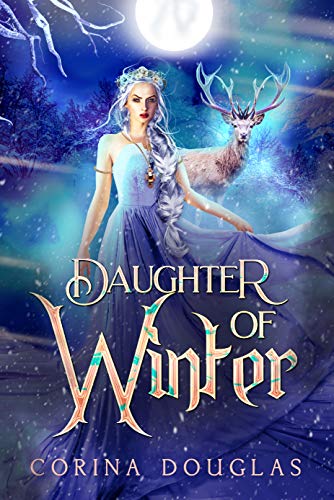
Daughter of Winter by Corina DouglasDaughter of Winter by Corina Douglas:

Some choose to fight the darkness; others become it.

Darkness and danger enter Brydie MacKay’s life in the form of an unforeseen inheritance.

Ignorant of her turbulent birthright, and unaware that she is marked by an ancient prophecy wielded by the gods, Brydie becomes prey to a powerful adversary who seeks vengeance for the curse laid upon him thousands of years before.

When her life is threatened, and the lives of the people she cares for are placed in jeopardy, Brydie must choose to embrace her legacy and fight the darkness or lose everything she loves.

Daughter of Winter is the first book in a gripping fantasy series based on the legends behind the winter goddess, Cailleach Bheur. The series draws you into a world of Celtic mythology, powerful Druids, dark magic, and fated mates.

Wizard's Hatchling by James EggebeenWizard’s Hatchling by James Eggebeen:

The age of Dragons has returned…

Kedrik was just another promising student at the wizard’s school in Amedon. He thought saving the last dragon egg was the right thing to do. Little did he know he was going to be stuck raising the troublesome hatchling.

Expelled from the school for losing control of their magic and run out of every town they entered, Kedrik and his dragon, Sul’ing must learn to control their wild magic, but the threat to the dragon realm has them chasing their tails.

Bones TradersBone Traders by Rachel Ford:

A missing giant. A sinister conspiracy. A decision that will change the fate of a jarldom.

The bone trade is big business. Black market buyers will offer many silvers for fresh giant bone, to carve into charms or use in dark enchantments.

When cloaked men kidnap the giant Njal Frostborn, everyone knows why. He’s destined to be murdered and sold in that terrible trade.

His best friend, apprentice wizard Idun Wintermoon, is determined to save him from that terrible fate. But to do so, she must defy the head of her order, and face powers far beyond her ability. To survive, she’s going to need an ally. Luckily for her, Lissette Forlatt – a down-on-her-luck sellsword – is on the case. Together, they’ll brave worse than the elements and rogue mages in their quest to save Njal. What they discover might shake the jarldom to its core.

If they live long enough to tell the story.

No Quarter by Rachel FordNo Quarter by Rachel Ford:

Sometimes, old debts cost dearly.

War breaks out when the Union’s newest member planet is attacked by an age-old rival. Now every planet or star system with a grudge is capitalizing on the unrest.

And every available hand is drafted into service, to help keep the peace. That includes privateers Kay Ellis and Captain Magdalene Landon, whose honeymoon is cut short when the Black Flag is assigned to the far reaches of Union space.

It’s supposed to be a quiet mission: a simple show of force to deter mischief makers and reassure the border colonies that they haven’t been forgotten.

What they find instead is a ruthless enemy, who will stop at nothing to oust the Union – and anyone flying her colors.

Lilitu: The Memoirs of a Succubus by Jonathan FortinLilitu: The Memoirs of a Succubus by Jonathan Fortin:

England, 1876. Twenty-year-old Maraina Blackwood has always struggled to adhere to the restrictive standards of Victorian society, denying the courage and desire that burn within her soul. But after a terrifying supernatural encounter, Maraina’s instincts compel her to action.

Maraina soon discovers a plot to unleash a new world—one of demonic aristocrats, bloody rituals, and nightmarish monsters. Putting her upbringing aside, Maraina vows to fight the dark forces assuming control of England. But as her world transforms, Maraina finds that she too must transform…and what she becomes will bring out all that she once buried.

Lilitu: The Memoirs of a Succubus is the first chapter in an epic dark fantasy saga, proudly represented by Crystal Lake Publishing—Tales from the Darkest Depths.

Wicked Reunion by Lily Harper HartWicked Reunion by Lily Harper Hart:

Ivy Morgan was convinced she was heading toward a smooth future … until she was arrested and charged with criminal trespass. Sure, she was saving a woman from certain death at the time, but in order for the criminal case to hold up against a murderer, she has to face the music.

Fear is the one thing Ivy hates more than anything else, so in order to make herself feel better, she decides to fix her Aunt Felicity’s love life. That includes tracking down an old love … who just so happens to have set up shop one town over.

While visiting, Ivy is horrified when a battered woman straggles through the door and is immediately shot dead by a masked man. Traumatized, horrified, she calls her fiancé Detective Jack Harker for help. By the time he arrives, though, things are already spiraling out of control.

Ivy was always a good girl – although sometimes with a bad attitude – but now she’s a murder suspect thanks to some overzealous police officers … and a criminal record that’s fresh in the minds of everyone concerned.

Jack is determined to protect Ivy, but there’s only so much he can do. That means he needs to work with her to solve the crime. Otherwise, it could haunt them for the rest of their lives.

Who would be so brutal, though? That’s the question of the day.

A dangerous game of cat and mouse is afoot, and it’s going to take both Jack and Ivy working together to figure it out.

Kiss of Death by Kelly HashwayKiss of Death by Kelly Hashway:

The only life Alex Montgomery knows is raising the dead and having zombie servants, normal stuff for an Ophi.

Alex is a necromancer descended from Medusa—or at least he will be once he comes into his powers. So far his life is training to use abilities he doesn’t yet possess, which gets him beaten up by zombies on more than one occasion. And his parents Victoria and Troy won’t tolerate anything less than perfection from Alex. He has a lot to live up to, and they remind him of it every day.

So when an innocent birthday kiss turns deadly, Alex has to work twice as hard to master his Ophi abilities. He isn’t the Chosen One, but he’s still a Montgomery, which means he’s expected to run the Ophi school one day. With a new group of students coming to the school, Alex needs to learn fast because he’s about to be sent on the biggest mission of his life.

No Crone Unturned by Amanda M. LeeNo Crone Unturned by Amanda M. Lee:

Scout Randall is on the verge of getting information about her past. Patience has never been one of her virtues, though. As she’s waiting for her source to get settled, a new problem arises … and it has fangs.

When she was a kid, a chance encounter in a park left Scout questioning the existence of monsters. Now, one of those potential monsters is back … and he’s taken up residence in Hawthorne Hollow. He isn’t alone either.

Vampires are on the prowl and it’s up to the Spell’s Angels to figure out what they want and eradicate them through any means necessary. That’s easier said than done, though.

Scout can’t shake the feeling that something bigger than the obvious is happening, and when her boyfriend’s close friend is infected, she realizes she has to increase her efforts if she wants to save as many people as possible.

One vampire is deadly. A nest, though? That can be catastrophic. In this particular case, the head vampire trying to infiltrate Hawthorne Hollow has a plan … and it involves turning as many people as possible.

It’s a race against time. Scout has to keep those closest to her safe while expanding her search for answers. In the end, she might get more than she bargained for on both fronts … if she can survive long enough to see the light at the end of the tunnel.

Alpha and Omega by Carol T. LunaAlpha and Omega by Carol T. Luna:

Ao never believed in monsters—not after being branded one since childhood. Exiled, he lives with his adoptive guardian, Kaisei Aizawa, amidst verdant valleys surrounded by desolation.

Humanity only had themselves to blame for the wretched landscape. Their war poisoned the seas. Their greed coveted the fertile and the green.

Their ambition set it ablaze.

One hundred years had passed since the war banished Talus to the skies. Doomed to chase the sun, the once proud nation survives as a floating city. But the fallen always hunger for more.

When the Talarians descend to claim the earth as their own, Ao escapes capture—but nothing is without its price. The only man he ever saw as family, Kaisei, is imprisoned instead.

Ao vows to rescue him, no matter the cost—even if it means taking a stand against the most powerful nation left on earth. He knows of the risks. He knows of the dangers. But never would he know that someday, somehow, he would finally believe in monsters.

Kitra by Gideon MarcusKitra by Gideon Marcus:

Stranded in space: no fuel, no way home…and no one coming to help. Nineteen-year-old Kitra Yilmaz dreams of traveling the galaxy like her Ambassador mother. But soaring in her glider is the closest she can get to touching the stars–until she stakes her inheritance on a salvage Navy spaceship.On its shakedown cruise, Kitra’s ship plunges into hyperspace, stranding Kitra and her crew light years away. Tensions rise between Kitra and her shipmates: the handsome programmer, Fareedh; Marta, biologist and Kitra’s ex-girlfriend; Peter, the panicking engineer, and the oddball alien navigator, Pinky.Now, running low on air and food, it’ll take all of them working together to get back home.

Unbroken Vows by Christine PopeUnbroken Vows by Christine Pope:

Hell hath no fury like a demon back from the dead.

Rosemary McGuire thought the past was dead. Unfortunately, she’s dead wrong…because it’s standing on her doorstep, very much alive. But this time, Caleb Lockwood’s target isn’t the hidden hard drive with the footage that proves demons are real. His target is Rosemary.

When Will Gordon comes home to find Rosemary gone, he trusts his instincts and reaches out to a network of friends forged in the fires of too many demon battles. Soon he, Michael, Audrey, and Glynis are casting supernatural nets far and wide in a desperate search. And Will is torn between hurling ungodly curses at who — or what — took the love of his life, and falling to his knees to pray for her safe return.

The truth isn’t just a nightmare — it’s a night terror. And Rosemary faces the terrible choice of surrendering everything she is to an unspeakable evil…or losing everyone she loves.

Unbroken Vows concludes the six-part Project Demon Hunters series.

Marek by Liza ProbzMarek by Liza Probz:

Jazmine

Being a thief was never my life’s ambition, but there’s something I need to find, and I’ll go to any length to do it.

It’s a matter of life and death. And no one is willing to help.

A few mishaps later, I find myself in trouble with the feline king and it’s time to RUN.

But I don’t get very far. A handsome humanoid is wanting company for a long trip and he’s offering just the help I need.

For a cost…

Marek

One year. That’s all I get before I’m to step up as rightful king of my people.

A people believed to be extinct by the surrounding worlds.

Even though I’m the eldest and most responsible, I’m in need of an adventure and a beautiful woman to help keep my blood warm.

Finding a human thief who needed a transport around the galaxy was not part of the plan, but once I laid eyes on her, I knew she was mine.

She might plan on ripping me off and not paying up on her half of the bargain, but that’s all right. I don’t only want her body.

I want everything she’s got to offer.

Forever.

Magically Poisoned by Joynell SchultzMagically Poisoned by Joynell Schultz:

The Mayor was murdered?
And a magical plant from my garden is to blame?

Even if I wanted that jerk dead, running my Bed & Breakfast takes all my time. There’s no way I could have snuck a murder into my busy schedule, but obviously, someone I know did.

They stole a plant from my garden and poisoned the Mayor. It couldn’t be my hard-working assistant, the delivery driver, or my gardener, could it be? And I’m sure it wasn’t the sexy water witch who spends an absurd amount of time staying at my little Bed & Breakfast…but he does know way more than he should about magical plants.

When the police ask for my cooperation, I begin to investigate myself. Who would steal from me? Frame me? None of my friends look like they could murder anyone…but what does a murderer look like?

But don’t worry, I have this all under control.

I’m a potion witch and have a few tricks up my sleeve.

Mountains of Mars by Glynn StewartMountains of Mars by Glynn Stewart:

The Mage-King of Mars is dead
Chaos rocks Olympus Mons
A new monarch must rise – but she does not stand alone!

As the celebration of the victory at Legatus cools, a shuttle accident claims the lives of the Mage-King of Mars and his heir. The Crown and the Mountain fall to the Mage-King’s daughter, sixteen-year-old Kiera Alexander. She recalls Damien Montgomery, her father’s First Hand, to stand as her Lord Regent.

The pair are unprepared to govern but are thrust into the heart of Protectorate politics as the Mage-King had left behind everything from an unfinished war to an incomplete new Constitution.

Even as they get a handle on the list Kiera’s father left them, Damien is grimly certain of one thing: when it comes to the deaths of Kings, he doesn’t believe in accidents.

Auxiliary's Revenge by Jeff Tanyard Auxiliary’s Revenge by Jeff Tanyard:

Jerry Harper is back home, recovering from his injuries. It won’t be for long. He’s a strategic asset now, and the government is eager to send him back into action. They want to protect him better on his next war patrol, so he’s assigned to a new station: the Agrarian Commonwealth’s new battleship. He and the fleet soon jump out and begin their mission.

While in space, horrifying news arrives. The Reliants have invented a doomsday weapon, a virus that targets the Agrarian genetic code. They begin deploying it, and Agrarians are killed by the billions. Jerry is tasked with using his electrokinesis to find the virus’s production facility so that a coordinated attack can be made. It might be the only chance the Commonwealth gets before the galaxy’s Agrarians are exterminated.

Jerry’s health is in rapid decline due to his electrokinesis. He can’t afford to push himself. But a Rifleman does his duty, even if it kills him.

The Black Raider by John TriptychThe Black Raider by John Triptych:

In command of the most notorious pirate outfit in known space, Captain Dangard is a mystery- a man without a past, until a stowaway triggers an event that reveals long buried secrets.

Before the legend, a young military officer chose honor over duty. His actions led to betrayal and then exile to the worst prison imaginable. Within that forsaken world there were infinite ways to die, yet only one path led to freedom and ultimately, vengeance.

For somewhere in the shadows of deep space, a black ship waited—ready to unleash her unholy power across the entire galaxy.

Posted in Books, Speculative Fiction of the Month | Tagged , , , , , , , , , , , , , , , , , , , , , , , | Leave a comment

Indie Crime Fiction of the Month for March 2020

Welcome to the latest edition of “Indie Crime Fiction of the Month”.

So what is “Indie Crime Fiction of the Month”? It’s a round-up of crime fiction by indie authors newly published this month, though some February books I missed the last time around snuck in as well. The books are arranged in alphabetical order by author. So far, most links only go to Amazon.com, though I may add other retailers for future editions.

Our new releases cover the broad spectrum of crime fiction. We have cozy mysteries, small town mysteries, hardboiled mysteries, historical mysteries, Jazz Age mystries, paranormal mysteries, crime thrillers, psychological thrillers, domestic thrillers, legal thrillers, noir, private investigators, amateur sleuths, police officers, FBI agents, lawyers, missing persons, domestic abuse, crime-busting witches, crime-busting realtors, crime-busting journalists, crime-busting writers, crime-busting weretigers, murdered mayors, murdered Santas, dark family secrets, crime and murder in New York City, Nashville, Florida, Oregon, California, Damascus and much more.

Don’t forget that Indie Crime Fiction of the Month is also crossposted to the Indie Crime Scene, a group blog which features new release spotlights, guest posts, interviews and link round-ups regarding all things crime fiction several times per week.

As always, I know the authors at least vaguely, but I haven’t read all of the books, so Caveat emptor.

And now on to the books without further ado:

Murder in the Early Hours by Blythe BakerMurder in the Early Hours by Blythe Baker:

When Alice Beckingham finally uncovers the truth about her brother’s death, she must set off for New York City in search of the powerful criminal responsible. An unexpected family reunion pulls her cousin Rose and the famous detective Achilles Prideaux into the case, even if Rose seems mysteriously reluctant to be involved.

Alice’s search for her brother’s killer will lead her from the streets of the city to the highest echelons of New York society as she closes in on the shadowy villain.

With the murder of an informant destroying Alice’s best hopes of cornering her enemy, will she ever find justice for her family? Or will the painful mystery that has tormented her for years go forever unsolved?

Death in Damascus by Karen Baugh MenuhinDeath in Damascus by Karen Baugh Menuhin:

A 1920s Murder Mystery – Death in the desert with intrigue, adventure and a dog of distinction.’

There’s a damsel in distress and accusations of attempted murder flying around, but it’s not in the comfortable confines of the English countryside, it’s in the very distant city of Damascus.

Lennox must go and investigate, although he’s not too keen on exotic locations, and his old retainer, Greggs is distinctly averse to the very idea.

Nevertheless, ex-Chief Inspector Swift persuades them and they reach the ancient city to discover a movie crew, a spy and a couple of mysterious ladies. Nobody seems to be telling the truth, they all have secrets, and there’s one secret in particular that’s drawn them like bees to the honeypot. But what is it? And then there’s murder, and mysteries from the ancient past, and a handsome Sheik who remains in the shadows. Heathcliff Lennox and Swift must investigate and use all their ingenuity to unravel the enigma that lies hidden deep below the dusty streets of ancient Damascus.

Major Heathcliff Lennox, ex-WW1 war pilot, six feet 3 inches, unruly dark blond hair, age around 30 – named after the hero of Wuthering Heights by his romantically minded mother – much to his great annoyance. Death in Damascus is the fourth book in the Lennox series.

Killer Deals by Jenna BennettKiller Deals by Jenna Bennett:

Savannah Martin has always been a good girl, doing what was expected and fully expecting life to fall into place in its turn. But when her perfect husband turns out to be a lying, cheating slimeball, Savannah kicks him to the curb and embarks on life on her own terms. With a new apartment, a new career, and a brand new outlook on life, she’s all set to take the world by storm.

If only the world would stop throwing her curveballs…

A CUTTHROAT BUSINESS – #1

Everyone has warned new-minted realtor Savannah Martin that real estate is a cutthroat business. But Savannah doesn’t think she’s supposed to take the warning literally … until an early morning phone call sends her to an empty house on the ‘bad’ side of town, where she finds herself standing over the butchered body of a competitor, face to face with the boy her mother always warned her about.

Rafe Collier is six feet three inches of testosterone and trouble; tall, dark, and dangerous, with a murky past and no future—not the kind of guy a perfect Southern Belle should want to tangle with. In any way. But wherever Savannah turns, there he is, and making no bones about what he wants from her.

Now Savannah must figure out who killed real estate queen Brenda Puckett, make a success of her new career, and avoid getting killed—or kissed—by Rafe, all before the money in her savings account runs out and she has to go back to selling make-up at the mall.

HOT PROPERTY – #2

When Savannah Martin’s fellow Realtor and friend Lila Vaughn is robbed during an open house, Savannah rushes to the rescue with tea and sympathy, or at least a really good lunch and a shoulder to cry on. However, Lila seems more peeved than distraught, and her main gripe is that the sexy robber who tied her to a kitchen chair—for her own good—didn’t follow her suggestion to tie her to the bed instead.

Lila’s description of the man fits Savannah’s old school-mate Rafael Collier to a T. Rafe has recently turned up in Savannah’s life again, and he isn’t above doing a little breaking and entering. Metro Nashville Homicide Detective Tamara Grimaldi is of the same opinion, and when Lila turns up dead, tied to her bed and strangled, Rafe becomes a suspect.

Now Savannah must get busy finding the real murderer before Detective Grimaldi can arrest the wrong man.

Death Between the Pages by Beth ByersDeath Between the Pages by Beth Byers:

April 1937

When Georgette Dorothy Aaron first started writing books, she little expected to affect real life. When she dives into writing crime novels with Robert, she little expects to see fiction come to life once again.

Once before she wrote a book and changed the fate of her neighbors. Was it happening again? When the book she and Robert Aaron write together seems to be coming to life, Georgette can’t help but wonder if the gods are playing games with them.

Once again, Georgette and her family turn to the crime in front of them and work together to discover just what happened, why it happened, and what to do next.

Rudolph the Red-Nosed Country Bumpkin by Sam CheeverRudolph the Red-Nosed Country Bumpkin by Sam Cheever:

Rudolph the Red-Nosed Bumpkin, died a very shiny death…

Rudy-Bob Hortmann has never quite gotten the hang of making friends. He doesn’t much like people, mostly preferring the company of his pot-bellied pig, Ethel Squeaks to humanoid types. But there’s one exception. Rudy-Bob loves kids. So for Christmas every year he gives himself a present. He plays Santa at the annual Deer Hollow Christmas party. Only this year, Rudy-Bob doesn’t make it out of the Santa suit when the Pageant is done. Instead, Deputy Sheriff Arno Willager finds Rudy-Bob literally chillin’ in a snowbank, his bulbous nose flashing red through the snow.

That’s where I come into the picture. I’m Joey Fulle and I’m pretty good at finding bodies around my place on the outskirts of Deer Hollow. I didn’t actually find this one, of course. But I’m fully invested in locating his killer. ’Cause, with the help of my handsome PI boyfriend Hal, my sweet and goofy Pitbull Caphy, and my opinionated Siamese cat, LaLee, I’m also pretty good at finding killers. Sometimes, even before they find me…

Family Secrets by Stacy ClaflinFamily Secrets by Stacy Claflin:

Some questions are better left unasked.

Like whose blood is on the knife upstairs.

Kenzi Brannon’s life was turned upside down when she moved into her family’s abandoned home to raise her niece. Problems compound when her aging mother starts to remember things.

And clues the police find regarding the knife don’t match anything Kenzi knows about her family.

Things go from bad to worse when she and her niece discover something horrifying in their house. But not even that compares to the strange ways her mom is acting.

Can they get to the bottom of it all, or will their house—a local legend that goes bump in the night—and the family secrets destroy them all?

Hush, Hush by Niki DanforthHush, Hush by Niki Danforth:

She’s living proof that 55 is the new 35, but this case could send the rookie P.I. into permanent retirement.

Private detective Ronnie Lake has a few wins under her belt, but she’s still proving she’s got what it takes, including to her biggest critic…herself. Eager to solve more crimes, the recently-licensed sleuth accepts a job to track down a young runaway. Her search quickly points to a far more sinister crime.

Sniffing out clues with her loyal German Shepherd, the determined investigator uncovers a brutal crime and meddling authorities. The abduction may be part of a dark conspiracy that’s out of her league, and following a trail that leads to shadowy powerbrokers could put her directly in their crosshairs.

Can she solve the case before one missing person turns into two dead bodies?

A smart heroine, fast-paced action, and now a dash of political intrigue, Hush, Hush is the page-turning fourth standalone book in the Ronnie Lake Mystery Series.

The House in the Woods by Mark DawsonThe House in the Woods by Mark Dawson:

Four murders. Two detectives. One mystifying crime.

On Christmas Eve, DCI Mackenzie Jones is called to a shooting at a remote farmhouse. Ralph Mallender believes his father lies dead inside. When three more bodies are discovered, it’s clear a festive family gathering has turned into a gruesome tragedy.

At first it seems like an open and shut case: a murder suicide committed by Ralph’s volatile brother Cameron. Then new evidence makes Mack suspect the man who reported the crime is in fact the perpetrator.

But Mack isn’t the only one with a stake in the case. Private investigator Atticus Priest has been hired to get Ralph acquitted. That means unearthing any weaknesses in Mack’s evidence.

Irascible, impatient and unpredictable, Atticus has weaknesses of his own. Mack knows all about them because they share a past – both professionally and personally. This time round, however, they aren’t on the same side. And as Atticus picks at the loose ends of the case, everything starts to unravel in a way neither of them could ever have predicted…

Apple of My Eye by Alyssa DayApple of My Eye by Alyssa Day:

A detective who turns into a tiger. A pawn shop owner who can see how you’ll die. The criminals never had a chance.

If you enjoyed Sookie Stackhouse and True Blood, you’ll love Tess Callahan and the Tiger’s Eye mysteries. Tess and sexy shapeshifter Jack solve mysteries with supernatural flair, and the laughs fly as fast as the clues.” — New York Times and USA Today bestselling author Yasmine Galenorn.

When Tess starts receiving mysterious gifts from a stalker, addressed to “The Apple of My Eye,” she starts to worry. Because it’s Dead End, Florida, where dead bodies have been piling up faster than competitive pecan pies at the county fair. But when the gifts turn deadly, she and Jack know they have to solve the mystery and track down the stalker before they find another dead body … and this time it might be Tess!

Luckily, Tess has Jack to help her solve this case … because sometimes it takes a tiger’s eye to see the truth.

The Post Office by John EllsworthThe Post Office by John Ellsworth:

This is the story of Rachel, the world’s bravest girl.

She is very sick and needs a lawyer to get the right medical care. Enter Thaddeus Murfee, who takes up her case and starts doing what lawyers do. Her family and Thaddeus travel from California to Oregon, where the laws are friendlier. There, they set up housekeeping in a campground. Their group includes a young male nurse named Johann.

Johann takes a package to the USPO to mail. Waiting in line, he happens to glance at the FBI Wanted posters. Only to find–he’s wanted, too! The chase is on. Who could that possibly be in the poster if not him? And the name on the poster is his own name. Frantically, he places a call to Thaddeus Murfee.

The trials begin, a race to live, a race to die…

Wicked Reunion by Lily Harper HartWicked Reunion by Lily Harper Hart:

Ivy Morgan was convinced she was heading toward a smooth future … until she was arrested and charged with criminal trespass. Sure, she was saving a woman from certain death at the time, but in order for the criminal case to hold up against a murderer, she has to face the music.

Fear is the one thing Ivy hates more than anything else, so in order to make herself feel better, she decides to fix her Aunt Felicity’s love life. That includes tracking down an old love … who just so happens to have set up shop one town over.

While visiting, Ivy is horrified when a battered woman straggles through the door and is immediately shot dead by a masked man. Traumatized, horrified, she calls her fiancé Detective Jack Harker for help. By the time he arrives, though, things are already spiraling out of control.

Ivy was always a good girl – although sometimes with a bad attitude – but now she’s a murder suspect thanks to some overzealous police officers … and a criminal record that’s fresh in the minds of everyone concerned.

Jack is determined to protect Ivy, but there’s only so much he can do. That means he needs to work with her to solve the crime. Otherwise, it could haunt them for the rest of their lives.

Who would be so brutal, though? That’s the question of the day.

A dangerous game of cat and mouse is afoot, and it’s going to take both Jack and Ivy working together to figure it out.

New Media & Old Grudges by Amanda M. LeeNew Media & Old Grudges by Amanda M. Lee:

Avery Shaw likes to win. Unfortunately, her single-minded focus on being declared victor tends to get her into trouble. That’s never more true than when she decides to take on her archnemesis Tad Ludington.

With an election coming up, Avery is ready to let her freak flag fly in an attempt to get Tad to show his true colors on television … thus sabotaging his chance at getting into office. That backfires when, after a truly epic meltdown, Tad is shot and left for dead in his own home.

Sheriff Jake Farrell knows Avery isn’t guilty but his belief doesn’t matter when the case is taken away from him and given to the Michigan State Police. The incoming investigator zeroes in on Avery almost instantly … and makes her life a living hell.

In addition to Tad, who is fighting for his life in the hospital, Avery also has to grapple with Eliot’s former employee Fawn, a woman who won’t stop flapping her lips about Avery’s probable guilt … all because she holds a grudge and finally has a platform to express it.

Avery is in a bind. She’s been banned from covering Tad’s attack and the election, and she’s being called a “suspect” on every television station in the state. If she wants to clear her name, she’s going to need help.

There’s little more she loathes than asking for help. She has no choice this time.

Avery has always attracted weirdos. This go-around, those weirdos are going to come to her defense. It’s going to take a motley band of colorful characters to save Macomb County’s favorite intrepid reporter.

Will they be up for the challenge?

No Crone Unturned by Amanda M. LeeNo Crone Unturned by Amanda M. Lee:

Scout Randall is on the verge of getting information about her past. Patience has never been one of her virtues, though. As she’s waiting for her source to get settled, a new problem arises … and it has fangs.

When she was a kid, a chance encounter in a park left Scout questioning the existence of monsters. Now, one of those potential monsters is back … and he’s taken up residence in Hawthorne Hollow. He isn’t alone either.

Vampires are on the prowl and it’s up to the Spell’s Angels to figure out what they want and eradicate them through any means necessary. That’s easier said than done, though.

Scout can’t shake the feeling that something bigger than the obvious is happening, and when her boyfriend’s close friend is infected, she realizes she has to increase her efforts if she wants to save as many people as possible.

One vampire is deadly. A nest, though? That can be catastrophic. In this particular case, the head vampire trying to infiltrate Hawthorne Hollow has a plan … and it involves turning as many people as possible.

It’s a race against time. Scout has to keep those closest to her safe while expanding her search for answers. In the end, she might get more than she bargained for on both fronts … if she can survive long enough to see the light at the end of the tunnel.

The Girl Next Door by A.J. RiversThe Girl Next Door by A.J. Rivers:

Complete silence filled the room until an unexpected sound brought Emma out of her slumber and into the mystery of the girl next door.

Sherwood is a sleepy little town. A town full of friendly faces, and even friendlier neighbors.

Which is why FBI agent Emma Griffin isn’t surprised when her new neighbor starts stopping by to chat.

Turns out her neighbor has a dark past and secrets that made her run.

As much as Emma wished it wasn’t true, dark past and secrets are things that she is far too familiar with, especially now more than ever.

A chilling unknown filled the air of Sherwood, Virginia.

Strange things are happening around Emma.

Things that no one can explain, and many don’t believe.

And when Emma witnesses two figures hidden by sheer curtains, strangling a smaller figure.

A figure she can only assume to be Ruby’s.

She becomes a witness to the murder of the girl next door.

But what do you do when no one believes that the girl even existed?

Emma’s world starts to spin, and she begins to wonder…

Is someone taunting her and taking lives to torment her? Or has she truly gone crazy?

Magically Poisoned by Joynell SchultzMagically Poisoned by Joynell Schultz:

The Mayor was murdered?
And a magical plant from my garden is to blame?

Even if I wanted that jerk dead, running my Bed & Breakfast takes all my time. There’s no way I could have snuck a murder into my busy schedule, but obviously, someone I know did.

They stole a plant from my garden and poisoned the Mayor. It couldn’t be my hard-working assistant, the delivery driver, or my gardener, could it be? And I’m sure it wasn’t the sexy water witch who spends an absurd amount of time staying at my little Bed & Breakfast…but he does know way more than he should about magical plants.

When the police ask for my cooperation, I begin to investigate myself. Who would steal from me? Frame me? None of my friends look like they could murder anyone…but what does a murderer look like?

But don’t worry, I have this all under control.

I’m a potion witch and have a few tricks up my sleeve.

Murder at High Tide by Lee StraussMurder at High Tide by Lee Strauss:

Murder’s all wet!

It’s 1956 and WPC (Woman Police Constable) Rosa Reed has left her groom at the altar in London. Time spent with her American cousins in Santa Bonita, California is exactly what she needs to get back on her feet, though the last thing she expected was to get entangled in another murder case!

If you love early rock & roll, poodle skirts, clever who-dun-its, a charming cat and an even more charming detective, you’re going to love this new series!

Haftmann's Rules by Robb WhiteHaftmann’s Rules by Robb White:

It was another kiddie hunt. Ex-cop Thomas Haftmann is a private investigator in the resort town of Jefferson-on-the-Lake. What do you want me to do?” he asked the man sitting across the desk from him. “I want you to find her and bring her home,” he replied.” Haftmann countered “I have to ask this, you understand. What if she’s dead?” The answer: “Then tell me where she’s buried so I can bring her home.” Thus Haftmann faces another case, another venture into that dark world of murder and madness.


Deviant Souls by Amanda WilhelmDeviant Souls by Amanda Wilhelm:

Once I saw her, I had to have her.

Sam McIntyre had it all. Brilliant surgical career. Wealth. The begrudging respect of the best in the profession. Everything except someone to share it with.

Terri Malone is young, beautiful and a bit naïve. So what if Sam is a little possessive, a little pushy? Sam knows more about the world, about life, than Terri does. Of course Sam is going to make most of the decisions.

They look like the kind of couple everybody envies. The big house. The fabulous weekend getaways. The fast track to marriage and a family. As far as anyone knows, everything is perfect. And Sam will do whatever it takes to keep it that way.

Posted in Books, Indie Crime Fiction of the Month | Tagged , , , , , , , , , , , , , , , , , , , | Leave a comment