Indie Crime Fiction of the Month for August 2018

Welcome to the latest edition of “Indie Crime Fiction of the Month”.

So what is “Indie Crime Fiction of the Month”? It’s a round-up of speculative fiction by indie authors newly published this month, though some July books I missed the last time around snuck in as well. The books are arranged in alphabetical order by author. So far, most links only go to Amazon.com, though I may add other retailers for future editions.

Our new releases cover the broad spectrum of crime fiction. We have cozy mysteries, hardboiled mysteries, small town mysteries, historical mysteries, paranormal mysteries, children’s mysteries, crime thrillers, adventure thrillers, noir, private investigators, amateur sleuths, serial killers, kipnappings, missing persons, missing Shakespeare manuscripts, ex-CIA agents, ex-marines, intrepid reporters, crime-busting witches, crime-busting watchmakers, murder in Louisiana, Iowa, Wyoming, LA and the Caribbean and much more.

Don’t forget that Indie Crime Fiction of the Month is also crossposted to the Indie Crime Scene, a group blog which features new release spotlights, guest posts, interviews and link round-ups regarding all things crime fiction several times per week.

As always, I know the authors at least vaguely, but I haven’t read all of the books, so Caveat emptor.

And now on to the books without further ado:

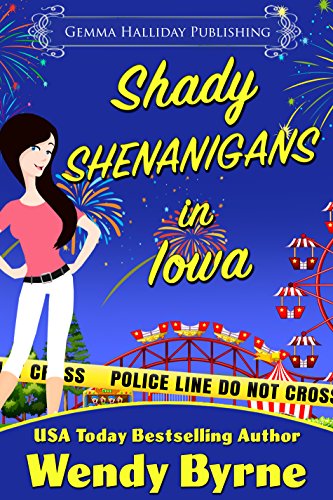
Shady Shenanigans by Wendy ByrneShady Shenanigans in Iowa by Wendy Byrne:

Former Manhattanite Izzy Lewis is finally settling into small town life in Inez, Iowa—she’s got her adventurous surrogate grandmothers, the Q’s, her hot boyfriend, Gabe, and the rest of the small town’s characters to make sure her days are never boring. But when
her good friend Sheriff Nate Crowder’s ex-wife goes missing, right after having a loud argument with him, things go from interesting to downright dangerous.

When a vengeful DA sets his sights on Nate as the prime suspect in his ex’s disappearance, Izzy and the Qs jump into action. But between leads that go nowhere, mysterious strangers, enemies becoming friends, and an Izzy double stirring up trouble, they have their hands full trying to figure out what happened to Nate’s ex. With the sheriff suspended, the clock ticking, and the danger closing in, can Izzy find out the truth… before she and the Q’s are the next victims?

Flea Flicker by David ChillFlea Flicker by David Chill:

When a young football coach doesn’t come home one night, his beautiful young wife turns to Private Investigator Burnside to locate him. But things are not the way they seem in this riveting page-turner, and a simple missing persons case evolves into a shocking murder. There are no shortage of suspects in this intricately woven story, and P.I. Burnside must overcome the many obstacles in his path to get to the truth that no one seems eager to learn.

The 9th Burnside novel is a treat to read, as the story brings back some fascinating characters from Burnside’s past – as well as adding a host of new ones. And it wouldn’t be a Burnside novel without the wise cracking gumshoe engaging in the sharp and cutting banter that has come to define this award-winning series.

Don't Forget Me by Stacy ClaflinDon’t Forget Me by Stacy Claflin:

When things can’t get any worse, they always do…

Alex Mercer and his fiancée Zoey have weathered many storms, but this latest one might be too much for even them. She’s hiding a secret she fears will send him running for the hills, and she has to tell him before he finds out on his own. Time is definitely not on her side. But with his busy hours at the police academy, there hardly seems a moment to open up to him.

Alex knows something is wrong with Zoey, but he’s too preoccupied to dig into it. Not only is the academy leaving him physically and mentally drained, he’s convinced he’s seeing Flynn Myer, the man who is supposedly in jail for abducting his daughter. No one believes him, but then he starts getting texts trying to arrange a meeting between him Myer.

Meanwhile, Alex’s boss and mentor, Captain Nick Fleshman, is on the case of a serial killer whose burial ground has been unearthed at the home of one of his deputies—one he has a secret relationship with. While he considers the implications of recusing himself, her father becomes the prime suspect.

Alex wants to help Nick and needs to help Zoey, all while trying to put the Myer case to bed for good. But everyone’s secrets are slowing him down, and the killer is on the prowl again. Alex needs more time, but that’s the one thing no one has left.

Dying Breath by M.A. ComleyDying Breath by M.A. Comley

She had everything…

Until she drew her dying breath.

DI Kayli Bright receives a disturbing call that she finds impossible to ignore. The case is an unusual one that forces her to dig deep to find the answers.

Was Jessica’s death a simple accident?

Or did she lose her life due to something far more sinister?

Can Kayli sift through the shocking deception she uncovers during the investigation to find the truth?

Grab this thriller today if you enjoy an intriguing mystery that will keep you turning the pages.

Reel of Fortune by Jana DeLeonReel of Fortune by Jana DeLeon:

Nothing says Welcome Home like a murder.

It’s official. Fortune Redding is out of the CIA and a newly minted resident of Sinful, Louisiana. She never expected her homecoming to be all apple pie and hugs, but a murder wasn’t on her list of things to deal with before she’d even gotten her name stenciled on her mailbox.

Boone Carre—Hooch, to the locals—was a drunk and a louse and had shafted pretty much everyone he’d ever done business with. So when someone kills him, there is no shortage of suspects. Unfortunately, Ally is at the top of the list.

Fortune, Ida Belle, and Gertie know that Ally isn’t capable of murdering anyone, but with an ambitious ADA looking to make a name for himself, and the local gossip train intent on finding someone to blame, they know they have to find the killer and clear Ally’s name.

Bolt from the Blue by Cynthia E. HurstBolt from the Blue by Cynthia E. Hurst:

Luke Alden had everything to live for – a good job, a loving wife and a child on the way – until the events of one stormy night destroyed it all. Some people said it was an act of God, but police in the Cotswold market town suspect it was a very human hand that started a fire and left Alden to die inside a burning building. Did someone resent Alden’s good fortune enough to kill him, or was there another motive? Clock repairer Jacob Silver and his housemaid Sarah Simm join forces with the police to track down a killer who is as elusive as a bolt of lightning, and just as destructive.

‘Bolt from the Blue’ is the seventh book in the Silver and Simm Victorian Mysteries series.

Witch Out of Water by Amanda M. LeeWitch Out of Water by Amanda M. Lee:

Hadley Hunter is the new witch in a town overflowing with paranormal beings. She’s ready to settle, but odd things keeping cropping up and knocking her off her game.
In addition to dating Moonstone Bay’s sheriff Galen Blackwood, Hadley has her hands full when she helps discover a body at a local festival and uncovers a decades’ old feud between two warring families.

The stories are flying fast and furious and the suspects are racking up. At the top of the list is local enigma Booker, a mysterious soul who Hadley is determined to chase until he starts giving answers about his hidden past.

Galen and Booker are at odds – and it’s over more than just the dead body – and Hadley feels caught in the middle. When another witch shows an interest in her magical development, Hadley is eager for a breather. Unfortunately for her, the old witch in town might not be on the up and up.

Hadley has a lot to do. She needs to solve a murder, figure out what’s up with the other witch and get to know a few more locals. That’s on top of bonding with a grandfather she didn’t even know she had. She doesn’t have a job but she’s always working at something … as long as she survives to see another fantastic island sunrise, that is.

Cold Open by Patricia McLinnCold Open by Patricia McLinn

As spring beckons, winter chill remains …

In television, a cold open sometimes rolls before the opening credits, often a teaser to news or a feature to follow. For TV journalist Elizabeth Margaret “E.M.” Danniher, a nippy March and April are just a tease for spring after a long Wyoming winter. In her short time in Sherman, she’s learned that winter starts in October and might not end until June. Since last June, a series of murders have tested her and her KWMT-TV colleagues’ reporting – and amateur sleuth — skills. And the small town’s rumor mill is churning about her relationship with handsome sports reporter Mike Paycik – or is it rugged rancher Tom Burrell?

As winter winds down, Elizabeth is ready for spring and looking for a place of her own. Ah, a little peace and quiet as she begins to settle in Cottonwood County. That is, until she discovers homicide at her front door.

Phyllis Wong and the Return of the Conjuror by Geoffrey McSkimmingPhyllis Wong and the Return of the Conjuror by Geoffrey McSkimming:

Phyllis Wong, that keen young magician with a talent for sleuthing and getting to the bottom of the strangest mysteries, is back! Incredibly valuable first editions of Shakespeare’s collected plays are appearing for sale, and Chief Inspector Barry Inglis of the Fine Arts and Antiques Squad suspects foul play. These rare First Folios are in mint condition, but seemingly are not forgeries. Where on Earth could they have come from? Has a crime been committed?

Luckily Phyllis is on the case. She suspects villainy dating back to the time of Shakespeare himself, which seems to be seeping into the 21st century. How can she convince Chief Inspector Inglis what’s going on? And how can she do this without giving away the greatest magical secret of all time?

As Phyllis herself says: ‘Fasten your seatbelts, ladies and gentlemen … the ride will get bumpy!’

Drip Drop Dead by Willow RoseDrip Drop Dead by Willow Rose:

Watch out! The past will always haunt you.

When you hear the dripping…RUN and don’t look back!

Things are going well for Emma Frost for once. She has a sweet boyfriend and has just finished a new book. Her daughter, Maya, is doing well in high school and even Victor is thriving and playing with his new best friend, the strange girl who fell from the sky.

But soon, a murder shocks the island of Fanoe, when a woman is found dead in her bed with no apparent signs of having been killed. But as they find out she died by drowning, and more deaths like it begin to occur around the peaceful island, Emma once again finds herself following signs that lead to her own front door while chasing a killer quite out of the ordinary.

Emma has to ask herself the question: What exactly is going on in her island home and especially underneath it?

As the investigation moves on, and terrifying answers begin to emerge, Willow Rose’s compelling story evolves rapidly, resulting in a novel with almost agonizing suspense.

Rising Force by Wayne StinnettRising Force by Wayne Stinnett:

Paradise has a price. For Jesse McDermitt, that price is his moral compass and a bullet.

The retired Marine and charter skipper takes on a passenger in Nassau, a young woman who is a breath of fresh air. She introduces him to the laid-back cruising crowd on an idyllic small cay in the Berry Islands. Jesse takes to the relaxing lifestyle like a fish to water.

Living each day on its own terms is a new experience for Jesse, but it doesn’t last long. Trouble always seems to find him. When Jesse gets word that someone is destroying nearby patch reefs and poaching sea turtles — and that all this is happening in the same area where a trio of sadistic murderers may be hiding — it triggers his instincts for investigation.

Has Jesse’s urge to find out the truth cost him everything? He came to the Bahamas on a fool’s errand to reconnect with a lost love. The image of her on a beach in the Virgin Islands fills his mind as he passes out from loss of blood…

Posted in Books | Tagged , , , , , , , , , , , , , , , , , , , , , | Leave a comment

More Reactions to the 2018 Hugo Awards and Other WorldCon 76 Links

Since my last post, some more reactions to the 2018 Hugo Awards have trickled in.

For starters, if you want to watch the Hugo ceremony with your own eyes, the video of the ceremony is now online. And if you want to admire the clothes worn by finalists, winners and presenters a little more closely, Olav Rokne and Amanda Wakaruk share several photos they’ve taken before the ceremony, as does Alyshondra Meacham. Olav Rokne and Amanda Wakaruk have also uploaded several photos of the Masquerade, so you can admire the amazing costumes.

At nerds of a feather, Joe Sherry shares his thoughts and reactions regarding the 2018 Hugo Award winners and also thanks everybody who nominated and voted for them.

Martha Wells, Hugo finalist in best series and Hugo winner in best novella, shares her experiences at WorldCon 76 and also offers her account of the Hugo ceremony. Martha Wells has also posted some photos of the Hugo Losers Party hosted every year by George R.R. Martin.

And if you want to see the dancing robots at the Hugo Losers Party in action, Alvaro Zinos-Amaro has you covered.

Hugo master of ceremonies and WorldCon 76 guest of honor Jon Picacio has posted an extensive con report at his website, including plenty of photos. He discusses the Mexicanx Initiative to bring 100 Mexican fans and creators to WorldCon 76 as well as the Chesley Awards, the Hugo ceremony and the Hugo Losers Party.

At Dreaming About Other Worlds, Aaron Pound weighs in on the 2018 Hugo Awards and 1943 Retro Hugo Awards and also takes a look at the longlists in the respective categories. Aaron also made the effort to add the author and editor names to the novels, stories, magazines, fanzines, fancasts, etc… on the longlist, which is very much appreciated, because it makes tracking down novels, stories, magazines, etc… easier.

In its editorial section, the Guardian shares its official view on science fiction, namely that N.K. Jemisin’s Broken Earth trilogy deserves its three Hugo Awards, because it is a gift to culture. It’s a lovely editorial and high praise for N.K. Jemisin (oh, how I wish that German newspapers would even have an official view on science fiction). Unfortunately, the comment section is full of pissed off puppies and the usual “I don’t care about an author’s race and gender, but I only read books by white men, because white men are objectively the best, not that I’d know, cause I don’t care about skin colour” concern trolls.

As for the “But what about the poor white menz” brigade, Desirina Boskovich has some facts:

I just did the count and six men named Robert won the Hugo Award for Best Novel over the years. Robert A. Heinlein won four best novel Hugos (as well as a bunch of Retro Hugos), Robert J. Sawyer and Robert Charles Wilson won one each. If you add in the short fiction categories, you get another five Roberts. Three of those are Robert Silverberg plus Robert Bloch and Robert Reed. You also get a whole lot of Johns, Jacks and Fritzes in the fiction categories. All the Fritzes are Fritz Leiber, by the way. Not that he hasn’t deserved it, but those who are worried that white men are an endangered species at the Hugo Awards would do well to remember that there are literally more Hugo winners who are white guys named Robert than there are Hugo winners who are writers of colour.

I found the Desirina Koskovich tweet as well as several other posts linked herein via File 770, which is not just an indispensible resource for every SF fan, but also deserves every single Hugo it has won. And everybody worried about Mike Glyer who was hospitalised a few hours before the Hugo ceremony and had to have a pacemaker implanted will be happy to hear that Mike is doing much better.

Also at File 770, Jo Van Ekern, who accepted File 770‘s Hugo on Mike Glyer’s behalf, shares her adventures at WorldCon 76, a San José hospital, the Hugo ceremony and the Hugo Losers Party. Turns out that Jo also injured herself outside the hospital, so that Hugo Award nearly landed two people in hospital.

As for future WorldCons, next year’s WorldCon will be in Dublin, Republic of Ireland. the concomm also asks everybody interested in participating in the programme to fill out the programme participant form and/or the programme idea suggestion form, because they cannot contact people who haven’t given their consent to be contacted due to the annoying GDPR law. I’m definitely attending WorldCon 77 in Dublin BTW and hope to see you there.

WorldCon 2020 will be called ConZealand and will take place in Wellington, New Zealand. File 770 has some relevant links as well as a cute announcement video, which even includes a welcome from New Zealand’s prime minister Jacinda Ardern.

Posted in Books | Tagged , , , , , , , , , | Leave a comment

In Memoriam Dieter Thomas Heck

German TV personality and actor Dieter Thomas Heck died today aged 80. Here is a video obituary with many clips, courtesy of ZDF. Unfortunately, there is no English language obituary anywhere (honestly, Deutsche Welle, that’s your job), so I had to write one myself.

If you grew up in West Germany in the 1970s and 1980s, Dieter Thomas Heck was part of your life, because he was always on your TV screen (unless you were one of those poor kids whose parents did not have a TV, that is). Dieter Thomas Heck hosted quiz shows, game shows, music shows, always recognizable by his hairstyle, his glasses, his mannerisms and his unique motormouth voice.

If you’re my age, you probably first encountered Dieter Thomas Heck via the show ZDF Hitparade, which he hosted from 1969 to 1984. Hitparade was your typical music program. Several popular songs – all of them sung in German, international hits need not apply – were performed live in front of a studio audience and later a winner was determined, first via mailed postcards and later via televoting, as Heck himself explains in this clip. The winner would then compete again in the next show. It was a simple concept, but one that worked. Dieter Thomas Heck was a large part of the reason why the show worked so well – and it’s telling that it floundered after he left, though it held on until 2000. His fast talking presentation, combined with the ultra-conservative look of the car salesman he used to be, were a large part of what made the show. Hitparade has no conventional scrolling end credits BTW. Instead, Dieter Thomas Heck spoke the end credits in superfast mode. What makes Dieter Thomas Heck’s fast talking even more amazing is that Heck actually had a speech impediment, a stutter that was caused by the trauma of being trapped under rubble during a WWII bombing as a small child. Singing and acting helped young Dieter Thomas Heck, still named Carl Dieter Heckscher then, overcome his stutter and paved the way for his radio and TV career.

If Hitparade ever was cool, it was not in my lifetime. Hitparade was always the dreaded family viewing, something intended for audiences from 3 to 90. Nonetheless, we all watched it. In a world with only three TV channels, it wasn’t as if there was much competition, after all. Not that there weren’t other, more exciting music programs. But Musikladen, still the crown jewel of German music television, where you could see all the big international stars live on TV, aired in a late evening slot. Too late, if you were a kid. Hitparade, however, aired in an early evening slot – half past seven to quarter past eight – on Saturday nights, and being allowed to watch Hitparade before being sent to bed was the highlight of the week in my early childhood. There was also disco with Ilja Richter, which alternated with Hitparade in its Saturday night slot for a while. disco had international stars, though not nearly as many as the name would suggest. Most of disco‘s line-up was the same old German Schlager music that you could also hear on Hitparade. Besides, disco also included a lot of skits featuring host Ilja Richter, while Hitparade was only music. Which show was better was a huge playground debate in kindergarten and primary school. I tended a bit towards Hitparade, because it was just music and no stupid skits. Though disco did have Blondie perform, while Hitparade just had Heino and the like.

But change eventually came even to the good old Hitparade. It arrived in the early 1980s in the form of the Neue Deutsche Welle and strange bands and singers in strange outfits who invaded the staid Hitparade literally like aliens from a distant galaxy. Instead of Heino, Roland Kaiser, Rex Gildo, Costa Cordalis, Lena Valaitis, Katja Ebstein and the rest of them, you suddenly had the sheer absurdity of Trio performing “Da-Da-Da” (still one of the very few genuine world hits from Germany) or Hubert Kah singing “Sternenhimmel” (who actually got booed, when they won) or DÖF performing “Codo” (basically a science fiction epic in the form of a pop song) or the Spider Murphy Gang performing “Skandal im Sperrbezirk” (no Hitparade clip, though they must have been there, cause everybody was) and “Peep Peep”, which taught a generation about phone sex (Me aged 9: “And people pay for that?”) and peep shows (Me aged 9: “And people pay for that, too?”). Coincidentally, the Munich phone number mentioned in “Skandal im Sperrbezirk” is still blocked 36 years later, because everybody who winds up with that phone number finds themselves inundated with calls from people looking for Rosi and her phone sex line.

Dieter Thomas Heck obviously was no fan of the Neue Deutsche Welle songs that gradually took over his program, though he did play them. Though looking back, the difference between some of the softer Neue Deutsche welle songs like “Kleine Taschenlampe brenn” by Markus (okay, so I just wanted to post that clip) and the sappier Schlager songs of the same era isn’t all that great. Interestingly, one of the very few songs that Heck did not want to play and only very coolly announced was “Bruttosozialproduct” by Geier Sturzflug, the song that taught a generation what a gros national product was. Honestly, one of these days I’m going to write a book entitled “Everything I needed to know I learned from the Neue Deutsche Welle”. I’ve never quite understood why Heck disliked “Bruttosozialprodukt” so much and yet happily played the much bawdier Spider Murphy Gang songs. Supposedly, he disliked the song because it lampooned the economic growth politics of the early Kohl era. Because in real life, Heck was as conservative as his TV persona and actually campaigned for the conservative CDU at a time when celebrities involving themselves in election campaigns was still considered extremely gauche and a big no-no.

Dieter Thomas Heck left the Hitparade behind not long after the Neue Deutsche Welle invasion. I suspect the fact that German language music had changed away from what he was comfortable with had much to do with his exit after fifteen years. The Hitparade limped on until 2000 under a series of successors and even opened its stage for English language songs, provided the singers and/or producers were German, but it had long lost its must watch status by then. In fact, I stopped watching Hitparade not long after Heck left, but then I was rapidly aging out of the Hitparade demographic by then and had found better places to see better music.

But reducing Dieter Thomas Heck’s life merely to the fifteen years of Hitparade would be wrong, because he did so much more. He hosted quiz shows like Die Pyramide, sport programs like Das aktuelle Sportstudio, other music programs like Musik liegt in der Luft or the bane of my teen years, Melodien für Millionen (Melodies for Millions) or as we nicknamed it, “Melodien für Melonen” (Melodies for Melons). Melodien für Melonen was a terribly sappy program where usually elderly people talked about their lost lovers, parents, siblings or whatever, then a song that was important to them was played and then the lost person would come on stage for a tearful reunion. Melodien für Melonen lasted from 1985 to 2007, when Dieter Thomas Heck retired from TV. Heck was also extremely active in collecting donations for various charitable causes, usually via hosting charity galas and extravaganzas.

Dieter Thomas Heck was one of the last of the great entertainers and presenters of German TV, so his death is in many ways the end of an era. Most of his contemporaries – Hans Joachim Kuhlenkampf, Hans Rosenthal, Heinz Schenk, Peter Frankenfeld, Robert Lemke. Kurt Felix – have already gone to that great TV studio in the sky. Frank Elstner is the only one who’s still around as well as Thomas Gottschalk who belongs to the next generation of German TV entertainers. As for Dieter Thomas Heck, I knew that he was ill, because I occasionally saw headlines like “Dieter Thomas Heck – Death Drama” on the covers of the celebrity gossip mags in the supermarket. However, at least half of those headlines are wholly imaginary and the rest usually refer to some celebrity’s third cousin being ill, so I did not pay a whole lot of attention.

But though Dieter Thomas Heck is best remembered as a TV presenter, he also was an actor. For some reason, he often played villains or at least deeply unlikable characters. I guess screenwriters and perhaps even Heck himself wanted to subvert his conservative Dad image.

And then there is my all-time favourite Dieter Thomas Heck peformance, which combines his TV presentation and his acting skills. For in 1970, Dieter Thomas Heck played the host of the fictional TV show in Das Millionenspiel (The Million Game), an SF film about a reality TV show where contestants are hunted by professional killers, competing for a prize of one million deutschmark. Das Millionenspiel was based on a short story by Robert Sheckley (for which the ZDF neglected to license the rights from Sheckley, instead licensing them from Sheckley’s German publisher, so Sheckley never saw a dime). Even 48 years later, Das Millionenspiel is still a brilliant bit of television that caused a scandal upon first airing, because many people mistook the fictional TV program for a real show and wrote in to protest the inhumanity of the whole thing, apply as contestants or in a handful of cases as hunters.

Though not the star of the film, Dieter Thomas Heck is a large part of the reason why it is so brilliant. Because he played the fictional host of a fictional TV show in a dystopian world just like he hosted Hitparade every week. What is more, the fictional show looks just like a real 1970s game show, complete with live studio audience and weird musical interludes and performances by the TV ballet, which makes it incredibly creepy. The fake ad breaks full of fake ads for fake products reinforce this feeling, though German TV did not have ad breaks during evening programs in the 1970s. Rewatching Das Millionenspiel today feels eerily like watching a TV show from a parallel universe.

But you don’t have to take my word for it. The entire film is on YouTube and you can watch it below. Heck first appears at the 8 minute mark BTW. So in memory of Dieter Thomas Heck I give you his finest hour in Das Millionenspiel:

Posted in TV | Tagged , , , , , , , , , | 6 Comments

Reactions to the 2018 Hugo Award Winners

I already shared my own reactions to the 2018 Hugo Award winners as well as some reactions from around the web in yesterday’s post. However, since then I’ve come across a couple more reaction posts from around the web.

At Women Write About Comics, Doris V. Sutherland talks about this year’s Hugo winners and also touches upon the earlier WorldCon 76 programming controversy and the even earlier controversy surrounding the short fiction review site Rocket Stack Rank. Doris V. Sutherland has also reviewed all the novel and novella as well as novelette and short story finalists for the 2018 Hugo Awards.

On his blog, Steve J. Wright shares his thoughts on the 2018 Hugo Award winners and the 1943 Retro Hugo Award winners. Like me, he does not much care for The Good Place as well as the two winning Heinlein stories in the Retro Hugos.

Font Folly compares his ballot with the 2018 Hugo winners and realises that he never actually put N.K. Jemisin’s triple Hugo winning trilogy in first place. Coincidentally, neither did I. It’s not that I don’t feel that N.K. Jemisin is a most worthy Hugo winner, for she absolutely is. It’s just that there was always at least one book I liked better. For that matter, the last time and only time my first choice won in the best novel category was Ancillary Justice in 2014.

Font Folly also explains why he feels more drawn to stories by women, writers of colour and LGBT writers, probably in response to the handwringing in various places (for a taste, check out the comments on this File 770 post) that for the second year in a row, all Hugo winners in the fiction categories were women (and psst, don’t tell them, but in 2016 the winners in the fiction categories were four women, three of them women of colour, and Andy Weir). Interestingly, those handwringers worry very much about the statistical improbability of only women winning two years in a row, but seem notably less concerned about the fact that only white men won Hugos for a whole fifteen years in a row, even though we know that women were nominated as early as the third ever Hugo Awards in 1956. I also don’t recall the “But what about the poor menz” brigade being overly concerned that all but one Hugo finalist in the fiction categories was male as late as 2007.

Font Folly also pointed me to this post by Alexandra Erin, in which she muses about WorldCons and the Hugos in general. Alexandra Erin points out that what makes WorldCon so great is the community and how generally welcoming it is (occasional idiots notwithstanding). And what makes the Hugos great is that they arise from this community. I agree with her and indeed I wrote something similar in my WorldCon 75 after-action report last year.

Best fanwriter finalist Camestros Felapton digs into the Hugo numbers to analyse the impact of “No Award” and the EPH system of weighing the nominations to reduce the impact of slates, used for the first time in 2017.

It turns out that “No Award” is a factor even when there is no puppy poo on the ballot due to people no awarding works they dislike/don’t consider Hugo worthy and some people also no awarding entire categories (series, fancast, the editing categories) they believe should not exist. Now I don’t really get the latter – if I don’t want to vote in a category for whatever reason, I simply leave it blank. But I do no award finalists I intensely dislike and/or do not consider Hugo worthy and/or feel do not belong in that category, cause that’s what “No Award” is for. I have also no awarded finalists in the pre-puppy era. The first year, I voted for the Hugo, I was depressed because I had to put several finalists under no award, either because they were just dreadful or miscategorised. I felt quite about that at the time. Then came the puppy years and “no award” became a serious contender. And ever since then, I find that I am far more willing to pull the “no award” trigger.

As for the impact of EPH, it turns out that without EPH, The Stars Are Legion by Kameron Hurley and Autonomous by Annalee Newitz would have replaced The Collapsing Empire by John Scalzi and New York 2140 by Kim Stanley Robinson, the two IMO weakest works on this year’s best novel ballot. But then, I suspect that The Stars Are Legion and Autonomous are more likely to appeal to the same voter/nominator pool that also liked The Stone Sky, Raven Strategem or Provenance or Six Wakes for that matter, while John Scalzi and Kim Stanley Robinson both have strong fanbases, but those fanbases, particularly Robinson’s, don’t seem to have as much overlap with the fanbases for the other books. So in short, EPH seems to work as intended, even if I personally would have been happier with The Stars Are Legion and Autonomous.

On a related note, Camestros Felapton also wonders what is a fan writer anyway and what does and does not constitute fan writing.

ETA: Inspired by N.K. Jemisin’s triple Hugo win, Mike Glyer compiled a list of all those who have won three or more consecutive Hugos in the same category. The record holder is Dave Langford BTW who won best fan writer every single year from 1989 to 2007.

ETA 2: Sal Pizarro reports about the 2018 Hugo Awards for the San José Mercury and also particularly focusses on the fact that so many women, including women of colour, won.

Regarding people not happy about the 2018 Hugo winners, the Vox Day post I linked to in my last post (archive.is link) also contains an alleged quote from Robert Silverberg, in which he declares that he hasn’t read N.K. Jemisin’s triple Hugo winning trilogy, but found her acceptance speech vulgar, because she wasn’t properly grateful or something. Like many others I dismissed that quote as Vox making up stuff, but Laura Resnick and John Scalzi have both confirmed that the quote is genuine, though it was apparently a comment made on a private e-mail list that turned out to be not as private as Robert Silverberg thought. Besides, it’s not his place to criticise how other writers celebrate their Hugo wins. I also find it a bit sad that one of the greats of our genre and an annual WorldCon attendant since 1953 can’t find the time to read a Hugo winning novel. It’s okay if he doesn’t like the books and if he doesn’t want to read the whole trilogy, but not having read even one volume is rather sad.

N.K. Jemisin herself has the following response:

At Facebook, Katherine Kerr and Laura Resnick also respond to complaints that N.K. Jemisin and the other Hugo winners and finalists of colour as well as those who have voted for them have engaged in “identity politics” by pointing out that promoting straight white men is also identity politics, especially since straight white men are actually a minority of the world population.

I already posted some reactions from the puppy camp in my last post. For more voices from the puppy camp (all links go to archive.is), here is 2016 Campbell Award finalist Brian Niemeier complaining that the Hugo voters are unimaginative, because they awarded N.K. Jemisin’s Broken Earth trilogy three years in a row. As I said above, I never actually placed any of the Broken Earth books in first place either, because there was always at least one book I liked better. Alas, Niemeier fails to tell us what he would have preferred to win instead. He also harbours under the misapprehension that Tor has dropped John Scalzi (they didn’t; his career is going fine) and that Tor publishes N.K. Jemisin (The Broken Earth trilogy was actually published by Orbit). The rest of the usual blah-blah about how traditional publishing is doomed and indies are the future, though there is no mention of the Dragon Awards this time around. Niemeier also can’t resist a swipe at Catherynne M. Valente, who became the subject of truly nasty harassment campaign after she tweeted about the alt-right rally outside WorldCon 76. Cause for some reason, several puppy types and fellow travellers assumed she was calling them Nazis – even though she was referring to the protesters at the rally and none of the various puppies were actually there – and decided to spew hatred and death threats at a pregnant woman.

Meanwhile, Sad Puppies founder Larry Correia wishes to let K. Tempest Bradford (and presumably everybody else) know that he is totally over WorldCon and the Hugos and just doesn’t care anymore. The rest of the post is a mix of Correia bragging about his mountain, his car and his guns, as if he were the guy from this classic 1995 bank commercial, and telling K. Tempest Bradford how utterly irrelevant she is. Because he doesn’t care anymore, you see.

Comments are still closed.

Posted in Books, Links | Tagged , , , , , , , , | 1 Comment

Comments on the 2018 Hugo Awards Winners

So the 2018 Hugo Awards were awarded tonight. The full list of winners may be found here, while the detailed breakdown of votes and nominations is here. Finally, if you want to see my comments on the finalists, back when they were announced, go here.

This year, my hit rate this year was even worse than last year, because only four of my first choices won, while two finalists I had no awarded, because I really did not like them, won their respective categories as well. I’ll talk about one of them later. I won’t talk about the other. But then, I guess that my low hit rate in the past two years is a sign that things are back to normal after the puppy years, where the number of good choices was strongly curtailed in many categories. However, my tastes have always been out of step with those of the larger Hugo electorate, even though I am much happier overall with the finalists and winners now than I was ten or twenty years ago.

The 2018 Hugo Award for Best Novel goes to The Stone Sky by N.K. Jemisin and this time, she was even able to accept her award in person, wearing an utterly gorgeous gown. This win wasn’t exactly unexpected, considering that the first two books in the trilogy already won in 2016 and 2017 respectively, making N.K. Jemisin the first writer ever to win back to back to back Hugos in any of the fiction categories. The entire Broken Earth trilogy would also have been nominated in best series, but N.K. Jemisin declines the nomination. What is more, the 2017 Best Novel ballot was a lot stronger than the 2018 Best Novel ballot. New York 2140 was very much a “love it or hate it” book (I’m in the “hate it” category, but then none of Kim Stanley Robinson’s books have ever done it for me) and such books are unlikely to win. Six Wakes by Mur Lafferty is a perfectly fine murder mystery in space, but not as strong as some of the other finalists. Meanwhile, The Collapsing Empire by John Scalzi was just weak and didn’t offer anything that other books (some of them released in the same year) didn’t already do better. I was surprised that it finished in second place. I know Scalzi has a big fanbase, but he has written much better books than this one.

Raven Strategem is an excellent novel (and was my first choice in this category), but was hampered by being the second book in a trilogy where the first did not win. In fact, I do feel a bit sorry for Yoon Ha Lee, whose outstanding trilogy remained unrecognized by the major genre awards so far, largely because it happened to come out at the same time as N.K. Jemisin’s outstanding trilogy. However, I do hope that Hugo voters will recognise the Machineries of Empire trilogy in some form (either best novel or best series) next year. Provenance by Ann Leckie finally is a lovely story (and was my second choice), but it’s cozier and lighter than the other finalists in this category, basically a caper novel in a science fiction setting. Some people also had issues with the protagonist who is a bit naive and not hypercompetent – and we all know how science fiction fans love their hypercompetent protagonists. It’s not that Provenance doesn’t have anything to say – in fact, it has a lot to say about family, identity, history and how people often manufacture both from whole cloth. If anything The Collapsing Empire was a more lightweight work than Provenance, in spite of its galaxy spanning scope and the fact that it’s apparently an analogy for climate change (but then New York 2140 already has that angle covered in a non-metaphorical way). But in the end how Hugo voters tend to prefer high stakes to small stakes stories (and both Provenance and Six Wakes had smaller stakes) and grim and serious stories over lighter stories, particularly in this rather grim time in American history.

The 2018 Hugo Award for Best Novella goes, again unsurprisingly, to All Systems Red by Martha Wells, but then this charming novella about the grumpy security robot Murderbot was the big favourite in this category and also won the Nebula. It also was my first choice in this category, by the way. Contrary to what I said before, here we have proof that cozier stories with smaller stakes can win. The excellent and innovative “And Then There Were (N-One)” by Sarah Pinsker finished highly deserved in second place. I’m a bit surprised that Sarah Gailey’s delightful River of Teeth finished last, but then this novella hit so many of my personal sweet spots that I was willing to overlook its weaknesses. And besides, Sarah Gailey did get to take home a Hugo in a different category.

The 2018 Hugo Award for best novelette goes to “The Secret Life of Bots” by Suzanne Palmer. Again, this is a highly deserved win and this story was also my second choice from an extremely strong ballot. In fact, there was not a single bad story nominated in the novelette category, though some were better than others. Coincidentally, this makes two wins this year for stories with robot protagonists and there was another robot story nominated in the short story category. But then, stories told from the POV of highly advanced and curiously human AIs are one of the big SF trends of recent years. See also the Imperial Radch trilogy by Ann Leckie (the first book of which, Ancillary Justice, won the Hugo and everything else there is to win in 2014), “Cat Pictures, Please” by Naomi Kritzer (which won the Hugo in 2016), “Damage” by David D. Levine (knocked off the Hugo ballot by puppy shenanigans), the not very good puppy story about a sentient warship, and now Murderbot, Suzanne Palmer’s aged repair bots who happen to save humanity and Vina Jie-Min Prasad’s fanfiction writing robot from “Fandom for Robots”.

The 2018 Hugo Award for best short story goes to “Welcome to Your Authentic Indian Experience (TM)” by Rebecca Roanhorse. It’s a fine story and a well deserved win, though it wasn’t my first choice. Though I can absolutely see why it won. Because Hugo voters value novelty and “Welcome to Your Authentic Indian Experience (TM)” did offer plenty of novelty. It’s also a more substantial tale than the delightful “Fandom for Robots” and “Sun, Moon, Dust”. “The Martian Obelisk” is fine, but not quite as innovative as “Welcome”. And “Carnival Nine” (which I disliked) and “Clearly Lettered in a Mostly Steady Hand” were both divisive “love ’em or hate ’em” stories. Coincidentally, Rebecca Roanhorse also got to take home the Campbell Award (not a Hugo) for the best new writer, making her the first writer to win both the Campbell and a Hugo in a fiction category in the same year since Barry Longyear in 1980. Rebecca Roanhorse’s Campbell win was highly deserved, too, even though my personal favourite was Rivers Solomon, whom I hope we will see on the Hugo ballot again some other year.

The 2018 Hugo Award for Best Series goes once again to Lois McMaster Bujold for The World of the Five Gods (which was also my first choice), making Lois McMaster Bujold the first and only person to win the best series award back to back and the only person other than Isaac Asimov, who won a lifetime achievement type best series award for the Foundation series, to ever win the best series award. Okay, so the regular best series Hugo is only in its second year, but it’s still a remarkable achievement. Though I’m still not convinced that the best series Hugo really does what it was supposed to do, namely award the sort of series that are hugely popular, but usually overlooked by the best novel awards, because individual installments don’t stand alone all that well and because the sum is greater than its parts. But so far, what we see in this category are a lot of the same finalists we also see in the other fiction categories. Lois McMaster Bujold, much as I love her work, has plenty of wins and nominations for both the Vorkosigan series and the Five Gods series. Perennial Hugo favourite Seanan McGuire has plenty of Hugo nominations and at least one win, though not for the October Daye and InCryptid series (that is, I think an October Daye short story was nominated a few years back). The Divine Cities by Robert Jackson Bennett never had a Hugo nomination, because the individual volumes got knocked off the ballot by the puppies. Broken Earth, The Expanse and the Craft sequence, all of which would have been nominated, but declined (Broken Earth) or were disqualified have had individual volumes (and in the case of Max Gladstone, the author) recognised before. In fact, the only 2018 best series finalist that matched the description of “popular, but doesn’t fit onto the best novel ballot” is Brandon Sanderson’s Stormlight Archive, which isn’t to my taste at all. And Brandon Sanderson did have Hugo nominations and even a win before, just not for Stormlight Archives. Meanwhile, names that I expected to see on the best series ballot – Diana Gabaldon, Ilona Andrews, Patricia Briggs, Jim Butcher, J.D. Robb, Charlaine Harris, Sharon Lee and Steve Miller, Nalini Singh, etc… – didn’t even make the longlist. Okay, so Butcher hasn’t published a new novel since 2015 (and no new Dresden Files novel since 2014 – thanks a lot, puppies), but the others had eligible work in popular, long-running series. In fact, best series is the category where my tastes are most notably out of step with the Hugo electorate. I also don’t feel that it works as intended, especially since we’ve run out of Lois McMaster Bujold series to nominate.

The inaugural YA Not a Hugo, to be named Lodestar from next year on, goes to Akata Witch by Nnedi Okorafor. It’s a good and not exactly surprising choice, considering that Nnedi Okorafor’s work is popular with the Hugo electorate, but also with actual YA readers. In general, the YA award got off to a good start. It will be interesting to see where the Lodestar goes next.

The winner of the 2018 Hugo Award for Best Related Work is No Time to Spare by Ursula K. Le Guin. Again, this is not exactly a surprise, because this is after all the last chance to honour one of the true greats of our genre. Though a previously unpublished short story by Ursula K. Le Guin came out this year, so there is one more chance next year. Coincidentally, this is the seventh Hugo win for Ursula K. le Guin. Interestingly, the other finalist in this category featuring a luminary of the field who only recently left us, Nat Segaloff’s biography of Harlan Ellison, finished in last place. But then, a biography is a different beast than a collection of essays by a beloved late author. I’m surprised, though not displeased that Crash Override by Zoe Quinn finished in second place, for while it’s certainly an important and harrowing work, its connection to the genre is also slighter than with the other works. I’m a bit disappointed that Paul Kincaid’s scholarly biography of Iain Banks didn’t finish higher, but then my preference for scholarly works about science fiction, fantasy and horror in this category is not shared by the rest of the Hugo electorate.

The 2018 Hugo Award for Best Graphic Story goes to Volume 2 of Monstress by Marjorie M. Liu and Sana Takeda, who also got to take home to Hugo for Best Professional Artist. Both wins are highly deserved. Meanwhile, the 2018 Hugo Award for Best Fan Artist goes to Geneva Benton, once again highly deserved.

Uncanny Magazine wins the 2018 Hugo Award for best semiprozine, while Lynne and Michael D. Thomas also win the Best Editor Short Form Hugo. Once more, these are not exactly surprising wins, because if you look at the Hugo and Nebula finalists in the past few years, a whole lot of them were published in Uncanny. It’s much as with John W. Campbell in the Retro Hugos, whatever you think of Campbell as a person and editor (and unlike Campbell, I like what the Thomases are doing a lot), the record speaks for itself. And at the moment, Uncanny dominates the short story and novelette categories, while Tor.com dominates the novella category via its (excellent) novella line. Best Editor Long Form goes to Sheila Gilbert, another well deserved win.

So let’s take a look at the two dramatic presentation categories: The 2018 Hugo Award for Best Dramatic Presentation Long Form goes to Wonder Woman, which was a bit of a surprise to me, since I expected Get Out! to win. My own top vote went to Thor: Ragnarok, by the way. On the other hand, Wonder Woman is a very popular film which also proves that DC can make a decent superhero film, after all. Though I wasn’t all that impressed with Wonder Woman. It was all right, Gal Gadot was great as Diana and there were some neat moments, but the anachronistic World War I setting and the German stock villains (though the ultimate villain was not German in the end) put me off. I also didn’t like the fact that the film used a real historical figure, German WWI general Erich Ludendorff, and inserted him into an otherwise fictional setting and even had Diana kill him.. But while the real Erich Ludendorff was a horrible person, he actually survived the end of WWI by nineteen years. They could have just as easily used a fictional general. Not to mention that Wonder Woman totally missed on whose side the Ottoman Empire was in WWII. Hint, it was not on the British/French side and also committed some truly horrific acts against its own population. Of course, the Turkish guy who is a member of Steve Trevor’s squad might well be an Ottoman defector (which would make for an interesting story), but if so, the movie never makes that clear. Honestly, if you want to play in the margins of history, do make sure to get your history right or at least don’t contradict known history. Nothing seen in Captain America: The First Avenger or the Agent Carter TV show ever happened either, but at least the film and TV show don’t contradict actual history beyond things like racially integrated troops, when they would have been segregated in real life. Coincidentally, my parents, both of whom are Wonder Woman fans from way back (my Mom’s fandom goes back to the Lynda Carter series, while my Dad even read some Goden Age Wonder Woman comics) were both disappointed by the movie as well. Their verdict was “This is an okay war film, but that’s not our Wonder Woman.” And when it came to filling the last slot on her ballot, my Mom nominated Logan over Wonder Woman and The Last Jedi. But then I guess many people were so starved for a superhero film with a female lead that they were willing to overlook the issues with Wonder Woman.

All that sounds as if I’m displeased that Wonder Woman won, but I’m not, not really. I did rank Wonder Woman above “No Award” in fourth place, I think, and I am actually looking forward to the upcoming 1980s set Wonder Woman film, which should avoid some of the problems with the earlier movie. Coincidentally, I am a bit surprised that The Shape of Water, which is one of the very few genre films to ever win an Oscar for best picture, finished only in fifth place, but then The Shape of Water seems to be the rare genre movie, which is more popular among mainstream than among genre audiences. No idea why, since I personally think it’s a lovely film.

On the other hand, I am extremely displeased with the winner for Best Dramatic Presentation Short Form. In fact, when the winner was announced, I emitted the sort of screams of pure frustration with other people’s bad taste that I normally emit only during the Oscars, because the winner was one of the two nominated episodes of The Good Place, a show which I dislike with intense passion and promptly no awarded. With other TV shows I dislike with a passion (the new Battlestar Galactica, Orphan Black), I at least managed to watch at least one full episode, maybe even more. With The Good Place, I lasted five minutes, then I had to switch off the TV, because it was just so awful. With other Hugo finalists I don’t personally care for, I can at least see why others like them, but with The Good Place I can’t see any redeeming characteristics at all. Honestly, as far as I am concerned, The Good Place is the worst non-puppy Hugo finalist I have ever seen. And even some of the puppy finalists were not that bad. It’s certainly the worst winner in the Hugo’s 65 year history so far. Okay, so there is They’d rather be right in 1954, generally considered to be the worst Hugo winner of all time. Now I haven’t read They’d rather be right, but it has to be very bad indeed to compete with The Good Place.

What makes the Hugo win for The Good Place even more infuriating is that unlike one year, where the choice was choice was between four different Doctor Who episodes and Orphan Black, so anybody who did not want to vote for Doctor Who automatically defaulted to Orphan Black, there actually were pretty good choices in the Best Dramatic Presentation Short Form category this year. The Black Mirror episode “USS Callister” was excellent, “Magic To Make the Sanest Man Go Mad” was the one genuinely good episode in the otherwise very uneven first season of Star Trek Discovery and the obligatory Doctor Who episode was pretty good and also a multi-Doctor adventure and a regeneration episode (double regeneration episode, actually), both of which tend to be fan favourites. Not to mention all the fine SFF shows, which did not even make the longlist like Outlander, The Orville, the various DC and Marvel superhero shows, Westworld, Stranger Things and of course The Handmaid’s Tale. Because the genre show that won Emmys, Golden Globes and BAFTAs isn’t good enough for the Hugos, because some people are still pissed off about something that Margaret Atwood may or may not have said fifteen years ago. So with such good choices (plus the clipping song, which is nice, but an outlier), why on Earth would anybody vote for a crappy afterlife sitcom, which thinks it’s funny to stage a real world scenario of the sort of contrived moral dilemmas that are inexplicably popular in the US (The episode that won is called “The Trolley Problem”) and pour a bucket of Kryolan blood on its leads? For that matter, why is Best Dramatic Presentation Short the one category where Hugo voters continue to forget that they tend to prefer darker and more serious works?

Okay, so now I’ve finished ranting about the dramatic presentation categories, let’s take a look at the fan categories, which were a mix of the expected and the unexpected: File 770 takes Best Fanzine, which was not exactly unexpected and well deserved (though my top vote was for Galactic Journey), because File 770 is an institution and an indispensable resource for the community. Unfortunately, Mike Glyer was unable to accept his Hugo in person, because he was taken to hospital only hours before the ceremony. So Jo Van Ekern delivered a heartfelt acceptance speech in Mike’s stead, in which Mike also withdrew himself and File 770 from future Hugo nominations, which is a great gesture.

Best Fancast went to Ditch Diggers, which I for one did not expect, though I liked what I heard. Best Fanwriter went to Sarah Gailey, which I also did not expect, since I had expected a three way race between Foz Meadows, Mike Glyer and Camestros Felapton with Bogi Takács as a potential dark horse candidate. Sarah Gailey, meanwhile, I did not expect to win at all. But then, Sarah Gailey is a writers whose fiction I like much better than her non-fiction (like I said, I loved River of Teeth and Taste of Marrow), whereas with Kameron Hurley and Jeff VanderMeer, I like their non-fiction better than their fiction.

For more discussion on the 2018 Hugo Award winners, see this thread at File 770. Best fanwriter finalist Camestros Felapton shares his thoughts here and last year’s and next year’s Hugo administrator Nicholas Whyte offers his analysis of the results here. Over at Whatever, John Scalzi offers a brief update and a photo from the Hugo Losers’ Party and declares that he is honoured to have come in second to N.K. Jemisin. Beth Elderkin’s Hugo article at io9 also focusses mainly on N.K. Jemisin’s historic Hugo win, as does Joel Cunningham’s post at the Barnes & Noble Sci-Fi and Fantasy Blog.

The ceremony itself was a lot more political this year than in previous years, which will piss off the usual suspects. Several winners made references to living in dark times in their acceptance speeches, Mike Glyer and N.K. Jemisin inserted jabs against the puppies into their acceptance speeches (you can read N.k. Jemisin’s acceptance speech here), George R.R. Martin inserted a jab against the Dragon Awards and those who think they’re better than the Hugos into his speech and Sheila Gilbert urged everybody to vote in the US midterm elections this November. Now I actually agree with her that if you can vote for the Hugos, you can vote in political elections (and the Hugos are more work). But plenty of Hugo voters are not American and therefore not eligible to vote in the US midterm elections.

In general, the 2018 Hugos are another triumph for women and creators of colour. All fiction Hugos as well as the Campbell and YA not-a-Hugo/Lodestar went to women this year, three of them women of colour. Women also dominate the other categories. The winners in the art and graphic story categories are all women of colour. Women won best fanwriter and best editor long form. A woman directed the best dramatic presentation long form winner, even though the screenwriters were men. Fancast, semiprozine and best editor short form all went to male/female teams. The only all-male winners were the team behind The Good Place and Mike Glyer for File 770. International creators did not fare so well in the 2018 Hugos. Several were nominated, but the only non-American winner is Sana Takeda, who is Japanese. But then, WorldCon was in the US this year.

The fact that the 2018 Hugos were once again dominated by women, including several women of colour, will of course upset the usual suspects (all links go to archive.org). Here is a not so usual suspect (plus some usual suspects in the comments) with the usual claim that people are not nominating and voting for what they like, but on the basis of race and gender and that the Hugos are suffering from affirmative action. And here is a more usual suspect lamenting that there are way too many women nominated for and winning Hugos and that the Dragons Awards are much better, probably due to being much more male dominated.

Now I can only speak for myself, but I only nominate works I like and vote accordingly. And yes, I usually nominate a lot of women, people of colour and LGBT people, but that’s because I genuinely like those works. I also find that I do tend to prefer works by women to works by men, because works by women are more to my taste and less likely to contain certain irritating tropes. Though I nominated several men, including a few straight white men, too.

Besides, as I said here, considering it took fifteen years for the first woman to win a Hugo and seventeen for the first writer of colour, the straight white men are still far ahead in the big picture. A few female dominated years don’t change that. If only women and people of colour win Hugos for fifteen years in a row, then you can come back and complain. Not to mention that there were male winners at the 2018 Hugo Awards. Last I checked, Mike Glyer, Matt Wallace and Michael D. Thomas were all male (and white). Ditto for the team behind The Good Place and the screenwriters of Wonder Woman.

Meanwhile, Vox Day declares victory, for of course he does. Apparently, now the aim of the Rabid Puppy campaign was to boost N.K. Jemisin’s career or something (not that she needs it). And no, I don’t get it either. Though he did take the time to listen to N.K. Jemisin acceptance speech and did notice that the rocket-shaped middle finger she spoke of is directed at him.

Meanwhile, Jon Del Arroz also declares victory, for of course he does, in spite of his failure to get into an event that banned him months ago and the truly pathetic turnout of his rally against discrimination of conservatives or against pedophilia in fandom or against far left violence or whatever it was supposed to be about in the end. In the footage I saw, the counter-protesters also seemed to outnumber the protesters, while the police outnumbered both groups. But then, Del Arroz couldn’t attend his rally due to a family emergency, so he has to rely on hearsay. Though I also find it interesting that he claims to know exactly that WorldCon 76 and most panels weren’t worth it, even though he never got further than the lobby of the convention centre.

Still, they can declare victory all they want, as long as they walk off to do their own thing and leave the rest of us to do ours.

Comments are closed.

Posted in Books, Comics, Film, TV | Tagged , , , , , , , , , , | 2 Comments

An Awards Post that’s not about the Hugos

The 2018 Hugo Awards ceremony is still a couple of hours away. And due to the awkward timing (the ceremony starts at 5 AM German time), you probably can’t expect a post from me about it until tomorrow night.

However, I can reports that the winners for another award, namely the winners of the 2018 eFestival of Words Best of the Independent eBook Awards have been announced today and my In Love and War prequel story “Baptism of Fire” is a runner-up in the best short story category.

Congrats to all the winners and thank you to everybody who nominated and voted or me.

Posted in Books, Personal, Writing | Tagged , , , , , , , | Leave a comment

Some Comments on the 1943 Retro Hugo Award Winners

Before the main event on Sunday, the 1943 Retro Hugos were awarded last night at WorldCon 76 in San José, California. The full list of winners may be found here. The full detailed results of the votes and nominations may be found here.

Short verdict: Wow, that’s a lot of Heinlein.

Longer verdict: That’s really a lot of Heinlein.

For my detailed verdict, see behind the cut. Continue reading →

Posted in Books, Film | Tagged , , , , , , , , , | 1 Comment

Cora blogs elsewhere yet again…

Today, I’m over at Galactic Journey again, this time with a look at the state of East German and East European (well, Polish, since East Germany already had Stanislaw Lem translations at the time) science fiction back in 1963.

For those who don’t know, Galactic Journey is a fanzine that’s set 55 years in the past (and was rewarded by a Hugo nomination in the distant future of 2018), i.e. as far as Galactic Journey is concerned it’s August 1963, John F. Kennedy is still president of the US, Konrad Adenauer is still German chancellor and Philip K. Dick will win the Hugo Award for best novel for The Man in the High Castle in a few weeks time, while Jack Vance will win the best short fiction Hugo for “The Dragon Masters”, beating my personal favourite, Fritz Leiber’s supremely creepy “The Unholy Grail”, which by some coincidence I just reread and still found as excellent as I remembered.

Posted in Books, Links | Tagged , , , , , | Leave a comment

The 2018 Dragon Award Nominees and the Rise of the Kindle Unlimited Writing Factories

For the third time in a row, Dragon Con, a big media con in Atlanta, Georgia, has enlivened the dead period just before WorldCon starts and the Hugo winners are announced, by announcing the nominees for the Dragon Awards. You can see the nominees on the official website here and in a less eye-searing design over at File 770, where there’s also some discussion in the comments.

Those of you who’ve followed the saga of the Dragon Awards (see my previous posts on the subject here) know that the award has been troubled from the start three years ago. The Dragons started out with the intention to award the sort of broadly popular works that have a lot of mass appeal, but rarely show up on the Hugo and Nebula shortlists. This is in theory a good idea, except that the actual shortlist and even the winners in the first two years did not really reflect those intentions at all and instead were a mix of the sort of broadly popular works the Dragons claimed to champion and “Who the hell is this?” nominees. For the Dragon Awards have zero voting controls (basically, you can nominate and vote with as many e-mail addresses as you can generate) and even less transparency (so far, they never released any voting and nomination data and according to the rules, it’s not even certain that the finalists or winners are actually the most nominated books), which makes them extremely vulnerable to ballot stuffing. The Sad and Rabid Puppies and their various offshoot groups tried it with varying success, as did other groups like Inkshares, the Red Panda Faction (who do good work and offered an eligibility spreadsheet for the 2018 Dragon Awards) and individual authors with large followings. Camestros Felapton, probably the foremost chronicler of the Dragon Awards, did the work and hunted down various Dragon Award recommendation lists and slates and “Please vote for my book” posts to offer his predictions of the finalists.

So now the preliminaries are out of the way, let’s look at the actual shortlist. Once more, it’s a curious mix of broadly popular works and “What the hell is this?” nominees. It’s also a very white and very male ballot. I count thirteen women out of 50 authors nominated in the fiction category (since several books have multiple authors), that’s 26%, i.e. a little over a fourth of all Dragon nominees in the fiction categories are women. They’re also unevenly distributed: The YA category is five women and one man, while science fiction and fantasy only include one female nominee each and military SF doesn’t have any women at all. I also count between four and six writers of colour (two nominees are immigrants from Iberic peninsula, who are often considered Hispanic in the US, but don’t necessarily self-identify that way), that’s between 8 and 12%. Though I may have missed someone, since I’m not familiar with all the authors.

In the best science fiction novel category, we have Persepolis Rising, the latest Expanse novel by James S.A. Corey and Artemis by Andy Weir, both highly popular works by author with a large following. Sins of Her Father by Mike Kupari is a Baen Book that only briefly surfaced on my radar because of some snark about the cover with its very phallic rocket and huge nozzles. But considering how reliably awful Baen’s cover art is, that doesn’t mean the book is bad. Kupari’s novel was also pushed by Brad Torgersen and Larry Correia. Vera Nazarian is an indie and small press pioneer and past Nebula finalist. Her nominated novel Win seems to be a Hunger Games style YA dystopia, but is clearly popular judging by the number of Amazon reviews. The Mutineer’s Daughter by Chris Kennedy and Thomas A. Mays is military SF from one of the Kindle Unlimited writing factories. It also seems that Chris Kennedy and pals campaigned heavily for the Dragons, since they’ve got several books on the shortlist. It Takes Death to Reach a Star by Gareth Worthington and Stu Jones finally is a novel I’d never heard of. Going by the blurb, it’s a post-apocalyptic novel of the sort that tends to make puppies cry.

The best fantasy shortlist consists of Brandon Sanderson, who of course has a huge fanbase, and several writers I know very little about. Pippa DaCosta is a popular indie author and her nominated book Shoot the Messenger seeems to be in the popular “mages in space” and “reverse harem” subgenres. The Traitor God by Cameron Johnston is an grimdark fantasy novel published by Angry Robot that has somehow flown under my radar, but then this subgenre isn’t rally my thing. Aleron Kong is another popular indie author and his novel The Land: Predators is part of a series in the popular LitRPG genre. A Tempered Warrior by Jon R. Osborne is epic fantasy from Chris Kennedy’s publishing outfit. War Hammer by Shayne Silvers is tough guy urban fantasy by yet another popular indie author, who nonetheless managed to pass completely beneath my radar.

The best young adult/middle grade shortlist, on the other hand, consists solely of highly popular authors and books. It’s also the most female shortlist, featuring five women and one man (which is only to be expected, because YA is heavily female dominated). There is no overlap with the Andre Norton Award or the new YA not-a-Hugo, but then there is very little overlap between the Hugo and Nebula shortlists and the Dragon shortlist in general. Coincidentally, there is also not a single indie book among the nominees in this category.

Best military SF/fantasy is another mixed bag. Former countryman Marko Kloos is a popular military SF author and by all accounts a good guy. Communications Failure by Joe Zieja is part of a series of satirical military SF, which actually seems to do something interesting with this subgenre. A Call to Vengeance by David Weber, Timothy Zahn and Thomas Pope is a prequel to David Weber’s hugely popular Honor Harrington series and therefore not exactly a surprising nominee. And yes, I know that Baen likes collaborations, but three authors for a single book is really pushing it. Jonathan P. Brazee is a popular indie military SF author, was a Nebula finlists this year and is by all accounts a good guy. Finally, we have two more books from two of the big Kindle Unlimited writing factories. Legend by Christopher Woods is another book from Chris Kennedy’s outfit and apparently a prequel of sorts to his Four Horsemen series. Michael Anderle and Craig Martelle are both popular indie SF authors and their nominated book Price of Freedom is part of Anderle’s Kutherian Gambit series. Michael Anderle is also the founder of the 20 books to 50K Facebook group of market-focussed indie SFF writers and finds many of his co-authors there. Coincidentally, this is the only all-male category.

On to best alternate history, which is probably the strangest Dragon Award category, since it’s such a small and peculiar subgenre, whereas big subgenres like epic and urban fantasy have to share a single category. Charles Stross is very popular and clearly a deserving nominee, though not to my taste at all. Though going by the blurb, I’m not sure if his nominated novel Dark State actually is alternate history, since it seems to be near future SF. But then, the Dragons did name a religiously tinged space opera best horror novel once, so odd categorisation is common for this award. D.J. Butler’s Witchy Winter is part of a popular historical fantasy series, though again I wouldn’t really classify this as alternate history. S.M. Stirling is another broadly popular author and actually writes alternate history. Kevin J. Anderson is another very popular author and Uncharted, written with Sarah Hoyt, is an actual alternate history novel. Dream of the Iron Dragon by Robert Kroese was promoted by several of the puppy-adjacent groups/authors like Superversive SF, Happy Frogs and Declan Finn. though mostly in the best science fiction category. The premise is vikings in space, so I guess it would count as alternate history. Minds of Men by Kacey Ezell is another book to come out of Chris Kennedy’s publishing outfit. It also is actually alternate history.

ETA: Paul Weimer and commenter Andrew at File 770 confirm that Dark State is indeed alternate history, so it’s absolutely in the correct category here.

Best media tie-in is a new category for the Dragon Awards and has replaced the apocalyptic/post-apocalyptic category. The finalists are two Star Wars tie-in novels (both by female writers about female characters), two Star Trek Discovery tie-in novels, a Halo tie-in novel and a World of Warcraft tie-in novel. All popular franchises, so it’s not particularly surprising to see them here. Coincidentally, Before the Storm by Christie Golden is also the only finalists from Vox Day’s Dragon Awards slate to make the ballot. And considering how many people play World of Warcraft, I suspect it would have made the ballot with or without Vox.

Oddly enough, best horror is the one category in the Dragon Awards which usually looks most like what it says on the tin, probably because the ballot stuffers don’t particularly care for horror. Even though a religiously tinged space opera won the category in the first year. This year, we have the biggest living name in horror, Stephen King and his son Owen King with Sleeping Beauties. Paul Tremblay is an up and coming horror writer and his The Cabin at the End of the World got quite a bit of buzz. Jonathan Maberry is another very popular horror author. Meddling Kids by Edgar Cantero is an interesting take on Scooby Doo and also got quite a bit of buzz. I’ve never heard of Beneath the Lighthouse by Julianne Lynch. Going by the blurb, it seems to be YA horror. Mark Wandrey, finally, is a frequent co-author of Chris Kennedy’s. His nominated novel A Time to Run seems to be a zombie apocalypse story.

Best comic book is a mix of popular series such as Saga or The Mighty Thor (Is this still the Jane Foster Thor or the restored Thor Odinsson?), popular, if unfinished miniseries such as Mister Miracle and Doomsday Clock and two media tie-in comics. In best graphic novel, we have popular works like Monstress, Paper Girls and Vision, all of whom are/were Hugo finalists in this category. There is also a Brandon Sanderson graphic novel and two works I’m not familiar with at all. Chicago Typewriter is a prohibition era noir tale with supernatural undertones, while Be Prepared by Vera Bresgol looks like the sort of thing that makes puppies cry. Coincidentally, not a single one of Vox Day’s Arkhaven/Alt-Hero comics or any of the other crowdfunded alt-right Comicsgate books managed to get a nomination.

The film and TV categories is full of very popular works with very few surprises. The film category is very Marvel dominated with pretty much every eligible Marvel movie plus Deadpool 2 nominated. Though I’m a bit surprised that Ready Player One managed to garner a nomination, considering how panned it was, but then it probably did appeal to the Dragon Con demographic. No Last Jedi or Solo, which is a bit of a surprise, especially since Last Jedi did well at the box office, in spite of a hate campaign.

I can’t say much about the game categories except that I’ve heard of many of the nominated games, which means that they’re popular. Coincidentally, Azul by two developers from Bremen just won the prestigious Spiel des Jahres award (which is pretty much the biggest award a boardgame can win), while Photosynthesis was a finalist. Though neither of those is even remotely science fiction or fantasy.

So what’s the verdict? The good news is that the Sad and Rabid Puppies and their offshoots have very little presence on the Dragon shortlist this year and indeed Camestros Felapton declares a preemptive no award for the Rabid Puppies. Sarah Hoyt is the only Sad Puppy I see and since she’s nominated for a book co-authored with Kevin J. Anderson, I suspect that the puppies didn’t have a whole lot to do with this nomination. Robert Kroese is puppy adjacent and was promoted by various puppy offshoot groups. Mike Kupari was promoted by Brad Torgersen and Larry Correia, though I have no idea if he is a puppy himself. At any rate, I don’t recall ever coming across his name in that context. The wording on the website of Chris Kennedy’s publishing company declares that they focus on fun and message-free science fiction and fantasy, which sounds very puppy-like. Ironically, the very first book on the website is a dystopian science fiction novel set in a Chinese occupied Seattle, which may be fun to some people, but sure as hell isn’t message free. Two of Chris Kennedy’s authors were on the puppy Hugo slates (Thomas A. Mays who withdrew and Jason Cordova who didn’t) and I also recall seeing his and Mark Wandrey’s books promoted at the Castalia House blog, when it was still active. Nonetheless, I’m not sure if Kennedy and friends are puppy-adjacent or just fellow travellers who happen to write the sort of thing puppies like.

ETA: Taking a look at the puppy camp, at Superversive SF, Declan Finn seems mostly happy about the Dragon nominations for Robert Kroese, Chris Kennedy and friends as well as for various Baen authors and Brandon Sanderson and expresses his disinterest in categories like best media tie-in or best comic book, where none of his favourites was nominated. And Richard Paolinelli admits that none of his nominations made the cut, which gives him a worse hit rate than me (I got four, in YA, media tie-in, comic and film), and shares which nominees he will be voting for. All links go to archive.org.

So the various puppy groups aren’t much of a problem for the Dragon Awards this year. Instead, we’re seeing the rise of the Kindle Unlimited writing factories in the Dragon Awards, namely extremely prolific indie authors (Aleron Kong, Pippa DaCosta) and author collectives (Chris Kennedy’s and Michael Anderle’s groups). These people are very talented self-promoters who adhere to the so-called “write to market” maxim and managed to rise to the top of the Amazon charts in their respective categories via a combination of a high ad budget, an eager fanbase and the artificial rank inflation due to Kindle Unlimited, where a borrow counts as much as a sale. These are clearly very popular authors and they write in subgenres that are popular among the Kindle Unlimited crowd such as military SF, LitRPG, reverse harem, mages and vikings in space, etc… A lot of these authors write in shared worlds, e.g. the various Chris Kennedy books seem to be part of one or more shared worlds, ditto for the Michael Anderle and Craig Martelle collaboration. Nonetheless, these books and authors are often little known outside the Kindle Unlimited eco-system and their little subgenre niche, which contributes to the “Who the hell are these people?” feeling that several of the finalists elicit. And I’m probably more familiar with the big names of indie SFF than many others and have indeed featured books by some of these authors in my new release round-ups before.

The 2018 Dragon Awards shortlist does resemble the subcategory besteller lists in Amazon’s Kindle store, which does go a step towards the stated aim of rewarding popular works. Though the Kindle charts are distorted by Kindle Unlimited and also by all sorts of promotional tactics ranging from the perfectly acceptable such as buying advertising (including at Amazon, so writers are actually paying Amazon to promote their books) via things like employing ghostwriters to put out more books to shady tactics such as clickfarms, pageread manipulation, etc… And indeed, it is notable that two SFF authors associated with big Kindle Unlimited writing factories have had their accounts closed by Amazon in the last month, though neither of them is on the Dragon shortlist.

So does this shortlist really reflect what is popular among a broad swath of the SFF readership or just which authors are good at promoting themselves to the top of the Kindle charts? It seems to me as if the Dragons have traded one problem (ballot stuffing by SFF’s rightwing puppies) for another (Kindle Unlimited writing factories that warp the Amazon charts and the indie SFF market in general). And while there is little overlap between the Dragon shortlist and the Hugo and Nebula shortlists, there is also little overlap between the Dragon shortlist and indie book awards like the e-Festival of Words Best of the Independent e-Book Awards. Finally, the Dragon shortlist still tends very much towards white and male nominees, but then popular vote awards often tend towards white dude nominees – also see the David Gemmell Legend Awards.

ETA: Mike Glyer has hunted down the number of Goodreads reviews for the Dragon Award nominees and also remarks upon the total lack of overlap both with the Hugo and Nebula finalists and Vox Day’s and Jon Del Arroz’s Happy Frogs slates.

Of course, being nominated for an award doesn’t necessarily mean winning. And so it will be very interesting to see which books actually win.

ETA: Some of our canine friends seem to have taken exception to me calling some Dragon nominees the output of Kindle Unlimited writing factories. Folks, hard as it may be for you to imagine, I wasn’t talking about any of you. None of you is even remotely prolific enough to be a writing factory.

Comments are closed.

Posted in Books, Comics, Film, TV | Tagged , , , , , , , , , , , , , | 2 Comments

Convention Programming in the Age of Necromancy – A Short Story

In my blogpost about the 2018 July Short Story Challenge, I wrote that every year that challenge generates one or two stories that are not something I can publish either in e-book form or send to a magazine. Often, these are short satirical pieces that are too tied to a specific moment in time to have much in the way of staying power.

This is one of those pieces. It was inspired at least in part by the WorldCon 76 programming debate (for a quick summery, see this and this post at File 770).

Another inspiration was this tweet by Camestros Felapton, in which he suggests that certain sad puppies would be glad to put the Heinlein on every panel in perpetuity, if they could only figure out how to reanimate him first.

That tweet made me wonder what if it were possible to reanimate the great science fiction and fantasy authors of bygone days and put them on panels at a modern con. And why stop at Heinlein? I ran with that thought and this is the result.

By the way, the various con volunteers are not based on any specific people. If there are any volunteers of those names at WorldCon 76 or any other con, that’s entirely coincidental.


Convention Programming in the Age of Necromancy

At the daily program operations meeting of a science fiction convention that shall remain unnamed, the debate got rather heated.

“We absolutely need to hold the ‘Future of Military Science Fiction’ panel in Auditorium 3,” the head of programming, whom we’ll call Matt, said.

“And why?” his fellow volunteer, who shall henceforth be known as Lucy, asked, “Is military SF so important, that it needs one of the bigger rooms, while we shove the ‘Own Voices’ panel into a tiny cupboard?”

“No,” Matt said, “But Auditorium 3 has air conditioning.”

Lucy tapped her foot. “And? Are old white dude military SF fans more deserving of coolness and air than own voices creators and fans?”

Matt sighed. “No, but Heinlein’s reanimated corpse is coming to the panel. And trust me, he smells abominably. Oh yes, and he’s declared that he wants to attend the ‘Alternative Sexualities in Science Fiction’ panel, so we’d better put that in a room with AC, too.”

“Can anybody explain to me why Robert A. Heinlein of all people is an authority on the future of military SF anyway?” program volunteer three, who shall henceforth be known as Derek, asked, “After all, the guy died in 1988.”

Matt rolled his eyes. “I know. But in spite of being dead, he is the biggest name and the biggest draw on the panel. The entire Heinlein Society will be there.”

A devilish gleam appeared in Lucy’s eye. “Did you put John Ringo on the military SF panel as well?”

Matt grinned. “Sure. After all, he considers himself the greatest living authority on the genre, so it’s only fair that he be paired with the greatest undead authority.”

Lucy clapped her hands. “I’d love to watch that. Do you think they’ll come to blows?”

“If they do, I pity the cleaning staff,” Matt said, “Cause Heinlein’s corpse… well, let’s just say he drips.”

Lucy made a face.

At this moment, the door opened and a program volunteer named Sunita burst in.

“Guys, we have a problem. The reanimated corpse of Isaac Asimov just pinched a female fan’s butt after the ‘Future of AI’ panel, which is totally against the code of conduct. And when I tried to explain the problem to him, he not just refused to listen, he pinched my butt as well.”

“And that…” Lucy said, “…is why we should only have reanimated female authors. Cause those white male dinosaurs don’t really get that it’s not the 1950s anymore.”

“Talking of which, how is Leigh Brackett’s corpse doing?” Matt wanted to know.

Lucy sighed. “Still watching her way through the entire Star Wars series.”

“Sure, that’s a huge binge, but it shouldn’t take that long,” Derek pointed out.

Lucy sighed once more. “I know. But whenever I leave the room for half an hour, Ms. Brackett stops the Star Wars films and starts watching something else. Last time I caught her binging Jessica Jones.”

At this moment, yet another program volunteer named Chris burst through the door, almost bumping into Sunita.

“Sorry,” Chris said, “But we have a problem with the Robert E. Howard sword fighting demonstration in the courtyard. It fell apart.”

“The sword fighting demonstration?” Matt asked.

“No, Robert E. Howard’s skeleton. He tried swinging a broadsword just like Conan. It clearly was too heavy for him and the entire skeleton just broke apart. We’re trying to put him together again, but…” Chris shrugged. “…let’s just say Humpty Dumpty is more accurate than you’d imagine.”

“Does Howard still have a panel scheduled?” Lucy asked Matt.

Matt checked his schedule. “Nope, the sword fighting demo was the last one.”

“Then why don’t we just leave him like that and put him back together after the con is over?” Lucy asked.

“Because he’s a guest of honour,” Matt said.

“”Ghost of honour,” Sunita corrected.

“He’s a skeleton,” Lucy countered, “It’s not as if he’ll notice. And anyway, it’s still got to be better than rotting away in a grave in Cross Plains, Texas.”

Before the argument could continue, the door burst open for the third time and a program volunteer named Kayla burst in.

“Folks, the ‘New Takes on the Cthulhu Myth’ panel just imploded. Or rather H.P. Lovecraft did.”

“So what went wrong with this one?” Derek sighed, “After all, we all agreed that Lovecraft and several young authors of Lovecraftian horror would be perfect for the Cthulhu panel.”

“Yes, but the other panellists…” Kayla was close to hyperventilating. “Well, two are women, one is trans and three are people of colour…”

“I thought there were only four people on the panel,” Sunita pointed out, “Well, five if we include Lovecraft.”

“Exactly. Lovecraft took one look at his fellow panellists and… well, it was just too much for him. He started crying and screamed incoherently and…”

Lucy put up her hand. “Sorry, but how can Lovecraft cry? He’s a corpse.”

“I don’t know,” Kayla said, close to tears herself, “But somehow, he managed to cry and then he panicked and ran away and locked himself in the bathroom. It’s the gender neutral bathroom, too, so he freaks out even more whenever anybody comes in. These last ten minutes, he’s been mumbling something that sounds like an incantation to summon Cthulhu. We’ve been trying to get him to come out, but he won’t. So I tried to fetch Robert E. Howard to coax out Lovecraft, but…”

“Howard is a pile of bones in the courtyard,” Chris said, “Yes, we know.”

“Anyway, what shall we do about Lovecraft? Someone will have to get him out of that bathroom and he won’t listen to me, cause I’m a woman.”

The program volunteers looked at each other.

“I can’t go,” Derek finally said, “I’m black and we all know how much Lovecraft hates African Americans.”

“I can’t go either,” Sunita said, “I’m Asian and Lovecraft hates us, too.”

“Me neither,” Lucy said, “Like Kayla said, Lovecraft won’t listen to women.”

“And I’m genderqueer,” Chris added, “That’s sure to confuse him. It even confused Heinlein and he is more open-minded than most of that bunch.” Chris shook their head. “I can’t believe I’m saying that.”

Matt threw up his hands in frustration. “All right, all right, I’ll go. Though I still think that Lovecraft is overrated.”

He hadn’t even reached the door, when a security staff member named Enrique burst in. “Folks, we have a fight in the lobby. The corpse of Heinlein just denounced the Sad Puppies and let’s just say, it didn’t go down well. So far, Heinlein is holding his own, but he’s dripping.”

“I’ll go,” Derek said.

But before he could, the door burst open once again or would have, if anybody had bothered to close it.

“Folks,” security staffer Alex exclaimed, “The skull of Robert E. Howard just denounced the Pulp Revolution and declared that he only wrote the Conan stories for the money anyway and… well, it’s not pretty. And Leigh Brackett’s corpse got into a discussion on screenwriting with Joss Whedon and George R.R. Martin…”

“Are they about to kill each other?” Derek asked.

“No, but they’re all supposed to be on different panels right now,” Alex replied, “Oh yes, and Dr. Asimov has pinched someone’s butt again.”

Lucy shot an acrid look at Matt. “Whose idea was it again to reanimate the biggest names of our genre, so we could learn from them?”

Posted in Books, Writing | Tagged , , , , , , , , , , | 6 Comments