A Few Words on Some Very Lacklustre Academy Award Nominees

So the nominees for the 2019 Academy Awards have been announced today and it’s a very lacklustre selection.

The SFF world is rejoicing that Black Panther got a Best Picture nod, the first ever superhero film to do so, which is bloody depressing in itself, because superhero movies are not just the most successful film genre of the past ten years or so, there have also been several very good ones that would have deserved this nod (Logan definitely, The Dark Knight, though I don’t care for it, Captain America: The Winter Soldier, etc…), but were resoundingly ignored. Plus, as Jacob Trussell points out at Film School Rejects, the Oscars still don’t give a fuck about horror, even though there were some excellent horror movies this year. Okay, A Quiet Place got a best sound editing nod, but that’s it. Meanwhile, musicals and westerns were not necessarily deeper than superhero films or horror films when they ruled supreme at the box office and both genres still got a lot of best picture nominations and wins.

Besides, it’s telling that Black Panther‘s other six nominations are all in the technical (sound editing, sound mixing, production design and costume design) and musical (best original song, best original score) categories. Notably absent are a best director nod for Ryan Coogler, a best screenplay nod as well as any nominations in the acting categories. Michael B. Jordan for best supporting actor would have been the obvious choice here, maybe also Chadwick Boseman and Letitia Wright or Danai Gurira. And no nominations in the acting, best director and best screenplay categories usually mean that a film won’t win best picture, no matter how deserving.

And so I’m pretty sure the best picture nod for Black Panther will remain just that, a nod. It has very little chance of winning, as little as Get Out! in 2018 and Mad Max: Fury Road in 2017. If there’s any justice in the world, Black Panther will take costume and production design, though you never know and the gerontocracy that is the Academy of Motion Picture Arts and Science may just go for The Favourite or even Mary Poppins Returns. I don’t see much of a chance for Black Panther in the music categories either – Academy voters like sappy ballads and the completely superfluous third reiteration of A Star Is Born will probably take best song – though it might just take the sound categories.

I’m not sure what will win best picture – BlacKkKlansman is the only other nominated movie I actually like, but that one isn’t any more likely to win than Black Panther. The rest of them range from overrated to terrible, blatant Oscar bait. I guess The Favourite is the best we can hope for. It’s not bad for a historical drama and Olivia Colman is probably my personal favourite in the best actress category, but nonetheless. I’m very much over historical dramas and have been for years. Most of them have very little new or interesting to say, though Queen Anne is at least not as overexposed as the entire Tudor period.

There are some other nods to superhero movies, Spider-Man: Into the Spider-Verse and Incredibles 2 in best animated feature and Avengers: Infinity War in best special effects. If there’s any justice in the world, Spider-Man: Into the Spider-Verse would win best animated picture, but the Academy shares the inexplicable American love for Pixar, so Incredibles 2 will probably win.

Meanwhile, what gets a lot of Oscar nods is the Academy’s favourite genre, the bio pic. Now bio pics are something I just don’t get – they’re usually boring, almost always falsify the subject’s life story to match social conventions of the day, hardly anybody likes them and they’re usually forgotten within a few years. But for reasons best known to themselves, the Academy just loves bio pics and always has, as far back as the 1930s. Even if bio pics are often the most blatant Oscar bait around and also usually the most “What the ever loving fuck?” of past Oscar decisions. Or can anybody explain why James Cagney won his lone best actor Oscar for the crappy Yankee Doodle Dandy rather than for Angels With Dirty Faces or White Heat?

The year’s crop of Oscar nominees includes no less than six bio pics, namely Vice, Bohemian Rhapsody, Green Book, Werk ohne Autor, Can You Ever Forgive Me? and The Favourite. I guess you could also make a case for BlacKkKlansman, since it’s based on a true story. Ditto for Roma. Plus, two Oscar favourite – A Star is Born and The Wife – are not actually bio pics, but very much feel like bio pics, only that their subjects never existed.

But what makes the focus of this year’s Oscar nominations on bio pics even worse is that two of the movies in question – Green Book and Werk ohne Autor – were vehemently refuted by their subjects. The family of jazz pianist Donald W. Shirley was so angry about Green Book and accused the film of hurtful lies to the point that Mahershala Ali, who plays Donald W. Shirley in the movie, actually apologised, which is a classy thing of him to do, considering that the fault lies not with him, but with the script and the director. And the notoriously media shy artist Gerhard Richter, who almost never gives interviews, was so infuriated by Werk ohne Autor (which utilises some extremely painful bits of Richter’s biography such as the fact that his aunt was a victim of a Nazi euthanasia program) that he emerged from hiding to vehemently renounce it. I imagine that Dick Cheney isn’t particularly happy about Vice either, but then I don’t much care about how he feels, cause he very much had it coming. Meanwhile, Freddy Mercury and Queen Anne are no longer around to complain about Bohemian Rhapsody (which did fudge details of Mercury’s life and pushes a homophobic “gays are only good as long as they’re monogamous” narratives) and The Favourite respectively. Only the subject of BlacKkKlansman actually seems to like the movie. As for writer/forger Lee Israel who is the subject of Can You Ever Forgive Me?, I’d never heard of either her or the movie until today, so I have no comment.

Nonetheless, honouring two bio pics which insult their subjects is not a good look for the Academy. Plus, Green Book has attracted more than its share of controversies, such as accusations of perpetuating the magical negro narrative as well as allegations of sexual misconduct against the director and islamophobic tweets against the screenwriter, which are made even worse by the fact that Mahershala Ali, one of the stars of Green Book, is muslim. Honestly, Academy, this is the movie you want to honour in two thousand fucking nineteen?

Not to mention that Mahershala Ali and Viggo Mortensen have equal amounts of screen time in Green Book, but for some reason Viggo Mortensen was nominated for best actor and Mahershala Ali for best supporting actor. What is more, Adam Driver was nominated for best supporting actor for BlacKkKlansman, while star John David Washington doesn’t get any nomination at all. Honestly, Academy, have you learned nothing from the “Oscars so white” debacle of two years ago?

Okay, so there are actors of colour nominated in all four acting categories as well as two directors of colour (Spike Lee and Alfonso Cuarón). But it’s notable that there’s always just one actor of colour nominated in each category – Rami Malek in best actor, Yalitza Aparicio in best actress, Mahershala Ali in best supporting actor. Only best supporting actress gets two nominees of colour – Marina de Tavira and Regina King. And this in a year that had several excellent movies with highly diverse casts. Sorry, but this stinks of tokenism.

Meanwhile, the white nominees in the acting categories are mostly examples of make-up and fat suits doubling as acting, unless you’re Doug Jones, that is, (anybody nominated for Vice), ugliness doubling as acting (Olive Colman, whom I like a lot, for The Favourite) as well as the Academy’s inexplicable love for Bradley Cooper who gets nominated for everything he’s ever done except Rocket Raccoon.

Meanwhile, the German cultural press is all agog about the best foreign language picture and best cinematography nominations for Florian Henckel von Donnersmarck’s Werk ohne Autor, which is inexplicably named Never Look Away in English (an accurate translation would be “Work without an Author”). Here is Ignatiy Vishnevetsky’s review of the movie at The AV Club. He doesn’t like it – well, it’s a bad film and don’t get me started on the voyeuristic portrayal of the aunt who becomes a euthanasia victim* – and notes the bio pic like qualities, but seems completely unaware that it is an unauthorised bio pic of an actual artist. Now Florian Henckel von Donnersmarck already won a best foreign language Oscar in 2007 for The Lives of Others, an awful film that’s very much responsible for reducing the former German Democratic Republic to the all Stasi all the fucking time image that prevails today, even though reality was a lot more complex than that. And yes, I’m still pissed off that The Lives of Others robbed Pan’s Labyrinth of its well deserved Oscar. Now I think that all three German best foreign language picture winners are awful (the other two are The Tin Drum and Nowhere in Africa), but The Lives of Others is the worst of the three.

However, Werk ohne Autor won’t win the 2019 best foreign language Oscar, because it’s pretty clear that Roma will take that one, since everybody seems to love Roma. Now I’m pretty sure that Roma won’t win best picture or any of the acting categories (sorry, Yalitza Aparicio and Marina de Tavira – I’d be happy for both of you), though Cuarón might just snag best director or best screenplay. Maybe best cinematography, too – that category is hard to predict.

Meanwhile, the real best foreign language picture, Capernaum, which made me cry (and I hardly ever cry at movies) won’t win and neither will the second best foreign language picture, Shoplifters (honestly, if you love found family stories, watch them both). And for that matter, why no best actor nod for Zain Al Rafeea, the young star of Capernaum? But then, America doesn’t care about the plight of refugees and street kids, but the Academy really likes movies about domestic servants for some reason (see Roma and The Help a few years ago and also the completely superfluous Mary Poppins Returns). I guess they need the periodic reminder that their domestic servants are indeed human. And while we’re on the subject, it’s bloody depressing that eighty years after the first person of colour won an Oscar (the wonderful Hattie McDaniel for Gone with the Wind), actors of colour still get nominated for and sometimes win Oscars, when they’re playing domestic servants (Viola Davis and Octavia Spencer for The Help, Yalitza Aparicio for Roma) or other cliché roles, but not when they’re playing mathematicians (Taraji P. Henson, Janelle Monae and Octavia Spencer in Hidden Figures) or superheroes (anybody in Black Panther).

Over at File 770, Bonnie McDaniel said that the best picture nod for Black Panther represents baby steps forward, but that’s all it is, baby steps and tokenism. Because the vast majority of this year’s Oscar nominees is the same stuff that always gets nominated, movies hardly anybody except the Academy actually likes, which will be forgotten in ten years of time.

ETA: For a bit of fun, enjoy Benjamin Lee’s look at some terribly blatant Oscar bait movies that nonetheless failed to snag a nomination at The Guardian. In many way, failed Oscar baits are a lot sadder than failed blockbusters. Because while it’s usually possible to at least get a bit of fun and entertainment out of a failed blackbuster (plus, there are quite a few failed blockbusters that aren’t actually bad such as Jupiter Ascending or John Carter), failed Oscar baits usually don’t even have any entertainment value.

*The aunt is in her late teens or early twenties (which matches the age of Gerhard Richter’s real life murdered aunt) and her mental illness manifests itself by running around the house naked and playing music. Later, she is gassed in lacy silk underwear together with several other attractive and scantily clad young women. That’s so inappropriate, I can’t even… Honestly, it’s no surprise that Gerhard Richter was furious, when he saw the film. Hell, I’m furious on behalf of Marianne Schönfelder. Here is an article about the true tragic story of Marianne Schönfelder BTW.

Posted in Film | Tagged , , , , , , , , , | 1 Comment

Star Trek Discovery is back… and it actually feels like Star Trek, for a change

It’s hard to imagine that two years ago, we didn’t have any new Star Trek on the screen at all beyond the vague promise of a fourth film in the J.J. Abrams reboot series (which has since been shelved). Two years on and there’s suddenly a lot of Star Trek on the screen and even more coming up. There’s Star Trek Discovery, there is the Short Treks spin-off series of mini episodes focussing on Discovery‘s characters, there is The Orville, which is basically Star Trek with the serial numbers filed off and even did its own version of Discovery‘s “the protagonist’s love interest is an undercover Klingon spy” plot from last season, there was “USS Callister”, Black Mirror‘s foray into Star Trek territory. And the CBS All Access streaming service has apparently figured out that Star Trek is the only thing that can get them subscribers, since not enough people give a flying fart about The Good Wife/The Good Fight, and are milking that cash cow for all it’s worth, so there are also two animated and two live action Star Trek shows in development, respectively focussing on a post-Next Generation Jean-Luc Picard and Michelle Yeoh as the villainous Philippa Georgiou from the mirror universe. There even are fears that viewers might eventually start suffering from Star Trek overload. Honestly, these are the best of times for Star Trek fans since the 1990s.

And now Star Trek Discovery, the show that kicked off the Star Trek resurgence, is back for its second season. Now I freely admit that I have been pretty harsh on Discovery at times (read my episode by episode reviews here), perhaps a little too harsh. Part of the reason was purely personal – Star Trek Discovery premiered on the night of the 2017 German general election, when I was really depressed by seeing my own country taking a step further towards dystopia, so a new Star Trek show featuring a dystopian Federation was about the last thing I needed. But a large part of the problem was that Star Trek Discovery‘s first season was wildly inconsistent (apparently due to behind the scenes drama and switching showrunners every other episode) and seemed to be about four very different TV shows of highly varying quality, only some of which actually feel like Star Trek, awkwardly stitched together. The result is very much Frankenstein’s Star Trek.

Of course, Star Trek shows are known for wildly uneven first seasons and season 1 of Discovery did have its moments and some really good episodes. But it also had some infuriatingly bad ones. And when lending my DVD boxset to other German fans (it’s on Netflix here and hardly anybody has that), I’m always debating whether to say “The first two episodes are sort of okay until the last few minutes, then follows a really bad one and then it gets better, so stick with it” or whether to just advise them to skip the bad early episodes, which is made difficult by Discovery‘s highly serialized structure, because even the bad episodes still contain information the viewer will need later on.

Fortunately, the powers that be seemed to recognize what the problem with Discovery was and fired yet another showrunner (the third or fourth in the show’s short history) and replaced them with Alex Kurtzman, the man behind enjoyable fluff like Scorpion and the new Hawaii Five-Oh, who also was involved with the J.J. Abrams reboot films. What is more, the season 1 finale pressed as big a reset button as they could get away with short of time travel and there were hints that the events of season 1 would be forgotten, never to be mentioned again. Besides, we were promised that season 2 would be lighter (hopefully in more ways than one, cause the permanently dim lighting was one of the many annoyances with Star Trek Discovery) and funnier and stick closer to established Star Trek canon. So now the first episode of season 2 has aired, how did they do?

Warning! Spoilers below the cut.
Continue reading →

Posted in TV | Tagged , , , , , , , | 5 Comments

Cora spreads some joy at the Skiffy and Fanty Show

I know many of you are waiting for my take on the return of Star Trek Discovery, at least judging by the amount af attention my previous Star Trek Discovery posts get. And I’m drafting a post at the moment, which will go live later today or tomorrow.

But in the meantime, I spread the joy of space opera as part of the 2019 Month of Joy project over at the Skiffy and Fanty Show. So hop over there and check it out.

And if you’re a Hugo nominator, the Skiffy and Fanty Show would be an excellent choice for “Best Fancast” (hint, hint).

Posted in Links | Tagged , , , , , | Leave a comment

Science Fiction Is Dying Again – The Hopepunk Edition

Science fiction sure dies a lot. It’s been regularly dying every year or so ever since it emerged as a separate genre (here is a recent example courtesy of Chinese science fiction author Liu Cixin in Der Spiegel) and yet it somehow always manages to survive. Just as WorldCon, the Hugos, fandom, traditional publishing and Barnes & Noble have been dying for years now and are all still around somehow. As we say in Germany, those declared dead live longer.

And now science fiction is dying again. Or rather, it already died in the 1980s and has been shambling along like a mirroshaded cyberpunk zombie ever since. For inspired by the hopepunk debate that broke out in late December (chronicled here), Lee Konstantinou weighs in on cyberpunk, hopepunk, solarpunk and the state of science fiction in general as part of Slate‘s future tense project (found via File 770). And this is one case where I wish I could use the German phrase “seinen Senf dazugeben” (literally “add their mustard”) instead of the more neutral English “weigh in”. Because Lee Konstantinou absolutely adds his* mustard, regardless whether anybody actually wants mustard or whether mustard even fits the dish.

Konstantinou’s post is very much an expanded summary of the various Twitter criticisms of hopepunk that I chronicled in my earlier post. For starters, he takes issue with the tendency to create new SFF micro-niche-subgenres by adding the suffix “-punk” to random nouns. Now I freely admit that the proliferation of punk-suffix genres is somewhat ridiculous, as my 24 page list of punk suffix genres with examples and explanations proves. And Konstantinou even indentified a punk suffix genre I missed (even though I have committed it), namely Trumppunk. But as I said in my earlier post, the cyberpunks themselves started the proliferation of punk suffix genres, when they coined steampunk. And with all the damage they’ve done, they certainly deserve having their suffix appropriated for all sorts of micro-genres.

Besides, speculative fiction is not just flooded with punk suffix genres. Quite often, a new movement or genre niche will coin a name for itself that calls back to some earlier movement or micro-genre. Just adding “new” to the original subgenre name is popular, if a tad unimaginative, and gave us such gems as the New Weird or the New British Space Opera and of course, the granddaddy of them all, the New Wave, which in turn beget a number of other waves such as the Next Wave or the Human Wave. Speculative fiction folks like to mix and match and combine terms to come up with new genre classifications and other neologisms. Even cyberpunk itself was such an accidental coinage, as Lee Konstantinou explains, coined not by the usual suspects like Bruce Sterling or William Gibson, but by Bruce Bethke and popularised by the late Gardner Dozois who favoured cyberpunk over various rival terms for the new movement/subgenre that was emerging in the early to mid 1980s.

But Lee Konstantinou’s article goes beyond complaining about a lack of imagination in naming speculative fiction subgenres and movements. No, he takes issue with the very existence of hopepunk, solarpunk, biopunk, nanopunk, steampunk, clockpunk and all the rest, because to him this means that speculative fiction hasn’t sufficiently advanced since the 1980s and is still stuck in variations of the cyberpunk mode. Here is a quote:

Yet I have come to suspect these punk derivatives signal something more than the usual merry-go-round of pop culture. These punks indicate that something is broken in our science fiction. Indeed, even when they reject it, these new subgenres often repeat the same gestures as cyberpunk, discover the same facts about the world, and tell the same story. Our hacker hero (or his magic-wielding counterpart) faces a huge system of power, overcomes long odds, and finally makes the world marginally better—but not so much better that the author can’t write a sequel. The 1980s have, in a sense, never ended; they seem as if they might never end. […] If we’re still drawn to cyberpunk, that might be because 2019 is far more like 1982 than we’d care to admit.

Now speaking as someone who actually remembers the 1980s, nope, the 1980s and the 2010s are not very similar. There are certain superficial parallels, of course. Both periods were characterised by an intense concern about the environment, though in the 1980s we were worried about acid rain, nuclear disasters and the ozone hole, while nowadays we’re more worried about climate change, which wasn’t that big a topic in the 1980s yet, though it was certainly around. Both periods saw a lot of angst about the loss of old industries, the same industries even (and you’d figure that almost forty years after Bruce Springsteen sang, “They said these jobs are going and they ain’t coming back” people would finally get it). Both periods had a less than sane president in the White House, though Donald Trump makes Ronald Reagan look like a paragon of reason, and an unpleasant woman with a horrible dress sense in No. 10 Downing Street (difficult to say who is worse, Thatcher or May. They’re both terrible). But the Communist bloc and the iron curtain, which very much defined the world of the 1980s, are gone for good, though what came after is just as problematic in many cases. The twin spectres of nuclear annihilation and AIDS, which hung like the Sword of Damocles over much of the 1980s, have not been banished, but at least tamed. The world is a much better place now for women, people of colour and LGBT folks, though still far from perfect, and the sheer neverending, unchanging leadeness of the 1980s that partially stretched even into the 1990s is finally over.

As for cyberpunk, yes, it is still with us, though by now it has become a quasi-nostalgic retrofuturist setting. Cyberpunk is no longer the message, but furniture for science fiction that tells the kind of stories that the original cyberpunks ignored. And that’s all right. Cyberpunk still has stories to tell, they’re just different and in many ways more diverse stories than before. Ditto for cyberpunk’s first spin-off subgenre steampunk. It’s going a lot stronger now than when the term was first coined in the late 1980s (though steampunk as a discrete subgenre existed before it was named) and it’s long moved beyond “What if Charles Babbage and Ada Lovelace had been able to built the difference engine?” and has embraced fantasy and horror and is in the process of breaking free from the unexamined colonialism of early steampunk efforts. In many ways, steampunk is following the trajectory of its parent subgenre and is becoming an aesthetic, genre furniture, a canvas upon which all sorts of stories can be told.

As for the many, many other punk suffix subgenres, a whole lot of them were not even direct responses to cyberpunk at all. The various historical punk genres – dieselpunk, clockpunk, transistorpunk, atompunk, mannerpunk, romanpunk, cavepunk, jazzpunk, etc… – are reactions to and derivatives of steampunk, not cyberpunk.  As for solarpunk and hopepunk, the two punk suffix subgenres whose existence so infuriates Lee Konstantinou, neither of them is a direct reaction to cyberpunk either.

Hopepunk stands in opposition to grimdark, not cyberpunk and indeed cyberpunk can also be hopepunk. Flawed as the movie is, I’d argue that Blade Runner 2049 is cyberpunk doing hopepunk, because it ends on a hopeful note (so does the original, for that matter).  Ditto for Brooke Bolander’s novelette And You Shall Know Her By The Trail Of Dead…, which is a story about friendship, trust and love triumphing against all odds, i.e. very much a hopepunk story, which just happens to use the genre furniture of cyberpunk. Solarpunk, meanwhile, is mainly a response to steampunk, which celebrates renewable energy just as steampunk celebrates coal, steam and combustion energy. It also bleeds over into hopepunk on occasion. Finally, there is a whole lot of science fiction which neither calls itself anythingpunk nor is in any dialogue with cyberpunk at all, because science fiction is as broad and diverse as it ever was.

But Lee Konstantinou’s problem isn’t so much with science fiction’s micro-genre nomenclatura, instead his main complaint is the old familiar stand-by, frequently skewered in these pages, that “other people are doing science fiction wrong”. It’s not just that they are writing cyberpunk derivatives, even if they’re not, it’s that they are not writing the sort of science fiction Konstantinou wants them to write. And what kind of science fiction would that be? Thankfully, Konstantinou is kind enough to tell us:

But if this is your choice, if you’re writing science fiction that decides on its attitude toward the future in advance of doing the work of imagining that future, you’re not heeding the most ambitious calling of the genre. You’ve substituted the hunt for a cool new market niche for the work of telling compelling stories that help us think rigorously about how we might make a better world, or at the very least better understand where our world might be heading. If, instead, you retain the hope of writing fiction that confronts readers with new ways of thinking about their relationship to the future—our future—you may need to drop the -punk suffix.

Now “telling compelling stories that help us think about how we might make a better world” sounds very much like the definition of both hopepunk and solarpunk. And ironically, Konstantinou first accuses solarpunk of being an aspirational subgenre, a “suggestion for the kind of science fiction or fantasy we ought to be writing”, before complaining that it doesn’t tell the kind of stories Konstantinou wants the genre to tell.

But what bothers Konstantinou isn’t so much that subgenres like hopepunk and solarpunk try to imagine building a better world, but that they’re doing it wrong. Here is another quote:

We are still, in many ways, living in the world Reagan and Thatcher built—a neoliberal world of growing precarity, corporate dominance, divestment from the welfare state, and social atomization. In this sort of world, the reliance on narratives that feature hacker protagonists charged with solving insurmountable problems individually can seem all too familiar. In the absence of any sense of collective action, absent the understanding that history isn’t made by individuals but by social movements and groups working in tandem, it’s easy to see why some writers, editors, and critics have failed to think very far beyond the horizon cyberpunk helped define. If the best you can do is worm your way through gleaming arcologies you played little part in building—if your answer to dystopia is to develop some new anti-authoritarian style, attitude, or ethos—you might as well give up the game, don your mirrorshades, and admit you’re still doing cyberpunk (close to four decades later).

In this paragraph, Konstantinou sounds eerily like those leftwing cultural critics from the 1970s who judged every single piece of pop culture with regard whether its aim was raising the consciousness of the working class and promoting socialism. If the book/film/TV show/comic book in question did not raise the consciousness of the working class or did not raise it in the approved way, it was condemned as distracting escapism at best and dangerously fascist at worst, whereby all that was needed to declare a piece of pop culture fascist was the presence of a blond and blue-eyed heroic character. These folks even declared that poor Captain America was a fascist, which makes Hulk smash and Steve Rogers cry.

I encountered watered down versions of this 1970s leftwing pop culture criticism at school, used by teachers to denigrate their students’ favourite books, films, TV shows, etc… (because that’s such a great method to foster a love of reading). And later at university, I came across the originals in all their seventiestastic glory. Therefore, whenever I hear someone complaining that current science fiction is too escapist and doesn’t raise the readers’ consciousness, I always roll my eyes and think, “The Seventies called and they want their pop culture criticism back”.

Besides, Lee Konstantinou is wrong, because both hopepunk and solarpunk are actually community minded and stress the importance of working together to achieve goals and make the world a little better. Though I suspect that like many of those who criticise hopepunk, Konstantinou never read beyond Aja Romano’s fairly superficial summary article at Vox and thus isn’t aware of Alexandra Rowland’s much more detailed and political explanation.

The article is part of Slate‘s “future tense” series and the contributors to that series are usually fairly high profile. But the name Lee Konstantinou didn’t ring a bell and so I got curious and clicked on his profile and found three other articles/stories by him, two about universal basic income and how science fiction isn’t tackling income inequality and one about drones.

Now I’m sceptical about universal basic income for reasons that are too complicated to go into here (the short version is that I believe it will have unintended effects that undermine what it’s trying to do), but nonetheless it is a viable subject for science fiction. And indeed, there is quite a lot of science fiction – all of which seems to have passed Konstantinou by – which addresses the subject, though usually framed as a dystopia (well, science fiction has always been full of libertarians). In The Expanse, the vast majority of Earth’s inhabitants don’t have jobs and live on some form of universal basic incomes, which gets them labelled “parasites” by the ever charming Bobbie Draper character (Honestly, I’m stunned that so many people seem to like Bobbie Draper. From what I’ve seen halfway through season 2 of The Expanse, she’s a horrible person). The Admiral series by Sean Danker (which is really good, by the way) is set in a galactic empire where once again the vast majority of inhabitants live on some kind of universal basic income and the protagonist’s eagerness to escape that life is what sets the plot in motion. For a more positive view, the Federation in Star Trek clearly has some form of universal basic income, though we don’t learn how it works, because we know very little about what life is like for Federation citizens who are not members of Starfleet. Is there room for more? There always is and indeed, a less overtly dystopian examination of universal basic income would be a welcome change.

However, what annoys me about Lee Konstantinou’s article and plenty of other variations on “You’re doing science fiction wrong” is that these complaints inevitably want science fiction to address only the author’s pet topic and promote only the author’s pet cause. However, science fiction’s job is not to prepare us for living in the future, address income inequality and promote universal basic income, promote Socialism, Capitalism, Libertarianism or any other political movement, raise awareness of global warming and climate change, warn of the nuclear apocalypse, overcome non-binary gender, inspire young people to go into STEM careers lest the Nazis/Soviets/Chinese pull ahead of the Western world, etc… Science fiction can do all of those things and more and indeed, it often does them to great effect. But if someone just wants to write an adventure, a mystery or a love story in space or on a foreign planet or in a cool, neon-drenched cyberpunk future without any additional agenda, that perfectly fine as well. Science fiction’s primary purpose is to tell stories. Messages are great, but optional. Not to mention that a lot of readers and critics completely fail to notice messages that don’t concern them and/or confirm their worldview.

Now I consider myself a political person and my politics certainly seep into my writing. It would be impossible for them not to. But it annoys me if people insist that I should only write science fiction that fits whatever their agenda du jour is. Because my job is telling stories. It’s not promoting universal income, raising awareness of climate change (though I have written climate change stories), warning of the nuclear apocalypse (though again I have done this at least twice), telling people how they will live in the future, inspiring young people to go into STEM careers, etc… All these are fine and noble subjects for science fiction, but they’re not the only ones. And I will write whatever the hell I want.

Finally, I’d like to link to David Gerrold’s reaction to Lee Konstantinou’s article, shared by Chris M. Barkley in the comments at File 770. Because the man is right. Science fiction isn’t broken or dying, it’s doing just fine.

*Yes, “he” is the correct pronoun. I checked.

Posted in Books, Writing | Tagged , , , , , , , , , , , , | 7 Comments

A handy guide to all SFF-related posts and works of 2018

I tend to feel uncomfortable with eligibility posts, but I posted such an overview for the first time in 2016, when someone added my name to the Hugo Nominations Wiki. And since I did it the past two years, I decided to make an overview post for 2018 as well.

So if you’re interested in what I write, here is an overview of all SFF related blogposts of 2018, in chronological order, as well as a list of all the SFF fiction I published.

At this blog:

At Galactic Journey:

Elsewhere:

Fiction (SFF only):

Poetry:

Posted in Books, Links, Writing | Tagged , , , , , , | 2 Comments

And the 2018 Darth Vader Parenthood Award for Outstandingly Horrible Fictional Parents goes to…

I actually meant to do this yesterday, but New Year’s Eve was kind of busy, so I will announced the 2018 winner of the coveted (not) Darth Vader Parenthood Award for Outstandingly Horrible Fictional Parents on the first (well, second, since it just turned midnight) day of 2019 instead.

I have been informally awarding the Darth Vader Parenthood Award since sometime in the 1980s with the earliest awards being retroactive. Over the years, the list of winners migrated from a handwritten page via various computer file formats, updated every year. Last year, I finally decided to make the winners public on the Internet, because what’s an award without some publicity and a ceremony? The list of previous winners (in PDF format) may be found here, BTW.

In some years, the race for the Darth Vader Parenthood Award is close and we have had several years of joint wins as well as several honourable mentions. But in 2018, there really was no question who would win. A forerunner emerged early in the year and was so monstrous that there really was no contest.

And so the winners of the 2018 Darth Vader Parenthood Award for Outstandingly Horrible Fictional Parents is:

Drumroll

Continue reading →

Posted in Comics, Film | Tagged , , , , , | 9 Comments

Happy New Year 2019 – and some links

First of all, a happy new year to everybody who reads my blog! My 2019 bring you health, happiness and success!

Here in Germany, 2019 is already a little more than three hours old and so far, the year is looking good. Not that it had much chance to cause trouble yet.

I’ve done the party thing and the “standing on the market place in the cold, while people randomly launch fireworks all around” thing in the past, but these days I prefer a quieter new year’s eve. And so I went to a local Thai restaurant for dinner with my parents. The place was pretty full, mostly with elderly people, and the staff was very busy. Nonetheless, everybody seemed happy except for the guy at the table next to ours.

Honestly, this dude was a pain. He was clearly trying to impress his date and get into her knickers and he was incredibly annoying about it, too. Kept bragging about all the places he had supposedly visited and rattled off facts about the hotel Bayrischer Hof in Munich, which he had clearly found on the internet. Honestly, the dude was showing his date pics from the hotel website on his smartphone. He also took exception to the Mai Tai he and his date had ordered at the restaurant (“Too much alcohol” – Dude, it’s a bloody Mai Tai. It’s supposed to contain alcohol.) and kept telling his date how wonderful the Mai Tais at the Trader Vic’s restaurant in the basement of the hotel Bayrischer Hof were. Now I have no doubt that Trader Vic’s knows how to mix a Mai Tai – the drink was invented there after all (not at the Munich branch, though). But if the Trader Vic’s in the basement of the Bayrischer Hof in Munich is so great, why didn’t he take his date there rather than to a suburban Thai restaurant in Bremen? Probably because he’s never actually been there and only learned about it from the website. I honestly considered tripping him up by launching into a discussion of tiki bars, especially since I’ve actually been to one, though that was a long time ago.

But his bragging wasn’t the worst thing about the guy. No, he was also rude to the wait staff, which should be a huge red flag for everybody on a date. You see, the wait staff was too slow for his tastes – on a busy new year’s eve – and one of the servers, not a regular, got confused about who had ordered which wine. In short, the sort of hiccups that happen on busy days. I honestly hope that his date didn’t fall for his crap.

But now, let’s take a look at the food:

Tom Yum Soup and spring rolls

Here is the starter: Tom yum soup and spring rolls.

Thai food

The main course was, from left to right: Vegetable coconut curry, pork in xa-cha auce and crispy chicken with peanut sauce.

Lychees with ice cream

And here is dessert: Baked lychees with ice cream.

By half past ten, we were home. I spent the time until midnight at my laptop and then we had the traditional champagne and fireworks.

So have some more photos:

Clover and good luck charms

A potted four leaf clover plant and two pigs, a toadstool and a chimney sweeper for good luck.

Champagne and bottle

A stiking blue champagne bottle and three glasses waiting for midnight.

Champagne

And here is a glass of champagne for a hearty “Prosit Neujahr!”

My parents live in a fairly quiet suburban neighbourhood, but nonetheless the neighbours (well, some of them, at any rate) pulled out all the stops regarding fireworks.

Fireworks

New year’s night fireworks in our neighbourhood.

Fireworks

More new year’s night fireworks.

Fireworks

And even more fireworks. The folks living a bit down the street had a lot of fireworks batteries.

Fireworks

Another fireworks battery creates a spectacular display.

Fireworks

This was one of our rockets, which I managed to capture in the moment it exploded.

Fireworks and smoke

One thing that’s easy to forget about fireworks is that they generate a lot of smoke. Here the smoke, the streetlamp and the fireworks combine into an unearthly blue glow.

I also shot a short video of the fireworks in our neighbourhood. You can see it below:

But I also promised you some links and here they are. For I’m not just posting on my own blog tonight, I’m also elsewhere on the web.

At the retro science fiction blog Galactic Journey, where 1964 has only just begun, I have a review of Andre Norton’s 1964 (according to the copyright date – it apparently was published in late 1963) science fantasy novel Ordeal in Otherwhere up today. Believe it or not, this was my first Andre Norton novel, since her works were not easy to come by in Germany when I was younger. I enjoyed it quite a bit. In many ways, it felt surprisingly modern for a 55 year old novel – a competent female protagonist, a male lead of colour, some positively psychedelic scenes, commentary on gender relationships – in others it felt very old-fashioned with rocketships straight out of a vintage B-movie and a curiously sexless universe. If you want to know more, hop over to Galactic Journey and read the full review. Oh yes, and if you’re a member of either WorldCon 76 and WorldCon 77 and therefore eligible to nominate for the 2019 Hugos, consider Galactic Journey for best fanzine.

But I don’t have just one article at Galactic Journey today, I have two, because I also share my grandmother’s vintage 1960s recipe for spaceman’s punch a.k.a. Raumfahrer Bowle. There’s even a delightful Frank Kelly Frears illustration to go with the recipe. I said I was going to share more family recipes and what better way to start than with a crowdpleasing punch? Coincidentally, after all the talk of Mai Tais at the neighbouring table tonight, I noticed that Mai Tai and spaceman’s punch actually share quite a lot of ingredients.

What is more, issue 11 of the botanical themed poetry and art zine Umbel & Panicle also came out today. The theme of the issue is “Hybrid” and it includes poetry by Casey Williams, F.E. Clark, Kelly Heard, Lisa Kiew, Tiana Coven, Emma Cairns Watson and me and stunning photos by Paul Weimer, Elizabeth Fitzgerald and Harshal Desai. My poem, “The Mystery of the Compost Heap”, is here. But read the whole issue and enjoy the poems and photos.

Posted in Books, Links, Personal | Tagged , , , , , , , , , , , , , , , , , | Leave a comment

Indie Speculative Fiction of the Month for December 2018

Indie Speculative Fiction of the Month
It’s that time of the month again, time for “Indie Speculative Fiction of the Month”.

So what is “Indie Speculative Fiction of the Month”? It’s a round-up of speculative fiction by indie authors newly published this month, though some November books I missed the last time around snuck in as well. The books are arranged in alphabetical order by author. So far, most links only go to Amazon.com, though I may add other retailers for future editions.

Once again, we have new releases covering the whole broad spectrum of speculative fiction. This month, we have epic fantasy, urban fantasy, cozy fantasy, grimdark fantasy, military fantasy, children’s fantasy, paranormal romance, paranormal mystery, space opera, military science fiction, science fiction romance, science fantasy, Steampunk, Cyberpunk, LitRPG, sword and sorcery, horror, non-fiction, time travel, a lot of holiday stories, vampires, witches, ghosts, dragons, robots, asteroid miners, space pirates, alien invasions, airships, enchanted swords, Krampuses, mermaids, tech mages, enslaved princes, valkyries and much more.

Don’t forget that Indie Speculative Fiction of the Month is also crossposted to the Speculative Fiction Showcase, a group blog run by Jessica Rydill and myself, which features new release spotlights, guest posts, interviews and link round-ups regarding all things speculative fiction several times per week.

As always, I know the authors at least vaguely, but I haven’t read all of the books, so Caveat emptor.

And now on to the books without further ado:

Minimum Wage Magic by Rachel AaaronMinimum Wage Magic by Rachel Aaron:

The DFZ, the metropolis formerly known as Detroit, is the world’s most magical city with a population of nine million and zero public safety laws. That’s a lot of mages, cybernetically enhanced chrome heads, and mythical beasties who die, get into debt, and otherwise fail to pay their rent. When they can’t pay their bills, their stuff gets sold to the highest bidder to cover the tab.

That’s when they call me. My name is Opal Yong-ae, and I’m a Cleaner: a freelance mage with an art history degree who’s employed by the DFZ to sort through the mountains of magical junk people leave behind. It’s not a pretty job, or a safe one–there’s a reason I wear bite-proof gloves–but when you’re deep in debt in a city where gods are real, dragons are traffic hazards, and buildings move around on their own, you don’t get to be picky about where your money comes from. You just have to make it work, even when the only thing of value in your latest repossessed apartment is the dead body of the mage who used to live there.

Fringe Legacy by Rachel AukesFringe Legacy by Rachel Aukes:

It’s a new age of heroes and sacrifices.

The colonies won their independence.
But they are not at peace.

New enemies come at the fragile Alliance of Free Colonies. Assassination attempts. Kidnappings. Murder.
When Aramis Reyne is nearly killed, he turns the tables and hunts the hunters. He learns things are not as they seem. When Critch disappears, he must make an impossible rescue.

If Reyne fails, the Alliance will fall. War will claim the colonies once again.
The race is on and time is running out.

Flights of Fancy: The Great Atlantic Run by Cameron Jon BernhardFlights of Fancy: The Great Atlantic Run by Cameron Jon Bernhard:

Join Captain Fancy and the crew of the Persephone as they take to the clouds in this riveting steampunk adventure.

The Great Atlantic Run is more than a passport to high-flying thrills and excitement; it’s a perilous two-day marathon over the ocean, where only the fast and strong survive. In a journey fraught with air pirates, rough weather and international spies, the risks are sky-high. The rewards, fame and fortune.

Take off on the voyage of a lifetime as you explore a grand world of flying ships, steam-powered machines, and incredible characters. Flights of Fancy is a fast-paced, unforgettable yarn as limitless and unpredictable as imagination itself.

The Bakery on Gloomland Street by Cora BuhlertThe Bakery on Gloomland Street by Cora Buhlert:

A legendary monster threatens Christmas…

It’s Christmas time in the permanently fog-shrouded seaside town of Hallowind Cove, which is also known as the “Harbour of the Weird”.

Rachel Hammersmith is new to Hallowind Cove and has recently taken over the bakery on Gloomland Street, after Marie Percht, the previous owner, retired.

However, Marie Percht didn’t tell Rachel everything, when she retired. She didn’t mention the fog, for starters, and she also didn’t mention that her bakery plays a vital role during the Christmas season and not just as a provider of holiday cookies either.

For the Krampus, a yuletide monster from alpine folklore, is coming to Hallowind Cove. And the only thing that can keep him from wrecking the town and ruining Christmas are pastries baked according to a secret recipe. Unfortunately, Rachel has no idea what the recipe is.

However, with the help of fellow newcomer Paul MacQuarie, Rachel will bake up a storm to pacify Krampus and save Christmas.

The Mermaid of Foghorn Point by Cora BuhlertThe Mermaid of Foghorn Point by Cora Buhlert:

The catch of the day at the Croaking Foghorn is not at all as expected…

Strange things keep happening in the permanently fog-shrouded seaside town of Hallowind Cove, earning it the nickname “Harbour of the Weird”.

Paul and Rachel’s date at The Croaking Foghorn pub is derailed, when it turns out that local fisherman Eddie Bramwell brought home no fish, but one hell of a story.

But Paul has one hell of a story of his own to tell and he’s not at all sure how Rachel will react.

This is a short story of 3400 words or approximately 12 pages in the Hallowind Cove series, but may be read as a standalone.

The Standarounds of Twilight Gardens by Cora BuhlertThe Standarounds of Twilight Gardens by Cora Buhlert:

Sinister shadows menace a family…

Strange things keep happening in the quirky little seaside town of Hallowind Cove, earning it the nickname “Harbour of the Weird”.

When the Hutchinson family buy the beautiful Beauregard mansion on Gloomland Street, they believe they’ve made the deal of a lifetime.

But unfortunately, no one told them about the fog that envelops Hallowind Cove for three hundred and forty days a year. Or about the mysterious shadows that stand around Twilight Gardens, staring at random houses…

This is a short story of 3300 words or approximately 14 pages in the Hallowind Cove series, but may be read as a standalone.

Dragon Tear by Lindsay BurokerDragon Tear by Lindsay Buroker:

Now that Jev is no longer obligated to marry a manipulative noblewoman, Zenia can finally pursue a relationship with him. But there’s something else she must deal with first. She’s learned that the magical dragon-tear gem she wears around her neck is linked to a living dragon, one that is being held prisoner and tortured.

Zenia owes her life several times over to the creature. She must set aside personal desires and lead a team to the distant and dangerous continent where the dragon is imprisoned.

But it took someone—or something—very powerful to capture such a great creature in the first place. Zenia, Jev, and their friends may not have the magic or might necessary to free their scaled ally. If they fail, the dragon will be enslaved forever by a cruel master, and Zenia and Jev may never see their homeland again.

Darker Days: A Collection of Dark Fiction by Kenneth W. CainDarker Days: A Collection of Dark Fiction by Kenneth W. Cain:

This collection of dark speculative tales will lead the reader on a roller coaster ride through the unknown, where things aren’t always what they seem.

Now that you’ve warmed by the embers, submerse in darker days.

The author of the short story collections These Old Tales, Fresh Cut Tales, and Embers presents Darker Days: A Collection of Dark Fiction. In his youth Cain developed a sense of wonderment owed in part to TV shows like The Twilight Zone, The Outer Limits, One Step Beyond and Alfred Hitchcock Presents. Now Cain seeks the same dark overtones in his writing.

There’s a little something for every reader within this collection. These 26 short speculative stories arise from a void, escaping shadows that ebb and weave through minds like worms, planting the larvae that live just under the skin, thriving upon fear. These are Cain’s darker days.

In this collection, Cain features stories from the Old West, of past lives and future days, the living and the dead, new and unique monsters as well as fresh takes on those of lore. Once more he tackles themes of loss and grief and the afterlife, always exploring the greater unknown. In “The Sanguine Wars,” Cain takes us to a future war where soldiers are made to endure the horrors of war. He explores the complexities of global warming and what lengths men and women alike sink to in “The Reassignment Project.” And, as often is the case, he ends on a lighter note, with “Lenny’s New Eyes” and “A Very Different Sort of Apocalypse.”

When the darkness comes, embrace it. Let it wrap you up in cold. Don’t worry, it’s not your time…yet.

Lasso by Mike CovilleLasso by Mike Coville:

A suspicious accident, a prized asteroid, and a game of politics to decide who rules the galaxy. Someone’s making a power play, but who?

Captain Greg Daniels of the DSM Boone is a handful of asteroids away from retiring when his plans are threatened by an explosion on his ship. With the risk of another more lethal attack, Greg must locate the source of the explosion or he’ll lose more than the priceless rock he just obtained – he’ll lose his life.

On the Lunar Community, Final Frontier Mining Director David Rivera has his sights set on become Prime Minister of the ISC. His hopes rest on ace miner, Daniels, bringing in the most profitable asteroid in the company’s history to keep himself in the spotlight. But when he discovers a conspiracy to destroy his company and put a stop to his political aspirations, David must hunt down his mysterious hacker while trying to save Greg, DSM Boone, and the asteroid it has secured.

One man fights for survival in deep space, another on the moon, but is there someone else pulling the strings of both? Only if they can work together, will they find the answers they need to survive.

Hunter's Terminus by Timothy EllisHunter’s Terminus by Timothy Ellis:

Tech and Magic must come together to survive!

Jon Hunter thinks he’s done enough. But since when did he get any say in the matter?

15,000 people, 4 main stations, and 15 large ships, somewhere in the galaxy, unexpectedly looking for a new start.

Jon sees himself as their protector, at least until his people build their own new society, without him in charge.

Thorn has been waiting for Jon Hunter for 82 years.

3100 years ago, Thorn had to save humanity. One week ago, Jon did save humanity. Just different groups.
Both have done the impossible. Both are tired. Both want out.

But in a galaxy newly restored to an older and much more dangerous configuration, just how much rest can either of these men get?

Especially when the three powers in the galaxy don’t want a fourth.

Is the galaxy’s crossroad, Hunter’s Terminus?

Krox Rises by Chris FoxKrox Rises by Chris Fox:

The Godswar Has Come Again

Nebiat has seized godhood, and now controls Krox, the most powerful elder god in the sector. Both Ternus and Shaya know she is coming, but their preparations cannot save them. She launches a strike at Ternus that cripples their home world, and shatters their fleets.

Voria desperately struggles to find a way to raise Shaya, or to rise as a goddess herself. She will do anything to oppose Nebiat, but fears it will not be enough.

Aran must confront the awful truth about the Skull of Xal, and make a deal with demons in order to gain the strength they so desperately need to overcome Krox.

And Nara must face the most awful choice of all. Will she murder the woman she most respects, or let the sector burn?

Possibilities narrow. Krox Rises. Shaya will fall.

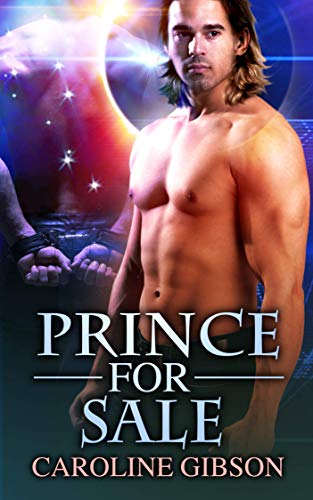
Prince for Sale by Caroline GibsonPrince for Sale by Caroline Gibson:

Sold into slavery, saved by love

Vell once was a powerful sorcerer and a prince of Otharn. With his father and brother at his side, worlds fell at his feet. Now, he is a slave, cast out by his father, sold, used and abused. His rebellious brother’s desperate attempt to save him is his only hope for freedom, but first, he must go to Earth in chains.

David Thomen, scientist, inventor, defender of Earth, is living a lonely life with his inventions. Responsible for opening the gateway from Earth to Otharn, he must come to terms with his role as Vell’s newest owner and navigate the powerful forces of the joined worlds, who all seem to have an interest in Vell’s fate.

Joined by a magical binding which forces them into an intimate relationship against both their wills, can Vell and David learn to trust each other, find a way to break their bonds, and preserve the alliance of the worlds?

Note to readers: This is an MM Romance book for a mature audience, it contains dubious consent, memories of past rape, as well as consensual sex scenes. No graphic violence, mild descriptions of injuries.

The Scythian Crisis by J.J. GreenThe Scythian Crisis by J.J. Green:

Humanity’s last stand.

An attack by unknown aliens has devastated the Nova Fortuna colony. Its long-term survival seems impossible. But the colonists aren’t going down without a fight.

Ethan must prepare the Gens for their final battle. Geneticist Cariad must decide whether to reactivate the sinister Guardians to aid in the colony’s defense.

Earth is lost. The new world settlers are without hope. When the moment to decide humanity’s fate arrives, will they be ready?

The Scythian Crisis is book three in the compelling, provocative space colonization epic adventure, Space Colony One.

Ruby Heart by Donna Maree HansonRuby Heart by Donna Maree Hanson:

A book of manners, magic and mayhem.

Jemima Hardcastle has a sad history. After her father was murdered by a secret society of magicians, her guardian and new heir to Willow Park, Edward Huntington, packed her off to boarding school. In the four years she was there, she never saw him again until she escaped from school to a house party and there he was. He did not recognise her and he even flirted with her.

A disastrous kiss, a murder and a stolen jewel herald dire happenings. Jemima is shipped off to Willow Park in the care of Fulton, Edward’s man, to be under the chaperonage of the odious Aunt Prudence and the meek cousin, Milly. While avoiding stitching in the evenings, she discovers Edward’s scientific genius and the artificial leg he made for Fulton. Her esteem for Edward rises and she is actually looking forward to seeing him again when he does not arrive as planned.

When they realise Edward is abducted, Jemima schemes to go in rescue. She has cunning and she has money and with these she plunges herself and her companions into the world of dark sorcery and London shopping.

In London, Jemima and Fulton lead a double life as they search for Edward in the slums, manufactureys and even a bawdy house. When she final discovers Edward, her life is on the line.

While a vicious and bloody fight for survival is going on around him, Edward has to choose between saving her life or unleashing the unholy, vampiric beast Geneck on an unsuspecting London.

The Starfighter Invitation by Andrea K. HöstThe Starfighter Invitation by Andrea K. Höst:

The only thing bigger than the world’s first full virtual reality game is the mystery surrounding its origins. Who is behind Ryzonart Games? How was such a huge advance in technology achieved? Taia de Haas loves having her own virtual spaceship, and wants nothing more than to visit every planet in the solar system. But she cannot ignore the question of whether such a magnificent gift comes with strings attached. Is the game a trick, a trap, a subtle invasion? Or an opportunity to step up and fight for her own planet? Caught in a tangle of riddles and lies, Taia can’t resist trying to win answers from Ryzonart’s mysterious administrators. But will finding the truth cost her the Singularity Game?

Eternal Darkness by Marc JohnsonEternal Darkness by Marc Johnson:

The wizard Hellsfire is dead. Hellsfire is now an ordinary mortal, weakened and powerless. But two people are seeking him out: one wants to save him and one wants revenge.

Bryce is seeking retribution for the slaughter of his family. Running his blade through Hellsfire is the only way to fill the empty hole in his heart. He failed before. He won’t fail again.

Eager to explore her blossoming powers, Alyssa receives a vision from the gods telling her to go to Hellsfire. He may be the only one who can teach her to harness her magic. With no family ties, she’s ready to leave the only home she’s ever known to rescue a man she barely knows.

Hellsfire still has a crucial role to play in the fate of the realm—if he survives and remembers who he is. Will he regain his powers and his sense of purpose before it’s too late?

Swordheart by T. KingfisherSwordheart by T. Kingfisher:

Return to the world of Clockwork Boys in this all-new novel from T. Kingfisher!

Halla is a housekeeper who has suddenly inherited her great-uncle’s estate… and, unfortunately, his relatives. Sarkis is an immortal swordsman trapped in a prison of enchanted steel. When Halla draws the sword that imprisons him, Sarkis finds himself attempting to defend his new wielder against everything from bandits and roving inquisitors to her own in-laws… and the sword itself may prove to be the greatest threat of all…

The Megalodon Mix-Up by Amanda M. LeeThe Megalodon Mix-Up by Amanda M. Lee:

Charlie Rhodes’ life has taken a turn.

Not only is she working her dream job, but she’s also taken on a dreamy co-worker and is officially dating the office security chief.
Yeah, she’s still trying to wrap her head around it, too.

She doesn’t have much time because a high-profile incident in Florida means the team is on the hunt, and this time the likely culprit is none other than a prehistoric shark that’s been extinct for millions of years.

For Jack Hanson, the mere thought that a Megalodon is hunting the Gulf of Mexico waters is too much to bear. He’s on edge and irritated, and that’s on top of the fact that Legacy Foundation co-workers are starting to find out about his relationship with Charlie.

For her part, Charlie is enjoying herself. Not only is she looking for a giant shark, but she’s investigating in the middle of an author conference and the victim was the one person hated by absolutely everyone. She’s learning on the job … and it’s a tangled web of lies and intrigue to wade through.

There are suspects at every turn, blood in the water, and hungry sharks looking for a meal. It’s another fun-filled adventure, and the stakes in this one are graver than anybody anticipated.

Scourge of the Seas of Time (and Space), edited by Catherine LundoffScourge of the Seas of Time (and Space), edited by Catherine Lundoff:

Think pirates are all about the rum and the pieces of eight? Let these fifteen tales draw you into the adventures of a new kind of pirate. Sail with them as they seek treasure, redemption, love, revenge and more. Raise the Jolly Roger and sharpen your cutlass (or recharge your raygun) and climb aboard for some unforgettable voyages. Featuring stories by Ginn Hale, A.J. Fitzwater, Geonn Cannon, Joyce Chng, Elliott Dunstan, Ashley Deng, Su Haddrell, Ed Grabianowski, Mharie West, Matisse Mozer, Soumya Sundar Mukherjee, Megan Arkenberg, Peter Golubock, Michael Merriam and Caroline Sciriha.

The Santa Claus of Mystic Springs by Mona MarpleThe Santa Claus of Mystic Springs by Mona Marple:

What if Father Christmas is on the naughty list?

It’s beginning to look a lot like Christmas in Mystic Springs, but all is not still or calm with the department store Santa.

The amateur dramatics club is full of big egos and legends-in-their-own-heads, so their spats aren’t unusual. But when the theatre owner is shot dead during the Christmas play, it’s Santa who pulls the trigger.

With the arrival of an unwelcome ex, a petition to end Discrimination Against Spirits, and a second attack by St Nick, the chances of a quiet Christmas seem to be quickly disappearing.

Has Santa really gone bad? Or is there more to it?

Town medium Connie and her dead sister Sage are both avoiding their own festive conundrums. A mistletoe murder is just the distraction they need.

Phyllis Wong and the Vanishing Emeralds by Geoffrey McSkimmingPhyllis Wong and the Vanishing Emeralds by Geoffrey McSkimming:

When Phyllis Wong—that brilliant young magician and clever sleuth—happens upon a mystery from the past that has proved unsolvable, she knows she has to try to get to the bottom of it.

More than sixty years ago an astonishing emerald necklace owned by the famous pianist Isabella Beaufort seemingly vanished off the face of the earth! Ever since, the disappearance has stumped the police, detectives and those associated with the missing priceless jewels. How did the prized Flurtis Emeralds vanish? Where are they today? Is there any way they can be traced, after so many cobwebs have covered the case?

Another mysterious intrigue right up the alleyway of our favourite conjuring Transiter!

The sixth Phyllis Wong: Time Detective mystery.

Christmas in Silver Birch Valley by Lorri MoultonChristmas in Silver Birch Valley by Lorri Moulton:

A man spends the holidays in a small Northwestern town that may not be exactly what it seems…and rediscovers the true meaning of Christmas.


It's Alive: Bringing Your Nightmares to Life, edited by Joe Mynhardt and Eugene JohnsonIt’s Alive: Bringing You Nightmares to Life, edited by Joe Mynhardt and Eugene Johnson:

Nightmares come to life in this comprehensive how-to guide for new and established authors…

Book two in Crystal Lake Publishing’s The Dream Weaver series picks up where the Bram Stoker Award-nominated Where Nightmares Come From: The Art Of Storytelling In The Horror Genre left off.

It’s Alive: Bringing your Nightmares to Life focuses on learning the craft in order to take your story from concept to completion.

With an introduction by Richard Chizmar and cover art by Luke Spooner. Featuring interior artwork from horror master Clive Barker!

Table of Contents:

  • Introduction by Richard Chizmar
  • Confessions of a Professional Day Dreamer by Jonathan Maberry
  • What is Writing and Why Write Horror by John Skipp
  • Tribal Layers by Gene O’Neill
  • Bake That Cake: One Writer’s Method by Joe R. Lansdale and Kasey Lansdale
  • Ah-Ha: Beginning to End with Chuck Palahniuk and Michael Bailey (Discussing the Spark of Creativity)
  • They Grow in the Shadows: Exploring the Roots of a Horror Story by Todd Keisling
  • Sell Your Script, Keep Your Soul and Beware of Sheep in Wolves’ Clothing by Paul Moore
  • The Cult of Constraint (or To Outline or Not) by Yvonne Navarro
  • Zombies, Ghosts and Vampires?Oh My! by Kelli Owen
  • The Many Faces of Horror: Craft Techniques by Richard Thomas
  • Giving Meaning to the Macabre by Rachel Autumn Deering
  • The Horror Writer’s Ultimate Toolbox by Tim Waggoner
  • Sarah Pinborough Interview by Marie O’Regan
  • Conveying Character by F. Paul Wilson
  • Sympathetic Characters Taste Better: Creating Empathy in Horror Fiction by Brian Kirk
  • Virtue & Villainy: The Importance of Character by Kealan Patrick Burke
  • How to write Descriptions in a story by Mercedes Yardley
  • “Don’t Look Now, There’s a Head in That Box!” She Ejaculated Loudly (or Creating Effective Dialogue in Horror Fiction) by Elizabeth Massie
  • Point of View by Lisa Mannetti
  • What Came First the Monster or the Plot? In Conversation with Stephen Graham Jones by Vince A. Liaguno
  • Building Suspense by David Wellington
  • Conveying Horror by Ramsey Campbell
  • Unveiling Theme Through Plot: An Analysis of Nathaniel Hawthorne’s “The Birthmark” by Stephanie M. Wytovich
  • Interview with Clive Barker by Tim Chizmar
  • World Building (Building a terrifying world) by Kevin J. Anderson
  • Speak Up: The Writer’s Voice by Robert Ford
  • Writing for a Better World by Christopher Golden
  • Shaping the Ideas: Getting Things from Your Head to the Paper or on Screen. Interview with Steve Niles, Mick Garris, Heather Graham, Mark Savage, and Maria Alexander by Del Howison
  • On Research by Bev Vincent
  • Editing Through Fear: Cutting and Stitching Stories by Jessica Marie Baumgartner
  • Leaping into the Abyss by Greg Chapman
  • Edit Your Anthology in Your Basement for Fun and Profit! . . . or Not by Tom Monteleone
  • When It’s Their World: Writing for the Themed Anthology by Lisa Morton
  • Roundtable Interview by John Palisano
  • The Tale of the Perfect Submissions by Jess Landry
  • Turning the Next Page: Getting Started with the Business of Writing by James Chambers

Proudly represented by Crystal Lake Publishing—Tales from the Darkest Depths.

Merry Happy Valkyrie by Tansy Rayner RobertsMerry Happy Valkyrie by Tansy Rayner Roberts

Norse myth and magic collides with a small town Tasmanian Christmas in this festive romantic fantasy!

Lief Fraser has mixed feelings about returning home to Matilda, the only Australian town where it always snows at Christmas. As a TV weather presenter, it’s her job to report on the strange holiday phenomenon… but as a local, it’s her duty to preserve Matilda’s many magical secrets.

Then pretty Audrey Astor rolls into town to shoot the ultimate romantic Australian Christmas movie with her film crew. Sparks fly, secrets unravel… and soon everyone will know exactly how Mt Valkyrie got its name.

“A sparkling holiday fantasy story full of deliciously fun characters and fabulous magic.” – Stephanie Burgis

Created for Christmas by Joynell SchultzCreated for Christmas by Joynell Schultz:

Need the perfect man? No problem—simply create him!

Ivy wanted nothing more for Christmas than to have someone to come home to…to have a companion to chat about her day with, and someone to show off at her family holiday celebrations.

This Christmas, she’s not going to be alone! Ivy decides to create her perfect companion at Dream Droids, the premier robotics company specializing in sentient humanoids. Ivy spends weeks with Dr. Pierce, creating her dream man, from his appearance, personality, and even his knowledge of her life.

There’s just a few problems: when a special gift she purchased for her father goes missing, and Dr. Pierce agrees to help her find it, she finds herself falling for him. After getting her heart stomped on by her ex-fiancé, there’s no way she can open it up again…besides, she just created the perfect man.

Finders by Melissa ScottFinders by Melissa Scott:

Cassilde Sam is a barely solvent salvage operator, hunting for relics in the ruins left by the mysterious Ancestors—particularly the color-coded Elements that power most of humanity’s current technology, including the ability to navigate through hyperspace. Cassilde is also steadily fading under the onslaught of Lightman’s, an incurable, inevitably fatal disease. She needs one last find big enough to leave a legacy for her partner and fellow salvor Dai Winter.

When their lover and former colleague Summerlad Ashe reappears, offering them a chance to salvage part of an orbiting palace that he claims contains potentially immense riches, Cassilde is desperate enough to take the gamble, even though Ashe had left them both to fight on the opposite side of the interplanetary war that only ended seven years ago. The find is everything Ashe promised. But when pirates attack the claim, Cassilde receives the rarest of the Ancestors’ Gifts: a change to her biochemistry that confers near-instant healing and seems to promise immortality.

But the change also drags her into an underworld where Gifts are traded in blood, and powerful Gifts bring equally powerful enemies. Hunted for her Gift and determined to find Gifts for her lovers, Cassilde discovers that an old enemy is searching for the greatest of the Ancestral artifacts: the power that the Ancestors created and were able to barely contain after it almost destroyed them, plunging humanity into the first Long Dark. Haunted by dream-visions of this power whispering its own version of what happened, Cassilde must find it first, before her enemy frees it to destroy her own civilization.

Death by Rosie ScottDeath by Rosie Scott:

Over the years of waging the War of Necromancers, Kai Sera has become known by many names. Mage of the Six Elements. Necromancer. God-Killer. Rebellion Leader. Liberator. War General. Goddess of Magic. Living Legend. Most importantly, Kai is the greatest asset of war that exists, and now her war is nearing its end.

Chairel is on the horizon. Kai’s home country has massive armies prepared to defend itself from her rebellion. Mortals and gods alike team up to put a stop to her intimidating advance, but Kai is not fazed. News of the final showdown brings unlikely supporters to Kai’s doorstep willing to bend their knee to her superior power, and her Seran Renegades collect the allies they’ve made over years of globe-trotting and war to face their foes head-on.

The greatest military in the world will come to a final bloody clash with the largest rebellion ever built. Both sides will suffer losses and heartbreak. The world and its occupants will be forever scarred. Kai started this war for political change and vengeance, and she will not relent until it is finished.

UnArcana Stars by Chris FoxUnarcana Stars by Glynn Stewart:

A humanitarian mission into unfriendly stars
A training cruise under the watch of a fortified fleet base
The closing jaws of a trap years in the making

It has been over a year since the UnArcana Worlds of the Protectorate of the Mage-King of Mars seceded, shattering the unity of the human race. The new Republic of Faith and Reason has raised new banners in defiance of the power of the Protectorate’s Mage aristocracy.

Now, Hand Damien Montgomery commands a relief mission to a Republic world ravaged by famine. His humanitarian mission collides with a newborn military beginning to flex its muscles–and a newborn nation prepared to accept no violations of its sovereignty, regardless of their needs.

Elsewhere, disaster strikes the Nia Kriti Fleet Base as an earthquake shatters their only communication with the rest of the Protectorate. Officer-in-training Roslyn Chambers is in the middle of the recovery effort when she realizes Nia Kriti is under attack.

The Republic is done with peace. They are coming for the Protectorate–and they will see the fleets of Mars break!

Elixirs and Elves by Astoria WrightElixirs and Elves by Astoria Wright:

The elves of Mount Vale are throwing a Christmas Party, and they’ve invited everyone! While the human residents of Moss Hill are excited to attend, many of the sidhe find the invitation beneath them. It’s no secret that they dislike mingling with non-faeries, but are they so hostile toward humans that one of them would commit murder? Carissa has never gotten along with the sidhe guard, but Varick of Vale has helped her on occasion. So, when he asks for her help after suspicion falls on him, it’s up to her to prove his innocence – if, that is, he isn’t guilty after all.

Posted in Books | Tagged , , , , , , , , , , , , , , , , , , , , , , , , , , , , , , , , , , , , , , | Leave a comment

The Hopepunk Debate

Back in 2017, SFF writer Alexandra Rowland wrote on tumblr: The opposite of grimdark is hopepunk. Pass it on.. She later expanded that statement in a longer post. Here is a quote:

So the essence of grimdark is that everyone’s inherently sort of a bad person and does bad things, and that’s awful and disheartening and cynical. It’s looking at human nature and going, “The glass is half empty.”

Hopepunk says, “No, I don’t accept that. Go fuck yourself: The glass is half-full.” YEAH, we’re all a messy mix of good and bad, flaws and virtues. We’ve all been mean and petty and cruel, but (and here’s the important part) we’ve also been soft and forgiving and KIND. Hopepunk says that kindness and softness doesn’t equal weakness, and that in this world of brutal cynicism and nihilism, being kind is a political act. An act of rebellion.

At the time, I was quite taken by the post and found myself nodding along. I even planned to write a response to it, though I never got around to it for some reason.  But what Alexandra Rowland labeled “hopepunk” was already in the air last year and it has become even more notable since then.

Hopepunk has been deliberately coined as an opposite to grimdark, which was already going strong, when I got on the internet in the late 1990s, though back then it was the new cool thing. And grimdark SFF has been at the centre of several debates in the past twenty years  – you can find my previous blogposts about the grimdark debate here. It’s still popular and going strong – the David Gemmell Legend Awards still regularly go to grimdark novels, the winners of the self-published fantasy blog-off are frequently grimdark as well and the unabashedly grimdark Game of Thrones is the most successful TV series in the world – but grimdark is no longer the scrappy upstart, the counterpoint to the bloated big fat fantasy of the 1990s. And by now, more and more people – often the sort of marginalised people who only exist as cannon fodder in grimdark fiction – are heartily sick of grimdark and want something else, so enter hopepunk.

Hopepunk has been quietly chugging along all year. Here is an April 2018 Strange Horizons article by Claudie Arsenault (thanks to Joyce Chng for pointing it out), in which she doesn’t use the term, but very much describes the phenomenon and also points out that a more hopeful and positive kind of SFF is often to be found in indie and small press books, often by marginalized writers.

But in the normally dead time between the years, hopepunk suddenly resurfaced on the genre radar again in a big way. It started in November, when Alexandra Rowland expanded on her original tumblr post with this essay in The Stellar Beacon. In this essay, Alexandra Rowland also explains why “hopepunk” doesn’t mean “nice” and differentiates hopepunk from noblebright, another countermovement to grimdark. It’s a great essay and I urge you to read it. Meanwhile, let’s have a quote:

Ask it of hopepunk, then: “What’s the point?”

And the answer is, of course, that the fight itself is the point.

It’s not about glory or noble deeds; it’s not about an end result because there is no end. There’s always a tomorrow and when the sun rises again, we’ll still have a dam holding the water back. For now. But entropy is real, and dams must be maintained, and it takes all of us to do it, and it’s done by linking arms with the people next to you, by building a community with deliberate intent.

It’s about how the first step to slaying a dragon is for one person to say, probably drunk in a bar somewhere, “I bet it can be done, though.”

It’s about being kind merely for the sake of kindness, and because you have the means to be, and giving a fuck because the world is (somehow, mysteriously, against all evidence) worth it and we don’t have anywhere else to go anyway.

It’s about digging in your heels and believing that one single atom of justice, one molecule of mercy does exist somewhere in the mindboggling vastness of the universe—believing in that, even if for no other reason than fuck you, buddy; fuck you, fuck you, fuck you. I do what I want and this, this is what I want; this is the world I want to live in: One where the atom of justice exists, even if I’ve never seen it myself, even if I’ll never see it.

It’s about doing the one little thing you can do, even if it’s useless: planting seeds in the midst of the apocalypse, spitting on a wildfire, bailing out the ocean with a bucket. Individual action is almost always pointless. Hope and strength comes from our bonds with each other, from the actions we take as a community, holding hands in the dark.

Today, the subject of hopepunk was then taken up by Aja Romano who wrote an article about it for Vox, quoting Alexandra Rowland and others. The Vox article spread much further than the original essay on a small indie gaming site and suddenly the knives came out by those who really have a problem with either the label or the phenomenon or Vox or all three.

Now it’s certainly possible to have issues with the proliferation of -punk suffix subgenre names, though that fight was lost ages ago. I keep a master list of punk suffix genres with explanations and examples on my PC that’s a whopping 24 pages long. And considering how much havoc the cyberpunks wreaked on the science fiction genre, starting with the wholesale erasure, whether intentionally or unintentionally, of the feminist SFF of the 1970s, they deserve having their suffix tacked onto anything and everything. Never mind that they started it by coining Steampunk. And besides, hopepunk and its idea of “The world is crap, but we keep fighting and we do it together” actually fits the punk aesthetic more than many other punk suffix genres.

It’s also possible to disagree with Aja Romano’s list of things that are hopepunk. In fact, I disagree with several items on that list myself and there are even some that IMO are more grimdark than hopepunk. But then, genre and subgenre definitions exist to be argued about. And besides, grimdark and hopepunk are not just opposites, but also uneasy neighbours, because hopepunk is often set in grimdark worlds, only that people are fighting back in little ways.

However, quite a few people also seemed to have issues with the very idea of hopepunk itself. There were complaints that hopepunk glorifies bland centrist politics, that it’s just some cutesy tumblr thing, that it’s supposed to make readers/viewers feel validated and complacent and that it’s way too much about feelings besides, that it’s an empty coolness signifier for dweebs and squares, that it won’t motivate real political change and won’t bring about the revolution (echoes of 1970s pop culture criticism here), that people should read non-fiction and biographies instead of hopepunk, that it’s just marketing and that it’s a middle class thing.

Do you know what else is a middle class thing? Grimdark. Because some of the most eager fans of grimdark are/were young white men (and occasionally women and non-binary folk as well) from middle class backgrounds, in short the sort of people for whom the world was not very grim at all compared to more marginalized folks. Back when The Wire was the best show on television(TM) (about four or five best shows on TV ago), I said about British fans of The Wire on a long defunct forum (paraphrasing obviously):

They’re nice white middle class boys and the closest they’ve ever come to the ghetto is when they accidentally got off at the tube in Brixton once, took one look around and ran crying back into the tube. But they like The Wire, because it makes them feel tough and because they think that’s the way real life is.

It was a deliberate insult and it was aimed at someone who had just denigrated my viewing choices. But the point still stands. Some of the most eager consumers of grimdark are white middle class kids who just realised that parents and teachers are imperfect, that there are some really horrible things happening in the world, that the TV is lying and that elections don’t always mean that the right person wins. And so they became cynical and go for grimdark because “it shows the world as it really is”. In many ways, a taste for grimdark entertainment is normal for teenagers and young adults, once they lose their illusions about the world. The exact delivery mode varies – punk rock, heavy metal, grunge, 1990s anti-hero comics, depressing YA books – but most young people go through a grimdark phase in their late teens and early twenties. I certainly did. Most gradually grow out of it by their mid to late twenties, though some never do. In fact, you can sometimes trace the grimdark interlude in the work of artists – often musicians and comic book writers; novelists normally take longer to break out – who came to fame young. Early works are grim and dark, later works are more hopeful though not necessarily less dark.

However, when a whole genre or worse, a whole society gets stuck in a grimdark mode, then you have a problem. In some ways, that’s what happened to American pop culture in the early 2000s, when every movie and every TV show was suddenly death, torture, terrorism, corrupt politicians, murdered women and “We must make hard choices”. For me, this coincided with me growing out of my own grimdark mood, so it was bloody annoying, but due to shifted US demographics, it also coincided with the so-called millennials entering their own grimdark period and the September 11 attacks kicked the whole thing into high gear. Things gradually lightened up a bit around 2007/08 on the film and TV front, though then the financial crisis and the so-called great recession struck and everything promptly went grimdark once again. Meanwhile, SFF was still stuck in grimdark mode and only gradually started to emerge from all that gloom, usually in works on the margins of the genre ignored by the genre mainstream. I read very little SFF during that time and instead turned to other genres and only gradually found my way back. Then from 2011/12 on, more hopeful works gradually started to appear. Among Others by Jo Walton came out in 2011, Ancillary Justice by Ann Leckie and Fortune’s Pawn by Rachel Bach in 2013, The Long Way to a Small Angry Planet by Becky Chambers and The Goblin Emperor by Katherine Addison in 2014, The Fifth Season by N.K. Jemisin in 2015 (still not sure if this one belongs on this list, but many seem to think it does), Ninefox Gambit by Yoon Ha Lee, Too Like the Lightning by Ada Palmer and All the Birds in the Sky by Charlie Jane Anders in 2016. All of these books were big successes, won and were nominated for awards. And all got plenty of pushback and not just from the puppy fractions either. Also in 2016, the Brexit vote, the election of Trump and the rise of the far right around the globe happened and people suddenly needed hope more than ever. They also needed stories that tell them that even when things look dark, people can still live, love, work together, fight and hope.

When I read some of the reactions to Aja Romano’s hopepunk article (since not a lot of people seem to have read Alexandra Rowland’s), I want to ask, “What do you have against hope?” I also want to break out that old Tolkien quote about escape and jailers. Not to mention that a lot of the complainers seem to accuse hopepunk of being some harmless, fluffy, nice thing that – at least according to Alexandra Rowland, who coined the term – it isn’t. Not that there isn’t a tendency among those people who can afford it to retreat into the private and domestic during politically difficult and oppressive times, see Biedermeier. And actually, some of the Biedermeier works were not nearly as harmless and fluffy as they seemed on the surface.

I’ve never used the term hopepunk to describe my own work (yes, I’m talking about my work and yes, that’s probably marketing. Get over it!), though it certainly fits. The In Love and War series is definitely hopepunk (though I call them cozy space opera), since it’s the story of two people who fight to be together and live the lives they want (and right some wrongs along the way) in a universe that has other ideas. Ditto for Shattered Empire. My post-apocalyptic collection After the End – Stories of Life After the Apocalypse is definitely hopepunk (and volume 2 will hopefully come out in 2019), because it focusses on people, surviving, rebuilding and just living their lives after the world as everybody knew it has ended. The Day the Saucers Came… would also fit under hopepunk, since it’s about the survivors (and it turns out, prominent figures of the resistance) of a 1950s B-movie style alien invasion, none of whom are the sort of people who usually survive that sort of event. There will be more The Day the Saucers Came… stories in 2019 as well. I guess you could even call the Hallowind Cove stories hopepunk (though those are on the lighter and more humorous side), because they’re about people living with the weird, where sometimes the solution is “Feed the monster cookies”.

Comments are off.

Posted in Books, Writing | Tagged , , , , , , , , , , , , , , , , | 4 Comments

Indie Crime Fiction of the Month for December 2018

Welcome to the latest edition of “Indie Crime Fiction of the Month”.

So what is “Indie Crime Fiction of the Month”? It’s a round-up of speculative fiction by indie authors newly published this month, though some November books I missed the last time around snuck in as well. The books are arranged in alphabetical order by author. So far, most links only go to Amazon.com, though I may add other retailers for future editions.

Our new releases cover the broad spectrum of crime fiction. We have plenty of cozy mysteries, holiday mysteries, small town mysteries, culinary mysteries, animal mysteries, historical mysteries, Victorian mysteries, Medieval mysteries, paranormal mysteries, YA mysteries, crime thrillers, psychological thrillers, spy thrillers, political thrillers, horror thrillers, police procedurals, romantic suspense, private investigators, amateur sleuths, hackers, human trafficking, serial killers, cannibals, spies, troubled boxers, suburban moms, missing children, crime-busting witches, crime-busting dogs, crime-busting bakers, crime-busting historians, murder in ski resorts and seaside towns, in coffee shops and country inns, in Russia, Denmark, Scotland and the Cotswolds and much more.

Don’t forget that Indie Crime Fiction of the Month is also crossposted to the Indie Crime Scene, a group blog which features new release spotlights, guest posts, interviews and link round-ups regarding all things crime fiction several times per week.

As always, I know the authors at least vaguely, but I haven’t read all of the books, so Caveat emptor.

And now on to the books without further ado:

The Season for Slaying by Hillary AvisThe Season for Slaying by Hillary Avis:

All is quiet at the Pines and Needles Christmas Tree Farm. Too quiet.

It’s Christmas Eve, and Darla Cooper is merrily preparing for a family holiday when she witnesses a shocking murder in the woods.

Luckily, her son is a police detective. The problem? He doesn’t believe her—and the body is missing.

Darla must prove that a murder occurred, but she has no body, no witnesses, and no evidence except her own memory—which, to be honest, isn’t that great these days. Plus, she didn’t have her glasses on.

Join Darla as she hunts down a killer…just in time for Christmas.

The Season for Slaying is a short holiday cozy mystery story full of suspense, snowflakes, and sleighbells.

A Merry Murder at St. Bernard Cabins by Cindy BellA Merry Murder at St. Bernard Cabins by Cindy Bell:

A pet-loving sleuth. A perplexing murder. Will the murder be solved before the clues are buried forever?

Nikki Green is taking a break from walking and pet-sitting her loyal companions. She is going to a ski resort for the holidays for some quiet time with her family. To her delight her solo journey turns into a group excursion. However, the trip doesn’t go according to plan when Nikki lands up in the middle of a snowstorm.

Then things go from bad to worse when someone is murdered, and her brother is the prime suspect. With the roads impassable, and two inexperienced officers on the case, Nikki decides to take matters into her own hands and clear her brother’s name. She plows through a mountain of clues to reveal the truth before the snow melts and the murderer disappears forever.

It’s a slippery slope of suspects and danger as she goes hurtling towards the truth.

The Best Friend by Shalini BolandThe Best Friend by Shalini Boland:
‘I can tell we’re going to be the best of friends…’

When Louisa Sullivan takes her little boy to his first playdate at a new friend’s house she doesn’t realise life is about to change for her family. Because she’s about to meet Darcy Lane.

Darcy is a woman who has everything – a dream house, a powerful husband and enviable wealth.

She’s the perfect wife.

The perfect friend.

The perfect liar.

The Secrets of Palmerston House by Philippa Nefri ClarkThe Secrets of Palmerston House by Philippa Nefri Clark:

1853. A fateful game of poker changed the fortunes of two families forever. A home was lost. But what was left behind?

2018. The wedding of Christie Ryan and Martin Blake is only weeks away and River’s End is buzzing with excitement.

But when a stranger arrives at Palmerston House, a new mystery arises. How does he know so much about the Ryan family, and what do a nineteenth century diary, a grandfather clock, and an old key have in common?

As a dangerous plot unfolds, long hidden secrets threaten to change everything held dear to the town.

The Secrets of Palmerston House will sweep you on a journey to the past and back, where enduring friendships warm the heart, a sad goodbye brings a new start, and the power of true love shines.

Jingle Bells and Deadly Smells by Amber CreweJingle Bells and Deadly Smells by Amber Crewe:

“Each of the Sandy Bay mysteries are great! I think they just keep getting better.”

Christmas is that season…that season of pleasant surprises…delicious smells…and family and friends to share the holidays with.

This Christmas, Sandy Bay’s lovable bakery owner, Meghan Truman, gets a whole lot more than she bargained for…plus a dead body at the door of her favorite restaurant. Some people would rather sweep this murder under the carpet but something smells awfully fishy about the events surrounding it.

Will Meghan join Detective Irvin to find the murderer or will this event serve to etch unpleasant memories of this most wonderful time of the year?

Shamrock by Janie CrouchShamrock by Janie Crouch:

Every mission has a price.
He never meant for her to pay it.

Aiden has never left anyone behind. Not a comrade and certainly not an innocent. But when an undercover mission goes wrong, he’s forced to abandon a woman trapped in a human trafficking ring.

Violet learned brutally that no one is promised a happy ending. She knows Aiden blames himself for his part, but she refuses to let her abduction define the rest of her life.

She won’t be a victim again. And she’s going after what she wants: Aiden.

Watching Violet transform herself into a fierce warrior is the sexiest thing Aiden has ever seen. The honorable plan would be to stay away from her—let her heal and grow without the shadow of his mistakes clouding her progress—even though every instinct tells him to claim her for his own.

But when they discover the danger they thought they’d left behind is closer than ever, they’ll have to confront their fears and fight side-by-side in order to survive.

Twelve Days by Mark DawsonTwelve Days by Mark Dawson:

John Milton hasn’t seen Elijah Warriner for three years. The last time they met, Milton’s efforts to keep the boy safe didn’t go exactly to plan. Now Elijah is a promising boxer, preparing for the bout that will take him to the big time. Milton decides that he will spend the week before Christmas in London so that he can watch the fight.

But Elijah’s burgeoning fame has brought him to the attention of old acquaintances with long memories and grudges to bear. They have noticed Elijah, too, and decide that now is the time to settle old scores.

Can Milton keep the young man and his mother safe, or will Elijah’s old running mates get to him first?

Dead in the Shop by Dahlia DonovanDead in the Shop by Dahlia Donovan:

With love, wit, and a murder to solve, Valor and Bishan really need to stop life being so bloody complicated in this sweet gay romance.

Deadly fire? Check.

Fear-induced heart attack imminent? Check.

Time running out on them? Not good.

Valor Scott wants nothing more than to enjoy life in his little cottage with his boyfriend. The shadows of a serial killer continue to haunt him, though. He only wants the living nightmare to end. He battles one catastrophic event after the other, intent on bringing his loved ones through to the other side safely.

As their killer finally comes out into the open, Valor finds himself face-to-face with an obsessed murderer intent on destroying everyone in their path.

Trepalli's Christmas by Marcelle DubéTrepalli’s Christmas by Marcelle Dubé:

It’s Christmas eve day and Constable Marco Trepalli of the Mendenhall Police Department can’t wait to be off shift. He’s planning a big surprise for his girlfriend, Amanda. Something special. Something romantic.

Then a kid doesn’t return home after sledding and Trepalli forgets all about his plans in the mad scramble to mobilize search parties and interview the kid’s friends. And as hour after hour slips by with no sign of the boy, Trepalli braces himself for what could turn into the worst Christmas ever… for him and the kid’s family.

A Strange Twist of Fate by Debra ErfertA Strange Twist of Fate by Debra Erfert:

Gutsy, grieving Julianna is determined to find who murdered her husband. Hampered by agonizing loneliness, her obsessive-compulsive mother and her over-controlling father, she defies convention and the law to investigate on her own. When she runs up against a handsome police detective who’s determined to save Julianna from herself, she has to step up her rogue search for the killer before time, and dwindling leads, run out.


AntiAmerica by T.K. FalcoAntiAmerica by T.K. Falco:

AntiAmerica stands at the center of the largest US anarchist uprising in 100 years.

When hacktivist group AntiAmerica hacks the nation’s largest banks, the financial industry is left teetering on the brink of collapse. Hacker and teen runaway Alanna Blake is forcefully recruited by the government to track down the only link to AntiAmerica, her missing ex-boyfriend Javier. She relies on every bit of her social engineering cunning to navigate a conspiracy of lies and deceit, which imperils both the lives of everyone closest to her and the secrets to a past she longs to remain locked away forever.

This book contains content surrounding drug abuse, mental illness, physical abuse, and suicide.

Spirit of the Season by Cynthia E. HurstSpirit of the Season by Cynthia E. Hurst:

In a season of peace and goodwill, it was shocking for residents of the Cotswold town to learn a stranger had been murdered in their midst. It was even more shocking that he died on the doorstep of the town’s police inspector’s home as he was entertaining guests on Christmas Eve. It appeared Daniel Keegan’s only failing had been to fall in love with the wrong person, something that sends a chilling message to two of the inspector’s guests. Newlyweds Jacob Silver and Sarah Simm are used to criticism, but does Keegan’s death mean their own lives may be in danger?

‘Spirit of the Season’ is the eighth book in the Silver and Simm Victorian Mysteries series.

Retrieval by Ethan JonesRetrieval by Ethan Jones:

Can a lethal assassin have a soft side?

After a botched operation in Geneva, Javin Pierce and his partner are offered the chance to return to the CIS if they eliminate two senior ISIS leaders hiding in Iraq. Dispatched to the lawless lands, Javin and Claudia start to gather intel, and soon find themselves immersed in a sinister corruption scheme that reaches top-level Iraqi officials. Javin isn’t about to walk away.

Now, being hunted down by ruthless ISIS fighters, the team fights to survive and navigate crooked, ever-shifting allegiances. As Javin and Claudia forge bonds with unlikely local allies from a refugee camp, Javin gets more than he bargained for. The evidence leads to Europe and an elaborate retrieval that, if successful, will tear down the entire corruption scheme and bring desperate relief to the camp workers.

Javin now realizes his ticket back into the agency might be his most dangerous but satisfying mission yet. How will Javin clean up the targets, get back into the agency, and execute the seemingly impossible retrieval, all without leaving a trace?

Kinfolk by Matt KurtzKinfolk by Matt Kurtz:

Criminal brothers Ray and Eric Kuttner pulled off what they thought was a seemingly simple score, until Ray’s innocent wife, Rachel, was brutally murdered in retaliation. Hell-bent on revenge, the brothers delivered their own merciless payback.

Three years later, something sheds new light on Rachel’s murder and it requires the brothers to drive across Texas to Oklahoma on a new mission of vengeance that’ll finally bring them closure.

After an incident forces them to take back roads to elude the cops, they get stranded along a hunting ground patrolled by a family looking for fresh meat to feed their hunger for flesh.

In a race against the clock, Ray and Eric must fight their way out of the backwoods of Texas and still make it across state lines to accomplish their plan of revenge …all before one very large—and pissed off—family secret is unleashed to stop them.

The Megalodon Mix-Up by Amanda M. LeeThe Megalodon Mix-Up by Amanda M. Lee:

Charlie Rhodes’ life has taken a turn.

Not only is she working her dream job, but she’s also taken on a dreamy co-worker and is officially dating the office security chief.
Yeah, she’s still trying to wrap her head around it, too.

She doesn’t have much time because a high-profile incident in Florida means the team is on the hunt, and this time the likely culprit is none other than a prehistoric shark that’s been extinct for millions of years.

For Jack Hanson, the mere thought that a Megalodon is hunting the Gulf of Mexico waters is too much to bear. He’s on edge and irritated, and that’s on top of the fact that Legacy Foundation co-workers are starting to find out about his relationship with Charlie.

For her part, Charlie is enjoying herself. Not only is she looking for a giant shark, but she’s investigating in the middle of an author conference and the victim was the one person hated by absolutely everyone. She’s learning on the job … and it’s a tangled web of lies and intrigue to wade through.

There are suspects at every turn, blood in the water, and hungry sharks looking for a meal. It’s another fun-filled adventure, and the stakes in this one are graver than anybody anticipated.

Death Over Divorce by Jerri Kay LincolnDeath Over Divorce by Jerri Kay Lincoln:

This is the second book in the Rutledge Historical Society Cozy Mystery Series.

When a dead man that she knows falls out of Lorry Lockharte’s new car right in front of the sheriff, it doesn’t look good. Still, being hauled into the sheriff’s station isn’t what Lorry had expected. After a lawyer comes out of nowhere to get her released, Lorry struggles to prove her innocence and find the real killer.


Kousins Kan't Kill by Jerri Kay LincolnKousins Kan’t Kill by Jerri Kay Lincoln:

This is the third book in the Rutledge Historical Society Cozy Mystery Series.

When Lorry Lockharte’s cousin, Kasey, is accused of murder, Lorry feels like once again she must work to find the murderer. Did Kasey do it, or is she truly innocent as she claims? Lorry isn’t so sure about this one. Not only did Kasey have the opportunity and the motive, but she picked up the murder weapon. Will Lorry find the murderer only to discover that it really is Kasey?


Iced Inn by Karen MacInerneyIced Inn by Karen MacInerney:

It’s Christmastime at the Gray Whale Inn. The inn’s kitchen smells like ginger and spice, the ground is frosted with snow, and wedding bells are about to ring out for innkeeper Natalie’s favorite niece, Gwen. It’s a joyous time… until the families of the bride and groom descend on the island, bringing nasty tempers and a wicked winter storm with them. Add a baffling rash of thefts, a dash of romantic intrigue, and an unexpected power shutdown, and Natalie’s plans for a magical season are looking more like a recipe for disaster. Can Natalie find the missing gifts before the big holiday? And will the happy couple make it to the altar… or will the wedding go up in flames?

Shame on Me by Margaret MalShame on Me by Margaret Mal:

Everything in 17-year-old Julia’s life was boring and monotonous until she came across a real corpse. Since it happened near her best friend Kate’s cabin, Julia and Kate feel the urge to find the killer, as does the dead man’s best friend Nick, for whom Julia falls as soon as they meet. At first glance, the murder seems to be connected to the victim’s business, but what if it has to do with a serial killer on the loose in the same area?

‘Shame on Me’ is the first novel in the series.
The series revolves around two young friends from Russia, Julia and Kate, who love to take on the role of amateur sleuths. The novels are written in the form of email letters to their mutual American friend. Each book is written in first person, each from the point of view of one of the girls. The first book in the series is written from Julia’s point of view, the second from Kate’s, and so on. In addition to the mysteries and love stories, the series highlights interesting cultural differences between Russians and Americans and describes the life of a girl from a poor Russian family.

The Santa Claus of Mystic Springs by Mona MarpleThe Santa Claus of Mystic Springs by Mona Marple:

What if Father Christmas is on the naughty list?

It’s beginning to look a lot like Christmas in Mystic Springs, but all is not still or calm with the department store Santa.

The amateur dramatics club is full of big egos and legends-in-their-own-heads, so their spats aren’t unusual. But when the theatre owner is shot dead during the Christmas play, it’s Santa who pulls the trigger.

With the arrival of an unwelcome ex, a petition to end Discrimination Against Spirits, and a second attack by St Nick, the chances of a quiet Christmas seem to be quickly disappearing.

Has Santa really gone bad? Or is there more to it?

Town medium Connie and her dead sister Sage are both avoiding their own festive conundrums. A mistletoe murder is just the distraction they need.

Phyllis Wong and the Vanishing Emeralds by Geoffrey McSkimmingPhyllis Wong and the Vanishing Emeralds by Geoffrey McSkimming:

When Phyllis Wong—that brilliant young magician and clever sleuth—happens upon a mystery from the past that has proved unsolvable, she knows she has to try to get to the bottom of it.

More than sixty years ago an astonishing emerald necklace owned by the famous pianist Isabella Beaufort seemingly vanished off the face of the earth! Ever since, the disappearance has stumped the police, detectives and those associated with the missing priceless jewels. How did the prized Flurtis Emeralds vanish? Where are they today? Is there any way they can be traced, after so many cobwebs have covered the case?

Another mysterious intrigue right up the alleyway of our favourite conjuring Transiter!

The sixth Phyllis Wong: Time Detective mystery.

Punitive Damages by Marti TalbottPunitive Damages by Marti Talbott:

A deathbed phone call made Private Detective Jackie Harlan’s heart skip a beat. Her agency specialized in finding missing people, yet the one person she couldn’t find was her own son, Brian, who disappeared at the age of two. Was what the caller said the truth, or was it a sinister ploy to take her off the trail of an important case she was working?


The King's Coroner by J-R- TomlinThe King’s Coroner by J.R. Tomlin:

A game of spies is afoot. The king’s new coroner, Sir Law Kintour, investigates the death of a mysterious stranger in fifteenth-century Perth, Scotland. The investigation is complicated by the civil war brewing as the king raises his army against a rebellious duke. Sir Law is pitched further into intrigue and betrayal when he discovers a hired assassin is lurking in Perth. No one knows who will be the next victim. Now Law must call on every resource he has to stop the killer.


Pineapple Gingerbread Men by Amy VansantPineapple Gingerbread Men by Amy Vansant:

Sheriff Frank asks newly-minted private detective Charlotte to help him crack the case, but she has no idea those darn gingerbread men will start showing up everywhere. What did Santa do that made them so angry? And what’s the secret in his colorful Christmas-themed bureau?

Charlotte is forced to split her time between searching for Santa’s killer and helping Declan’s crazy ex-Stephanie stop a corrupt district attorney in exchange for a book that could help solve more crimes in the future. She never thought she’d help calculating Stephanie with anything…but as this story comes to it’s shocking ending, you’ll find it could be Stephanie who’s finally bitten off more cookie than she can chew…

Tangled Destiny by Jenny WheelerTangled Destiny by Jenny Wheeler:

A promising proposal. A life-changing secret. Will she live out a lie or follow her heart?

New York, 1847. Elanora dreams of marrying her childhood sweetheart Eustace. The proposal on her 21st birthday is everything she hoped for, until her fiancé’s father dispatches him to the West Indies. After the promise of a white Christmas with the man she loves evaporates, she stumbles upon a secret that could tear Eustace’s family apart…

After a sudden death further sends Elanora reeling, she’s as vulnerable as ever until a gifted photographer comes to her rescue. With the tragic love triangle forming before her eyes and the secret burning within her, she has an impossible Christmas choice. Will Elanora obey the powerful men who want to control her or will she trigger generations of consequences by exposing the truth?

Tangled Destiny is a prequel novella to the Of Gold & Blood historical mystery series.

Songbird by Inger WolfSongbird by Inger Wolf, translated by Mark Kline:

On an early morning in May, the police find the heavily beaten body of Maja Nielsen in a public park in central Aarhus in Denmark.

She has fallen from a great height and her right arm has been cut repeatedly. Everything points to a suicide, and as the police dig deeper into the world of Maja, they discover a young woman plagued by paranoia and violent nightmares.

Something was tormenting her.

The investigation leads Daniel Trokic and his team to a distinct blood profile with traces of an unknown drug, a tattooed Colombian, and a particularly uncompromising animal rights activist who has been run over in a hit-and-run accident.

Elixirs and Elves by Astoria WrightElixirs and Elves by Astoria Wright:

The elves of Mount Vale are throwing a Christmas Party, and they’ve invited everyone! While the human residents of Moss Hill are excited to attend, many of the sidhe find the invitation beneath them. It’s no secret that they dislike mingling with non-faeries, but are they so hostile toward humans that one of them would commit murder? Carissa has never gotten along with the sidhe guard, but Varick of Vale has helped her on occasion. So, when he asks for her help after suspicion falls on him, it’s up to her to prove his innocence – if, that is, he isn’t guilty after all.

Posted in Books | Tagged , , , , , , , , , , , , , , , , , , , , , , , , , , , , , , , | Leave a comment