First Monday Free Fiction: Picnic at Seashell Beach

After the End - Stories of Life After the ApocalypseWelcome to the August 2020 edition of First Monday Free Fiction. To recap, inspired by Kristine Kathryn Rusch who posts a free short story every week on her blog, I’ll post a free story on every first Monday of the month. It will remain free to read on this blog for one month, then I’ll take it down and post another story.

You may have noticed that there was no First Monday Free Fiction in July, because with the July Short Story Challenge and everything else going on, I just plain forgot.

This month’s free story is called “Picnic at Seashell Beach” and  may be found in the collection After the End – Stories of Life After the Apocalypse.

So join Pete and Marcie for a post-apocalyptic daytrip and a…

Picnic at Seashell Beach

“Okay, so what are we doing here again?”

Marcie jumped out of the solar car. She put on her shades and adjusted her shawl, even though the sun was already dipping towards the horizon, hanging like an overripe Satsuma in the late afternoon sky.

“It’s an outing.” Pete got out of the car and activated the lock. He opened the tiny trunk and picked up a cool box. “We’re going to have a romantic picnic on the beach.”

“A picnic? Outside? Really?” Marcie applied sunscreen stick to her exposed cheeks and nose. “That’s an… interesting idea.”

“It was my Grandma’s idea, really.” Pete gave Marcie a sheepish look and pulled his cap deeper into his face. “She told me when she and Grandpa were dating, Grandpa didn’t have any money to take her for dinner, so they had a picnic at Seashell Beach instead.”

“And when was that?” Marcie wanted to know. Cause Seashell Beach — which had neither seashells nor a beach these days — was about the least romantic place she could imagine.

Pete shrugged. “I dunno. Sixty, maybe sixty-five years ago. Granny’s getting on in years and Grandpa — well, he’s been dead for almost twenty years now.”

Noticing Marcie’s questioning glance, Pete added, “He died when I was seven. Melanoma got him. He refused to wear sunscreen, you know. Said he never needed any when he was young.”

“Fuck. I’m sorry.”

Pete shrugged again. “There’s no need, really. I barely remember him and what I remember is hospital beds and mottled skin. But Granny, she remembers. They’d been married for almost forty years, you know.”

***

This story was available for free on this blog for one month only, but you can still read it in After the End – Stories of Life After the Apocalypse. And if you click on the First Monday Free Fiction tag, you can read this month’s free story.

Posted in Books, First Monday Free Fiction, Writing | Tagged , , , , , , , | Leave a comment

More Reactions to the 2020 Hugo Ceremony and a bit about the Retro Hugos

I’d hoped to get my comments on the generally excellent winners of the 2020 Hugo Awards up today (ETA: It’s here). However, this was not to be, for two days later we’re still talking about the neverending Hugo ceremony from hell, as it will probably be known one day, when some toastmaster at the 2060 Hugos will bore the audience to death with remembering how they survived the neverending Hugo ceremony from hell back in the olden days of 2020. And if that toastmaster should be me, you officially have my permission to kick me off that stage.

You can read my account of the ceremony as one of the finalists who were waiting on tenterhooks while George R.R. Martin went on and on and on here. In that post, I also linked to the reactions and summaries of the disaster that was the 2020 Hugo ceremony by Natalie Luhrs, Sean Reads Sci-Fi, Miyuki Jane Pinckard and Matt at Runalong the Shelves.

However, in the past days I’ve come across even more reactions to the 2020 Hugo ceremony from around the web.

ETA: I’ll just keep adding to this post, because more and more reaction posts keep showing up.

My fellow best fan writer finalist Adam Whitehead shares his thoughts on the 2020 Hugo ceremony, including the torturous wait imposed on the finalists. And since Adam is in the UK, he was very much in the same boat as me (and Alasdair Stuart, for that matter) that the ceremony took place in the middle of the night for him.

Erin Underwood, the 2020 DUFF winner who presented the Best Fan Writer category, explains what the 2020 Hugo ceremony was like from the POV of a presenter and confirms that she was never given any guidance in how to pronounce the finalists’ name.

ETA: There also is some coverage of the disastrous Hugo ceremony in mainstream news outlets and major geek news sites, probably because George R.R. Martin was involved.

At the Guardian, Alison Flood reports about the 2020 Hugo winners and completely fails to remark on the many issues with the ceremony, which really takes some doing.

ETA: At Esquire, Gabrielle Bruney has a thoughtful article about the Hugo ceremony mess, in which she also points out the many problematic of A Song of Ice and Fire.

At Vulture, Madison Malone Kircher reports about the 2020 Hugo ceremony with plenty of embedded tweets criticising George R.R. Martin.

At The Mary Sue, Kaila Hale-Stern also weighs in one the 2020 Hugo ceremony and shares various links and tweets.

ETA: At KPBS San Diego, Andi Dukleth reports about the 2020 Hugo ceremony and also shares a few comments from Best Related Work winner Jeannette Ng.

ETA: Torsten Adair’s report at the comic site The Beat focuses mainly on the Hugo winners, finalists and longlists in the Best Graphic Story and Best Retro Graphic Story categories, but also touches upon the many problems with the ceremony.

ETA: At the New Zealand news site The Spinoff, Sam Brooks reports about the strange, shambling mess that was George R.R. Martin’s hosting of the Hugo Awards ceremony.

Also at The Spinoff, Casey Lucas reports about the other SFF awards ceremony CoNZealand messed up, namely the Sir Julius Vogel Awards, New Zealand’s national science fiction and fantasy awards. All CoNZealand members, regardless of country of origin, were eligible to vote for the Sir Julius Vogel Awards this year, only that hardly anybody knew about this, because it wasn’t publicised. And those who did find out that they were eligible to vote didn’t receive the voters’ packet. And then, to add insult to injury, the Sir Julius Vogel Award ceremony was stuck onto the back of the Retro Hugo ceremony like an afterthought. Given CoNZealand’s track record with award ceremonies, I now wonder whether there were issues with the Prometheus Awards, which are traditionally handed out at Worldcon, too.

ETA: The Science Fiction and Fantasy Association of New Zealand, the organisation behing the Sir Julius Vogel Awards, has announced that the voters’ packet for the award will be made available again to CoNZealand members.

Andrew Liptak declares that the 2020 Hugo ceremony was a mess, which it absolutely was.

At Digital Spy, Louise McCreesh reports about the 2020 Hugo ceremony.

At io9, Charles Pulliam-Moore also weighs in on the 2020 Hugo Awards.

At Pharyngula, P.Z. Myers weighs in on the 2020 Hugo ceremony, mostly quoting from Natalie Luhrs’ excellent post.

At The Daily Dot, Rachel Kiley also discusses the 2020 Hugo ceremony and the many, many problems with it.

ETA: Omigy.co.uk, a pop culture site I’d never heard of, reports about the problems with the 2020 Hugo ceremony.

ETA: At Rokzfast, Jacob Tyler weighs in on the issues with the 2020 Hugo ceremony and links to several tweets.

ETA: At Women Write About Comics (which would be a great choice for Best Fanzine next year – hint, hint), Doris V. Sutherland shares her thoughts on the 2020 Hugo Awards, the 1945 Retro Hugo Awards and the 2020 Hugo ceremony.

ETA: New Zealand fan Soon Lee also weighs in on the 2020 Hugo ceremony and particularly focusses on the almost complete lack of any New Zealand content. Soon Lee also points out that it’s offensive that George R.R. Martin seems to assume that New Zealanders have no idea what the Hugos and Worldcon are.

ETA: Discon III, the 2021 Worldcon in Washington DC, has announced that the hosts of their Hugo ceremony will be Malka Older and Sheree Renée Thomas, so the 2021 Hugo ceremony will be a lot younger, a lot less white and a lot less male. After this year’s disaster, I can only see this as a good thing. The toastmasters at Chicon 8, the 2022 Worldcon in Chicago, Illinois, will be Annelee Newitz and Charlie Jane Anders, two time Hugo winners for Best Fancast and another excellent choice. So I’ll think we have two good Hugo ceremonies ahead of us.

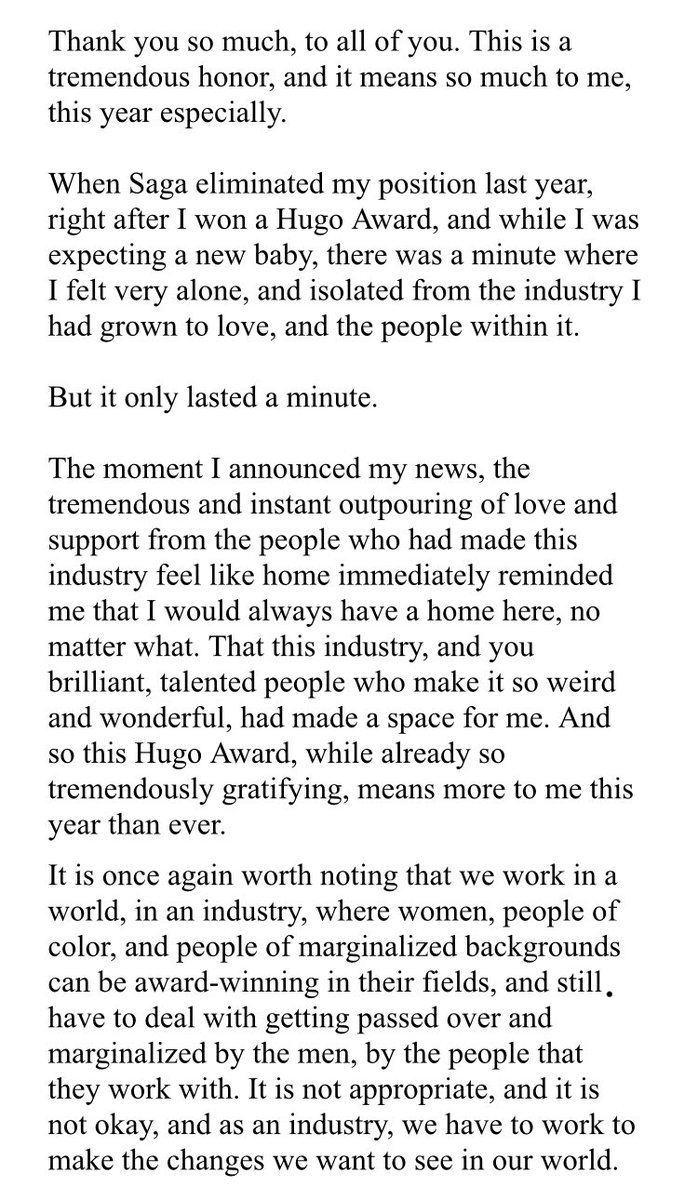
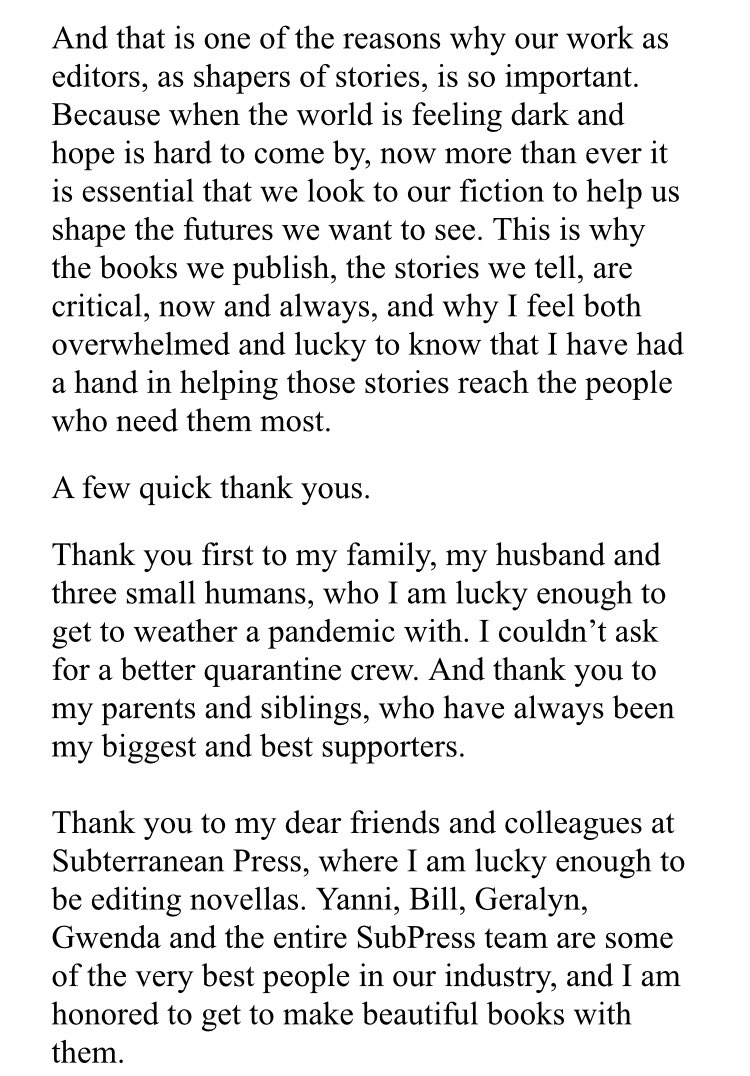
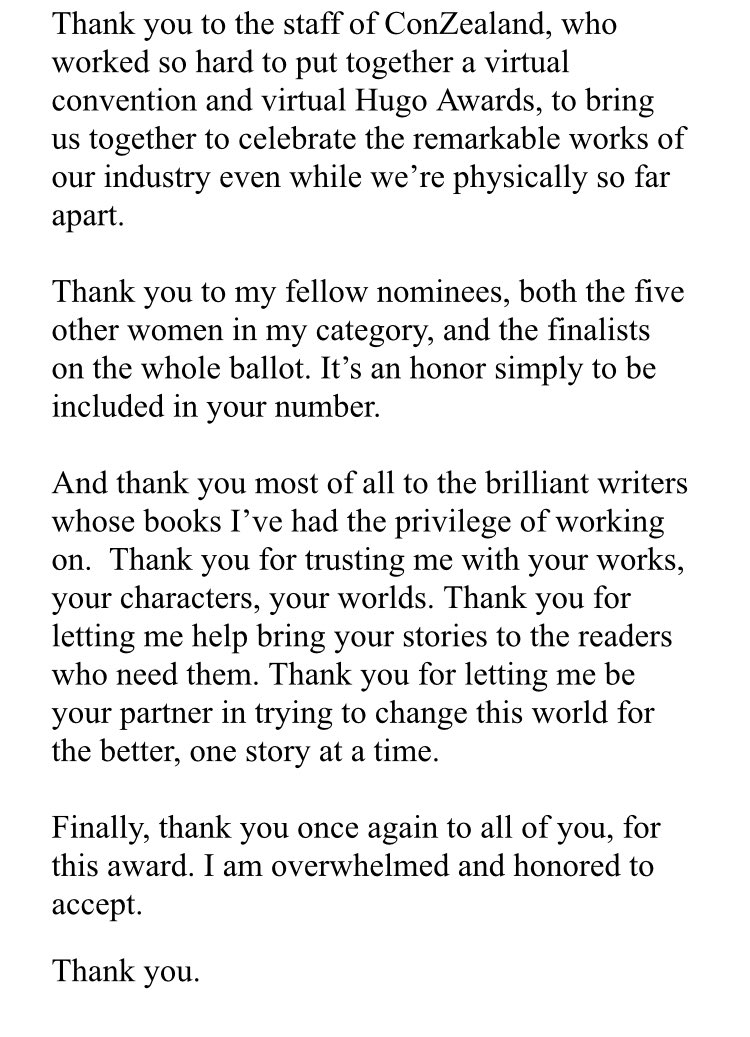
Another of the many problems with the 2020 Hugo ceremony is that the acceptance speech of Best Editor Long Form winner Navah Wolfe was cut off by a technical glitch. Navah Wolfe has now shared the full text of her speech online, which you can read here, here and here. I think this is my favourite acceptance speech of the night, though most people seem to prefer R.F. Kuang’s. I’m also horrified that it’s even legal in the US for a company to fire an employee who’s pregnant.

Norwegian fan Dag-Erling Smørgrav shares his thoughts on the 2020 Hugo ceremony and particularly focusses on George R.R. Martin and Robert Silverberg repeatedly praising John W. Campbell, which was clearly a jab against the renaming of the former Campbell Award as the Astounding Award and Hugo finalist (and eventual winner) Jeanette Ng. And as I said in my previous post, I have some sympathy that Martin as one of the first finalists ever for the Campbell may not be happy about the renaming (even though the fact that the Campbell Award is now the Astounding Award doesn’t take away Martin’s accomplishment in getting nominated for it in 1973), but the repeated jabs at the Astounding Award and Jeanette Ng were petty and uncalled for.

Sword and sorcery writers Remco van Straten and Angeline B. Adams also weigh in on the 2020 Hugo Awards Ceremony in a post fittingly entitled “When Dinosaurs Roamed the Earth”. And indeed it’s interesting that both Dag-Erling Smørgrav and Remco van Straten/Angeline B. Adams evoked dinosaurs in their posts about the 2020 Hugo ceremony. I guess Camestros Felapton, who wrote the brilliant Hugosauriad to discuss how dinosaurs are a recurring theme on the Hugo ballot, has found the dinosaurs at the 2020 Hugos, only that this year they weren’t on the ballot, but up on the stage.

As sword and sorcery writers, Remco van Straten and Angeline B. Adams are well aware that it’s possible to appreciate the SFF of yesteryear while remaining aware of the flaws of these works and their creators and so point out how problematic many of the writers and editors of yesteryear who were explicitly mentioned at the Hugo ceremony truly were.

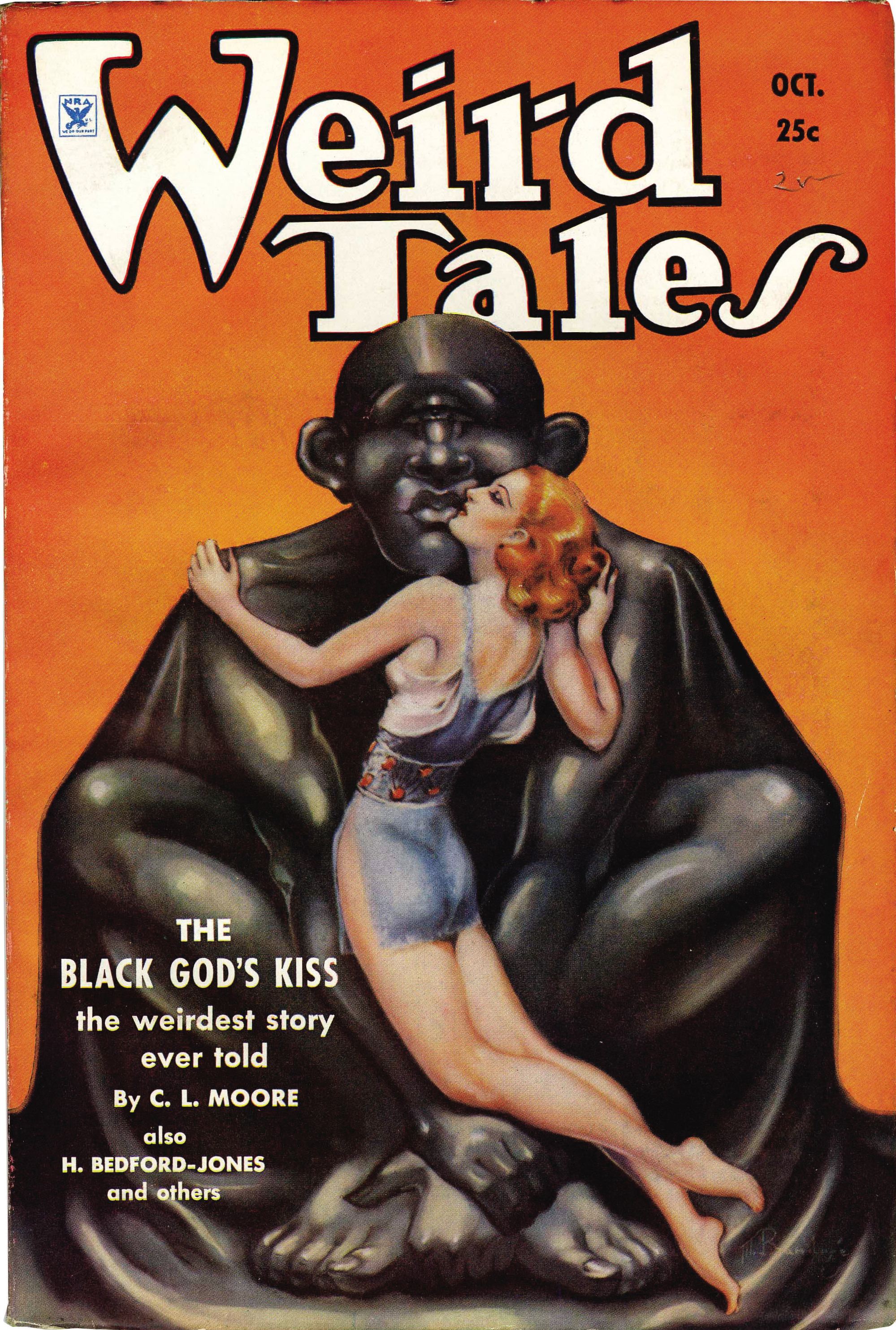
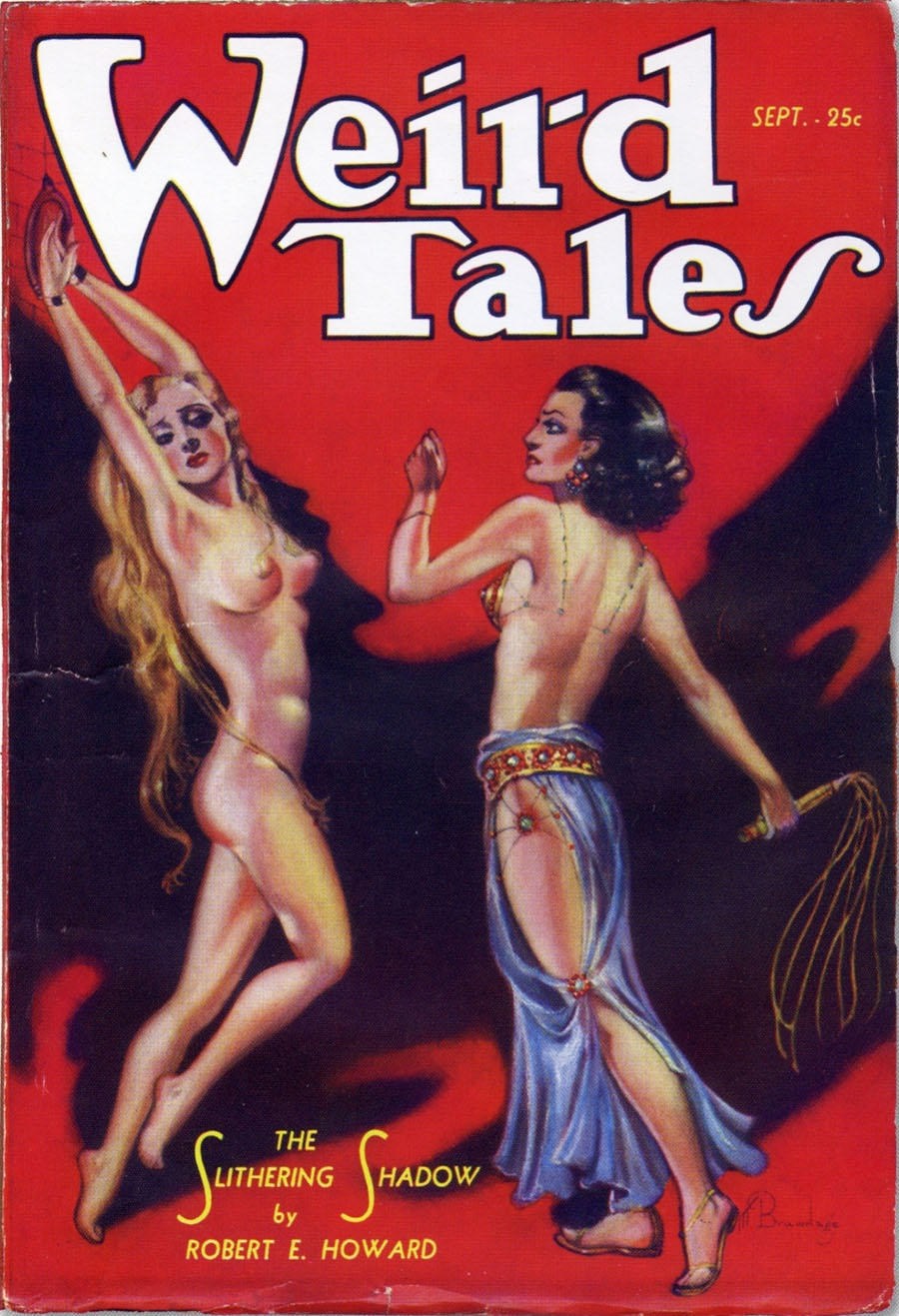
Van Straten and Adams also have a great post about the controversy surrounding the sword and sorcery anthology Flashing Swords #6, from which several authors pulled their stories, after they became aware that editor Robert M. Price’s foreword was a sexist and transphobic screed. In their post, Van Straten and Adams point out that sword and sorcery was always a diverse genre and that women like C.L. Moore and newly minted Retro Hugo winner Margaret Brundage were an important part of the genre from the beginning and that writers of colour like Samuel R. Delany and Charles R. Saunders and transpeople like artist Jeffrey Catherine Jones were part of the genre at least from the 1960s on. The 2020 Hugo ceremony is only mentioned in passing, but the post very clearly illustrates that the past of our genre was a lot more diverse and a lot less straight, white and male than it is often remembered.

ETA: Robert J. Sawyer weighs in on the problems with the 2020 Hugo ceremony and points out that George R.R. Martin repeatedly referring to various writers and editors by their nicknames alienated the audience even further. Now it’s not too big of a stretch that “Silverbob” refers to Robert Silverberg, who introduced himself as Bob when I was on a panel with him. But the “Piglet” thing threw me, too, since I’ve never heard George Alec Effinger referred to by that name and it’s not easily deducible either.

ETA: At Future Less Travelled, Vivienne Raper, a fan and critic whose taste in books leans more conservative, declares that the 2020 Hugo ceremony was a dumpster fire, which it absolutely was.

ETA: Lela E. Buis also weighs in on the issues with the 2020 Hugo ceremony.

ETA: James Pyles sent me a link to his thoughts about the 2020 Hugo ceremony, so here it is.

ETA: At a site called The American Thinker, which seems to be the usual US conservative website obsessed with “the Left”, Kamala Harris and Alexandria Ocasio-Cortez, Andrea Widberg reports about the problems with the 2020 Hugo ceremony (which she doesn’t seem to have watched) and declares that “cancel culture” is going after George R.R. Martin and that it’s somehow the fault of the Maoists. Never mind that Maoists are exceedingly rare in the twenty-first century, several of those who criticised George R.R. Martin are the children of people from China and Hongkong who left those countries for political reasons, so they’re extremely unlikely to be Maoists.

ETA: The usual canine suspects are mostly silent about the 2020 Hugos, which means that they’ve moved on, so good for them. Vox Day is mainly starting fights with Patreon these days, but he still can’t resist a quick post about the Hugos, which mainly quotes from the Daily Dot article. Vox also gloats that George R.R. Martin is cancelled now and that he hopes John Scalzi will be next (not that anybody ever brought up Scalzi, except for Vox Day who’s obsessed with him). There’s also a jab against his other obsession N.K. Jemisin, though he seems to have missed that she has won four Hugos by now,  and a lot of use of the word “rape” for a very short post. So in short, business as usual.

ETA: Puppy come lately Jon Del Arroz sees to have moved on to comics these days, but he also feels compelled to weigh in on the Hugo ceremony in this video. Of course, he didn’t even watch the ceremony (well, he saved himself almost four hours by that), because Worldcon and the Hugos are dead and the Hugo winners don’t sell, blah, blah, blah. Never mind that one look at Amazon presents a very different picture. He also thinks it’s ridiculous that people are upset that George R.R. Martin and the other presenters mispronounced several names, which is interesting coming from someone whose name is not pronounced the way you would assume either. As a result, Del Arroz probably gets his share of mispronounciations, too (and he makes a point of saying his name at the beginning of every video, likely to counter that), so you’d think he’d have some sympathy for people being fed up with having their names mispronounced all the time.

YouTube being what it is, I also came across a bunch of other videos from aggrieved white gamer dudes weighing in on the Hugo ceremony, usually without having watched the ceremony or following the Hugos at all, because the Hugos and Worldcon are supposedly irrelevant. What drew their attention was the involvement of George R.R. Martin and the fact that he supposedly was cancelled. Never mind that all of these folks were screaming about the ending of Game of Thrones or the fact that Winds of Winter is still not out not so long ago. There’s a bunch of these videos – apparently, there are a lot of disaffected white gamer dudes with too much time on their hands out there. You can find examples here, here, here and here. I wouldn’t recommend watching them, unless you have a lot of time to kill, since it’s mostly the same blather about SJWs, cancel culture, blue checkmarks on Twitter, Sad Puppies, etc… that we’ve heard umpteen times from that corner before.

ETA: At a blog called The Dark Herald, Cataline Sergius weighs on in the 2020 Hugo ceremony (one day after it happened, even though the Hugos are supposedly not even on their radar anymore) and claims that winning a Hugo damages an author’s reputation. I guess N.K. Jemisin, Mary Robinette Kowal, Arkady Martine and other recent Hugo winners are crying all the way to the bank.

British writer Ed Fortune calls the 2020 Hugo Awards ceremony the worst awards ceremony he ever had the misfortune to sit through and also goes into the debacle about the 2019 Hugo Losers Party, where the venue George R.R. Martin booked was too small and several Hugo finalists and their plus ones were left standing outside.

Two time Hugo winner Cheryl Morgan shares her thoughts on the disastrous 2020 Hugo ceremony and also remembers the incident in 2006, where Harlan Ellison groped Connie Willis on stage at the Hugo ceremony, just in case you were wondering if Hugo ceremonies can get worse than what happened this year. Cheryl Morgan also points out that Harlan Ellison at least seemed mortified that his behaviour had damaged the ceremony and the Hugos, even if he didn’t quite understand what the problem was. She is not so sure that George R.R. Martin and Robert Silverberg understand what they did.

Cheryl Morgan also has a follow-up post about how and why Worldcons go wrong, which is well worth reading. Cheryl also points out that pointing fingers at the World Science Fiction Society doesn’t help, because the WSFS is us, i.e. every supporting and attending member of Worldcon.

Jason Sanford also discusses the 2020 Hugo ceremony and the many problems with it. He makes a lot of good points, but then he goes into something I’ve also seen on Twitter, namely that Worldcon is old, irrelevant and in danger of dying and that the big media cons like San Diego Comic Con and Dragon Con in Atlanta are the future.

Leaving aside the irony that the Puppies said the very same thing back in 2015/16, for better or for worse, Worldcon is a different beast than commercial cons like San Diego Comic Con and Dragon Con (and let’s not forget that Dragon Con’s literature trek leans strongly conservative/rightwing, even if the overall membership doesn’t). Worldcon is less polished than the media cons, because it’s entirely run by volunteers. At Worldcon, the barriers between fans and pros are much lower, because everybody is a fan first and a writer, artist, editor, publisher, filmmaker, etc… second. This doesn’t always work out as intended, as this weekend’s events have shown, but I still love the inclusive idea behind it and it makes me sad when I hear of people – often writers and fans of colour – who were made to feel unwelcome at Worldcon. But while Worldcon isn’t perfect, as Cheryl Morgan said, Worldcon is us. We can make it better and many of us try in a myriad of ways, whether it’s people braving the Business Meeting to submit proposals or this year’s Hugo finalists and others who worked behind the scenes to make programming more diverse and inclusive or the many volunteers who keep the convention running.

But the best thing about Worldcon is that it’s not stationary, like San Diego Comic Con, Dragon Con and so many other cons, but that it moves around. Of course, the “World” in Worldcon is still too often ignored, the locations are still too often in the US, though we’ve been seeing more non-US locations in recent years, and whole continents barely get a look in. But while there’s at least a chance that Worldcon will eventually come to your country or continent (plus, if you find enough likeminded fans, you can bid to bring a Worldcon to your country), you’ll always have to go to San Diego to attend Comic Con and to Atlanta with its hellish airport to attend Dragon Con. Entering the US was always an unpleasant experience (ask me why I hate Atlanta airport so much sometime) and it has only gotten worse in the past twenty years and even worse in the past four. Even if they get a visa, which is by no means assured particularly for people from non-western countries, a lot of people from outside the US are reluctant to travel to the US. Some people like Cheryl Morgan are unable to enter the US at all through no fault of their own. So those who are saying, “Worldcon is old and irrelevant, so let it die and go to Dragon Con or San Diego Comic Con instead” are saying to everybody who can’t or won’t travel to the US and everybody inside the US who cannot afford to travel to Atlanta or San Diego, “You don’t matter. We don’t care if you can’t come.” I’m sure that’s not what they mean to say, but that’s how it comes across.

Jason Sanford goes on to declare that the Retro Hugos must die, because John W. Campbell and Cthulhu won Retro Hugos this year. Like so many others who complain about Campbell and Cthulhu and maybe Forrest J. Ackerman, he fails to mention that Leigh Brackett and Margaret Brundage, two awesome women who went unrecognised in their lifetimes, also won Retro Hugos this year.

I’ve already pointed out how strongly I disagree with the people who cry for the Retro Hugos to be abolished, because they don’t agree with some of the winners (and I’m not thrilled about the Retro Hugos for Campbell, Cthulhu and Voice of the Imagi-Nation either). I also strongly disagree with Jason Sanford when he calls Retro Hugo voters “a small group of people stuck in the past giving today’s genre the middle finger”.

I have nominated and voted for the Hugos and Retro Hugos, when they were offered, since 2014. Like so many others, I was frequently underwhelmed by the finalists and winners, so I decided to do something about it. I started the Retro Hugo Recommendation Spreadsheet and Retro Science Fiction Reviews to point potential nominators to worthy works and to show what else was out there beyond the big name writers and editors. I also didn’t vote for or nominated Campbell, Cthulhu and Voice of the Imagi-Nation.

It’s perfectly fine if someone doesn’t want to engage with the Retro Hugos and doesn’t care for older SFF in general. However, if you didn’t bother to nominate and vote, don’t complain about the results. And don’t call those of us who are interested in the history of our genre reactionaries – unless maybe they are presenters hijacking the current day Hugo ceremony to reminisce about the past.

I care about the history of SFF because I think it is important to know where we’ve been to understand where we are now and how we got here. It also infuriates me how much of the history of our genre has been forgotten and erased, how the only ancestors that are remembered are a narrow group of straight white men and tht there’s another round of “Wow, women, writers of colour, LGBTQ writers and other marginalised groups are writing science fiction and fantasy now” every twenty years, even though women, POC, LGBTQ people have always been here, only that their contributions to the genre have been ignored and forgotten.

I like having a way to honour those writers and artists who went unrecognised during their lifetimes. The Retro Hugos are one of the few ways we have to do this. They may not be perfect and I certainly don’t think that John W. Campbell needs yet another Hugo, considering he won plenty during his lifetime. But rather than abolish the Retro Hugos, I’m trying to make them better and also to challenge received wisdom about what the genre was like in days of old, a received wisdom that’s usually much straighter, whiter and male than reality.

ETA: In the latest edition of The Full Lid (which you should subscribe to, if you haven’t already), my fellow best fanwriter finalist Alasdair Stuart also weighs in on CoNZealand, the sidelining of the Sir Julius Vogel Awards, the disastrous 2020 Hugo Award ceremony, where Alasdair was much in the same boat as me, except that he was also up for Best Semiprozine with Escape Pod and had to wait even longer, only to have semiprozines dismissed as “not paying enough”, the unofficial CoNZealand Fringe side programming and the 1945 Retro Hugos.

ETA: At File 770, Chris M. Barkley also weighs in on the 2020 Hugo ceremony, the 2020 Hugo winners and the 1945 Retro Hugos.

ETA: At the blog of the excellent small press Foxspirit Books, Russell A. Smith shares his thoughts about the 2020 Hugo ceremony (which he compares to Lord of the Rings in length) and the 1945 Retro Hugos. It’s a good post, though I have one minor quibble. John W. Campbell “only” won the Retro Hugo for Best Editor, not Best Series because the only potentially eligible series Campbell ever wrote, the Arcot, Morey and Wade series finished in 1931 (which is a good thing, because while these stories influenced a lot of writers from Campbell’s stable, the Arcot, Morey and Wade stories are pretty dreadful) . Instead, the Retro Hugo for Best Series went to the Cthulhu Mythos by that renown racist H.P. Lovecraft and a whole lot of others.

ETA: Jason Sanford is not the only Retro Hugo hater out there. Aaron Pound thinks they’re a joke, because the voters often go for famous names over story quality (which is precisely why I started the spreadsheet and Retro Reviews).

Richard Gadsden has some suggestions to improve the Retro Hugos, which he e-mailed to Chicon 8, the 2022 Worldcon. Once again, he’s completely unaware that there was a crowdsourced eligibility and recommendation spreadsheet or that Paul Fraser assembled links to every single eligible story published in the SFF pulps.

Font Folly also points out that a lot of the problems with the Retro Hugos stem from people trusting received wisdom such as that Astounding was the best SFF magazine of the 1940s and that John W. Campbell was the best editor, even though this isn’t the case when you actually read the magazine, because Astounding actually published a higher ratio of crap than many other magazines, even though they also published a lot of classics.

ETA: Comrade-in-arms Steve J. Wright, who heroically reviewed a whole bunch of Retro Hugo eligible stories and discovered both a lot of dross and some overlooked gems, shares his thoughts on the 1945 Retro Hugo winners here. Steve J. Wright also shares his thoughts on John W. Campbell and points out that even though he did not vote for Campbell, Campbell was a more nuanced figure than the simple “saviour of science fiction” or “fucking fascist” dichotomy makes him out to be.

ETA: The Hugo Book Club also weighs in on the Retro Hugos and declares that contemporary voters and nominators often have to rely on received wisdom and hindsight, because they don’t have the same overview of the field that fans of the time did. They also point out that Best Series doesn’t work well with the Retro Hugos.

ETA: Remco van Straten busts another bit of received wisdom regarding the 1945 Retro Hugos and points out that the 1945 Retro Hugo winner for Best Graphic Story Superman: “The Mysterious Mr. Mxyztplk” is credited to the wrong person, for the art was not by Superman co-creator Joe Shuster, but by Ira Yarbrough, an uncredited artist who worked in Shuster’s studio. But even though Yarbrough and other studio artists were uncredited, golden age Superman fans have long since figured out who drew which stories. So the misattribution is embarrassing and shouldn’t have happened, especially since Alex Raymond’s co-artist Don Moore is credited correctly for Flash Gordon, as are the creators of the nominated Spirit comic, none of whom is Will Eisner. I guess the lesson is to reach out more to golden age comic fandom in correctly sourcing who actually drew those comics.

ETA 2: And the official listing for the Retro Hugo for Best Graphic Story has been corrected.

And yes, Hugo voting already is a lot of work and Retro Hugo voting adds to that workload with the added complication that there is no helpful Hugo voter packet – you have to track down all of that stuff yourself. But I’d rather help voters and nominators to make more informed decisions than to abolish the Retro Hugos altogether, because I don’t like how they turn out.

Posted in General, Links | Tagged , , , , , , , , , , | 25 Comments

Some Reflections on the 2020 Hugo Ceremony a.k.a. Reminiscing with George

This was not the post I wanted to write today. The post that I hoped to write was, “Hey, I won a Hugo. Go me!” However, Bogi Takács won and a most deserving winner they are, too. And in fact, the speech I never got to hold would have specifically said that as far as I am concerned, everybody in the fan writer category was a winner. And besides, I came in second at first try, which is pretty amazing.

So yes, let’s talk about the 2020 Hugo Ceremony. By now, you may have seen some tweets or read some posts about the fact that the 2020 Hugo Ceremony was a) very, very, very long, and b) pretty damn awful. If you have about three hours and forty-eight minutes of time to spare, you can watch the whole thing. Or you can read the summaries by Natalie Luhrs, Sean Reads Sci-Fi, Miyuki Jane Pinckard and Matt at Runalong the Shelves. You can also watch the 2020 Hugo ceremony without all the extraneous blather at the YouTube channel of The Reading Outlaw.

As you know, I was a Hugo finalist this year, so I was in a different position than those watching the regular livestream. I was in the Hugo finalist Zoom, waiting for my categories (I was accepting again for Galactic Journey this year as well as for myself) to be called. And since the fan categories are up first, I was basically sitting there in full ceremony get-up – evening gown, tiara, jewellery – from 1 AM my time on. My elderly parents were there as well. I’d told them that my category would probably come up by 1:30 AM at the latest.

Cora Buhlert in Hugo outfit

Me in my Hugo dress, posing with a bookshelf and Occulus, the friendly eyeball monster.

So the ceremony started, George R.R. Martin appeared on the screen and starting talking. And talking. And talking. He reminisced about his first Worldcon and his first Hugo ceremony in 1971. He reminisced about the first time he was a finalist for what was then the Campbell Award in 1973. Those stories about the olden days were actually interesting, but they also went on for much, much too long. Besides, those stories are better suited to a panel or the bar than to the Hugo ceremony.

When they finally announced the Lodestar and Astounding winners after more than half an hour, I thought, “Okay, now my categories will be up in a few minutes.” And then I saw a message in the Zoom chat from Allan, the tech person in charge of the Hugos who did a great job (and who unlike the finalists, actually had to sit through all three hours and forty-eight minutes of it), that the next video would be 17 minutes long. “That’s a typo”, I thought, “He means 1.7 minutes or 7 minutes.” But it wasn’t a typo. Because George R.R. Martin went on to talk for another 17 minutes.

Meanwhile, the fan category finalists who were up first (and all the other finalists for that matter) were on tenterhooks. My parents were nodding off. My tiara and my bra were hurting and I really needed to go to the bathroom, but didn’t dare to go, before my categories were called.

And because I could see the other finalists in Zoom, I saw that they were in a similar situation. There was one fan category finalist, also in Europe where it was in the middle of the night, who kept fanning themselves and dabbing at their face, because they were obviously hot and sweating. At one point, I said to the screen, “George, please get to the point already, because finalist X is melting.”

Then fanzine and fan writer were called, neither Galactic Journey nor I won, and my parents left, clearly grateful to be finally able to go to bed. I got rid of my bra and my tiara, dressed more comfortably, made myself a tea, got my crochet and settled down again. Fan artist and semiprozine were called, while I was undressing, but I missed nothing during my tea break, because George R.R. Martin was talking again. And then Robert Silverberg talked as well and also for a long time, introducing the editor categories.

By the time best related work was called, I’d had enough and decided to decamp to the after-party and follow the finalist announcements on Twitter. Which I promptly did and I had a great time, too. A lot better time, I bet, than the poor finalists in the fiction categories, who had been waiting for three hours at that point.

Around the same time that I gave up, I saw tweets, Discord messages, etc… from plenty pf people saying the same thing. “Sorry, I’m going to bed, just let me know who won.” And today on Discord, someone said, “Wait a minute, the Hugo ceremony is over?”

“No”, I replied, “George is still sitting in his theatre in Santa Fe reminiscing about the olden days and he’s up to the 1989 Worldcon by now. However, the technician fell asleep and accidentally ripped out the cable.”

Now some of George R.R. Martin’s and Robert Silverberg’s annecdotes might actually have been interesting, if presented on a panel about “Writers remember the olden days” or “Rememberances of Worldcons and Hugos past”. And indeed, there was such a panel. But the Hugo Award Ceremony is not the time to go on endlessly about things that happened decades ago. Instead, the point of the Hugo Ceremony is to honour today’s finalists and winners. Which seemed almost like an afterthought at this year’s ceremony.

I understand that George R.R. Martin is not happy about the name change of the former Campbell, now Astounding Award, considering he was one of the first Campbell finalists. And once again, his remarks would have been appropriate for a hypothetical panel called “Saviour of science fiction or freaking fascist? The complex legacy of John W. Campbell”. However, the 2020 Hugo Ceremony is not the place to go on about what an important figure he was to the genre – and I already shared my thoughts on Campbell in the Retro Hugo post – considering Campbell died before most of this year’s finalists in any category were even born.

What makes this lengthy and rambling Hugo Ceremony even more annoying is that George R.R. Martin (and Robert Silverberg for that matter) both know what it’s like to be a finalist, waiting for your category to be called. After all, they’ve been there several times. So they should have asked themselves, “How would I have felt if this had happened at my first (or second or third) Hugo ceremony as a finalist and the toastmaster had gone on and on and on with anecdotes about Hugo Gernsback?”

And for some Hugo finalists, the lengthy wait was more than an annoyance, but made it impossible for them to accept the Award without violating their religious beliefs. Best Editor winner Navah Wolfe is orthodox Jewish and let the Hugo Ceremony organisers know that she would not be able to accept in person after sunset in her part of the world because of Shabbat. Best Fan Writer winner Bogi Takács was in the same boat, only that fan writer was announced earlier in the evening. Nor is this the first time this has happened, Alix E. Harrow’s designated accepter last year had to drop out, because the Hugo Ceremony coincided with Shabbat. There are a lot of Jewish people in our community and while not all are observant, we nonetheless should be able to find a date and time for the Hugo ceremony that doesn’t force anybody to choose between violating their personal beliefs and accepting a Hugo.

ETA: In the comments, Standback, who was supposed to accept the Hugo for Alix E. Harrow in Dublin and dropped said, said that the ceremony did not conflict with Shabbat after all, but that he had to drop out for other reasons. And of course, Navah Wolfe did win Best Editor last year and was able to accept her award in person. Bogi was a finalist as well, though I’m not sure whether they were at the ceremony. But the fact that Dublin got it right doesn’t excuse that CoNZealand did not take the religious beliefs of at least two finalists into account.

ETA: Several Hugo finalists also report that the overlong Hugo ceremony conflicted with panels or readings they had at what they expected to be after the ceremony. One of my panels was actually scheduled for after the Hugo ceremony, but since every single person on that panel was a Hugo finalist (and one of us – John Picacio – went on to win in his category), we contacted programming and asked them to shift the panel, which they did.

But if the lengthy ramblings of George R.R. Martin were bad, what was even worse was George and other presenters repeatedly mispronouncing the names of Hugo finalists and in one case misgendering finalists (George talked about the young men and women nominated for the Astounding Award, even though this year’s finalists were only women, two of them with ambiguous names). And yes, finalists of colour were the worst affected, but white and western finalists had their names mispronounced as well. In my category alone, Paul Weimer and myself had our names mispronounced (not by George R.R. Martin, who didn’t present our category). Now I’m used to English speaking people mispronouncing my surname as “Bjuhlert”, even though there is no J in my name anywhere, so it’s no big deal for me, though I can understand why particularly people from a non-western background who have their names mispronounced all the time are angry.

But I still have no idea how a native English speaker can mispronounce “Jemisin”. And don’t even get me started on FIYAH Magazine, who had to put up a tweet explaining their name, because Martin mispronounced them, even though the title of the magazine is a phonetic spelling of “fire”. And yes, mistakes happen, but they shouldn’t happen with such frequency and they certainly shouldn’t happen in segments that have been prerecorded, because the good thing about prerecording is that you can do it again, if you mess up the first time around. Not to mention that all Hugo finalists were explicitly asked to provide their pronouns and the phonetic spelling of their names to prevent debacles like this.

As a teacher of German as a foreign language, I know how difficult even seemingly easy names/words can be to pronounce, if one’s native language does not have that particular phoneme. But if George R.R. Martin really couldn’t handle the pronounciation of certain names, they should have let someone else do it. And in fact this was probably the idea behind the “voice of God” that read out the names of the finalists again, because Martin did such a bad job of it.

It’s also not that I haven’t accidentally mispronounced someone’s name either. However, if you’re not sure how to pronounce someone’s name, ask them, cause they’re usually happy to tell you. For example, for the Galactic Journey acceptance speech I never got to hold, I asked how to pronounce the names of those members of the Galactic Journey team where I wasn’t sure. Because getting someone’s name and gender right is basic courtesy.

Also, several people noted that Martin had no problems pronouncing names like Fritz Leiber (and I actually praised him for getting Fritz Leiber’s name correct, before he started mispronouncing everybody else), Robert A. Heinlein and Roger Zelazny, probably because he knew those author personally. But even if he isn’t as familiar with today’s authors, that’s still no excuse to get their names wrong.

That said, while George R.R. Martin may have been the host of the ceremony, organising it was CoNZealand’s job and frankly, they didn’t do it very well. And yes, I understand the technical challenges they were faced with. But would it have been that difficult to ask George R.R. Martin and the other presenters to keep their remarks to 5 minutes per category and edit them down, if necessary? Especially since George R.R. Martin is known for many things, but brevity is not one of them. And would it have been that difficult to make sure that the names of the finalists were pronounced correctly and that the right pronouns are used, especially since they explicitly asked us for that information.

There have also been other criticisms, such as the fact that even though Worldcon was supposed to be held in New Zealand, the Hugo presenters were mostly white Americans as well as a white Brit and a white Australian. The closest the Hugo Ceremony came to New Zealand representation were the congratulations in the M?ori language following every announcement, which the finalists were told to use as a cue. Another finalist and I even asked what the appropriate response to those congratulations would be. They phrase we were given is scribbled – phonetically spelled – on the top of my acceptance speech.

The CoNZealand chairs Norman Cates and Kelly Buehler have now apologised for the Hugo mess, which is a start. And George R.R. Martin himself points out in the comments at File 770 that he was never provided with phonetic spellings of the finalists’ names (which is CoNZealand’s oversight then) and that people generally enjoy his anecdotes. Which I’m sure they do, but maybe not at the Hugo Ceremony.

But in general, this has not been a good experience, especially for the first-time Hugo finalists, of which I am one. First, the pandemic ruined everybody’s chances to enjoy their first time as a Hugo finalist in person at the con (though Discon III, the 2021 Worldcon in Washington DC, has announced that they want to hold a reception for the 2020 Hugo finalists, because they didn’t get one due to the pandemic). Then there was the inconsistent messaging that Hugo finalists received regarding what membership level was required for them to participate in the con and the Hugos and the fact that some Hugo finalists initially didn’t receive any programming at all. Nor is it the Hugo finalists’ job to fix issues with the programming, though we got comped memberships for 47 awesome people of colour, indigenous and otherwise marginalised people out of it, who made Worldcon programming so much better and more diverse. And in general, I enjoyed the first virtual Worldcon a whole lot, but that’s its own post. Nonetheless, I suspect the neverending Hugo Ceremony of 2020 will be talked about for a long time.

The analysis of the Hugo winners will be in a separate post.

Posted in Books, General | Tagged , , , , | 29 Comments

Indie Speculative Fiction of the Month for July 2020

Indie Speculative Fiction of the Month
It’s that time of the month again, time for “Indie Speculative Fiction of the Month”.

So what is “Indie Speculative Fiction of the Month”? It’s a round-up of speculative fiction by indie authors newly published this month, though some June books I missed the last time around snuck in as well. The books are arranged in alphabetical order by author. So far, most links only go to Amazon.com, though I may add other retailers for future editions.

Once again, we have new releases covering the whole broad spectrum of speculative fiction. This month, we have urban fantasy, science fantasy, fantasy mysteries, paranormal mysteries, paranormal romance, science fiction romance, space opera, military science fiction, post-apocalyptic fiction, horror, non-fiction, vampires, werewolves, ghosts, unicorns, necromancers, bounty hunters, galactic peacekeepers, magical assassins, magical cats, code monkeys, crime-busting witches, post-apocalyptic chickens and much more.

Don’t forget that Indie Speculative Fiction of the Month is also crossposted to the Speculative Fiction Showcase, a group blog run by Jessica Rydill and myself, which features new release spotlights, guest posts, interviews and link round-ups regarding all things speculative fiction several times per week.

As always, I know the authors at least vaguely, but I haven’t read all of the books, so Caveat emptor.

And now on to the books without further ado:

Free Station by Rachel AuckesFree Station by Rachel Auckes:

The Galactic Peacekeepers are being hunted.

The tables have turned. Marshals are going missing.

Marshal Throttle Reyne and her Black Sheep are sent on a mission to investigate the recent surge in pirate attacks. But when the pirates unite and take over Free Station, the headquarters of the Galactic Peacekeepers, the Black Sheep must make a suicide run against the pirates and save the lives of their friends. If they fail, the system will belong to the pirates.

Bounty Hunter: Nothing to Nobody by Rachel AuckesBounty Hunter: Nothing to Nobody by Rachel Auckes:

A dark threat is creeping across the wastelands.

Bounty hunters are the closest thing to law enforcement across the wastelands, but most folks can’t tell the difference between the criminals and their chasers. Havoc Joe Ballast and his team at the Haft Agency are trying to change that by picking their own targets and going after the worst criminals. But that’s not working out so well for them.

They should’ve stuck to the rules.

Their first target, the bloodthirsty Red Dead gang, is terrorizing hapless refugees. Things go bad fast when Havoc and his friends are ambushed and forced to flee to the lawless Wilds. Stranded in deadly territory, the hunters must align with a secret rebel group to survive while turning the tables on their merciless enemies.

Join the bounty hunters as they fight for their lives in the post-apocalyptic wastelands. Their enemies may think they have won, but the hunters are just getting started.

Aloha Thrive by Ginger BoothAloha Thrive by Ginger Booth:

An ex-cop who cannot die. A moon full of settlers who cannot thrive.

Mahina’s terraformers built a high-tech urban paradise. Then Earth flooded the colony with desperate refugees, cop Sass Collier among them.

The settlers who arrived with Sass died decades ago. Outside the citadel, their descendants die weak and young.

Sass fought a rebellion against the city once. She won concessions to give the settlers a chance at health. She paid with 20 years in prison.

Now she’s out, a reformed character. She assembles an oddball crew doing odd jobs. She intends to mind her own business – how to make a profit on the skyship Thrive.

But her fellow settlers are still failing.

While her business model careens toward circus acts, Sass dares to defy the city again, to solve Mahina’s failure to thrive.

Book of Dark Magic by Sara BourgeoisBook of Dark Magic by Sara Bourgeois

When Richard Jordan is found dead in the woods outside of Coventry, the town’s reputation for being paranormal is put into the spotlight.

Richard wasn’t just murdered. The person who found him was shocked by what looked like a Satanic ritual murder.

Suddenly, the town’s regular tourism starts to dry up. In its place is a flood of weirdos and wannabe Satanists who are there to finish the ritual they believe Richard’s murder began.

Is this the apocalyptic scenario that Kinsley was prophesied to stop? Or, did someone want the town drunk dead and used a bunch of dark magical items to make it look paranormal?

What about the mysterious black book that shows up on Kinsley’s doorstep? Does it hold the key to solving the crime, or does it represent something far more sinister?

Come along as Kinsley and friends solve this crime one spell at a time!

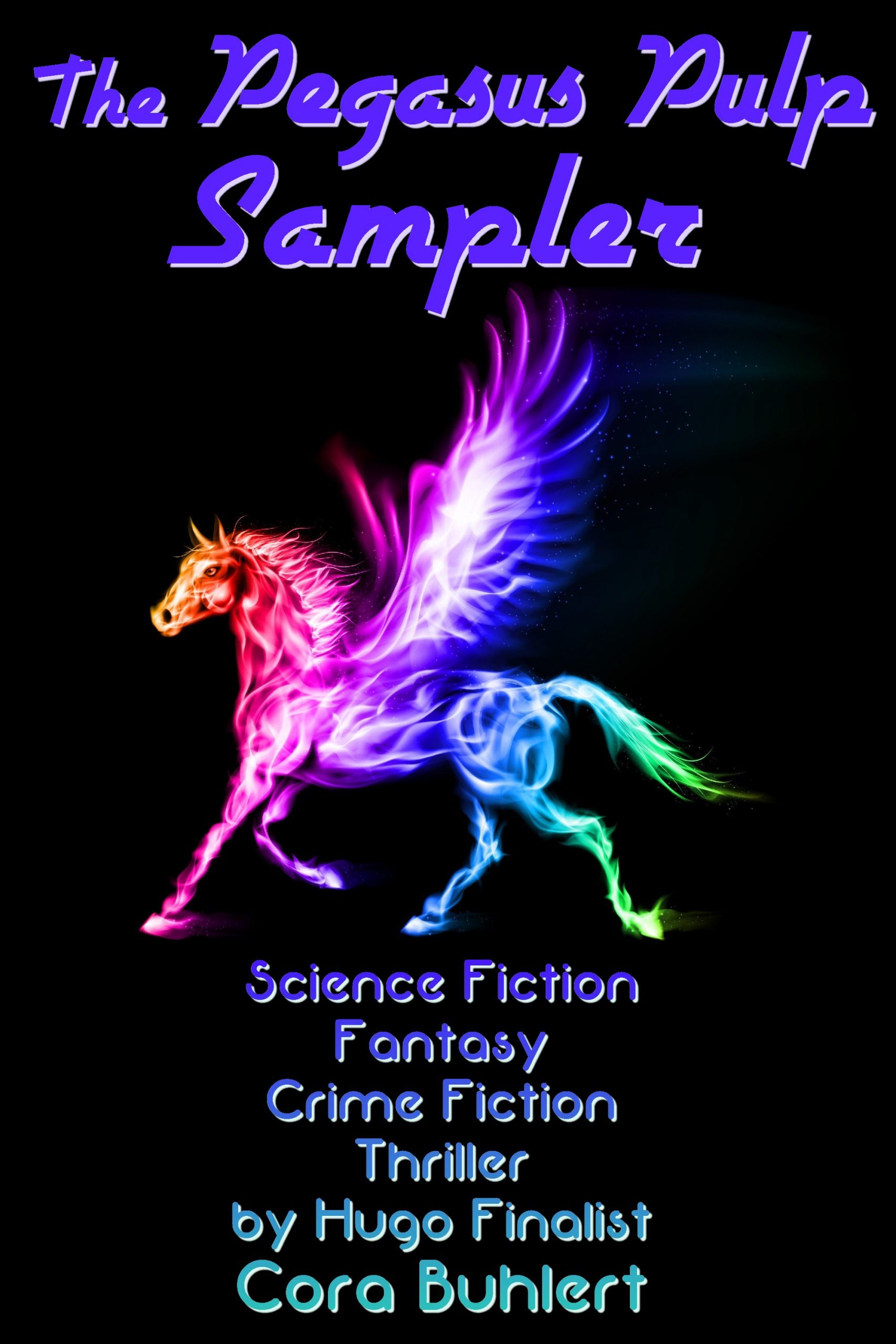
The Pegasus Pulp Sampler by Cora BuhlertThe Pegasus Pulp Sampler by Cora Buhlert

Get an overview of the works of Hugo finalist Cora Buhlert and her one-woman small press Pegasus Pulp Publishing.

Space opera, military science fiction, alien invasions, hostile planets, sword and sorcery, pulp thrillers, men’s adventure, murder mysteries, cozy fantasy, historical romance – we have all that and more.

Enjoy twelve novellas, novelettes and short stories in five genres.

Contains the following stories:

•Evacuation Order
•Baptism of Fire
•Mercy Mission
•Acacia Crescent
•Valentine’s Day on Iago Prime
•The Four and a Half Minute Boiled Egg
•The Cork and the Bottle
•The Crawling Death
•Countdown to Death
•The Valley of the Man Vultures
•The Revenant of Wrecker’s Dock
•The Kiss of the Executioner’s Blade

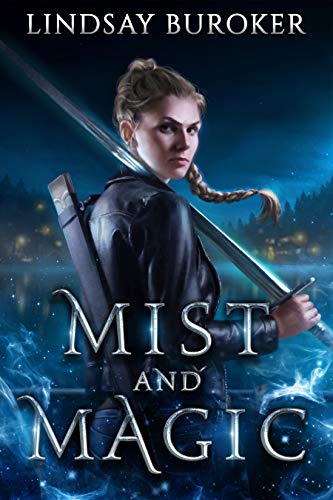
Mist and Magic by Lindsay BurokerMist and Magic by Lindsay Buroker:

As a freelance assassin, Val Thorvald leads a dangerous life.

She’s learned not to stay in the same place for long and not to get too attached to anything. For example, she would never consider adopting a pet.

But when she’s searching for a missing friend, she finds an abandoned silver tiger cub.

The magical feline is clearly from another realm, but Val has no idea which one or how to send it back. All she knows is that it’s the only witness to her friend’s kidnapping.

Val can kick the butts of ogres, trolls, and wizards, but she has no experience taking care of pets—certainly not magical tigers. And as she quickly learns, the cub has teeth like a chainsaw. Soon, everything from her apartment to her seat belts to the hair on her head is in danger.

But if Val can’t forge a bond with the cub, figure out what it knows, and find her missing friend, more than her belongings—and her hair—may be at risk.

Deadland Sentinel by J.N. Chaney and Ell Leigh ClarkeDeadland Sentinel by J.N. Chaney and Ell Leigh Clarke:

With the trafficking ring obliterated, Jack turns his attention to wiping out the dregs of the criminal empire.

But when he arrives to take out a particular scumbag, he only finds the man’s corpse.
And he’s missing a shoe.

As the investigation begins, Jack surmises he has either stumbled into a conspiracy or there’s a serial killer on the loose. The team must mobilize to figure out exactly what is going on.

Corruption, kidnapping, and life as they know it all collide as the group comes up against deadly elements within the very organizations they were sworn to protect.

With their own lives in the balance, and the integrity of the Union government at stake, it’s a race against the clock to figure out who the players are and how to bring them down.

All without being taken out themselves.

Heartless by Dannika DarkHeartless by Dannika Dark:

“For you, I’ll wait an eternity.”

Despite the spoils of a solid relationship and an idyllic life at Keystone, Raven is itching for the thrill of another big case. Things begin to heat up when a dangerous assignment falls in her lap.

Searching for the mastermind behind an illegal fighting ring is no easy feat, but as the weeks roll by, Raven’s undercover job begins to take an unexpected emotional toll. It’s a deadly mission, and if she’s not careful, she could lose everything.

The Ark War by Chris FoxThe Ark War by Chris Fox:

The Ark War Has Begun

War on a scale not seen in this sun-cycle has begun. Nox and his demonic army were thwarted at the Proto-Ark, but not before forging the tool that will hasten the destruction of the world. The Grey Men have a Primary Access Key, and are ready to bring their masters home. The Builders are coming.

Millions of deathless surround Jordan in the broken Ark of the Mother. The only thing standing between Lima and destruction is the last god anyone wants to trust…Irakesh. Jordan follows Sobek to Australia in search of allies, but what lurks there predates humanity.

Blair and Trevor spearhead a desperate gambit to alter time and save the Mother from her death at The First Ark. To do that they need powerful allies. The time has come to wake Jes’ka, so that she can train Liz in the ways of the Ka-Ken. If Blair and Trevor succeed, then ensuring Set doesn’t return to the present falls upon them.

But there is a spy in their midst. The Builders are far, far closer than anyone suspects.

Necrotech by Chris FoxNecrotech by Chris Fox:

The Unseen Fleets Come and Worlds Burn

The Unliving are implacable. Unreasonable. No one knows what they want, beyond souls, and bone for their war machines and ships. Now they’ve set their sights on the Inurans, and hey, I couldn’t wish an army of necromancers on a better target.

There’s just one problem.

I’m trapped on the Inuran Trade Moon, and the necromancers are attacking. Even if I can get the minister back to her ship we’ll still need to find a way to fight their flagship. That’s going to be tough to do without enough magic to power the Word of Xal.

If I pull it off I think I get a bonus though. Also, there’s that living thing.

324 Abercorn by Max Allan Gunnells324 Abercorn by Max Allan Gunnells

Brad Storm doesn’t believe in ghosts, but moving into the house at 324 Abercorn just may change his mind.

Best-selling author Bradley Storm finally has enough money to buy and restore his dream home. Despite 324 Abercorn’s reputation as one of the most haunted houses in America, Bradley isn’t worried. He doesn’t believe in the supernatural. Then strange things begin to happen. Objects no longer where he left them. Phantom noises heard from empty rooms. Shadows glimpsed from the corner of his eye.

Is his house truly haunted, or is there something more sinister happening on the property?

With the help of Bradley’s new boyfriend and a few friends who are just as intrigued with the seemingly inexplicable occurrences surrounding the infamous house, they set out to find the truth of what stalks the halls at 324 Abercorn.

Proudly represented by Crystal Lake Publishing—Tales from the Darkest Depths.

Silent Cravings by Jess Haines and E. BlixSilent Cravings by Jess Haines and E. Blix:

What’s a vampire to do when the werewolf she craves is playing hard to bite?

Christoph needs to save a young girl from a vampire’s clutches. It’s his fault she’s there in the first place—and rescuing her is the only way he might get back into his alpha’s good graces.

Unfortunately for them both, he’s just not that good.

He and his packmate soon find themselves caught and magically “neutered” by enchanted collars so they can’t hurt anyone in the vampire’s entourage.

Just when Christoph thought it couldn’t get any worse, a mute vampire named Mouse decides to claim him as her boy-toy.

She has her own set of problems involving some lingering issues from her past. She hungers for Christoph, but can’t stand to see someone victimized or—even worse—afraid of her.

The two must learn how to live together (and deal with his new fashion accessory)—without driving the rest of the vampire’s household crazy in the process.

Wicked Games by Lily Harper HartWicked Games by Lily Harper Hart

Ivy Morgan knew she was in for a world of hurt when she was sentenced to community service. She had no idea just how bad things were going to be, though. On her first day of picking up trash along the roadside, one of her crew members stumbles over a body, and it happens to belong to someone she knows.

Sasha Carmichael was described as a “good girl” and nobody can figure out how she ended up alone in the woods, so close to a road and help, and abandoned. When Jack Harker and his partner start digging down, though, some dark possibilities come to the surface.

It seems Sasha had ties to more than one person on Ivy’s work crew, which means Shadow Lake’s favorite witch is working with a killer. Finding the guilty party is difficult, especially given the way her crew chief is watching her.

If Ivy sticks even one toe out of line, her community service could be extended. That means her wedding is on the brink and her honeymoon might be lost. Jack isn’t about to let either of those scenarios happen.

It’s going to take both of them working together to solve the crime, and even then nothing is guaranteed.

Hang on to your hats, because murder has come to Shadow Lake and this killer might not be done … by a long shot.

Zero by Simon HaynesZero by Simon Haynes:

Hal Spacejock loves to watch cargo ships taking off for distant star systems.

One day, he promises himself. One day I’ll leave this dump of a planet and explore the galaxy!

But Hal’s not supposed to watch the ships.

No, his job is to load cargo into them… and he’s not very good at it.

After a particularly bad mixup, Hal flees from his boss, certain he’ll get the sack.

Instead, he runs smack-bang into an adventure that will alter the course of his life.

This prequel covers events leading up to Hal 1: A Robot Named Clunk. You can read it before or after any of the main Hal Spacejock novels.

Brewing up a Storm by Amanda M. LeeBrewing Up a Storm by Amanda M. Lee:

Storm season has hit Moonstone Bay and with it comes a whole lot of trouble.

Hadley Hunter thinks she’s ready for what’s to come, but she’s not. Before the storms can wreak havoc on her life, though, she has something even more frightening to deal with … lunch with her boyfriend Galen Blackwood’s mother.

Despite her best intentions, things don’t go as smoothly as Hadley envisioned. Before she has a chance to deal with that, though, the storms bring another surprise in the form of an unconscious woman on the beach and a yacht that keeps appearing (and then disappearing) with each subsequent storm.

Hadley can’t wrap her head around what’s happening, especially when news breaks regarding the identity of the individual who was found in front of the lighthouse. It seems she’s the wife of a very rich and powerful man … who disappeared a year before. In addition to that, the couple had two daughters with them at the time their boat fell off the map. What happened to them?

It’s a race against time for Hadley and her motley band of paranormal friends. They must find the yacht and uncover every horrible secret one family has managed to bury beneath a deep blue sea … and they have to do it with a monster on their tails.

At the heart of almost every family is love. At the heart of this one is despair. Somehow, Hadley will have to overcome her worst fears to become the best witch she possibly can.

Here’s hoping she’s up to the challenge.

A Blood Moon Swindle by W.H. LockA Blood Moon Swindle by W.H. Lock:

It’s the end of the world and it’s all Quinn’s fault.

Quinn is a talented conman and sorcerer, but even the best get caught. On his first day out of prison, Quinn was offered a job he should have refused. Quinn’s parole officer wanted him to steal a skull from a necromancer in Los Angeles.

It all went to downhill from there.

Quinn put together a team of the best criminals he knew. Together they stole the skull without getting caught. Only to be betrayed by one of the team and the parole officer. The pair was secretly working for the archangel Uriel in a plot to end the world.

Quinn and his team tried to stop the trio from getting the last artifact they needed to destroy the world, only to fail at the last moment because of Quinn’s antics.

Now Quinn is on the run from the FBI and his former team and he has made a literal deal with a devil.

If Quinn doesn’t save the world he’ll suffer an eternity of torment at the hands of Mamon, the Demon Prince of Greed. If he saves the world, all the debts he piled up will come due.

And those are the sort of debts that take an IOU.
Can Quinn save the world and escape certain death?

Ex Inferis by Nazri NoorEx Inferis by Nazri Noor:

Get ready for a hell of a ride.

Spoiled, sarcastic, and brutally self-obsessed, fledgling sorcerer Quilliam J. Abernathy has never worked a day in his life. And why should he? Being the half human son of a demon prince comes with its perks, among them a palatial lifestyle of luxury and excess.

But Quill’s comfort comes with a price. He is the Chosen of Asmodeus, destined to destroy the world and fated from birth to become the harbinger of hell. One last trial now stands in his way, the final obstacle to his ascent: a deadly game of devils…

Ex Inferis is the prequel to the Infernal Inheritance urban fantasy series, set several years before the events of the Darkling Mage and Sins of the Father books. Experience Quill’s rise to power as the Chosen of Asmodeus in an intense, action-filled supernatural suspense story filled with demons, devilry, and danger.

Of Flesh and Feathers by L.M. PierceOf Flesh and Feathers by L.M. Pierce:

“A modern Watership Down meets The Walking Dead – but with a lot more feathers.”

A foul wind blows through the chicken coop. The flock’s caretaker no longer comes to collect Chickory’s eggs or bring her feed, and the stench of death is everywhere. Her friend Fayne is haunted by visions of danger, and by a prophecy of safety beyond the farthest horizon a chicken has ever known. With the help of their faithful farm dog, Chickory must convince her flock to follow her into a frightening world of disease and predators, both natural… and unnatural.

Their survival may depend on fateful premonitions, but in order to save the world of humans and birds, Chickory must discover the truth behind the prophecy and the sickness that turned their keepers into killers.

From the mind that brought you Trans Liberty Riot Brigade, L.M. Pierce presents:
Of Flesh and Feathers

Winds of Change by Christine PopeWinds of Change by Christine Pope:

One surge of magical power could free her — or short-circuit her future.

Jake Wilcox thought he’d covered their tracks when he hid his love, weather witch Adara Grant, in a remote Wyoming town under the watchful guard of the Northern Arapahoe. He should have listened to his instincts that he was making a horrible mistake.

Now Addie’s gone, taken in the dead of night by the very nemesis they thought they’d eluded. Locked away so deep in a government testing facility, it’ll take more than magical luck to find her, much less get her out alive.

Addie is living her worst nightmare, and feeling every one of the three thousand miles between her and Jake. The temptation to use her wild gift to free herself is strong — but it’s not just her own life at stake. The facility is full of orphaned witches.

And one faint signal that could be glimmer of hope — or a sign that luck has run out for Addie, Jake, and everyone they love.

Road Seven by Keith RossonRoad Seven by Keith Rosson

Mark Sandoval—resolutely arrogant, covered head to foot in precise geometric scarring, and still marginally famous after Hollywood made an Oscar-winner based off his memoir years before—has been strongly advised by his lawyer to leave the country following a drunken and potentially fatal hit and run. When a woman sends Sandoval grainy footage of what appears to be a unicorn, he quickly hires an assistant and the two head off to the woman’s farm in Hvíldarland, a tiny, remote island off the coast of Iceland. When they arrive on the island and discover that both a military base and the surrounding álagablettur, the nearby woods, are teeming with strangeness and secrets, they begin to realize that a supposed unicorn sighting is the least of their worries.

Fraternity by Alasdair ShawFraternity by Alasdair Shaw:

The Indescribable Joy of Destruction has to choose between his human friends and his fellow Artificial Sentiences.

Legate Olivia Johnson struggles to adjust to life without her enhanced brain implants.

Decurion Anastasia Seivers rejoins the Legion to face her biggest challenge – command.

Together they are closing in on the war criminals in the Red Fleet. Will they succeed in bringing its commander to justice or will he evade their clutches once more?

Fraternity is the last in the trilogy of novels: Liberty, Equality and Fraternity.

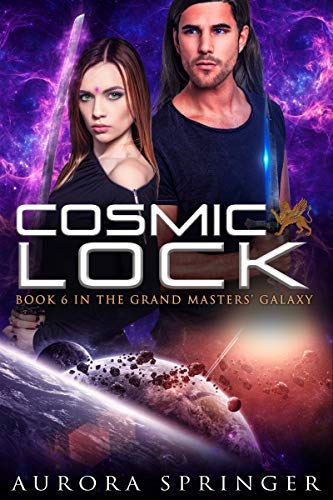
Cosmic Lock by Aurora SpringerCosmic Lock by Aurora Springer:

Three sets of enemies and a wormhole to shut?
Follow the superpowered Griffins on a rollercoaster adventure where new threats counter each success.

Grand Masters Violet and Athanor Griffin return from beyond the Cosmic Rift with two shiploads of rescued children and escaped slaves, but their enemies have not been idle in their absence. Avalon is in flames and their baby son is missing. Finding him may be the easiest of their problems. They must unite the fractious Grand Masters, stop the bloodsucking Ixioths from enslaving sentients, and seal the cosmic rupture to prevent new incursions of the vindictive Nulls. The clock is ticking. They have twelve days to squash their enemies before their final venture into the alternate universe. Can they overcome the challenges and secure peace for the galaxy?

Deception by Glynn StewartDeception by Glynn Stewart:

A new home on the edge of nowhere
A new hope for a peaceful future
An old enemy that won’t let go

Kira Demirci left her homeworld of Apollo pursued by assassins seeking revenge for her victories in the war against the Brisingr Kaiserreich. Now she has a new home and a new role: as the nova fighter wing commander aboard the mercenary carrier Conviction under Captain John Estanza.

Conviction is on retainer with the royal family of Redward, who encourage Kira and her pilots to make themselves a new home on the frontier planet. But there is a reason they want to tie the mercenary carrier’s crew more tightly to themselves and stormclouds are brewing on the horizon.

Those clouds break when a Redward warship goes missing on a standard patrol. Conviction and her fighters are sent out to find the destroyer—but instead they find a deadly plot by old enemies that will bring down the Syntactic Cluster in fire and war.

Unless Kira Demirci can do the impossible.

Lacey and Alex: The Dagger of Ill Repute by V.R. TapscottLacey and Alex: The Dagger of Ill Repute by V.R. Tapscott

Talking Plants, Explosions, Gunfire, Mayhem,
Magic and a Hint of Romance.

Lacey & Alex, roommates in San Francisco, are a barista and a cook by day. By night though, Lacey is a part time private investigator and Alex talks to plants. And they talk back.

In this book, they get dragged into hunting for a lost dagger. Of course, it winds up being so much more than simply a lost dagger.

The pair spend a couple of action-filled weeks travelling from San Francisco to Los Angeles, Barstow to Vegas and all parts between in their hunt for the elusive artifact.

They meet up with loose cannon Stevie and step it up a notch with exploding cars and tension of a whole nother kind, as she makes it clear what she thinks of Lacey.

Olive from Jane Bond shows up with a little tiny insignificant part (heh) and Jane herself has a cameo.

Join Lacey & Alex and Stevie as they have the adventure of a lifetime! Talking plants, explosions, gunfire, mayhem, magic and a little bit of romance all enter the picture before the end, in this slightly humorous, slightly serious, and always fun mystery.

Child of Wrath by R.K. ThorneChild of Wrath by R.K. Thorne:

Commander Ellen Ryu, Lieutenant Kael Sidassian, and the crew of the starship Audacity barely escaped Capital with their lives. Then betrayal kicked down their door. Now they need to clean up the mess.

The one team member they thought was safe has disappeared—their benefactor Doug Simmons. Doug’s former classmate is also in danger, and he’d planned a mission for them to rescue her. And the crew is zeroing in on just what exactly Ellen’s nemesis Dr. Arakovic is planning as the clues sharpen into focus.

Will the team be able to put together the pieces of many different puzzles before it’s too late? Attacked on multiple fronts, Ellen and her crew will have to divide and conquer if they want to triumph.

Because cyborg super soldiers, awkward aliens, gang members with secrets, and an ex-girlfriend from the past are just a few of the problems on their plate.

The baby they’ve been hiding from the entire galaxy is also about to make herself known.

Loudly.

Code Monkey by A.E. WilliamsCode Monkey by A.E. Williams

THAT IS ONE ANGRY MONKEY!

A.E. Williams opines on more matters of concern to thinking people, philosophers and chicken farmers.

CODE MONKEY follows the trajectory set by ROCKET SURGEON, as A.E. Williams opens up a can of whoop-ass on science, technology, politics and religion. Yeah, all those uncomfortable subjects that polite people eschew during cocktail party banter are just gristle for the mill as far as Williams is concerned.

Rocket Surgeon was just the first stage! Code Monkey ramps it up with a second-stage-to-orbit collection of articles, essays and unpublished works that will leave you shocked, aghast and rolling on the floor laughing.

Follow irascible raconteur, voyeur and mental saboteur A.E. Williams down a whole slew of rabbit holes, conspiracy theories, discussions about the fallacies and truth of the challenges of our times! You’ll discover why Williams is one of the most sought-after essayists on the planet. (Sought after by aliens, Sasquatch, sea serpents and hackers, that is…)

Once more, A.E. takes you by the hand and shoves facts, figures and statistics up your…nose, until you are spitting mad at finding out you have been duped all this time by Big Brother, the Deep State, the Man, the Establishment and even your lying parents! (Oh, for the sake of Santa! How could you!)

Williams regales you with personal tales from the aerospace trenches. He shows why firmly held ‘scientific’ facts are just as suspect as ‘truths’ that have been debunked, time and again. You’ll be cramming your tinfoil hat past your ears as you are exposed to the grim secrets of how the world REALLY works!

And, as always, you’ll chuckle and chortle your way through page after page of outrageous stories, anecdotes and observations by the man Cleopatra* said was “So funny I laughed my asp off!”

Get your copy TODAY and join the ranks of computer-literate primates who have gone bananas over riots, COVID19 and all the troubles in the world that have you praying for the Second Coming, World War 3 or a long-overdue asteroid strike!

*Cleopatra Jones works as a hair stylist in Roanoke, Va.

Posted in Books, Speculative Fiction of the Month | Tagged , , , , , , , , , , , , , , , , , , , , | Leave a comment

Some Thoughts on the 1945 Retro Hugo Winners

The winners of the 1945 Retro Hugos have been announced as well as the winners of the 2020 Sir Julius Vogel Awards. The indefatigable Nicholas Whyte also shares some additional information about the Retro Hugos as well as the full voting and nominations breakdown. Also check out the comments at File 770, where there is a lively discussion going on.

ETA: Adventures Fantastic weighs in on the Retro Hugos and seems quite pleased particularly with some of the winners that caused a bit of an uproar.

ETA 2: 2020 Best Novelette finalist Siobhan Carroll has some thoughts about how to imrpove the Retro Hugos.

So let’s take a look at the individual categories:

Best Novel

Shadow Over Mars a.k.a. The Nemesis from Terra by Leigh Brackett wins Best Novel. I’m really happy about this, because Leigh Brackett is one of the greats of our genre and was never recognised by the Hugos in her lifetime, though she did win a posthumous Best Dramatic Presentation Hugo for The Empire Strikes Back.

That said, I had expected that Sirius by Olaf Stapledon would win, because it is better known. But I guess Stapledon is too Marmite to win. I’m a bit surprised that The Wind on the Moon by Eric Linklater finished in last place, because it is a charming story – unlike the tedious Winged Man.

Best Novella

“Killdozer” by Theodore Sturgeon wins Best Novella. This isn’t a big surprise, because “Killdozer” is the best known story nominated, though it’s not the best story, because “The Jewel of Bas” by Leigh Brackett and “A God Named Kroo” by Henry Kuttner were both better. However, the Retro Hugos are still often determined by name recognition and nostalgia and the efforts of myself and others to change this have only met with mixed success.

That said, it’s a pity that “A God Named Kroo” only barely beat “No Award”, coming in fifth after the unreadable “Trog” and the Van Vogt novella I didn’t get around to reviewing, because I can only tolerate so much Van Vogt.

Best Novelette

The 1945 Retro Hugo for Best Novelette goes to “City” by Clifford D. Simak. This isn’t a huge surprise, because the City cycle is well regarded, still in print and Clifford D. Simak was one of the best writers of the Golden Age. “City” is a pretty good story, too, though not the best City story of 1944 or even the best City novelette, because “Census”, which didn’t make the ballot, is better.

That said, this was not the category I wanted to see Simak win. In fact, I was hoping that C.L. Moore, either with or without Henry Kuttner, would win Best Novelette, because both “No Woman Born” (which finished second) and “The Children’s Hour” (which finished unfairly in sixth place) are great stories.

Though I’m glad that “Arena” by Fredric Brown with its “Genocide is good” message didn’t win, because I feared that it might.

Best Short Story

The winner of the 1945 Retro Hugo for Best Short Story is “I, Rocket” by Ray Bradbury. I have to confess that this win surprised me, because not only was “I, Rocket” not the best story on the ballot – it’s a fine story, but “Desertion” by Clifford D. Simak is much better – it’s not even the best Ray Bradbury story of 1944, because both “The Lake” (which is a classic that has been reprinted lots of times) and the vastly underrated “Morgue Ship” are better. I also have no idea why Retro Hugo voters nominated “I, Rocket” over “The Lake”, though I have no illusions that anybody except me nominated “Morgue Ship”. I’m a bit surprised that “Far Centaurus” by A.E. van Vogt finished in last place, because this is the one van Vogt story on the ballot that’s actually good.

Best Series

The Retro Hugo for Best Series goes to the Cthulhu Mythos by H.P. Lovecraft, August Derleth (via whose stories the mythos qualified seven years after Lovecraft’s death) and many, many others.

There were some complaints about the renown racist H.P. Lovecraft winning a Retro Hugo in 2020. And while I didn’t put the Cthulhu Mythos in first or even second place – my number one was Captain Future who was one of my entry drugs into science fiction – I’m not surprised that it won. Because of all the nominated series, the Cthulhu Mythos is the only one which is still going strong – 83 years after the death of the original author. Also, I don’t view this solely as a win for H.P. Lovecraft, but for everybody who ever wrote a story in the world he created. And this includes authors as diverse as Victor LaValle, Silvia Moreno-Garcia, Ruthanna Emrys, Matt Ruff, Neil Gaiman, Robert Bloch, Fritz Leiber and many, many others, some of whom would have horrified Lovecraft.

So while Lovecraft was undoubtedly a racist, he also created a universe in which many writers have played over the years, often subverting Lovecraft’s ideas. So I think we should view this as a vote for the universe and everybody who ever wrote in it in the past ninety year. Cthulhu is an icon – more than the Shadow or Doc Savage, who are damned iconic in themselves – and has his own plush toy, so doesn’t he deserve a Hugo?

Best Related Work

The winner of the 1945 Retro Hugo for Best Related Work is “The Science-Fiction Field” by Leigh Brackett. I’m happy that the Retro Hugos have recognised Leigh Brackett not once but twice this year, but I’m still surprised that it won, because “The Science Fiction Field” is probably the most elusive Retro Hugo finalist of 1945.

The essay was originally published in Writer’s Digest and isn’t available online anywhere. The best way to get it is via Windy City Pulp Stories No. 13, which reprinted it a few years ago. I suspect that the publisher of Windy City Pulp Stories was very surprised about the sudden uptick in interest in his magazine.

That said, it is an interesting essay that offers insight both into Leigh Brackett’s writing process and the SFF field as it was in 1944. Who would have guessed that Planet Stories was considered one of the more scientifically accurate publications? There’s also a nice jab against John W. Campbell, whom Brackett famously didn’t get along with, as well as another jab against Weird Tales and their infamously bad payment practice.

Best Graphic Story or Comic

The winner of the 1945 Retro Hugo Award for Best Graphic Story is the Superman comic “The Mysterious Mr. Mxyztplk” by Jerry Siegel and Joe Shuster.

This is one case where I have no idea what the Retro Hugo voters were thinking. Yes, Superman is an iconic character beloved by many and even Mr. Mxyztplk is apparently a popular character, but have the voters looked at the actual comic? For while it’s not as bad as the racist Wonder Woman comic which won last year (and if you voted for that one, don’t complain about Campbell and Cthulhu?) it’s no more than competent.

My first choice was Flash Gordon, because Alex Raymond was probably the best artist working during the Golden Age and this would have been our last chance to honour him. Instead, the to Flash Gordon strips finished last, even lower than Buck Rogers, which was really, really bad.

Looking at the nominations, it seems as if us Mandrake fans need to settle on one story and we might lift Mandrake and Lothar (who was the first black comic hero 30 years before Black Panther) on the ballot next time. And if the Phantom fans would like to rally to the cause as well, we might still get the full Defenders of the Earth on the ballot.

Best Dramatic Presentation Short

We have two winners in the Best Dramatic Presentation category, The Curse of the Cat People and The Canterville Ghost. Both are fine winners and were my number one and two choices in this category. The Canterville Ghost is only the only Retro Hugo finalist, where someone involved with the production is still alive, namely former child actress Margaret O’Brien, then seven years old. The actress who played the little girl in The Curse of the Cat People unfortunately passed away a few years ago.

Best Editor

The winner of the 1945 Retro Hugo for Best Editor is John W. Campbell, which is not exactly a surprise, even though it did cause some wailing and gnashing of teeth, how people can still vote for Campbell after his name was removed from the Not-a-Hugo for Best New Writer, which is now known as the Astounding Award?

But while I agree that it’s not a good idea to name an award for the best new writer of 2020 after a (very problematic) man who died almost fifty years ago, Campbell was the leading figure in the field in the 1940s. And Astounding Science Fiction is still considered the best magazine of the era, even though I for one found that other magazines offered more consistent quality than Astounding, which when it was good, was very good indeed, but which was also truly dreadful, when it was bad.

And indeed, I ranked Dorothy McIlwraith of Weird Tales, W. Scott Peacock of Planet Stories and Raymond Palmer of Amazing Stories above Campbell. Nonetheless, for better or worse, Campbell was one of the most influential figures of our genre, which is why people keep voting for him.

I also suspect that the wins for the Cthulhu Mythos and Campbell prompted the slightly cringeworthy intro by the CoNZealand chairs, in which they talk about how these are works of their time, which may be reactionary today.

Best Professional Artist

The winner of the 1945 Retro Hugo for Best Professional Artist is Margaret Brundage. Now this is one win I’m thrilled about, because Margaret Brundage was not just one of the very few woman artists working during the Golden Age, but also created some absolutely iconic covers for Weird Tales. Margaret Brundage was the first person to picture Conan and Jirel of Joiry (who wears armour rather than lingerie in the story) and who gave us Puritan executions in haute couture gowns (not actually a Solomon Kane cover, though I always assumed it was) as well as the highest selling Weird Tales cover ever (which actually illustrates a Conan story with a Shoggoth like monster, but Margaret Brundage simply preferred drawing scantily clad ladies to drawing Conan and Lovecraftian monsters). She was also a political radical and very likely LGBTQ. It’s long overdue that the Hugos recognise her work.

Best Fanzine

The 1945 Retro Hugo winner for Best Fanzine is Voice of the Imagi-Nation, edited by Forrest J. Ackerman and Myrtle R. Douglas. This win prompted another round of wailing and gnashing of teeth, because Forrest J. Ackerman was a sexual harrasser. I didn’t vote for it either – not just because I prefer to vote for people who are not sexual harrassers, but also because I don’t find Voice of the Imagi-Nation very good. There were definitely better fanzines out there in 1944, which were not edited by sexual harrassers.

However, people should also note that Ackerman wasn’t even on the ballot for Best Fan Writer this year, a category he used to dominate at the Retro Hugos.

Which brings us to…

Best Fan Writer

The 1945 Best Fan Writer Hugo goes to Fritz Leiber for his contributions to the Lovecraft fanzine The Acolyte. This is the one win where I really think that my Retro Hugo Recommendation Spreadsheet made a difference. Because if I hadn’t found a Fritz Leiber short story, an critical essay about Lovecraft and a poem about the Gray Mouser in The Acolyte, following a trail from ISFDB, and had put his name on the spreadsheet, I doubt that many people would have been aware that Leiber was even eligible.

If we take a look at the full nomination data, I see a couple of other places where the spreadsheet and Retro Reviews had an impact. Would Allison V. Harding have made the novelette longlist with two stories, if I hadn’t enjoyed “Ride the EL to Doom” so much and shouted about it to the world?

Which brings me to the wailing and gnashing of teeth, which is really just focussed on three winners – Campbell, Cthulhu and Ackerman. And yes, I’m not happy with those wins either.

However, after a few years of complaining about bad Retro Hugo finalists and winners, I decided to do something about it. And so I created the spreadsheet and started Retro Reviews to make it easier for voters/nominators to make informed choices and point them at good works that might otherwise be overlooked. I had a lot of fun, too, and discovered stories I might never have read otherwise. It wasn’t just me either. N. helped to track down elusive dramatic presentation and related work finalists. Steve J. Wright, Paul Fraser, Don Briago and others reviewed lots of stories, novels and whole magazines.

So in short, several of us got together to put the information out there about what is eligible (obviously not Dave Langford nine years before he was born), what is worth checking out and shared our thoughts on the finalists. And yes, I wish more people would have looked at our work before voting/nominating, because if you look at the nomination data, you’ll see lots of examples of nominations for people and works, which are flat out ineligible. If the voters and nominators don’t pay attention to this in sufficient numbers, there’s little we can do about it.

As for the people complaining about Retro Hugos for Campbell, Cthulhu and Forrest J. Ackerman, did you nominate and vote? Did you point out better choices? Did you point people to unjustly forgotten authors/editors/fan writers? If not, then don’t complain.


Posted in Books, Comics, Film | Tagged , , , , , , , , , , , , , | 7 Comments

Indie Crime Fiction of the Month for July 2020

Welcome to the latest edition of “Indie Crime Fiction of the Month”.

So what is “Indie Crime Fiction of the Month”? It’s a round-up of crime fiction by indie authors newly published this month, though some June books I missed the last time around snuck in as well. The books are arranged in alphabetical order by author. So far, most links only go to Amazon.com, though I may add other retailers for future editions.

Our new releases cover the broad spectrum of crime fiction. We have cozy mysteries, small town mysteries, animal mysteries, culinary mysteries, historical mysteries, Jazz Age mysteries, paranormal mysteries, fantasy mysteries, hardboiled mysteries, noir, police procedurals, crime thrillers, psychological thrillers, science fiction thrillers, police officers, amateur sleuths, private investigators, forensic linguists, smugglers, kidnappers, crime-busting witches, crime-busting socialites, crime-busting cats, deadly cupcakes and much more.

Don’t forget that Indie Crime Fiction of the Month is also crossposted to the Indie Crime Scene, a group blog which features new release spotlights, guest posts, interviews and link round-ups regarding all things crime fiction several times per week.

As always, I know the authors at least vaguely, but I haven’t read all of the books, so Caveat emptor.

And now on to the books without further ado:

Book of Dark Magic by Sara BourgeoisBook of Dark Magic by Sara Bourgeois

When Richard Jordan is found dead in the woods outside of Coventry, the town’s reputation for being paranormal is put into the spotlight.

Richard wasn’t just murdered. The person who found him was shocked by what looked like a Satanic ritual murder.

Suddenly, the town’s regular tourism starts to dry up. In its place is a flood of weirdos and wannabe Satanists who are there to finish the ritual they believe Richard’s murder began.

Is this the apocalyptic scenario that Kinsley was prophesied to stop? Or, did someone want the town drunk dead and used a bunch of dark magical items to make it look paranormal?

What about the mysterious black book that shows up on Kinsley’s doorstep? Does it hold the key to solving the crime, or does it represent something far more sinister?

Come along as Kinsley and friends solve this crime one spell at a time!

A Treasured Little Murder by Beth ByersA Treasured Little Murder by Beth Byers:

August 1926

Jack and Ham’s first solo case is placed on pause just as the tale of a treasure is brought to light. ??As the case progresses, Vi and Rita dive in, and somehow it becomes a competition between the two couples. Things, however, take a sideways turn and the couples must unite and work together to protect all they hold dear.

Book TWENTY-THREE in the Violet Carlyle Mysteries. Are you ready for the roaring twenties? You’ll love Vi, her patient husband Jack, her indulgent twin Vic, and their friends.

Deadland Sentinel by J.N. Chaney and Ell Leigh ClarkeDeadland Sentinel by J.N. Chaney and Ell Leigh Clarke:

With the trafficking ring obliterated, Jack turns his attention to wiping out the dregs of the criminal empire.

But when he arrives to take out a particular scumbag, he only finds the man’s corpse.
And he’s missing a shoe.

As the investigation begins, Jack surmises he has either stumbled into a conspiracy or there’s a serial killer on the loose. The team must mobilize to figure out exactly what is going on.

Corruption, kidnapping, and life as they know it all collide as the group comes up against deadly elements within the very organizations they were sworn to protect.

With their own lives in the balance, and the integrity of the Union government at stake, it’s a race against the clock to figure out who the players are and how to bring them down.

All without being taken out themselves.

The Contract by William ColemanThe Contract by William Coleman:

Once a decorated cop, Hawke has fallen from grace and has turned private investigator to make ends meet. His first case is a simple one: follow the woman, Maddie, and get pictures of her having an affair.

But nothing is that simple. Hawke is forced to intervene when the Maddie is almost kidnapped right in front of him. When it happens again, Hawke switches from stalker with a camera to bodyguard with a gun.

The lawyer who hired him is not satisfied with the outcome or that Hawke is looking into who is responsible for the abduction attempts. He threatens Hawke to get him to back down, something not in the investigator’s nature.

To protect Maddie, Hawke must take her along while following the few leads he has to identify who is responsible and why. The closer they get to the truth the more danger they find themselves in.

Will they find who is out to get Maddie before it’s too late?

Cash Up Front by Mike FaricyCash Up Front by Mike Faricy:

Dev Haskell takes his ‘friend with benefits’ Heidi, out to dinner. His late night plans are suddenly put on hold when failed criminal, Tommy Benedetti shows up and forces Heidi into a stretch limo. Benedetti gives Heidi $200,000. Gee, $200,000 in cash, what could possibly go wrong?
There’s only one thing to do and Dev sets out to build a ‘working relationship’with FBI agent Candi Mangle

Another incredibly bizarre Dev Haskell read… Multiple tales wrapped into one crazy adventure.


Wicked Games by Lily Harper HartWicked Games by Lily Harper Hart

Ivy Morgan knew she was in for a world of hurt when she was sentenced to community service. She had no idea just how bad things were going to be, though. On her first day of picking up trash along the roadside, one of her crew members stumbles over a body, and it happens to belong to someone she knows.

Sasha Carmichael was described as a “good girl” and nobody can figure out how she ended up alone in the woods, so close to a road and help, and abandoned. When Jack Harker and his partner start digging down, though, some dark possibilities come to the surface.

It seems Sasha had ties to more than one person on Ivy’s work crew, which means Shadow Lake’s favorite witch is working with a killer. Finding the guilty party is difficult, especially given the way her crew chief is watching her.

If Ivy sticks even one toe out of line, her community service could be extended. That means her wedding is on the brink and her honeymoon might be lost. Jack isn’t about to let either of those scenarios happen.

It’s going to take both of them working together to solve the crime, and even then nothing is guaranteed.

Hang on to your hats, because murder has come to Shadow Lake and this killer might not be done … by a long shot.

Cutthroat Cupcakes by Cate LawleyCutthroat Cupcakes by Cate Lawley:

Killer cupcakes

Seems improbable to Lina, but when an attractive detective snaps cuffs on her and accuses her of witchy crimes she’s forced to reconsider.

The murder weapon? A cupcake topper sold in Lina’s shop, Sticky, Tricky Treats.
The method? A killing curse.
The curse’s origin? Lina…sort of.

Except Lina hadn’t a clue that she was a witch, and certainly didn’t know she’d accidentally cursed some of her confections.
She’s got to catch the killer who’s used her magic to murder or face a conviction as an accessory.
Now, if only the wizard detective assigned to the case weren’t such a distraction.

Cutthroat Cupcakes is a magical witch culinary cozy with a touch of romance, the first of three books in the Cursed Candy Mysteries series!

Brewing up a Storm by Amanda M. LeeBrewing Up a Storm by Amanda M. Lee:

Storm season has hit Moonstone Bay and with it comes a whole lot of trouble.

Hadley Hunter thinks she’s ready for what’s to come, but she’s not. Before the storms can wreak havoc on her life, though, she has something even more frightening to deal with … lunch with her boyfriend Galen Blackwood’s mother.

Despite her best intentions, things don’t go as smoothly as Hadley envisioned. Before she has a chance to deal with that, though, the storms bring another surprise in the form of an unconscious woman on the beach and a yacht that keeps appearing (and then disappearing) with each subsequent storm.

Hadley can’t wrap her head around what’s happening, especially when news breaks regarding the identity of the individual who was found in front of the lighthouse. It seems she’s the wife of a very rich and powerful man … who disappeared a year before. In addition to that, the couple had two daughters with them at the time their boat fell off the map. What happened to them?

It’s a race against time for Hadley and her motley band of paranormal friends. They must find the yacht and uncover every horrible secret one family has managed to bury beneath a deep blue sea … and they have to do it with a monster on their tails.

At the heart of almost every family is love. At the heart of this one is despair. Somehow, Hadley will have to overcome her worst fears to become the best witch she possibly can.

Here’s hoping she’s up to the challenge.

The Collector by John MaherThe Collector by John Maher:

They say human life is the most precious thing. The Collector doesn’t agree.

When world renowned archaeologist Philip Carlton suddenly and unexpectedly commits suicide, the police are called to investigate. Heading up the investigation is Detective Lucy O’Hara, a Forensic Linguist – and she immediately sees something is wrong with the suicide note. In her gut, she knows this was cold-blooded murder.

Battling sceptical superiors and the Irish establishment, Lucy digs for the truth and begins to uncover a shadowy trade in ancient artifacts led by a mysterious figure known only as ‘The Collector’.

As Lucy works to uncover his identity, she soon realises she is up against a ruthless mastermind who is systematically eliminating anyone who might lead her to him. But Lucy won’t give up and soon The Collector turns his attention to her…

The Collector – the first in a gripping new series featuring Detective Lucy O’Hara.

No Little Lies by A.B. PlumNo Little Lies by A.B. Plum

Burying memories sharp enough to raise a welt on the heart can work.

Or not.

Ask Ryn Davis. The adult daughter of a former high-class prostitute, she knows chronic, long-term insomnia reduces repression as a preferred coping technique. Still, she relies on denial.

A phone call from a stranger claiming her mother was murdered twenty years ago turns her life inside out. The reappearance of a forgotten childhood friend exposes buried and forgotten memories. Lies and half-truths torpedo her shaky world.

In this fast-paced psychological thriller, the suspense ratchets up. A psychopath’s ever-present memories drive him to exact revenge for Ryn’s lies about the past. His terrifying game of cat and mouse pit him against her where she is most vulnerable. His ties to organized crime make him even more dangerous.

Who is in control? What really happened to her mother? Why can’t Ryn remember?

Is facing her past the path to survival or death?

Lacey and Alex: The Dagger of Ill Repute by V.R. TapscottLacey and Alex: The Dagger of Ill Repute by V.R. Tapscott

Talking Plants, Explosions, Gunfire, Mayhem,
Magic and a Hint of Romance.

Lacey & Alex, roommates in San Francisco, are a barista and a cook by day. By night though, Lacey is a part time private investigator and Alex talks to plants. And they talk back.

In this book, they get dragged into hunting for a lost dagger. Of course, it winds up being so much more than simply a lost dagger.

The pair spend a couple of action-filled weeks travelling from San Francisco to Los Angeles, Barstow to Vegas and all parts between in their hunt for the elusive artifact.

They meet up with loose cannon Stevie and step it up a notch with exploding cars and tension of a whole nother kind, as she makes it clear what she thinks of Lacey.

Olive from Jane Bond shows up with a little tiny insignificant part (heh) and Jane herself has a cameo.

Join Lacey & Alex and Stevie as they have the adventure of a lifetime! Talking plants, explosions, gunfire, mayhem, magic and a little bit of romance all enter the picture before the end, in this slightly humorous, slightly serious, and always fun mystery.

Northtown Blitz by Robert WhiteNorthtown Blitz by Robert White

“With his usual razor-sharp writing Robert White takes us further into the world of Northtown & Raimo Jarvi in this second book of what is fast turning out to be a must-read series.”

Fresh from the success of his last case we find Raimo Jarvi reaping the benefits of his new-found status as a private detective who gets results.

Bella Cinciarelli was the eldest of three of sisters, all of them famous as high school beauties back in the day, and now one of them is dead. The coroner ruled the death natural causes but Bella is convinced her sister was murdered and she wants Raimo’s help to prove it and bring the murderer to justice.

The problems begin when Raimo realises Bella’s main suspect is her brother-in-law, James delCorelli – lawyer, businessman and county commissioner – a powerful man, a man with powerful friends, and as Raimo soon discovers – not a man you want to get on the wrong side of.

Posted in Books, Indie Crime Fiction of the Month | Tagged , , , , , , , , , , , , , , , , , | Leave a comment

Cora Goes to CoNZealand, the Virtual 2020 Worldcon

CoNZealand LogoCoNZealand, the virtual 2020 Worldcon, kicks off tomorrow or rather tonight. If you’re a member of CoNZealand, you can see me on the following panels:

The Evolution of Fanzines

Format: Panel

29 Jul 2020, Wednesday 16:00 – 16:50, Programme Room 5 (Zoom Meeting) (Programming)

Fanzines have been a beloved part of fandom for decades, and new ones are still springing up. What are the best new fanzines, and what classic fanzines are still putting out new content? Our panel of creators and enthusiasts discuss the relevance and importance of contemporary fanzines.

Chris Garcia (Team Journey Planet), Wendy Browne (Women Write About Comics), Sarah Gulde (Star Trek Quarterly), Greg Hills (Aesir HeathCare), Cora Buhlert (M), Jeanne Mealy


Come Time Travel with Me – 1965

Format: Panel
30 Jul 2020, Thursday 09:00 – 09:50, Programme Room 1 (Webinar) (Programming)Blast back to 1965: Beatlemania has seized the nation, the Great Society is on the rise, but southeast Asia and America’s inner cities are in turmoil.In geekdom, the Twilight Zone has just ended its five year run, The Outer Limits is off the air, but the Robinsons are about to get Lost in Space, and The Doctor is finishing his second season. Marvel and DC comics have growing stables of superhero teams, featuring a level of diversity and maturity never seen before. Anime is so new that the genre doesn’t have a name yet. Tabletop wargaming has taken off. And at last year’s World Science Fiction convention, a civil war violently split the fans.

Join award-winning SF author, Gideon Marcus, for a whirlwind trip through time: The space race, films, books, music, comics, politics, fashion — we cover it all! You’ll laugh, you’ll learn, and you’ll love it!

Lorelei Marcus (Galactic Journey), Gideon Marcus (Galactic Journey (and Journey Press) ) , Cora Buhlert, Erica Frank (Galactic Journey), Janice Marcus (Galactic Journey, Journey Press)


Cover Art

Format: Panel

31 Jul 2020, Friday 09:00 – 09:50, Programme Room 3 (Webinar) (Programming)

Let’s be truthful: you do judge a book by its cover. Otherwise, why would we bother with beautiful cover art? We will talk about the purpose(s) of the art, cover design, matching art to the story, and good (and maybe a few bad) examples of memorable book covers.

John Picacio, Cora Buhlert (M), Gideon Marcus (Galactic Journey (and Journey Press) ), Pablo Defendini (Fireside), Alyssa Winans


The Second Golden Age: SF of the 1960s

Format: Panel

31 Jul 2020, Friday 11:00 – 11:50, Programme Room 2 (Webinar) (Programming)

There was an explosion of new good SF in the 1960s, with the emergence of great new writers, a number of short story venues that expanded the scope of the field, and a series of classic novels that are still ranked as among the most important in the field’s history.

Dr. Bradford Lyau (M), Robert Silverberg, Cora Buhlert, Dr. Jack Dann, Kathryn Sullivan


Translation: the Key to Open Doors to the Cultural Diversity in SFF

Format: Panel

31 Jul 2020, Friday 12:00 – 12:50, Programme Room 2 (Webinar) (Programming)

Translated SFF are one way of knowing different cultural backgrounds, and is getting more attention than before. Discussion will go around what is the good story to be translated, or what is the key factor in actually selecting stories to be translated, from the editor or translator point of view.

Libia Brenda (Independent), Cora Buhlert (M), Neil Clarke (Clarkesworld Magazine), Mr. Wataru Ishigame (Tokyo Sogensha (Publisher)) , Luis F. Silva


And don’t forget to cheer me on at the Hugo Awards ceremony, where I’m nominated for Best Fan Writer:

Hugo Awards Ceremony

11:00, Saturday 1 Aug 2020 NZST (3 hours 30 minutes)

The biggest event of the convention. Join our toastmaster George R R Martin and special guests, as he presents the Hugo Award winners for 2019.


You can also find me in the Dealers’ Hall, selling e-books, so drop by and say hello.

Also be sure to check out the CoNZealand Yarnbombing gallery, where you can find my creation Occulus the Eyeball Monster with lots of other great yarnbombing projects around the world.

Posted in General | Tagged , , , , | 1 Comment

New Thurvok Adventure Available: The Beast from the Sea of Blood

This will only be a very short new release announcement, because I’m still busy with the July Short Story Challenge, where the aim is to write a short story per day during the month of July. You can follow along my progress here. Furthermore, I’m also busy with Worldcon related stuff and with day job (teaching and translation) stuff, because things tend to happen all at once.

Still, I did manage to publish a new Thurvok adventure just before embarking onto the July Short Story Challenge. It’s called The Beast from the Sea of Blood and was actually written during last year’s July Short Story Challenge. The inspiration was this image of what is presumably Conan by comic artist Gino D’Achille.

So accompany Thurvok, Meldom, Sharenna and Lysha, as they search for a pirate treasure and find…

The Beast from the Sea of Blood
The Beast from the Sea of Blood by Richard Blakemore and Cora BuhlertThey seek a treasure and find a monster…

Thurvok, the sellsword, and his friends Meldom, thief, cutpurse and occasional assassin, the sorceress Sharenna and Meldom’s sweetheart Lysha are on the hunt for a legendary pirate treasure, when they find themselves marooned on a desolate isle. To add insult to injury, there is no treasure on the island. There are, however, monsters…

This is a short story of 5400 words or 20 print pages in the Thurvok sword and sorcery series, but may be read as a standalone. Includes an introduction and afterword.

More information.
Length: 5400 words
List price: 0.99 USD, EUR or GBP
Buy it at Amazon US, Amazon UK, Amazon Germany, Amazon France, Amazon Netherlands, Amazon Spain, Amazon Italy, Amazon Canada, Amazon Australia, Amazon Brazil, Amazon Japan, Amazon India, Amazon Mexico, Kobo, Barnes & Noble, Apple iBooks, Google Play, Scribd, Smashwords, Thalia, Weltbild, Hugendubel, Buecher.de, DriveThruFiction, Casa del Libro, Vivlio, 24symbols and XinXii.

Posted in Books | Tagged , , , , , , , , | Leave a comment

Reminder: Hugo and Retro Hugo Voting Closes on July 22, 2020

Hugo Award Logo

Voting for the Hugos and the Retro Hugos opened in mid July. Because of the delays, the voting deadline has been extended until Wednesday, July 22, 23:59 Pacific Daylight Time/Thursday, 23 July, 18:59 New Zealand time. If you’re an attending or supporting member of CoNZealand, you can log into the members’ area to vote online. The Hugo Voter Packet can also be downloaded there.

Blogging is light this month, because I’m still doing the July Short Story Challenge, where the aim is to write a story per day during the month of July. I have written seventeen stories so far and you can follow along with my progress here.

So this post is just a short PSA that if you’re a CoNZealand member, please vote and make your voice heard. You don’t have to vote in every category – it’s perfectly all right to leave categories blank.

Also please don’t ignore the fan categories (Fanzine, Fan Writer, Fancast, Fan Artist), because the fan categories are full of great finalists who do amazing work for little to no money, all for the love of the genre. And no, I’m not just saying this, because I’m one of them, though I’d of course be thrilled if you were to vote for me. You can also still download my Hugo Voter Packet here, if you want to see what I wrote in 2019.

Camestros Felapton has been doing spotlights of all six Best Fan Writer finalists. Mine is here, but check out all of them, cause we have an amazing line-up of Fan Writer finalists this year.

My fellow Best Fan Writer finalist Alasdair Stuart has also sent out a special edition of his weekly newsletter The Full Lid (which you should absolutely check out), highlighting all of the 2020 Best Fan Writer finalists.

Constanze Hofmann offers an overview over the 2020 Fan Artist finalists and their amazing work here. At the Best Fanzine finalist nerds of a feather, Andrea Johnson is also interviewing this year’s Best Fan Artist finalists and offering samples of their work.

Finally, please don’t ignore the Retro Hugos either. I’ve repeatedly aired my frustrations that the Retro Hugos so often seem to go to the most famous name rather than the best work. That’s why I started the crowdsourced 1945 Retro Hugo Recommendation Spreadsheet as well as Retro Science Fiction Reviews, where I reviewed many eligible stories and most of the finalists in the fiction categories (still missing two (bad) novellas and a novel) to allow Retro Hugo nominators and voters to make more informed choices.

I’ll also post my panel schedule for the now virtual CoNZealand in the next few days, so you know where to find me. I’m looking forward to seeing many of you there.

Posted in General | Tagged , , , , , , , | Leave a comment

The 2020 July Short Story Challenge – Day by Day

For starters, Smashwords is currently having its annual summer sale, where you can get plenty of e-books at reduced prices or for free, including several of mine.

Also Camestros Felapton is currently running his Hugo Fan Writer Finalist Week and had some nice things to say about me here.

In other news, blogging will be light this month, because I’m currently doing the July Short Story Challenge again.

What is the July Short Story Challenge, you ask? Well, in July 2015, Dean Wesley Smith announced that he was planning to write a brand new short story every day during the month of July. The original post seems to be gone now, but the Wayback Machine has a copy here. At the time, several people announced that they would play along, so I decided to give it a try as well. And then I did it again the following year. And the next. And the next. If you want to read my post-mortems of the previous July short story challenges, here are the posts for 2015, 2016, 2017, 2018 and 2019.

Because I’ve already done the July short story challenge five years in a row now and always found the experience very rewarding, I’m aiming for a repeat this year. Though for now, I’m only committing to doing this for a week, which is already half over. If things are going well, I’ll keep going, though I’m not sure if I can do the entire July this year, because Worldcon is at the end of the month and that will eat up my time and attention.

In previous years, I’ve always done a post-mortem post about the July Short Story Challenge in August. Last year, I also started keeping a running tally of all stories written to date right here on this blog to hold myself accountable. It worked well and so I will do it again this year and will update this post for every new story. This tally will be very basic, listing just the date, title, word count, genre, series, if any, and maybe a one or two sentence summary/comment.

Most of these stories will become longer in editing. Many will eventually change their titles and some may never see the light of day at all.

If you want to follow along with the challenge, bookmark this post. And if you want to play along or cheer me on, feel free to do so in the comments.

And now, let’s take a look at the stories:

July 1, 2020: Recruitment, military science fiction, 4778 words

Craig Hammer is a frustrated military science fiction writer. One day, he sees an advertisement for the International Independent Military Science Fiction Writers Guild, IIMSFWG for short. He joins up and finds friends. But the Guild is not what it seems.

This one started out as a parody inspired by a discussion on Camestros Felapton’s blog about yet another would-be SFWA alternative. Eventually, it turned into a more serious science fiction story. There’s even a sweet romance in here.

July 2, 2020: Jamaica Jerk Chicken (The Culinary Assassin), crime fiction, 1178 words

The Culinary Assassin is a series of flash stories about an assassin who kills people in restaurant – after first sampling the food. I wrote the first one to practice my description writing skills and then they sort of piled up. I should really publish a collection of these some time, since I have quite a few of them by now.

In this story, the world’s only gourmet hitperson eats Caribbean food and shoots a drug dealer. Inspired by having jerk chicken for lunch.

July 3, 2020: The Hand from the Deep (Thurvok), sword and sorcery, 3923 words

Thurvok and his friends liberate a village that is beleaguered by a monster that lives at the bottom of a lake.

Inspired by a favoured hiking spot and a book about mythological creatures.

July 4, 2020: Stark’s Diner (The Culinary Assassin), crime fiction, 1309 words

The world’s only gourmet hitperson eats an ice cream sundae and shoots a mobster in a diner in New Jersey.

The inspiration for this story was that I recently ran across yet another discussion about the controversial final scene of The Sopranos, where Tony Soprano gets killed – or not, whatever the case may be – to the sound of “Don’t stop believin'” by Journey. As I came across the umpteenth dissection of the ending, I suddenly remembered that the scene in question takes place in a diner. And I thought, “Wait a minute, so Tony Soprano was killed – if that’s what happened – in a diner. It’s obvious who done it. It was the culinary assassin.”

And that’s how this story was born, though I changed the name of the victim and the diner.

July 5, 2020: The City of the Screaming Pillars (Thurvok), sword and sorcery, 5209 words

Thurvok, Meldom, Sharenna and Lysha travel to Candalor, an abandoned town in the middle of the desert known as “The City of the Screaming Pillars”. They are looking for a legendary treasure of rubies big as eyeballs.  But once they there, they have to deal not only with the screaming pillars, but also with the unholy gods of Cadalor.

The initial inspiration for this one was the cover of the March 1965 issue of Fantastic Stories of Imagination, which caught my eye when it was reviewed at Galactic Journey some time ago. The cover illustrates a Brak the Barbarian story by John Jakes – yes, the North and South guy. Before he wrote Civil War family sagas, he used to write sword and sorcery.

Somewhere along the fairly straightforward desert quest, the story took a turn into Lovecraftian territory.

The City of the Screaming Pillars is also the longest story I’ve written during the challenge to date and now I’m tired.

July 6, 2020: The Nightlife of Statues, contemporary fantasy, 1599 words

What it says on the tin. Several statues come to life by night and discuss current events.

Inspired by the recent debates about removing statues that are no longer politicall desired.

July 7, 2020: A Grave Case (Helen Shepherd Mysteries), crime fiction, 7467 words

When a wave of muggings at Kensal Green cemetery leaves one victim dead, Helen and her team are called in to apprehend the cemetery bandit.

This one was inspired by a report about thefts and robberies on cemeteries. It’s also the longest July short story challenge to date, though the first draft wouldn’t quite cross the novelette line.

July 8, 2020: The Golden Deer Inn (The Culinary Assassin), crime fiction, 1638 words

The world’s only gourmet hitperson visits Alsace, eats Flammkuchen, drinks Edelzwicker,  and shoots a far right politician.

The inspiration for this story was an article on “How to make the perfect Flammekueche” (“Flammekueche” is Alsatian dialect, “Flammkuchen” regular German) on the Guardian website. I saw the article and my first thought was, “I really need to make Flammkuchen sometime.” My second thought was, “Maybe the culinary assassin would like to have some Flammkuchen.”

And even though you can get Flammkuchen all over Germany these days (not sure about France), I nonetheless sent the culinary assassin to Alsace, because my great-grandfather hails from there and I still have family there.

July 9, 2020: Attack of the Robot Turkeys, science fiction, 1235 words

Robot turkey beleaguer a small town. What is says on the tin, basically.

The inspiration for this one was an episode of the new Magnum PI of all things, where Magnum muses about the meaning of the name of a yacht and finally says, “Maybe the initials stand for ‘robot turkeys’.” Magnum and Higgins are then interrupted by a pirate attack and the robot turkeys are never mentioned again. But somehow they stuck in my head and so I wrote a story about literal robot turkeys.

July 10, 2020: The Hanging Tree, historical fiction, 3454 words

During the Thirty Years War, teenaged Elsa and her little brother Jan escape the besieged town of Weißenburg. They hide from the Imperial army under General Wallenstein, witness a mass execution (well, Elsa does) and meet Adam, a young deserter from the Imperial army.  Together, Elsa, Jan and Adam try to find a safe place for them all.

The inspiration for this story was a piece of concept art for what I think is a videogame.  In this image, a girl and a young boy are hiding behind a dead horse, while there is a mass hanging going on in the background. The image reminded me of the famous etching “The Hanging” from the “Great Miseries of War” series of etchings by French (sort of, since he was from Lorraine, which has been disputed territory between Germany and France for centuries), which depicts a mass hanging during the Thirty Years War.

This story will probably need more historical background, for while the Thirty Years War, one of the bloodiest in the history of Europe, looms large in German memory, to the point that if you mention Wallenstein, religious conflicts, the horrors of war and a mass hanging reminiscent of an etching that is in every second history textbook people will get what you mean. However, the Thirty Years War not nearly as well known outside continental Europe, so I’m not sure if people elsewhere will get it.

July 11, 2020: Little Monsters, science fiction, 1022 words

One day Lana finds a small, tennis-ball-sized monster on the lawn. She takes it home, puts it in a box and generally treats it like a pet. What Lana is not know that the monster, whose name is Roznikath, is actually an advance scout of the invasion fleet of the alien Zostorug…

This is a humorous science fiction story and also the shortest one to date. It was inspird by my current craft project, which involves crocheting little monsters for CoNZealand’s yarnbomb project.

July 12, 2020: Cake Invaders, science fiction, 2193 words

All over the world, foodstuffs, common household objects and eventually people are revealed to be really made of cake. Bob Foster and Dr. Dana Milburn of the US Anti-Alien Taskforce believe that the proliferation of secret cakes may be the vanguard of an alien invasion. They will be proven right.

This story was inspired by the videos of cakes disguised as other foodstuffs or common household objects that are all over social media right now. Initially, it started out as a humorous and somewhat absurd story, but then it took a turn into paranoid X-Files territory.

Certainly one of the weirder stories I’ve written for this challenge.

July 13, 2020: Kitchen Demon, urban fantasy, 1881 words

Isabella tries to make her grandmother’s famous recipe for spaghetti sauce and winds up summoning a demon instead. She also gets some unexpected revelations about her grandmother…

I’m not sure where this one came from. There was no clear inspiration, though I do like to write about cooking and food.

July 14, 2020: Flamingos, post-apocalyptic, 1610 words

Two flamingos, Diego and Pablo, recall the day when one of the great steel birds that often fly high above the lagoon where they live (we call them planes) suddenly fell from the sky and turned the lagoon into a flaming inferno. Around the same time, the creatures that the flamingos call the thick-legs (we call them humans) as well as the great steel beasts and the waterbeasts that live in symbiosis with them (cars and boats to us) just vanished. Clearly, something terrible has happened, but what?

The July Short Story Challenge usually yields a handful of post-apocalyptic stories every year – several of them may be found in the collection After the End – Stories of Life After the Apocalypse. But for obvious reasons, I really don’t feel like reading or writing post-apocalyptic fiction right now. So I’m surprised that I wrote one after all. Though it’s notable that “Flamingos” is written from the point of view of animals who were left unaffected by whatever befell the humans. Diego and Pablo never find out what happened to the humans either.

The inspiration for this was an image of a flock of flamingos surrounding the gutted hull of a crashed plane. A secondary inspiration might have been this featured new release at the Speculative Fiction Showcase, a post-apocalyptic novel from the POV of chickens.

July 15, 2020: King’s Justice, sword and sorcery, 7178 words

Kurval has taken over the throne of Azakoria, after slaying the previous king Orkol in battle. He is determined to be a good and just king, but the people of Azakoria don’t respect him and view him as a barbarian outsider. Kurval also has to deal with various aristocrats plotting to depose him as well as a steady stream of executions of would-be conspirators.

One day, during an audience, a hooded petitioner draws a knife and tries to stab Kurval. Kurval easily disarms the would-be assassin. But when the hood is pulled off, Kurval is shocked to see that the assassin is a young woman, Nelaira, daughter of a minor noble.

Kurval decides to visit Nelaira in her prison cell, because he wants to know why she tried to kill him. And even though reason of state demands that Nelaira be executed for her crime, Kurval finds that he does not want to hang her…

This is a sword and sorcery tale, though not part of the Thurvok series. It’s also quite different, though still part of the same genre. The Thurvok stories set on the lighter end of the sword and sorcery spectrum, in spite of plenty of monsters, skeletons and resurrected corpses, and closer to Fritz Leiber’s Fafhrd and Gray Mouser (though there are plenty of dark Leiber stories as well) than to Conan and Jirel of Joiry. “King’s Justice” is more Robert E. Howard, particularly the Kull stories and The Hour of the Dragon/Conan the Conqueror. Though the ending is happier than what Howard would have written.

I’ve been tinkering with this one for the past few days, because it wouldn’t quite come together, but I’m happy with how it turned out in the end. Not sure whether I’ll publish this under my own name or under Richard Blakemore’s. Probably Richard’s, since he has a sword and sorcery backlist.

The inspiration for this one were two pieces of artwork, an image of a hooded assassin confronting a king on his throne for which I can’t find a link right now, as well as Rene Magritte’s 1928 painting “The Lovers II”, in which a hooded couple shares a passionate kiss.

July 16, 2020: Taco Truck (The Culinary Assassin), crime fiction, 864 words

The world’s only gourmet hitperson eats a fish taco and shoots a drug kingpin.

I was going to write something else today. But then I was massively busy with Worldcon related stuff and other things, so I shelved today’s idea for tomorrow and wrote a quick Culinary Assassin tale.

July 17, 2020: The Lantern Bearers (Thurvok), sword and sorcery, 2262 words

Thurvok, Meldom, Sharenna and Lysha are forced to cross the Gravendare Marshes by night, when the inn where they’d planned to spend the night turns out to be den of bandits. But the marshes have their own share of danger, such as the mysterious ghost lights and the hooded lantern bearers luring travellers to their doom…

The initial inspiration for this story was this Crime Reads article by Elly Griffiths about folklore connected to marshlands and how stories about will o’ the wisps and similar ghostly lights can be found all over the world. Somehow, it intermingled with the plot of The Spessart Inn, which also features a sinister inn that is a den of robbers, to beget this story.

July 18, 2020: Vacancy, post-apocalyptic, 2048 words

Daniel is a scavenger in the flooded Florida of the near future. One day, during a scavenging expedition, Daniel is separated from his friends Luis and Alanna during an alligator attack. Daniel manages to get away, but he is all alone, lost, out of ammunition and almost out of water. But then he spots a motel sign among the swamp vegetation…

I originally planned to write something else today, but that story just wouldn’t come together. So I went through my collection of images to see if something sparked an idea. Eventually, this one did…

July 19, 2020: The Tomb in the Swamp, fantasy, 762 words

In the middle of a vast and treacherous swamp, there lies the tomb of an ancient king. This is its story…

This one is very short, more vignette than story, but then it was that kind of day. Very short pieces about fantastic places occasionally crop up during the July Short Story Challenge. Eventually I should collect those in An Atlas of Fantastic Places or something like that. Or use them as seeds for future stories.

The inspiration for this story was this piece of fantasy art by Nele Diehl.

July 20, 2020: The Cow Thief, historical fantasy, 1284 words

Sigurd the Giant is thirsty and decides to buy himself a cow, so he’ll always have fresh milk. So he comes down from his mountain to the village of Flintskilde to buy a cow.

The people of Flintskilde may be Vikings, but nonetheless they’re not at all pleased when the giant who has been the bane of their village for years now comes stomping down from his mountain to bother them yet again…

Another very short story that was not at all what I had planned to write (I will finish that story eventually), but then the 2020 Hugo finalists have found themselves roped into fixing issues with Worldcon programming.

The inspiration for this story was this delightful piece of fantasy art by Ismail Inceoglu.

July 21, 2020: Neutral Ground (In Love and War), space opera/military science fiction, 4996 words

Colonel Brian Mayhew of the Republican Special Commando Forces and his Imperial counterpart General Roderick Crawford meet in a street café on the neutral world of Ibsen II for coffee and pastries and to discuss the most embarrassing matter of Anjali and Mikhail.

There was no concrete inspiration for this one, just a scene that popped into my head of Brian Mayhew and his Imperial counterpart sitting in a street café, talking and realising that even though they’re on opposite sides of the war, they’re actually quite alike.

This is another fairly quiet In Love and War story. During rewrites, I should probably enliven it by having Mayhew and Crawford’s little tete a tete interrupted by an assassin or something.

Still, it’s a nice character piece and I’m happy with how it turned out.

July 22, 2020: The Gate of Mist, sword and sorcery, 1773 words

On the slopes of the mountain Kuhinua sits the monastery of the Order of the Guardians of the Gate, warrior monks who protect the world against dangers from beyond. One day, young Tarkhali shows up at the gate of the monastery, wanting to join the order.

Tarkhali is taken in and given swordfighting training. He also finds a friend in his combat trainer Jengamal. Then comes the day when Tarkhali is finally sent up to the top of the mountain to guard the gate to beyond against the mist creatures trying to break through. And of course, Jengamal is by his side…

This one started out as a story about warrior monks fighting monsters and turned into Brokeback Mountain, but with cloud monsters, halfway through.

The inspiration was this piece of fantasy art by Nele Diehl.

July 23, 2020: The Guardians of the Forest, fantasy, 1056 words

In a glade at the heart of the vast Conegont forest, there are two statues, a man and a woman.  Once, they were a pair of doomed lovers on the run, now they are the guardians of the forest…

This is another very short story about a fantastic place and its background. I should really collect these some day.

The inspiration was another piece of fantasy art by Nele Diehl, namely this one.

July 24, 2020: Conscientious Objector, dystopian, 2459 words

In the future. the State has ended all discord and strife and united humanity – by making dissent and any deviation from the norm a crime punishable by death. Furthermore, any citizen may be called upon the serve as a citizen executioner.

One morning, Joseph Karlsbad receives a letter summoning him to citizen executioner duty. Joseph hates executioner duty, but he has no choice but to comply. Or does he?

This is the grimmest tale to come out of the 2020 July Short Story Challenge yet, though in general it seems to me as if this year’s stories are darker and grimmer. Geez, I wonder why that might be.

The inspiration for this story was a mix of several different factors. One was Rosemary Benton’s review of the 1965 science fiction novel Android Avenger by Ted White, which is set in a very similar dystopian society, complete with citizen executioners. The novel only uses the executioner duty idea as a jumping off point for a story about an android who doesn’t know he’s an android, but somehow the idea stuck in my head. It combined with this illustration from a 1937 issue of Spicy Mystery, which perfectly illustrates the curious and often disturbing mix of sex and violence found at the more risqué end of the pulp spectrum, and the trailer for a historical crime drama called The Alienist: Angel of Darkness, in which a young women is strapped into an electric chair, while a horrified Daniel Brühl, Dakota Fanning and Luke Evans look on. A little bit of Franz Kafka got mixed in as well and this is the result.

July 25, 2020: Willowbrook Farm (The Day the Saucers Came), alien invasion, 2569 words

It’s June 9th, 1956, known throughout the world as the day the saucers came. It’s also the day that Bob and Mary Graham are about to be evicted from their farm. But while an alien invasion cannot save their farm, it at least deals with the greedy banker Mr. Marsden and his goons as well as with the ineffective sheriff.

This one is basically: The couple from American Gothic meets a flying saucer.

July 26, 2020: My Hollywood Life: Confessions of a Dinosaur Actress, science fiction, 1400 words

In a candid interview, Myfanwy Krxxzplx, a pterodactyl and one of the premier dinosaur actors of Hollywood, talks about her lengthy career, which ranges from the silent era all the way to the modern CGI age, her friendship with Kong (yes, that Kong), her uncredited appearance in Citizen Kane, her hope to appear in a Marvel movie and her frustration at the lack of Oscar nominations for dinosaur, kaiju and cryptozoological actors.

The inspiration for this story was watching Kong: Skull Island on TV (about which I should probably write a review after Worldcon, because it was much better than I expected). In one scene, there are a number of pterodactyls, because there have always been pterodactyls on Skull Island, going back all the way to the original 1933 King Kong. Just as any movie or TV show that features dinosaurs inevitably has a pterodactyl. So I thought, “What if that pterodactyl is actually always the same pterodactyl? What stories would that actor or actress have to tell?”

I named my pterodactyl diva Myfanwy Krxxzplx, because Krxxzplx sounds like the sort of name a pterodactyl might have and Myfanwy, because the pterodactyl who appears in the British TV show Torchwood was supposedly nicknamed Myfanwy by the cast and crew.

And yes, there really are pterodactyls in Citizen Kane.

July 27, 2020: Ambush (In Love and War), space opera, 1933 words

On his way home from his shift at the spacedocks of Zhen Kang, where he’s working security, Mikhail is ambushed by bounty hunters.

The inspiration for this story was this image by Sebastian Hue of a man in a long coat under attack in a dark alley. When I saw the image, I immediately thought of Mikhail.

This story is very short and I may eventually use it as a starting point for a longer tale.

July 28, 2020: The House at Green Corner, urban fantasy, 2133 words

While delivering newspapers on her summer holidays, Maddie always passes a mysterious house with an overgrown garden. Bats often flutter around the garden.

No one in the neighbourhood knows anything about the house or its inhabitant. But one day, Maddie decides to venture into the garden on a dare and finds that the truth about the house  at Green Corner is stranger than even the wildest of speculations.

The inspiration for this story is a real house in my neighbourhood with an overgrown garden and a very tall fence, which is popular with the local bats. I walk past that house often and found myself wondering who lives there and why the house looks like it does.

Worldcon has officially started and I will be on my first panel in a few hours. I will see, if I can get in a flash story tomorrow or in the remaining July days, but if I don’t make it, I will end the challenge here at 28 days.

July 29, 2020: The Doorway to Nowhere, fantasy, 358 words

At the heart of the Berengar forest, there stands a ruin with a doorway. Strange things happen there and occasionally, travellers vanish…

Yes, I did finish a story today after all, though it’s very short, more vignette than short story. It’s another one of those Atlas of Fantastic Places stories and was inspired by this piece of fantasy art by Nele Diehl.

But even if today’s story was very short, I’m still happy that I managed to write one at all, especially since I’ve decided to view any story written during Worldcon as a bonus.

July 30, 2020: Impartial Observer, horror, 730 words

An anthropologist observes a demon summoning ritual in the woods. This turns out to be a very bad idea…

Yes, I did get another story written, though it is yet another flash piece. I will try to do one tomorrow, too, if only because giving up now will feel like cheating. However, tomorrow is Hugo night, so I’m not sure how much time I will have.

BTW, the Hugos will be livestreamed, so cheer me on.

July 31, 2020: The Timekeeper, post-apocalyptic, 1002 words

The timekeeper, an artefact from the time before, has been in Ella’s family for more than three generations. But one day, it breaks down…

The inspiration for this story was a clock radio I bought at my local Aldi today. The manual states that the date function of the clock radio will cease working on December 31, 2999, since it can’t handle the Y3K version of the millennium bug. When we read this, we laughed and said, “Well, that’s the problem that our descendants in the post-apocalyptic wasteland of the year 3000 will have to deal with.”

That sparked a story about a family in a post-apocalyptic world whose most prized possession, a clock radio from the time before, suddenly stops working.

And that’s it: 31 stories in 31 days, including the last three of them written during Worldcon.

I might try for another tomorrow, because I had an idea for a story I didn’t get around to in the crazy Worldcon days, but otherwise that’s it for the 2020 July Short Story Challenge.

The postmortem post will go up in the couple of days, probably after my Hugo commentary.

Posted in Writing | Tagged , , , , , , , , , , , , , , , , , , , , , , , , , , , , , , | 14 Comments